
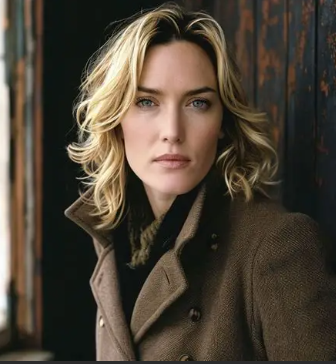
The casting director looked at the plump fifteen-year-old and delivered the verdict that would fuel thirty years of revenge: “You might have a career if you’re happy to play the fat friend.” Kate Winslet stood in that London audition room in 1990, absorbing the words that countless industry gatekeepers would repeat in various forms throughout her ascent. She was too heavy. Too working-class. Too Reading, too council estate, too obviously from somewhere that didn’t produce movie stars.
Today, Kate Winslet’s net worth approaches $65 million. Every dollar represents a rebuttal. Every Oscar nomination is a counter-argument to the industry that told a teenager her body disqualified her from leading roles. The working-class triumph isn’t just a narrative arc. It’s the architecture of an entire career built on proving wrong everyone who underestimated her origins.
The Wound: Growing Up in the Gap Between Dreams and Means
Reading, Berkshire sits forty miles west of London, close enough to touch the dream but too far to reach it easily. The Winslet household ran on theatrical ambitions and modest incomes. Both parents were stage actors. Her father Roger struggled to find consistent work. Her mother Sally performed while managing the chaos of raising four children on unpredictable earnings.
The Economics of Artistic Households
The family understood performance intimately. Nevertheless, they also understood that talent doesn’t pay the gas bill. Young Kate watched her parents navigate the gap between creative calling and financial reality. She absorbed the particular anxiety of artistic households: the knowledge that your worth as a performer has no reliable correlation to your income as a person. Furthermore, she learned that the world treats working-class dreamers with casual cruelty.

At Redroofs Theatre School, scholarships subsidized what her family couldn’t afford. The arrangement meant Kate knew precisely where she stood in the social hierarchy. Other students had parents who paid full tuition. She was there on charity, talented enough to merit investment but insufficiently wealthy to belong naturally. This positioning shaped everything that followed.
The Body Battleground
Then came the body commentary. Adolescence arrived with curves that British casting directors deemed unacceptable. Kate developed a figure that suggested abundance rather than the angular deprivation fashion demanded. Directors and agents delivered the message repeatedly: lose weight or accept limitations. Her body became a battleground where class and gender and commerce converged to tell her she wasn’t good enough as she existed.
The psychological damage was substantial. As she would later reveal in interviews, she developed disordered eating in her teens. She tried to make her body conform to an industry that had no space for her shape. Moreover, she carried the shame of poverty and the shame of flesh simultaneously, twin burdens that other young actresses from comfortable backgrounds didn’t have to bear.
The Chip: Proving Everyone Wrong, One Role at a Time
Something crystallized in Winslet during those early years of rejection. Rather than accepting the industry’s verdict about her limitations, she decided to demonstrate that the industry was wrong. Consequently, every audition became an opportunity to show them what they’d missed. Every role became evidence in an ongoing argument about who deserves to be a star.
The Heavenly Creatures Breakthrough
Heavenly Creatures in 1994 announced her strategy to the world. Peter Jackson cast her as Juliet Hulme, an intense New Zealand teenager involved in a notorious murder case. The role required physical commitment, emotional extremity, and the kind of unguarded performance that more cautious actresses would have declined. Winslet held nothing back. Additionally, she demonstrated something the industry hadn’t expected from the council estate girl: fearlessness.
The performance earned notice, but more importantly, it established a pattern. Winslet would take roles that required her to be uncomfortable, exposed, and vulnerable in ways that upper-class actresses often avoided. Her willingness to suffer onscreen became a competitive advantage. She had nothing to lose because she’d started with nothing to protect.
The Titanic Gamble
Sense and Sensibility with Emma Thompson and Ang Lee followed, demonstrating range and refinement. However, the career-defining gamble came with Titanic in 1997. James Cameron was notorious for brutal productions. The shoot would be long, physically punishing, and centered on a love story that could easily become forgettable spectacle. Winslet committed anyway.

Rose DeWitt Bukater was upper-class American aristocracy, precisely the opposite of Kate’s origins. Nevertheless, she understood something essential about the character: Rose was also trapped by expectations, also fighting against a system that tried to determine her worth based on circumstances of birth. The reading-girl playing a first-class passenger brought genuine class resentment to the performance. She knew what it felt like to be told you didn’t belong.
The Rise: How Working-Class Grit Conquered Hollywood
Titanic earned $2.2 billion worldwide and made Winslet one of the most famous actresses on the planet at 22. The council estate girl who’d been told she could only play the fat friend was now Hollywood’s most visible leading lady. Nevertheless, she responded to success with the wariness her upbringing had instilled.
Strategic Independence
Rather than cashing in with blockbuster after blockbuster, she retreated into character work. Iris, Eternal Sunshine of the Spotless Mind, Little Children. She chose roles that required transformation over glamour, that prioritized craft over commerce. The strategy seemed counterintuitive to industry observers, but Winslet understood something they didn’t: she wasn’t trying to maximize income. She was trying to prove she deserved to be there.
The Reader in 2008 finally delivered her Oscar. She played Hanna Schmitz, a former Nazi concentration camp guard confronting her past. The role required her to appear nude at 33 playing a character in her sixties, to embody someone morally repugnant, to make audiences empathize with the unforgivable. Critics noted her courage in taking such an uncomfortable role. What they didn’t note was that discomfort had been her competitive advantage since those first auditions in London.
The Mare of Easttown Reinvention
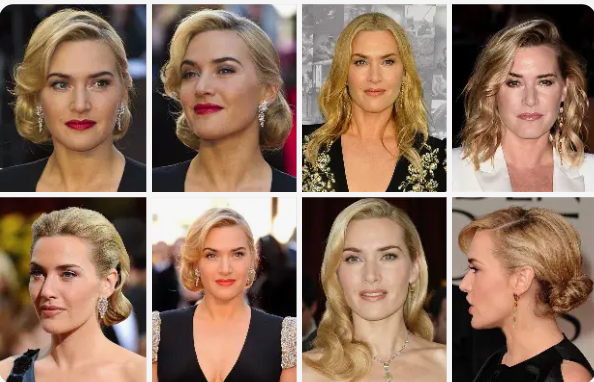
Mare of Easttown in 2021 proved she had nothing left to prove and everything still to demonstrate. She played a Pennsylvania detective whose body showed its age, whose face showed its wear, whose working-class community mirrored Reading more than Hollywood. Winslet insisted on keeping what she called her “bulgy bit of belly” visible onscreen. She refused retouching. Furthermore, she was finally playing the version of herself that casting directors had once told her disqualified her from leading roles.
The Emmy win that followed wasn’t just recognition. It was vindication decades in the making. The girl who’d been told to lose weight had won television’s highest honor while insisting her actual body be shown. The Hamptons wellness industry promotes relentless optimization, but Winslet had discovered something more valuable: authenticity as resistance.
The Tell: Where Class Never Quite Leaves
In interviews, Winslet maintains the forthrightness that marks working-class British speech. She doesn’t soften her opinions with hedging language. She doesn’t perform the polished evasiveness that privileged upbringings teach. Instead, she says what she means and means what she says, a directness that still reads as slightly transgressive in an industry built on manufactured image.
The Accent That Won’t Disappear
Her Berkshire accent, though modulated after decades of voice training, still emerges under stress or excitement. Listen carefully during awards speeches and you can hear Reading beneath the polish. She’s never fully erased where she came from, and increasingly, she’s stopped trying.
“I still can’t quite believe I’m allowed in the room,” she told Vanity Fair in a recent interview. The sentiment reveals the psychological residue of early rejection. At $65 million net worth, with seven Oscar nominations and one win, she still carries the uncertainty of the scholarship girl wondering if she really belongs.
The Location: Planting Roots Where She Was Told She Didn’t Fit
Winslet has maintained homes in both England and the United States, straddling the divide between her origins and her success. Her Sussex home connects her to British soil, to the working-class roots she’s never abandoned. Her American properties position her near the industry that once rejected her physical presence.
The Real Estate of Arrival
Unlike actresses who accumulate properties as investments, Winslet’s real estate choices suggest someone still processing the journey from council estate to comfortable wealth. She’s spoken about wanting her children to understand both privilege and its absence, to recognize that their mother’s success wasn’t inevitable. The homes become teaching tools, evidence in an ongoing lesson about where they came from.
Her connection to Hamptons social circles has been selective. She attends when professional obligations require it but hasn’t pursued the social climbing that her net worth would permit. The working-class instinct toward authenticity over performance extends to her relationship with wealth itself. Additionally, she seems to understand that belonging everywhere means belonging nowhere.

The Triumph That Keeps Proving Itself
Kate Winslet at 49 has achieved something the teenage auditioner couldn’t have imagined: she’s become exactly the kind of star she was told she could never be, and she did it without becoming someone else. The $65 million fortune represents thirty years of refusing to accept limitations that others imposed. Every role that required physical exposure, emotional vulnerability, and unflinching honesty was another argument against the gatekeepers who’d told her to lose weight or accept her place.
Somewhere inside the Oscar winner and Emmy champion lives a plump teenager standing in a London audition room, hearing words that would have crushed someone with less steel in her spine. The British invasion of Hamptons real estate includes plenty of actors who were told yes from the beginning. Winslet earned her place by being told no repeatedly and deciding that no was just the opening of a negotiation she intended to win.
The wound of class and body shame healed into determination. The determination built a career that redefined what leading ladies could look like. The career generated a fortune that the council estate girl never expected and still seems slightly suspicious of. Nevertheless, she keeps working, keeps proving, keeps demonstrating that the industry got it wrong about her. Some arguments never fully end. Some triumphs require constant renewal. Kate Winslet learned early that you have to earn your place every day, and she hasn’t stopped earning it yet.
Related Articles
- Cate Blanchett Net Worth 2025: The Prestige Player Who Learned Disappearance Early
- Joaquin Phoenix Net Worth 2025: The Commune Kid in River’s Shadow
- Frances McDormand Net Worth 2025: From Fargo to Nomadland’s Anti-Hollywood Fortune
Want to be featured in Social Life Magazine? Contact our editorial team to discuss coverage opportunities. For Polo Hamptons tickets and sponsorship information, visit polohamptons.com. Subscribe to our newsletter for exclusive Hamptons lifestyle content, or order a print subscription delivered to your door. Support independent luxury journalism with a $5 contribution.
Author

Written by
Recent Posts
A Night of Fashion and Film: My Night at the Hamptons Film Festival Closing Celebration at Baker House 1650

Verde New York Celebrates Meatpacking District Grand Opening With Mojave Grey Performance

He’s the Richest Man in the Room, but He’s Still Bad at Making Friends
Legal Options for Investment Fraud Claims

How Custom DTF Printing Adds Ease and Color to Your Boutique
Categories
- Art
- Articles
- Business of Luxury
- Celebrities
- Culture
- Entertainment
- Events
- Faces of Summer 2026
- Fashion
- Fashion & Style
- Featured
- Finance
- Food, Spirits, Wine
- Hamptons
- Hamptons Celebrities
- Health
- Health & Beauty
- Lifestyle
- Luxury Lifestyle
- Press
- Profiles
- Real Estate
- Technology
- The Chronicles
- Travel
- Uncategorized
- Weddings