
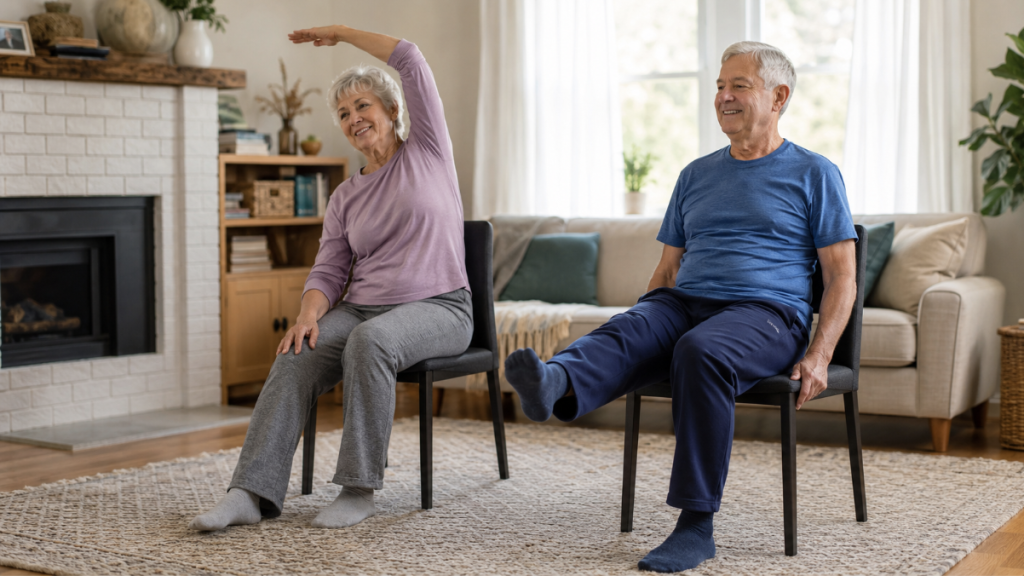
Chair Exercises for Seniors: 10 Best Moves at Home
Introduction
Chair exercises for seniors are gentle movements done while seated or while using a chair for support. They help older adults stay active at home without complicated equipment, floor exercises, or intense workouts.
These movements can support mobility, strength, flexibility, balance, posture, and confidence in daily routines. They are also easy to adjust based on comfort and energy level. Gentle movement can feel more enjoyable with rhythm, music, or simple options like chair dance for people who prefer seated activity with a fun pace.
The goal is not perfect movement. The goal is to move safely, regularly, and comfortably.
What Are Chair Exercises for Seniors?
Chair exercises are simple movements performed from a seated position or while holding a stable chair for support. They can include arm raises, leg lifts, ankle circles, gentle stretches, and posture exercises.
These movements are useful for older adults who may feel unsteady standing for long periods or want a lower-impact way to stay active.
Why Chair Exercises for Seniors Are Helpful
Chair exercises for seniors make movement more accessible. A chair provides support, which can reduce fear of losing balance and help beginners focus on slow, controlled motion.
They may help with looser joints, better circulation, improved posture, stronger legs and arms, easier daily movement, and more confidence while walking or standing.
Chair exercises can benefit seniors who are new to fitness, returning after a break, managing stiffness, or searching for a gentle home routine. Anyone with a medical condition, recent surgery, dizziness, chest discomfort, or balance concerns should speak with a healthcare searching for a gentle homing.
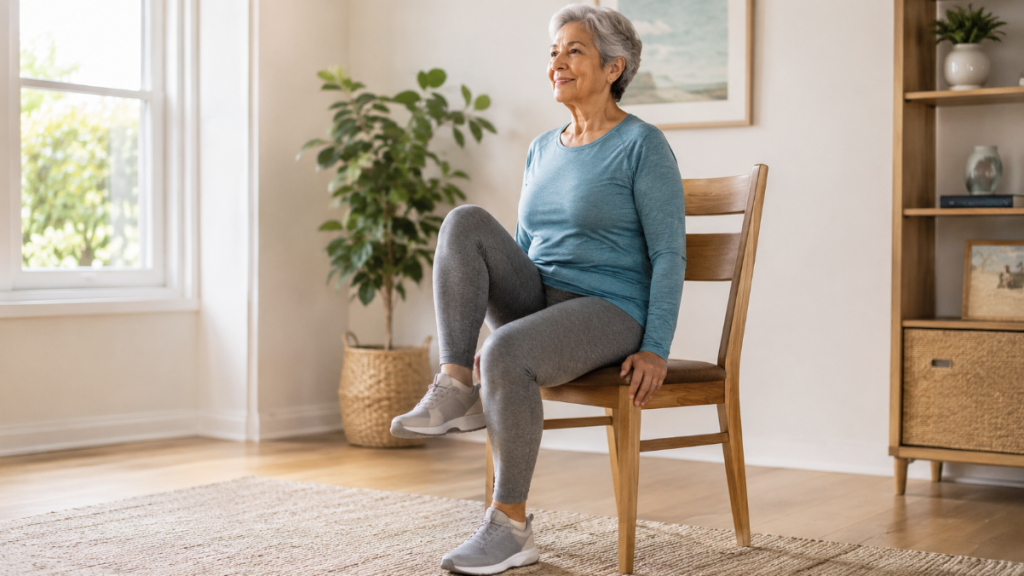
10 Best Chair Exercises for Seniors at Home
These beginner-friendly chair exercises can be done in a safe home space. Use a sturdy chair without wheels, sit tall, and move slowly.
- Seated marching
Sit tall with both feet flat on the floor. Lift one knee, lower it, then lift the other. Continue for 30–60 seconds. This warms up the hips and legs. - Seated knee lifts
Hold the sides of the chair. Lift one knee toward your chest as far as comfortable, then lower it. Repeat 8–10 times per side. - Ankle circles
Extend one foot slightly forward. Slowly circle the ankle in one direction, then the other. Repeat on both sides to support ankle mobility. - Heel and toe raises
Keep both feet on the floor. Lift your heels while keeping toes down, then lower. Next, lift your toes while keeping heels down. Repeat 10-15 times. - Seated leg extensions
Sit upright and extend one leg forward until the knee is straight but not locked. Hold briefly, then lower. Repeat 8–12 times per leg.
Seated Exercises for Seniors to Build Strength
- Chair squats
Stand in front of the chair with feet hip-width apart. Slowly lower toward the seat, lightly touch it, then stand again. Use support if needed. - Seated arm raises
Sit tall with arms at your sides. Raise both arms forward or out to the sides, then lower slowly. This helps shoulder strength and posture. - Seated side bends
Place one hand on the chair and reach the other arm overhead. Gently lean to the side, return to center, then switch. - Shoulder rolls
Roll your shoulders up, back, and down in a smooth circle. Repeat 8–10 times, then reverse direction. - Seated torso twists
Sit tall with feet flat. Turn your upper body gently to one side, return to center, then turn to the other side. Avoid forcing the twist.
These seated exercises for seniors work best with steady breathing and controlled movement instead of speed.
Best Seated Exercises for Seniors to Improve Mobility
Mobility exercises help joints move through a comfortable range of motion. They are useful in the morning, after sitting for a long time, or before a longer routine.
A simple mobility flow can include seated marching, ankle circles, shoulder rolls, and torso twists. Together, these movements wake up the hips, ankles, spine, and shoulders.
Start with 5 minutes. Add more time only when the body feels ready. A short daily routine is often easier to maintain than a long workout that feels tiring.
Good mobility supports everyday tasks such as standing from a chair, reaching for items, walking around the home, and getting in and out of bed. Chair exercises do not need to be intense to be useful. The key is consistency.
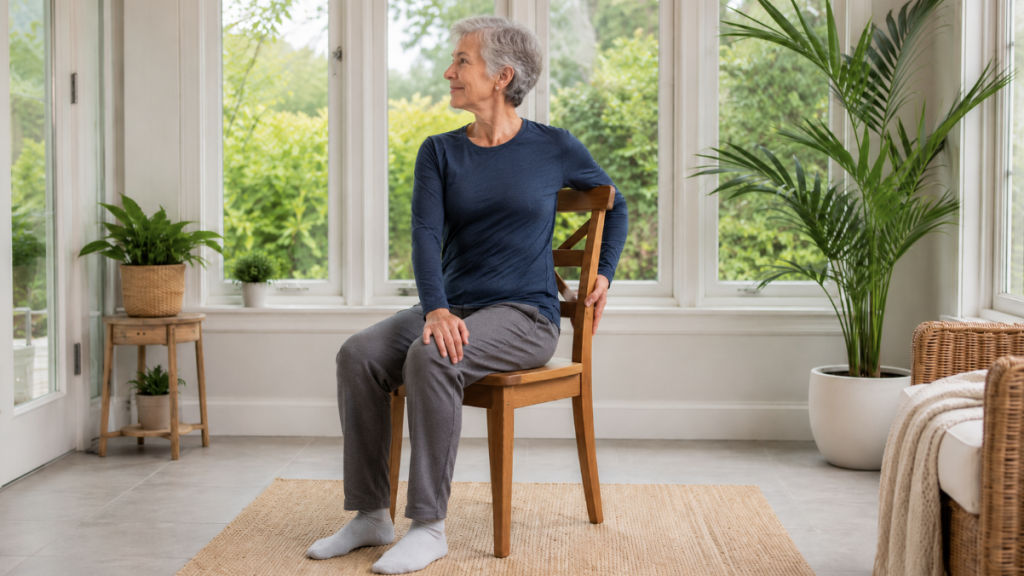
Chair Yoga Exercises for Seniors for Flexibility and Balance
Chair yoga exercises for seniors combine gentle stretching, breathing, posture, and balance support. They are a good option for people who want calm movement without getting down on the floor.
Chair yoga should feel gentle, not forced. The body should never be pushed into sharp pain or uncomfortable positions.
Gentle Chair Yoga Exercises for Seniors
Try these simple chair yoga movements:
Seated cat-cow stretch
Place hands on thighs. Inhale and gently lift the chest. Exhale and round the upper back slightly. Repeat 5–8 times.
Seated spinal twist
Sit tall, place one hand on the opposite thigh, and turn gently. Hold for a few breaths, then switch sides.
Seated forward fold
Slowly hinge forward from the hips, letting the hands rest on the thighs or knees. Keep the stretch mild.
Chair-supported side stretch
Reach one arm overhead and lean gently to the opposite side. Return to center and switch.
Seated breathing practice
Sit tall, relax the shoulders, and take slow breaths in and out for one to two minutes.
Chair yoga exercises can support flexibility, posture, breathing, and body awareness. Because a chair provides support, beginners can focus on balance and alignment with more confidence.
Safety Tips Before Starting Chair Exercises
Safety matters more than intensity. The best routine is one that feels controlled, comfortable, and repeatable.
How to Set Up a Safe Chair Exercise Space
Before starting, prepare your space:
- Use a stable chair without wheels
- Place the chair on a flat surface
- Wear comfortable clothing
- Keep feet flat when seated
- Move rugs or clutter out of the way
- Keep water nearby
- Use supportive shoes if standing
Avoid chairs that slide, fold easily, or feel too low.
When to Slow Down or Stop
Stop exercising if you feel dizzy, short of breath, faint, unusually weak, or experience sharp pain. Mild effort is normal. Pain or discomfort that feels sudden or intense is not.
Move at your own pace. It is fine to skip an exercise, reduce repetitions, or rest between movements. For a deeper home routine, this guide to chair exercises for seniors can help beginners build a simple weekly plan.
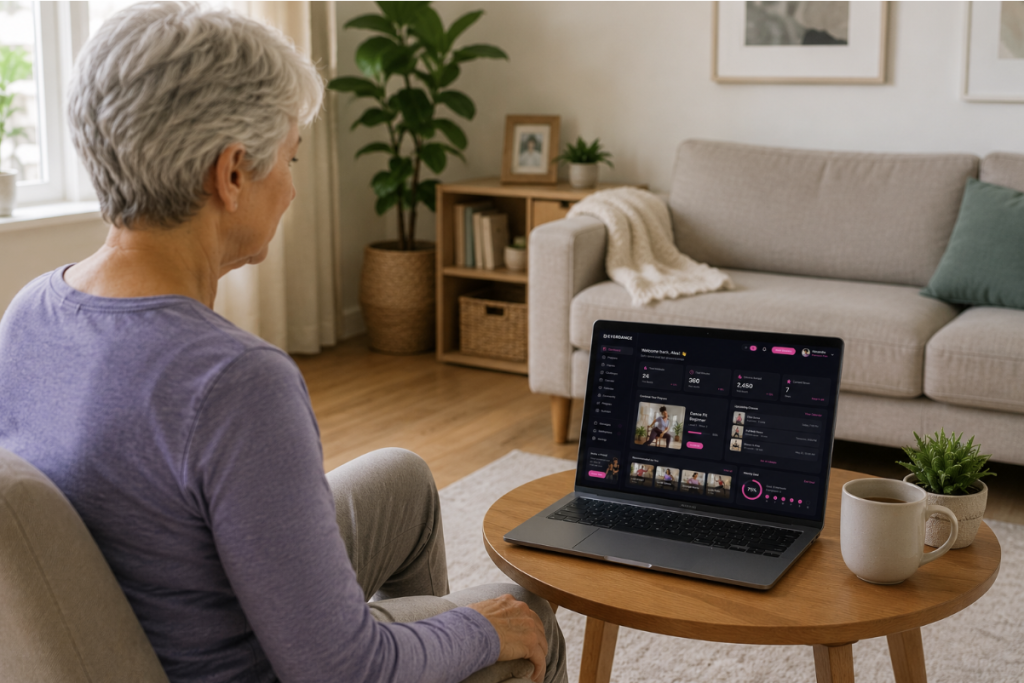
Simple Weekly Chair Exercise Plan for Seniors
A weekly plan helps create structure without making movement feel overwhelming. Beginners can start with 10–15 minutes per session.
Beginner-Friendly 15-Minute Routine
Use this simple weekly schedule:
Monday: Mobility and stretching
Tuesday: Seated strength movements
Wednesday: Rest or light walking
Thursday: Chair yoga
Friday: Full 15-minute seated routine
Saturday: Gentle movement or chair dance
Sunday: Rest and recovery
A full 15-minute routine could include seated marching, ankle circles, leg extensions, arm raises, shoulder rolls, side bends, and breathing practice.
How Often Seniors Can Do Chair Exercises
Many seniors can do chair exercises three to five times per week, depending on comfort, energy, and personal health. Some may prefer short daily sessions. Others may need more rest days.
The best schedule is one that feels sustainable. Progress can be simple: better posture, easier standing, smoother walking, or feeling more confident during daily tasks.
Conclusion
Chair exercises are a simple, safe, and practical way for older adults to stay active at home. They can support strength, flexibility, balance, mobility, posture, and confidence without requiring expensive equipment or a gym membership.
The best approach is to start slowly, use a stable chair, breathe steadily, and choose movements that feel comfortable. Over time, small sessions can become a meaningful part of a healthier daily routine. Chair exercises for seniors work best when they are consistent, gentle, and adapted to the person doing them.
Author

Written by
Recent Posts
Unlocking the Berkshires
Dalia Forman Design

Alberto Luzzi
How to Pick a Homecoming Dress for Your Body Type and Feel Amazing in It
How to Prepare a Home for Sale When Major Repairs Are Not Affordable
Categories
- Art
- Articles
- Business of Luxury
- Celebrities
- Culture
- Entertainment
- Events
- Faces of Summer 2026
- Fashion
- Fashion & Style
- Featured
- Finance
- Food, Spirits, Wine
- Hamptons
- Hamptons Celebrities
- Health
- Health & Beauty
- Lifestyle
- Luxury Lifestyle
- Press
- Profiles
- Real Estate
- Technology
- The Chronicles
- Travel
- Uncategorized
- Weddings