
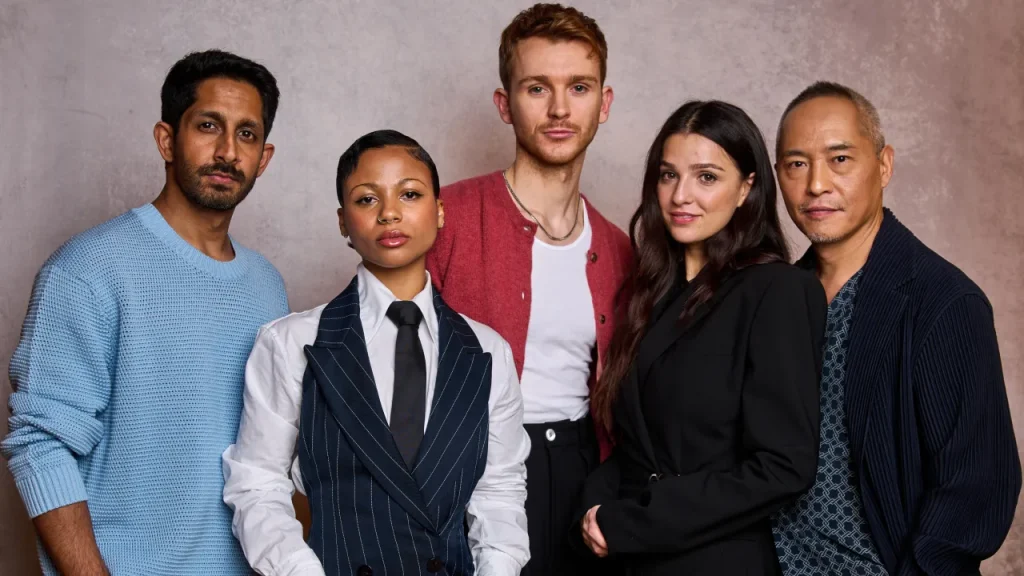
Industry fashion power dressing isn’t about looking good. It’s about signaling where you come from, who you’re aligned with, and how much you’re willing to spend to prove you belong. Costume designer Laura K. Smith, who has dressed the show since Season 3, approaches every character’s wardrobe as a form of communication — and sometimes a form of warfare. “I thought a lot about inheritance this season,” she told Marie Claire. “What’s the information that’s been passed down to you, and how do you wear it?”
That question drives every outfit decision on the show. Harper’s three-piece bespoke suit in the Season 4 premiere isn’t just a costume change. It’s a declaration that the woman who once wore Theory separates from T.J. Maxx now has a tailor. Yasmin’s Balmain military jacket isn’t just fashion-forward styling. It’s a signal that she’s done being underestimated and has started dressing to command. The Industry fashion power dressing system works because the show treats clothing the way real finance professionals treat it: as a language that everyone speaks but nobody acknowledges learning.
Harper Stern: Dressing Like a Weapon
Harper’s wardrobe evolution across four seasons tracks her entire character arc. In Season 1, she’s a graduate in affordable separates — clean lines, dark colors, nothing that attracts attention. She’s hiding. The clothes say: don’t look too closely. Theory blazers and basic trousers form her daily armor. Her costume designer for the early seasons, Colleen Morris, dressed Harper in new money brands — not flashy, not cheap, existing in the careful middle ground of someone who wants to appear professional without revealing that she’s figuring out what professional looks like.
Season 2 continued the education. Harper started mimicking the people around her. Laura K. Smith identified this as central to the character: “Harper is processing all the time. She talks about it in Season 1 a lot. If Yasmin had a Cartier watch, then Harper had one at some point later in the season.” The mimicry is strategic. Harper studies old money and copies its signals the way she studies trading patterns and copies their logic. She acquired a Cartier Santos — the same model worn by Otto Mostyn, the old-money power broker. Smith called it “a badge of certainty — it says, ‘I can be here.'”
The Season 4 Transformation
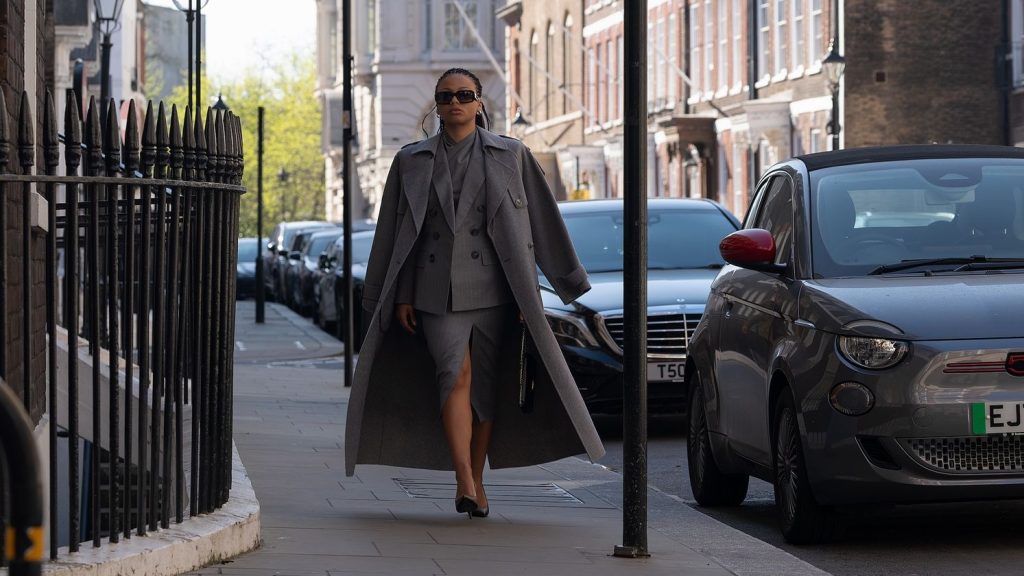
When Harper steps out of a chauffeured car in the Season 4 premiere wearing a knockout three-piece skirt suit with peaked shoulders, the message is unmistakable. This is a completely different person. The suit was custom-made with a crisscrossing top. She pairs it with Roger Vivier thigh-high leather boots — a choice Smith acknowledged as unusual for a morning commute, but entirely consistent with Harper’s appetite for risk.
The Season 4 wardrobe expands into territory Harper never occupied before. A David Koma tulle crinoline dress for a costume party. A JPG x Levi’s conical bra denim jacket. A Fleur du Mal zip bustier top. An 18th-century corset sourced from a period costume house. Completed Works gold thread earrings. Smith described the evolution as Harper entering “her dom era” — a femininity layered over the aggression she’s always carried. The Industry fashion power dressing for Harper works because the clothes don’t soften her. They weaponize her.
In Episode 5, when Harper learns of her estranged mother’s death, she wears a simple black V-neck cardigan and ultra-baggy carpenter jeans. It’s the most vulnerable outfit she’s worn in four seasons. Smith deliberately relaxed the costumes in this scene to match the emotional register. The contrast between the three-piece suit and the carpenter jeans tells the audience everything they need to know about who Harper is performing for and when she stops performing.
Yasmin: Role-Playing the Aristocracy

Yasmin’s Industry fashion power dressing journey is the inverse of Harper’s. Where Harper climbs toward sophistication, Yasmin descends into costume. Smith described Yasmin’s wardrobe philosophy bluntly: “Yasmin is essentially role-playing being a banker.” Her early-season silky blouses and pencil skirts followed a template that some banks literally mandated — heels and a skirt, no exceptions.
In Season 2, when Yasmin transferred to private wealth management, her wardrobe sharpened. Trouser suits. Shirts buttoned to the collar. She was dressing to be taken seriously in a department that demanded seriousness. Then Season 3 brought the collapse of her father’s fortune, and with it, the collapse of Yasmin’s carefully maintained image. She showed up to work wearing the same outfit two days in a row — a detail that Smith deliberately included to signal that the facade was cracking.
Lady Muck’s Two Wardrobes
Season 4 gives Yasmin a split identity reflected in two distinct wardrobes. At Muck Manor — Henry’s country estate — she wears the countryside palette: chocolates, burgundies, camel. Tweed and houndstooth. Barbour jackets and hunting vests. Heritage brands like Farlows for fair isle knits. She performs old money the way a method actor performs a character: total immersion, zero natural instinct.
In London, the wardrobe shifts. The military-style Balmain jacket from the Season 4 premiere — gold accents, strong shoulders, regimented structure — announced a Yasmin who has stopped dressing to be admired and started dressing to intimidate. Grazia read the jacket as character coding rather than fashion: “It signals a shift towards control and authority, moving away from the softer, more sensual dressing we’ve seen from her before.”
Smith explained that old money has a specific visual language — “there’s a kind of conformity and a set of visual language that she had to understand; they have a very particular language and expectation within the constituency of how a spouse is meant to behave.” Yasmin masters this language faster than she mastered banking. That’s the point. The Industry fashion power dressing for Yasmin reveals that she was always better at performing identity than performing finance.
The Supporting Cast: Eric’s Armor, Sweetpea’s Pink Suit, Robert’s Black Funeral

Eric Tao wears suits as literal armor. Smith discussed this with Ken Leung directly: “He sort of said that his suiting always feels like a suit of armor.” The most meme-able look in the show’s history was Eric’s bright purple Pierpoint corporate hoodie — a piece that HBO’s marketing team later capitalized on by selling Pierpoint merchandise. The hoodie works because it’s the only moment Eric drops the armor. He’s off the clock, at home, in a branded sweatshirt. The vulnerability of the outfit contrasts so sharply with his trading floor presence that the internet turned it into a joke. The joke works because it’s true.
Sweetpea’s Fashion Insurgency
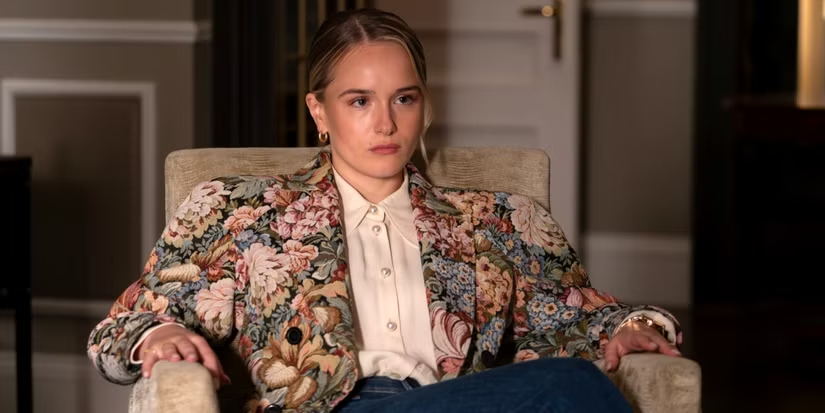
Sweetpea Golightly’s Industry fashion power dressing operates differently from every other character. Where Harper mimics and Yasmin conforms, Sweetpea subverts. Her candy-colored tailoring in the Season 4 premiere — a pink suit with a vintage Miu Miu top underneath — sends up the conventions rather than obeying them. Smith described a deliberate “Clueless vibe.” Sweetpea wears Bottega Veneta shoes, Valentino dresses, Sezane jackets, and Kenzo suit pieces. She can afford these brands because of undisclosed income from online “extracurriculars” — a plot point the show treats with characteristic ambiguity.
Robert Spearing’s fashion journey begins with the show’s most cutting line. In the pilot, someone tells him his black suit makes him look like an undertaker. The insult lands because it identifies exactly what Robert is doing wrong: he’s wearing the right garment in the wrong color because nobody taught him the rules. An Hermès tie, the show’s costume team confirmed, functions as the essential status symbol for insiders. By Season 2, Robert owns one. The tie doesn’t change who he is. It changes how the institution sees him.
The Real Finance Dress Code Industry Gets Right
The Industry fashion power dressing system works because it reflects real City of London and Wall Street conventions with uncomfortable accuracy. In actual investment banks, the dress code communicates three things simultaneously: your seniority, your department, and your relationship to the firm’s cultural norms.
Junior analysts wear dark navy or charcoal suits. Nobody wears black — that’s for funerals and outsiders, as Robert learned in the pilot. The fabric quality escalates with seniority. First-year analysts wear off-the-rack from Charles Tyrwhitt or TM Lewin. Associates upgrade to Reiss or Hugo Boss. Vice presidents graduate to Canali or Corneliani. Managing directors wear whatever they want because nobody is going to comment on what a managing director wears.
The women navigate an even narrower corridor: feminine enough to signal confidence, conservative enough to avoid comment, expensive enough to prove they belong. An expensive watch is acceptable. Visible logos are not. The codes are never written down. They’re absorbed through observation, exactly as Harper absorbs them on the show. Smith’s insight that “Harper is processing all the time” applies to every real analyst sitting on a trading floor, scanning colleagues’ wrists for watch brands and lapels for fabric quality.
The Hermès Tie and Other Signals
The show’s costume team confirmed that a Hermès tie functions as the essential status symbol for those who know what they’re looking for. The tie costs approximately £185. It signals nothing to a civilian. To a fellow banker, it says: I understand the codes. I can afford the entry price. I belong here. Robert acquires one by Season 2. The acquisition marks his transition from outsider to insider more definitively than any promotion or bonus could.
Watches carry even heavier symbolic weight. In the City of London, an IWC Portugieser says “banker.” A Rolex Submariner says “trying too hard.” A Patek Philippe says “family money.” A Cartier Santos — the watch Harper acquires by mimicking Otto Mostyn — says “old money, or someone who studies old money closely enough to copy it.” Smith’s decision to give Harper that specific watch is one of the most precise details in the show’s visual language.
The stealth wealth phenomenon that TikTok calls “quiet luxury” or “corp-core” has its roots in these unspoken conventions. Industry didn’t invent the aesthetic. It decoded it for an audience that finds it fascinating precisely because the rules are designed to exclude anyone who needs them explained.
The Men: Henry’s Smoking Jacket and Whitney’s American Uniform
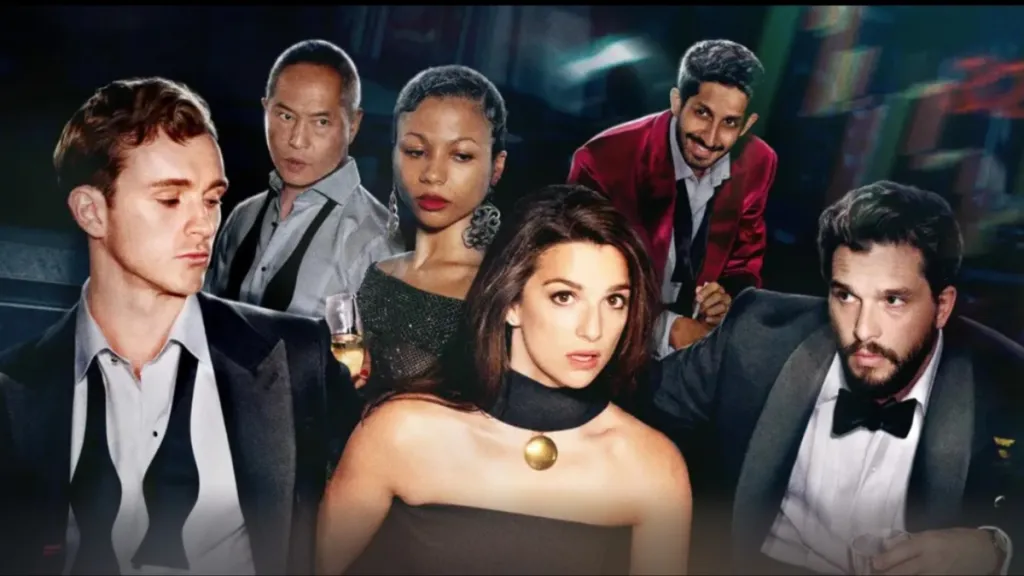
The Industry fashion power dressing conversation often focuses on Harper and Yasmin, but the male characters’ wardrobes carry equally precise signals. Kit Harington’s Henry Muck wears vintage smoking jackets and country estate tweeds that broadcast inherited wealth so loudly they might as well be monogrammed. His wardrobe comes from the closets of a family that has dressed the same way for generations. Nothing is new. Nothing is trendy. Everything is worn-in, inherited, and expensive in ways that require knowledge to recognize.
Max Minghella’s Whitney Halberstram wears the American tech executive uniform: clean shirts, minimal ties, Patagonia vests layered over button-downs. The wardrobe signals disruption — or at least the performance of disruption. Whitney dresses like someone who has read about what Silicon Valley founders wear and adopted the costume without the culture. He’s performing startup energy in a British finance context that doesn’t trust it. The tension between his American casualness and the City of London’s formality mirrors his character’s position: an outsider running a con that depends on looking like he belongs.
Laura K. Smith: The Architect Behind the Armor
Smith’s approach to Industry fashion power dressing centers on character psychology rather than trend forecasting. She builds each character’s wardrobe from the inside out. What do they want, what are they hiding, what have they inherited — from parents, mentors, or social class — and how does that inheritance appear on their body?
The process begins with research. Smith studies how real finance professionals dress. She visits trading floors. She reads fashion forums where City workers discuss suit brands and tie choices. Then maps each character’s financial position against their wardrobe budget — Harper in Season 1 can’t afford the same brands as Yasmin, and the difference has to read on screen without being explained in dialogue. By Season 4, when Harper’s fund is generating real money, the wardrobe budget expands to reflect her new reality. The Roger Vivier boots aren’t a costume choice. They’re a character development expressed through footwear.
For Harper, the inheritance is learned rather than given. She studies Eric’s suit and copies Yasmin’s watch. She acquires Roger Vivier boots after observing women who wear them naturally. Every fashion choice is a strategic decision made by a character who learned early that appearance determines access. Smith described the dynamic to Marie Claire: “Harper has never worn high heels because she hasn’t had the license or the luxury to do so, but she’s seen Yasmin wear them and taken note.”
For Yasmin, the inheritance is literal. She was born into wealth, trained in its visual codes, and now must deploy those codes in a new context — as Lady Muck, wife of a struggling aristocrat. Her Industry fashion power dressing shifts from aspiration to obligation. She doesn’t dress to climb anymore. She dresses to maintain a position she married into rather than earned.
The Second Screenplay
Smith told The Set Set: “We haven’t ever had a woman like Harper represented on screen. It’s really fun to watch — and it’s a lot of fun to dress her.” The fun shows. Every outfit on Industry tells a story that the dialogue doesn’t need to repeat. And for viewers who understand the codes — who know what a Cartier Santos signals versus a Rolex Submariner, who can read the difference between Balmain shoulders and Barbour tweed — the Industry fashion power dressing operates as an entire second screenplay running beneath the one the actors speak aloud.
Related Articles
Industry HBO: The Complete Guide to TV’s Most Dangerous Finance Drama
Marisa Abela Net Worth: The Civil Rights Lawyer Who Became Amy Winehouse
Myha’la Net Worth: The Girl Who Faked It Until She Made It
Harper’s Fake Transcript: The Lie That Built an Empire
Tender Explained: The Real Fintech Scandals Behind Industry
Stay Connected
If you read Industry fashion power dressing breakdowns and stayed for the class analysis, that’s what Social Life Magazine delivers. Twenty-three years of decoding the visual language of ambition, status, and the Hamptons.
Feature your brand in Social Life Magazine — contact us at sociallifemagazine.com/contact.
Guaranteed digital placement starts at $975 via our Submit A Paid Feature page.
Join 82,000+ readers at sociallifemagazine.com.
Polo Hamptons returns July 18 and 25, 2026. BMW title sponsor. The field is where the dress code matters most.
Print subscriptions at sociallifemagazine.com/subscription.
Support independent publishing: donate here.
Author

Written by
Recent Posts

Galina Breslav: From Pension Fund to Executive Presence
Hermès Fake Authenticator: A Monopoly Mistaken for Expertise
A Real Gift: How La Scala Found Its Community in New York Through the Teatro alla Scala Association of America (TASAA)

He Sold His Company, Got Everything He Wanted, but Lost His Purpose

OUT OF LINE
Categories
- Art
- Articles
- Business of Luxury
- Celebrities
- Culture
- Entertainment
- Events
- Faces of Summer 2026
- Fashion
- Fashion & Style
- Featured
- Finance
- Food, Spirits, Wine
- Hamptons
- Hamptons Celebrities
- Health
- Health & Beauty
- Lifestyle
- Luxury Lifestyle
- Press
- Profiles
- Real Estate
- Technology
- The Chronicles
- Travel
- Uncategorized
- Weddings