
Puffy is not too soft for most side sleepers, but there are still a few things side sleepers should test before buying. Your shoulders and hips need enough cushioning to relieve pressure, while your body still needs stable support so you do not sink too deeply. Your lower back needs to feel supported, and the mattress should let you change positions easily without making you feel stuck.
Puffy aims to strike a balance between a plush feel and supportive comfort, which may appeal to side sleepers looking for more cushioning without giving up support.
So, is Puffy the right mattress for side sleepers?
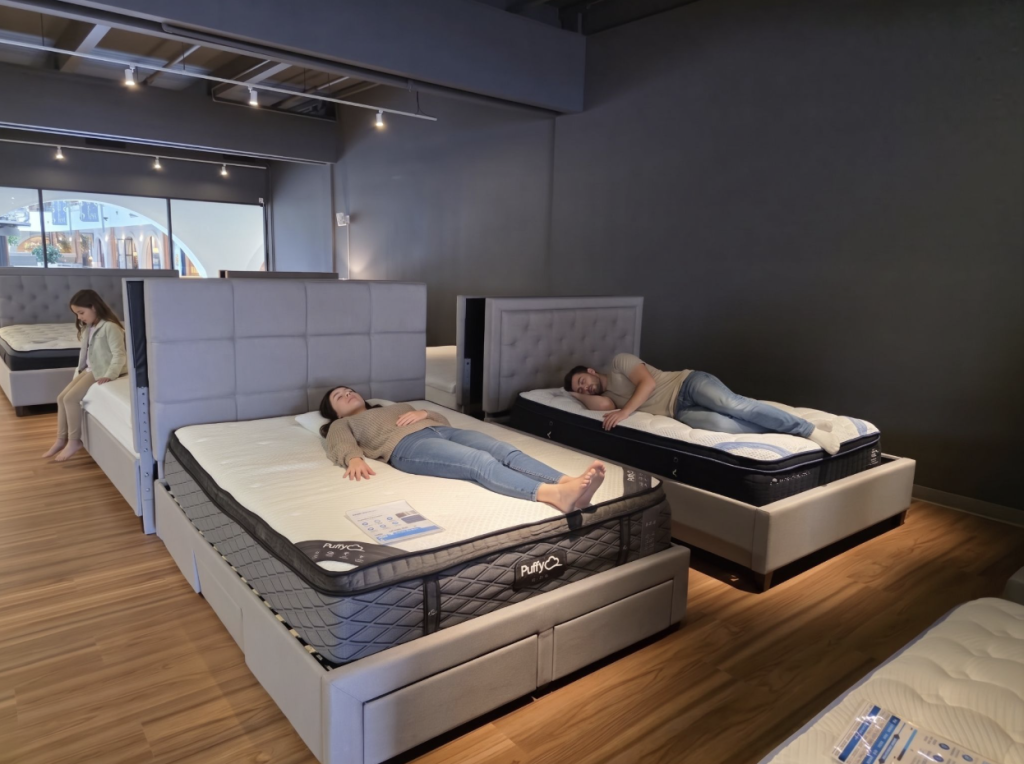
What Does “Too Soft” Actually Mean for a Side Sleeper?
“Soft” and “poorly supported” are not the same thing.
A mattress can have a cushioned surface while still providing support underneath your body. The important question is what happens once you settle into it.
Side sleepers put more pressure on the shoulders and hips because those areas come into contact with the mattress at different points than they would when sleeping on the back. A mattress that is too firm may create pressure around these areas. A mattress that is too soft may allow the body to sink too deeply.
You want your shoulder and hip to have enough room to sink into the mattress comfortably. At the same time, your body should not feel as though it is disappearing into the surface.
This is why “too soft” is not simply about how plush a mattress feels when you first lie down. It is also about sinkage, spinal alignment, ease of movement, and overall support.
Why Puffy Can Feel Different to Different Side Sleepers
A mattress does not feel the same to everyone, even when two people sleep in the same position. One side sleeper may find Puffy comfortably plush, while another may feel that they are sinking in more than they would like. Several factors can change how the mattress feels and understanding these differences can help explain why the same mattress may feel supportive to one sleeper and too soft to another.
Body weight
A petite sleeper may not sink as deeply into the comfort layers and may experience a different feel from someone with a heavier body type. An average-weight sleeper may experience the mattress closer to its intended feel, while a heavier sleeper may compress the upper layers more deeply.
That does not automatically make a mattress right or wrong for a particular body type. It simply means that the same mattress can feel different from one person to another.
Sleeping position
A dedicated side sleeper may have different needs from someone who moves between several positions during the night.
If you sleep on your side and back, for example, you may want a feel that works in both positions. Someone who regularly rotates between side and stomach sleeping may have different preferences again.
How often you change positions also matters. A mattress that feels wonderfully cushioned when you first lie down may feel less appealing if you have trouble rolling over or repositioning.
Personal preference
Firmness is subjective.
One sleeper may describe a mattress as plush. Another may call the same mattress supportive. Someone else may find it too soft.
That is why a firmness label cannot tell you everything. Your own body and sleeping habits are more useful guides.
What Side Sleepers Should Test on a Puffy Mattress
If you are considering Puffy, do not simply lie down for 30 seconds and decide whether it feels comfortable. Give yourself enough time to notice what is happening underneath your body.
Test 1: Shoulder pressure
Start by lying on your side for several minutes.
Pay attention to your shoulder.
- Does it feel compressed?
- Do you notice pressure building after a few minutes?
- Can you relax your shoulder completely?
If the mattress feels too firm around your shoulder, you may notice discomfort fairly quickly. If it provides enough cushioning, your shoulder should be able to settle into the surface without creating a pressure point.
Test 2: Hip cushioning
Next, focus on your hip.
Your hip should be able to settle into the mattress without making you feel as though the rest of your body is sinking with it.
Notice whether your hip feels supported and comfortable. If you feel excessive sinkage around the middle of your body, that is worth paying attention to.
Test 3: Spinal alignment
Your spine is one of the most important things to consider.
If possible, have someone look at your sleeping position from behind while you lie naturally on your side. Your body should not appear dramatically curved because the mattress is allowing one part of you to sink much farther than another.
This does not require a complicated test. You are simply checking whether the mattress allows you to settle into a comfortable, neutral position.
Test 4: Ease of movement
Roll from one side to the other. Change positions the way you normally would during the night.
Ask yourself:
- Can I roll over easily?
- Do I feel stuck in the mattress?
- Does the surface recover quickly enough for me to move comfortably?
A plush mattress can feel inviting at first, but if you have to work against it every time you reposition, the feel may not suit you.
Test 5: Edge support
Finally, sit and lie near the edge of the mattress.
This can be especially useful for couples or anyone who regularly uses the full sleeping surface. You want to know how stable the mattress feels when you are close to its edge, not just how comfortable it feels in the middle.
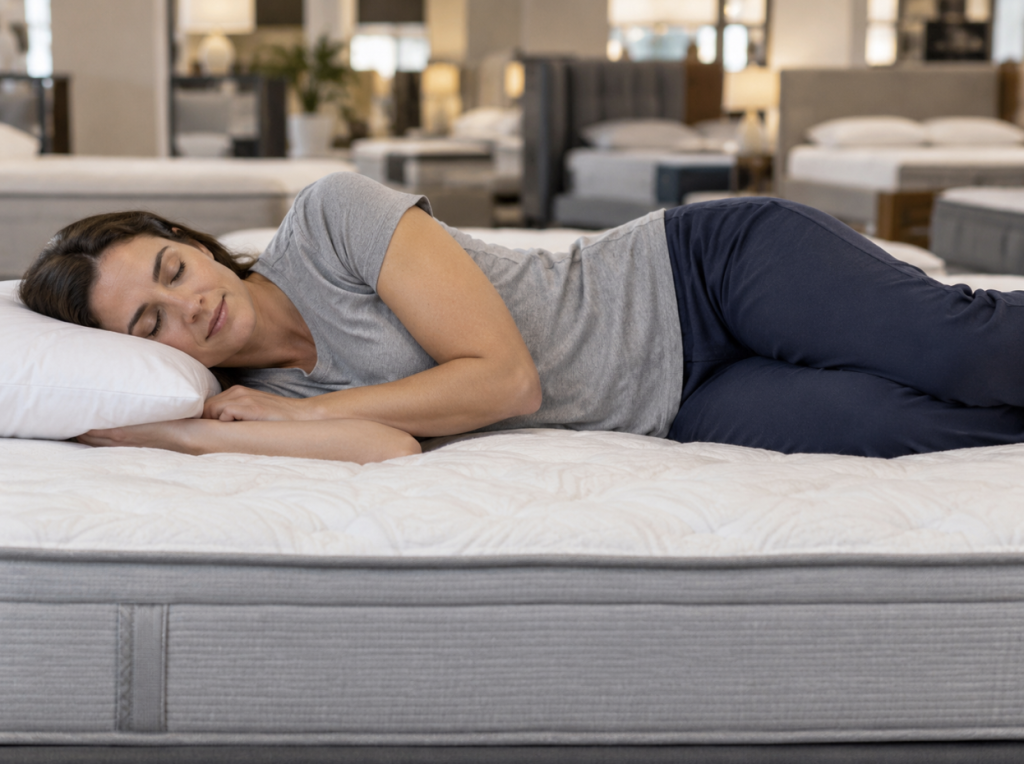
The Puffy Test: A 10-Minute Side-Sleeper Checklist
If you are testing a Puffy mattress in a showroom, give yourself about 10 minutes instead of making a decision after a quick lie-down.
Before you start, think about how you normally sleep. If possible, use the type of pillow you usually sleep with and wear comfortable clothing that does not interfere with the test.
Then work through the following:
Minute 1–2: Shoulder pressure
Lie on your side and focus on your shoulder. Does it feel cushioned or compressed?
Minute 3–4: Hip comfort
Notice how your hip settles into the mattress. Is the cushioning comfortable without excessive sinkage?
Minute 5–6: Spinal position
Pay attention to your overall body position. Does your spine feel naturally aligned?
Minute 7–8: Movement
Roll over and change positions. Do you feel free to move, or does the mattress make repositioning difficult?
Minute 9–10: Overall comfort
Stop analyzing every individual feature and ask yourself how the mattress feels as a whole.
Then ask one simple question:
Would I want to sleep like this for eight hours?
That is a much more useful test than deciding whether a mattress “feels nice” after half a minute.
Should Side Sleepers Buy Puffy Without Trying It?
Buying online can still make sense. It is convenient, the mattress can be delivered to your home, and a home trial may give you more time to evaluate the mattress than a short showroom visit.
But if you buy without testing the mattress first, understand the current trial and return terms before placing your order.
Check the trial length, return conditions, pickup arrangements, refund process, warranty, and any exclusions. These details can change, so they should always be confirmed before buying.
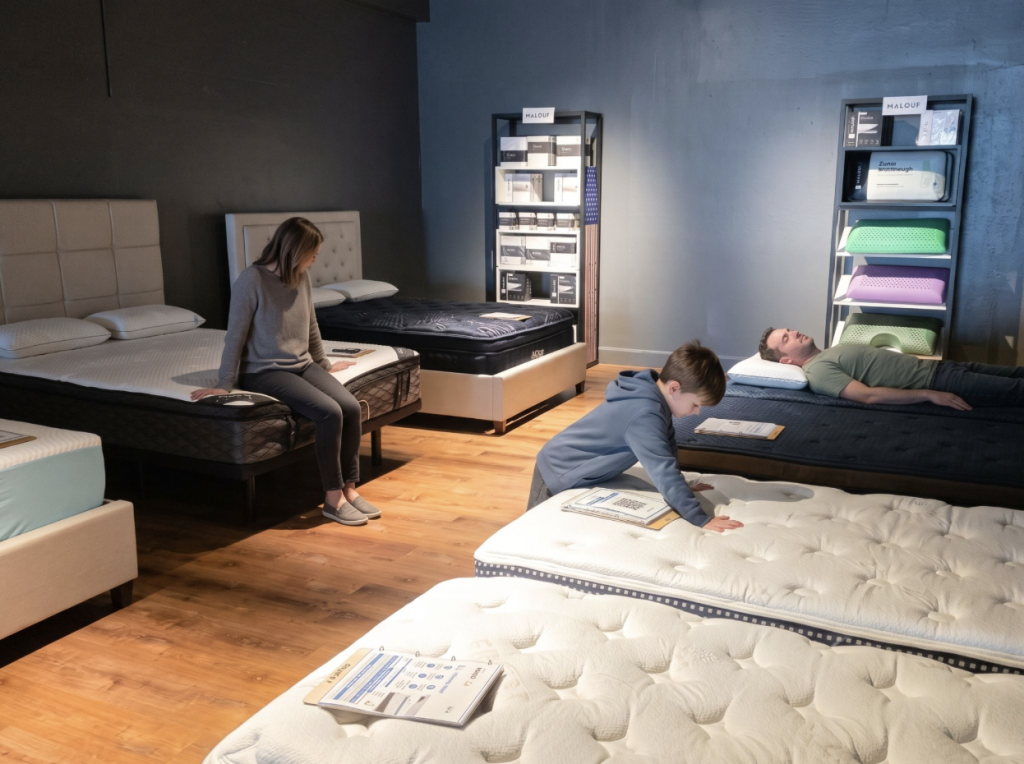
If you have access to a showroom where you can try a Puffy mattress in person, that can also help you understand whether the feel matches your expectations before ordering.
FAQ
Is Puffy a good mattress for side sleepers?
Puffy may work well for side sleepers who prefer cushioning around the shoulders and hips. Whether it is right for you depends on your preferred firmness, body weight, sleeping position, and support needs.
Is Puffy too soft for side sleepers?
It can feel too soft for some sleepers, particularly those who prefer minimal sinkage or a firmer surface. Others may find the cushioning comfortable and supportive.
How firm should a mattress be for side sleeping?
There is no single firmness level that works for every side sleeper. The mattress should provide enough cushioning for the shoulders and hips while allowing you to maintain a comfortable, supported sleeping position.
How can I tell if my mattress is too soft?
Look for excessive sinkage, difficulty changing positions, a feeling of being stuck, or a lack of support. Your shoulders and hips should feel cushioned without your body sinking excessively into the mattress.
Does body weight affect how soft Puffy feels?
Yes. Body weight can affect how deeply you compress a mattress and therefore how soft or supportive it feels. This is one reason personal testing can be useful.
Should side sleepers choose a soft or medium mattress?
That depends on personal preference and body type. Some side sleepers prefer a plush feel for pressure relief, while others prefer a firmer surface with less sinkage.
Can I test a Puffy mattress before buying?
If a local showroom or retailer carries the mattress, you may be able to test it in person. Check availability before visiting and confirm the specific model you want to try.
Conclusion
So, is Puffy too soft for side sleepers?
The right feel depends on your body weight, sleeping position, firmness preference, and how much cushioning and support you need.
Instead of judging the mattress by its surface feel alone, test the things that matter while you are actually lying on your side. Pay attention to shoulder and hip pressure, sinkage, spinal alignment, movement, edge support, and overall comfort.
For side sleepers, the right mattress is not necessarily the softest one. It is the one that cushions your pressure points while still supporting the way you actually sleep.
Author

Written by
Recent Posts
Co-Owned Property Disputes in Southern California: What to Know Before You Sell, Buy Out, or Go to Court
Is Puffy Too Soft? What Side Sleepers Should Test

Beyond the Theme Parks: How to Plan a Pigeon Forge Vacation Your Kids Will Actually Remember
What Parents Should Know About HIE Birth Injury Claims in Chicago
When a Serious Injury Changes How You Handle Everyday Activities
Categories
- Art
- Articles
- Business of Luxury
- Celebrities
- Culture
- Entertainment
- Events
- Faces of Summer 2026
- Fashion
- Fashion & Style
- Featured
- Finance
- Food, Spirits, Wine
- Hamptons
- Hamptons Celebrities
- Health
- Health & Beauty
- Lifestyle
- Luxury Lifestyle
- Press
- Profiles
- Real Estate
- Technology
- The Chronicles
- Travel
- Uncategorized
- Weddings