

This pattern defines McCaleb’s life: build something revolutionary, watch it collapse or get attacked, walk away, build something bigger. Mt. Gox handled 80% of all Bitcoin trades before losing 850,000 BTC in a hack. Ripple became a $100 billion payment network that he abandoned over disagreements. Stellar emerged to bank the unbanked. Now he’s building space stations. Jed McCaleb net worth 2025 stands at approximately $2.9 billion, accumulated across more reinventions than most people attempt in a lifetime.
Jed McCaleb Net Worth 2025: The Serial Builder
Born June 8, 1975, in Fayetteville, Arkansas, McCaleb grew up in Little Rock, surrounded by technology from an early age. UC Berkeley admitted him, but he dropped out to build. The classroom couldn’t compete with the code he wanted to write.
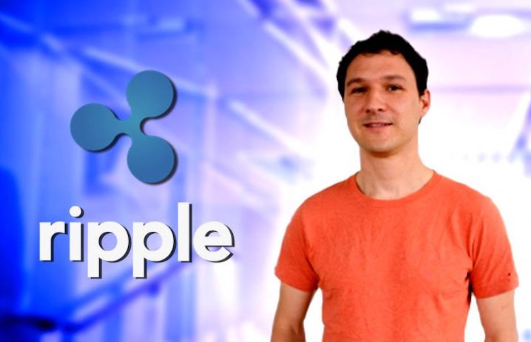
The eDonkey Era
In 2000, McCaleb founded MetaMachine and released eDonkey2000, a peer-to-peer file-sharing application that let users trade large files directly. At its peak, over four million people used the network simultaneously. According to Harvard Business Review, decentralized file sharing represented the first major challenge to centralized content distribution, previewing the blockchain disruption that would follow.
The RIAA didn’t appreciate the preview. In 2006, MetaMachine agreed to pay $30 million to avoid copyright infringement lawsuits. The settlement destroyed the company. McCaleb learned that building revolutionary technology attracts powerful enemies. He also learned that settlements aren’t convictions. Walk away. Build again.
The Accidental Exchange
In 2007, McCaleb purchased the domain Mtgox.com, originally intending to create a trading site for Magic: The Gathering cards. The name stood for “Magic: The Gathering Online Exchange.” He abandoned that idea but kept the domain.
When he discovered Bitcoin in 2010, McCaleb repurposed Mt. Gox as a cryptocurrency exchange. The platform grew explosively, eventually handling 70-80% of all global Bitcoin trading volume. Then he made a fateful decision: in February 2011, McCaleb sold Mt. Gox to Mark Karpelès, staying on as a minority owner.
The Mt. Gox Collapse: When History Caught Fire
Three years after McCaleb’s departure, Mt. Gox imploded. In February 2014, the exchange announced that hackers had stolen approximately 850,000 Bitcoin, worth roughly $700 million at the time and billions by today’s prices. The company filed for bankruptcy. Customers lost everything.
The Legal Aftermath
Lawsuits named McCaleb, alleging he knew of security vulnerabilities before selling. He denied the accusations. The distance of three years between his departure and the collapse complicated claims of direct responsibility. According to McKinsey & Company, early crypto exchanges universally lacked the security infrastructure that institutional finance requires. Mt. Gox wasn’t unique in its vulnerabilities, just in its scale.
McCaleb had already moved on. While Mt. Gox was collapsing, he was building something new.
Ripple: The Banking Revolution He Abandoned
In 2011, while still involved with Mt. Gox, McCaleb began developing a digital currency that didn’t rely on Bitcoin’s energy-intensive mining. Instead, transactions would be verified by consensus among network members. The protocol became Ripple.
The Founding Team
McCaleb recruited David Schwartz and Arthur Britto, then brought in Chris Larsen as CEO. The company, originally called OpenCoin, aimed to transform cross-border payments for banks and financial institutions. Ripple was faster and cheaper than traditional wire transfers. According to Boston Consulting Group, cross-border payment friction costs the global economy hundreds of billions annually, creating the opportunity Ripple targeted.
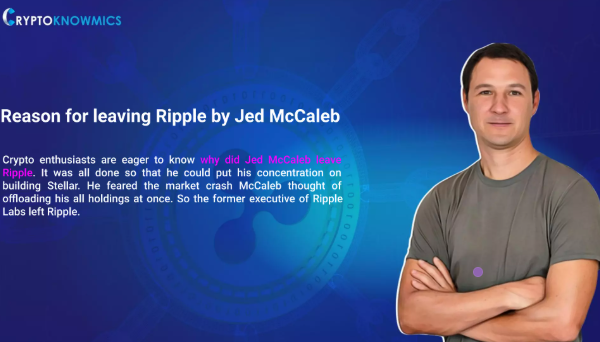
As a co-founder, McCaleb received 9% of all XRP tokens, billions of coins that would eventually be worth billions of dollars. However, he departed in July 2013 after disagreements with other founders about the company’s direction. The departure would become one of crypto’s longest-running dramas.
The XRP Selling Saga
In 2014, McCaleb announced plans to sell his entire XRP holdings. The market panicked. XRP’s price dropped 40% overnight on fears of supply flooding. Ripple negotiated restrictions: McCaleb could sell only limited amounts per week, gradually increasing over years.
The selling continued until 2022, when McCaleb finally exhausted his allocation. According to tracking by crypto analysts, he netted billions of dollars from the gradual liquidation. His “Tacostand” wallet became one of crypto’s most-watched addresses, with each transaction triggering market speculation.
Stellar: Banking the Unbanked
In 2014, McCaleb co-founded the Stellar Development Foundation with Joyce Kim. Where Ripple targeted banks, Stellar targeted the people banks wouldn’t serve. The non-profit aimed to facilitate cross-border transactions for the unbanked and underbanked, particularly in developing countries.
The Mission Shift
Stellar’s payment network initially used the Ripple protocol McCaleb had helped create. By 2015, the foundation had developed its own Stellar Consensus Protocol, distinguishing itself technically from its predecessor. The native cryptocurrency, lumens (XLM), grew to a market cap exceeding $8 billion.
IBM partnered with Stellar in 2017 to launch blockchain banking in the South Pacific. The partnership validated McCaleb’s vision of financial inclusion through decentralized technology. According to Bain & Company, blockchain-based payment systems can reduce transaction costs by 40-80% compared to traditional banking, making them viable for populations previously excluded from financial services.
The Lightyear Acquisition
In 2017, McCaleb launched Lightyear.io, a commercial entity building on the Stellar network. The following year, Lightyear merged with Chain.com to form InterStellar. The New York Times named McCaleb one of the top 10 people leading the blockchain revolution in 2018. The dropout from Arkansas had become an industry architect.
Vast: From Crypto to the Cosmos
In 2021, McCaleb made his most dramatic pivot yet. He founded Vast, an aerospace company with an audacious goal: building artificial gravity space stations. The crypto billionaire was now chasing the stars.
The Haven-1 Mission
Vast’s Haven-1 is a commercial space station under construction, scheduled to launch into orbit by May 2026. If successful, the company will be positioned to compete for NASA contracts to replace the aging International Space Station. McCaleb has invested over $1 billion of his personal fortune into the venture.

“There are not that many folks who are willing to dedicate the amount of resources and time and risk tolerance that I am,” McCaleb told Bloomberg in 2025. The serial entrepreneur who survived eDonkey, Mt. Gox, and Ripple departures was now betting on humanity’s expansion into space.
The SpaceX Connection
Vast has booked SpaceX flights to send hardware into orbit and deliver crew to its station. The company hired key personnel from SpaceX, including Max Haot as CEO and president. By October 2024, Vast employed over 600 people. According to McKinsey & Company, the commercial space station market could reach $37 billion by 2030, making McCaleb’s bet potentially transformative.
Jed McCaleb Net Worth 2025: The Accumulated Fortune
Forbes places Jed McCaleb net worth 2025 at approximately $2.9 billion, ranking him among the wealthiest crypto founders globally. The fortune derives primarily from his Ripple holdings, now fully liquidated, and his Stellar position, which remains less transparent.
The Source Breakdown
McCaleb’s XRP sales between 2014 and 2022 generated billions in proceeds. His timing proved fortuitous: much of the selling occurred during bull markets when prices were elevated. Additionally, his role in Stellar likely included substantial XLM allocation, though the foundation’s non-profit structure makes ownership less clear.
The Vast investment represents a significant deployment of accumulated crypto wealth into traditional aerospace. Unlike paper gains from token holdings, space stations require real capital expenditure. McCaleb’s willingness to commit $1 billion demonstrates conviction that his next reinvention will succeed.
The Philanthropy Thread
McCaleb has donated $500,000 worth of XRP to the Machine Intelligence Research Institute, joining its advisory board. He’s also contributed to OpenAI and various longevity research initiatives. The pattern suggests someone thinking about civilization-scale problems rather than personal consumption.
The Tell: What McCaleb’s Trajectory Reveals
The man they call “the Teflon Don of Crypto” has survived scandals that would have ended most careers. Mt. Gox collapsed after he sold it. Ripple sued him over his XRP sales. Yet he emerged wealthier and more ambitious each time.
The Reinvention Impulse
Long-time friend Sam Yagan describes McCaleb as a “deliberate risk-taker” with hyperrational tendencies. “He’s maybe slightly eccentric in his willingness to take what you and I would see as a lot of risks.” The description fits someone who pivots from file sharing to crypto exchanges to payment protocols to space stations.
Each venture addresses fundamental problems: distributing content (eDonkey), trading digital assets (Mt. Gox), moving money (Ripple/Stellar), expanding humanity into space (Vast). The through-line isn’t industry expertise. It’s identifying infrastructure that matters.
The Hamptons Distance: Where the Recluse Operates
Unlike crypto founders who cultivate media presence, McCaleb maintains deliberate obscurity. Based in San Francisco, he rarely grants interviews and keeps personal details carefully guarded. This distance from the social circuits that include Hamptons gatherings reflects his priorities: building over networking.
The Institutional Connection
Despite personal reclusiveness, McCaleb’s companies serve institutional clients. Stellar processes billions in transactions. Vast competes for NASA contracts. The work requires engaging with exactly the establishment figures who populate East End summer events, even if McCaleb himself stays away.
His wealth also flows through institutional channels. Philanthropic donations to AI research and longevity science connect him to networks of high-net-worth individuals concerned with existential risk and human enhancement. According to Forbes, effective altruism circles include many tech billionaires who share McCaleb’s focus on civilization-scale problems.
The Escape Velocity of Reinvention
Jed McCaleb net worth 2025 represents survival as much as success. The founder who watched eDonkey settle, Mt. Gox collapse, and Ripple turn hostile has accumulated $2.9 billion through sheer persistence. Each failure became fuel for the next venture.
From the Arkansas teenager pirating music to the billionaire building space stations, McCaleb’s trajectory spans the entire arc of digital disruption. He helped create the first major file-sharing network, the first major crypto exchange, and one of the first major blockchain payment systems. Now he’s reaching beyond Earth itself.
The pattern suggests someone driven not by the money but by the problems. Financial inclusion for the unbanked. Infrastructure for digital economies. Habitation beyond Earth’s gravity. Each venture addresses a different scale of human challenge. The fortune is incidental to the mission.
Whether Haven-1 reaches orbit or joins McCaleb’s list of abandoned projects remains uncertain. What’s certain is that he’ll build something else if it fails. The serial founder keeps founding. The reclusive billionaire keeps accumulating. And somewhere in San Francisco, Jed McCaleb is probably already thinking about his next reinvention.
Discover More Crypto Wealth Stories:
- Barry Silbert Net Worth 2025: The Wall Street Investor Who Built Crypto’s Power Grid
- Vitalik Buterin Net Worth 2025: The Philosopher Who Accidentally Became a Crypto Billionaire
- Brian Armstrong Net Worth 2025: Coinbase, Regulation, and the Making of a Crypto Billionaire
For features, advertising, and partnership opportunities with Social Life Magazine, visit sociallifemagazine.com/contact. Experience exclusive networking at Polo Hamptons. Subscribe to our newsletter for profiles of the founders reshaping technology and wealth.
Related Articles:
Author

Written by
Recent Posts
The New York Women’s Foundation’s 2026 Neighborhood Dinner

Marco Maranghello

The Baker House 1650
MvVO ART Show
Casita Maria Center for Arts and Education
Categories
- Art
- Articles
- Business of Luxury
- Celebrities
- Culture
- Entertainment
- Events
- Faces of Summer 2026
- Fashion
- Fashion & Style
- Featured
- Finance
- Food, Spirits, Wine
- Hamptons
- Hamptons Celebrities
- Health
- Health & Beauty
- Lifestyle
- Luxury Lifestyle
- Press
- Profiles
- Real Estate
- Technology
- The Chronicles
- Travel
- Uncategorized
- Weddings