
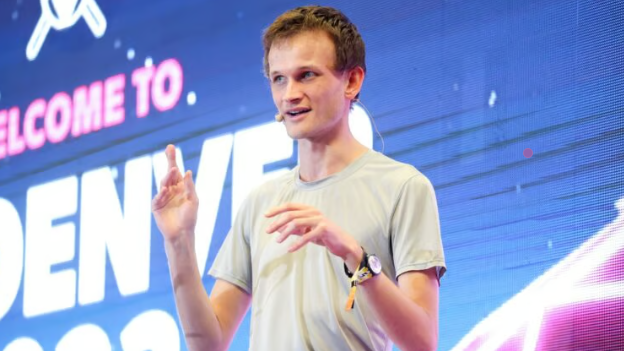
Vitalik Buterin Net Worth 2025: The Gifted Outsider
Born January 31, 1994, in Kolomna, Russia, Buterin arrived as something different. His father Dmitry was a computer scientist who recognized his son’s unusual abilities early. When the family emigrated to Canada seeking better opportunities, six-year-old Vitalik was already coding.
The Gifted Program
By third grade, Canadian schools placed Buterin in gifted classes. Mathematics, programming, and economics came naturally, almost obsessively. According to Harvard Business Review, exceptionally gifted children often struggle socially while excelling intellectually. Buterin fit this pattern precisely.
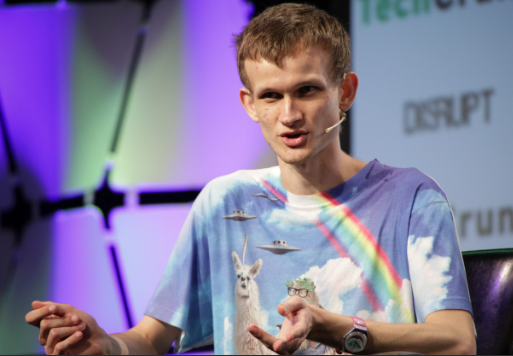
The Abelard School in Toronto, a private high school known for encouraging unconventional thinking, gave him space to develop. He won a bronze medal at the International Olympiad in Informatics in 2012. The University of Waterloo accepted him, where he worked as a research assistant for cryptographer Ian Goldberg. The trajectory pointed toward academic distinction.
The Bitcoin Discovery
In 2011, Buterin’s father introduced him to Bitcoin. The seventeen-year-old initially dismissed it. “I thought it was bound to fail because it had no intrinsic value,” he recalled. However, curiosity won. He began writing articles for Bitcoin Weekly, earning five Bitcoin per piece, worth about $3.50 at the time.
When Bitcoin Weekly shut down, Mihai Alisie recruited Buterin to co-found Bitcoin Magazine, one of the first publications dedicated to cryptocurrency. The young writer spent 10-20 hours weekly producing articles that established his reputation in the nascent community. The gamer was becoming a thought leader.
The Ethereum Whitepaper: When a Teenager Rewrote Finance
Buterin grew frustrated with Bitcoin’s limitations. The protocol could transfer value but couldn’t execute complex programs. He proposed adding a scripting language that would allow applications to run on the blockchain. Bitcoin’s community rejected the idea.
The November 2013 Breakthrough
Rather than compromise, nineteen-year-old Buterin wrote his own solution. In November 2013, he published the Ethereum whitepaper, describing a blockchain that could run any program a developer imagined. Smart contracts would execute automatically when conditions were met. Decentralized applications would run without any company controlling them.
The whitepaper circulated through crypto communities, attracting interest from developers and investors worldwide. According to McKinsey & Company, Ethereum’s programmability represented the first major architectural advance beyond Bitcoin, enabling an entire ecosystem of decentralized finance, NFTs, and Web3 applications.
The Thiel Fellowship
In 2014, Peter Thiel’s foundation awarded Buterin a $100,000 fellowship for young people who skip or drop out of college to pursue innovative projects. He left the University of Waterloo and committed to Ethereum full-time. The academic path was abandoned for something more ambitious.
The Ethereum Launch: Building a World Computer
Buterin gathered co-founders: Gavin Wood, Charles Hoskinson, Anthony Di Iorio, Joseph Lubin, and others. In January 2014, he gave a 25-minute speech at the North American Bitcoin Conference in Miami, describing a “world computer” that could run any decentralized application.
The ICO Pioneer
Ethereum raised 31,500 Bitcoin in its initial coin offering during summer 2014, worth roughly $18 million at the time. The founding team received 16.5% of all ETH tokens created. Buterin’s share would form the foundation of his eventual fortune.
The mainnet launched in July 2015. Within years, Ethereum became the foundation for an entire financial ecosystem: decentralized exchanges, lending protocols, stable coins, NFT marketplaces, and thousands of applications. According to Boston Consulting Group, Ethereum processes more value locked in DeFi protocols than all other blockchains combined.
The Proof of Stake Transition
In 2022, Buterin shepherded Ethereum through its most significant upgrade: the transition from proof-of-work to proof-of-stake. The “Merge” reduced Ethereum’s energy consumption by approximately 99.95%, addressing the environmental criticisms that had plagued cryptocurrency. The architect was still building, decade after launch.
Vitalik Buterin Net Worth 2025: The Reluctant Fortune
Calculating Vitalik Buterin net worth 2025 requires tracking his publicly known Ethereum wallet. According to Arkham Intelligence, he holds approximately 240,000 ETH, valued at over $1 billion when ETH trades above $4,000. Additional investments in blockchain projects like StarkWare, Kakarot zkEVM, and various privacy protocols add to the total.
The Billionaire Threshold
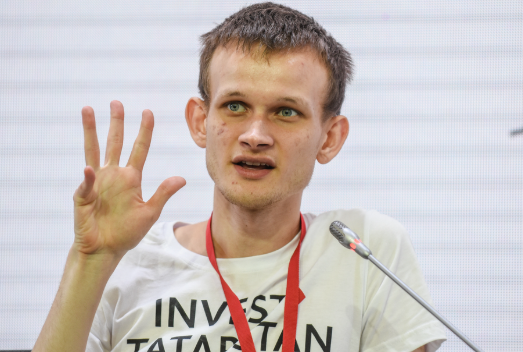
Buterin first became a billionaire in May 2021, at age 27, when ETH crossed $3,000. The crypto winter of 2022 pushed his net worth below $300 million as ETH dropped to $1,000. By August 2025, with ETH approaching $5,000, he regained billionaire status. The fortune fluctuates with every price movement.
At peak in November 2021, when ETH briefly touched $4,891, Buterin’s wallet was worth approximately $2 billion. However, he’s never chased maximum accumulation. He once tweeted, “$1b is still much more than I have,” suggesting his actual holdings may be less than wallet tracking implies.
The Massive Donations
Buterin has given away hundreds of millions. In May 2021, he donated over $1 billion worth of Shiba Inu tokens (which had been sent to his wallet unsolicited) to India’s COVID-19 relief fund. He’s funded research into life extension, AI safety, and Ethereum development. The giving reveals someone unbothered by wealth maximization.
The Philosophical Developer: Buterin’s Unusual Mind
Those who interact with Buterin describe someone operating on different wavelengths. He’s published papers on quadratic voting, radical markets, and mechanism design. His blog posts blend technical depth with philosophical speculation. The gamer became a public intellectual.
The Autism Disclosure
Buterin has spoken openly about being on the autism spectrum, describing how his different cognitive style contributed to both his technical abilities and social challenges. According to research cited by Harvard Business Review, neurodivergent founders often excel at pattern recognition and systematic thinking while struggling with the social demands of typical business leadership.
His father Dmitry once noted that Vitalik tries to avoid the “philosopher king” status the community assigns him. “He wants the community to be more resilient,” not dependent on any single individual. The architect doesn’t want to be worshipped for his architecture.
The Nomadic Life
Buterin doesn’t maintain a fixed residence. He’s been spotted working from Singapore, Montenegro, various European cities, and occasionally North America. The nomadic lifestyle reflects both his philosophical commitments to decentralization and perhaps a discomfort with the permanence that wealth typically enables.
The Ukraine Stance: When the Philosopher Took Sides
When Russia invaded Ukraine in February 2022, Buterin broke his typical neutrality. “Ethereum is neutral, but I am not,” he tweeted on the invasion’s first day. He called the attack “a crime against the Ukrainian and Russian peoples.” When Russian state media’s editor suggested critics weren’t truly Russian, Buterin replied with an expletive dismissal.
The Crypto Philanthropy
Buterin donated cryptocurrency to projects supporting Ukraine and endorsed initiatives helping the country through “cryptophilanthropy.” His father Dmitry became one of the key-holders on Ukraine DAO’s multi-signature crypto safe. The family commitment exceeded symbolic gestures.
The stance carried risks. Russia represents a significant crypto community, and Buterin’s Russian background made his criticism particularly pointed. According to Bain & Company, tech leaders increasingly face pressure to take positions on geopolitical issues, with potential consequences for their global operations.
The Tell: What Buterin’s Choices Reveal
The boy who cried over a video game patch created a system where no company can change the rules unilaterally. Ethereum’s governance distributes power across thousands of nodes. No single entity can nerf your character. The wound became the cure.
The Minimalist Billionaire
Unlike typical billionaires, Buterin displays no interest in luxury accumulation. He wears the same few outfits repeatedly, owns no real estate portfolio, and travels without an entourage. The fortune seems almost irrelevant to someone focused on technical problems and philosophical questions.
His investment style reflects this. He funds privacy protocols and longevity research, projects aligned with his interests rather than pure return maximization. The portfolio serves the philosophy, not vice versa.
The Global Citizen: Where Buterin Operates
Without a fixed base, Buterin exists outside the geographic hierarchies that organize most wealth. He’s not a Hamptons figure or a Silicon Valley fixture. He’s something newer: a globally distributed individual whose influence travels through code rather than real estate.
The Conference Circuit
Buterin speaks at crypto conferences worldwide, from Singapore to Paris to Denver. Each appearance draws attention not because he’s promoting products but because he’s genuinely thinking through problems in real time. The philosopher performs philosophy.
His blog posts at vitalik.eth.limo continue exploring technical and social questions. Recent topics include simplifying Ethereum’s architecture, expanding decentralized systems, and addressing societal challenges through technological innovation. The teenager who wrote the whitepaper keeps writing.
The Accidental Billionaire’s Burden
Vitalik Buterin net worth 2025 represents something unusual: wealth accumulated almost accidentally by someone who seems indifferent to it. The fortune derives from creating something useful, not from optimizing returns. The billionaire would probably give more away if he could do so without destabilizing the markets he created.
From the grieving World of Warcraft player to the youngest crypto billionaire in history, Buterin’s trajectory traces the conversion of pain into purpose. The centralized game company that nerfed his character inspired a decentralized platform that no company controls. The wound healed into Ethereum.
At thirty-one, Buterin continues developing, donating, and philosophizing. The fortune fluctuates with ETH prices, but the impact persists regardless of market conditions. Smart contracts execute daily. Decentralized applications serve millions. The world computer hums along.
Whether Vitalik Buterin net worth 2025 is one billion or two billion matters less than what it enabled: a financial system that can’t be nerfed. The gamer won. The philosopher built. And somewhere, a Russian-Canadian nomad is probably working on the next improvement, unbothered by the fortune attached to his name.
Discover More Crypto Wealth Stories:
- Brian Armstrong Net Worth 2025: Coinbase, Regulation, and the Making of a Crypto Billionaire
- Jed McCaleb Net Worth 2025: The Reclusive Founder Behind Crypto’s Biggest Fortunes
- Chris Dixon Net Worth 2025: The Venture Capitalist Who Funded Web3’s Future
For features, advertising, and partnership opportunities with Social Life Magazine, visit sociallifemagazine.com/contact. Join exclusive gatherings at Polo Hamptons. Support independent journalism with a $5 donation.
Related Articles:
Author

Written by
Recent Posts

The New York Women’s Foundation’s 2026 Neighborhood Dinner

Marco Maranghello

The Baker House 1650
MvVO ART Show
Casita Maria Center for Arts and Education
Categories
- Art
- Articles
- Business of Luxury
- Celebrities
- Culture
- Entertainment
- Events
- Faces of Summer 2026
- Fashion
- Fashion & Style
- Featured
- Finance
- Food, Spirits, Wine
- Hamptons
- Hamptons Celebrities
- Health
- Health & Beauty
- Lifestyle
- Luxury Lifestyle
- Press
- Profiles
- Real Estate
- Technology
- The Chronicles
- Travel
- Uncategorized
- Weddings