
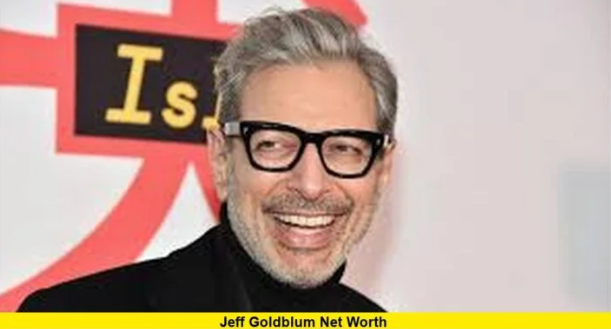
Pittsburgh, 1963. A ten-year-old Jeffrey stands outside the gate of his family’s home, watching his older brother Rick leave for good. His father, a physician, has just disowned the eldest son for reasons the younger children don’t fully understand. The house goes quiet. His mother retreats into a sadness that will color everything. And Jeffrey learns something that will shape the next sixty years: in this family, love is conditional, presence is fragile, and the safest place to be is entertaining.
Today, Jeff Goldblum’s net worth is approximately $45 million. On paper, he’s a character actor who stumbled into blockbusters. In reality, he’s something far stranger: a man who turned his nervous energy into a brand, his eccentricity into a career strategy, and his obsessive need to be noticed into one of Hollywood’s most unlikely second acts.
A Fractured House in Pittsburgh
Born October 22, 1952, Jeffrey Lynn Goldblum was the youngest of four children in an upper-middle-class Jewish family. His father Harold worked as a doctor; his mother Shirley had studied opera before abandoning it for domesticity. The family home was comfortable, the expectations high, the emotional temperature volatile.
Then Rick disappeared. The eldest brother’s exile—whether for rebellion, lifestyle, or reasons the family never openly discussed—created a silence that shaped everyone who remained. Jeffrey’s older brother Lee would later die young, adding another loss to a family that seemed haunted by departures.
The Piano and the Performance
Music became the escape. His mother’s unfulfilled artistic ambitions found a vessel in her youngest son, who took to piano with obsessive dedication. He wasn’t just learning an instrument; he was learning that performance earned attention, that charm could fill silence, that being interesting might keep people from leaving.
At seventeen, he left for New York to study acting at the Neighborhood Playhouse. His father objected. The departure echoed his brother’s, though this time the exile was self-chosen. Pittsburgh’s expectations couldn’t contain whatever Jeffrey Goldblum was becoming.
Learning to Weaponize the Weird
New York in the early 1970s was no place for a conventional actor, which worked out perfectly because Goldblum wasn’t one. At 6’4″ with a nervous energy that vibrated off him, he was too strange for leading man roles, too magnetic for the background. Directors didn’t know what to do with him. Neither did he, at first.
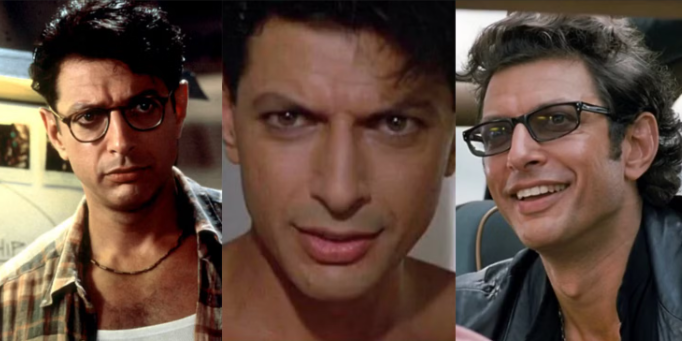
His early film appearances were small but memorable: the rapist in Death Wish (1974), a party guest in Annie Hall (1977), the journalist in The Big Chill (1983). Each role was brief, yet each demonstrated the same quality: you couldn’t look away from him even when he had nothing to do.

The Mannerisms That Became a Style
The pauses. The “uh”s and “ah”s. The sentences that trail off into ellipses. The hands that never stop moving. Other actors would have trained these quirks away. Instead, Goldblum amplified them. His strangeness wasn’t a bug to be fixed; it was a feature to be enhanced.
In therapy—which he’s discussed openly for decades—he came to understand that his performing self served a purpose. “I learned early,” he told The New York Times, “that if I could be interesting enough, maybe people would stay.”
From The Fly to Franchise Fortune
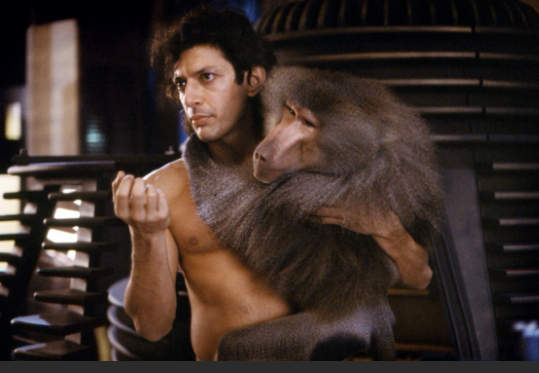
David Cronenberg’s The Fly (1986) changed everything. As Seth Brundle, the scientist who slowly transforms into an insect, Goldblum delivered a performance of genuine tragedy beneath the body horror. The role proved he could carry a film. Subsequently, it proved something else: audiences wanted to watch him think.
Then Steven Spielberg came calling. Jurassic Park (1993) made Goldblum a household name at forty. His Ian Malcolm—the chaos theorist who sees disaster coming before anyone else—became the film’s unlikely moral center and breakout character. The role earned him the sequel The Lost World and launched a franchise relationship that would pay dividends for three decades.
Independence Day and Blockbuster Peak
Independence Day (1996) cemented his commercial viability. According to industry analysis from Variety, Goldblum earned $5 million for the role—a career-high at the time. The film grossed $817 million worldwide. He was bankable in a way no one could have predicted for the strange kid from Pittsburgh.
Yet unlike peers who leveraged blockbuster success into more blockbusters, Goldblum kept one foot in independent film. He made The Life Aquatic with Wes Anderson, voiced characters in stop-motion animation, and appeared in projects that served the work rather than the paycheck.
Jazz and the Second Act Nobody Expected
In 2018, at sixty-five years old, Goldblum released his debut jazz album with Decca Records. The Capitol Studios Sessions hit number one on the UK jazz charts. The piano he’d learned to fill his mother’s silence had become, at last, a legitimate second career.
He performs regularly at the Rockwell Table & Stage in Los Angeles, leading his band The Mildred Snitzer Orchestra. These aren’t celebrity vanity gigs. Reviews consistently praise his musicianship. The wounded child who performed to keep people present had become a seventy-two-year-old artist who performs because the music matters.
The Cult of Goldblum
Something strange happened in the 2010s: Goldblum became a meme. His mannerisms, once merely distinctive, became cultural touchstones. The internet embraced his eccentricity not as oddity but as aspiration. Being “very Jeff Goldblum about it” became shorthand for embracing one’s authentic weirdness.
According to Forbes, this renaissance directly impacted his earning power. Voice work for Thor: Ragnarok, returns to the Jurassic franchise, and brand partnerships capitalized on his unique cultural position. The weird kid had become the template for cool.
Los Angeles: Finally At Home
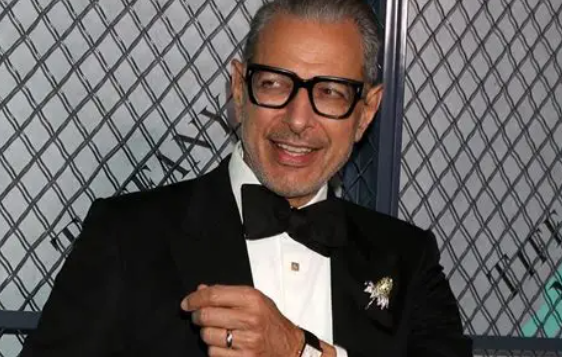
Goldblum lives in Los Angeles with his third wife, Olympic gymnast Emilie Livingston, and their two young sons—children he had in his sixties, embracing fatherhood with characteristic late-blooming enthusiasm. Their home is reportedly a mid-century modern in the Hollywood Hills, all clean lines and curated eccentricity.
The choice feels right. Los Angeles rewards reinvention, celebrates the strange, and forgives the time it takes to figure out who you are. The boy who fled Pittsburgh to escape conditional love found a city where being yourself—especially if that self is spectacularly odd—is the whole point.
Jeff Goldblum’s net worth of $45 million is the least interesting thing about him. The number represents blockbuster paychecks and jazz club door receipts, franchise returns and voice work residuals. What it doesn’t capture is the transformation: from anxious child to anxious adult to whatever this is now—a man who seems, finally, to be enjoying himself.
His father disowned his brother, his mother never got to sing opera, and his siblings left—one way or another. And Jeffrey kept performing, kept being interesting, kept making sure that if you looked away, you’d miss something. At seventy-two, he’s still doing it. Only now, the performance looks a lot like peace.
Related Articles
- Character Actor Elite Net Worth 2025: The $145 Million Club That Refused to Play the Game
- Willem Dafoe Net Worth 2025: The $40 Million Anti-Hollywood Strategy That Won
- Stanley Tucci Net Worth 2025: From Katonah to CNN, the $25 Million Reinvention
- Mark Ruffalo Net Worth 2025: The $35 Million Crusader of Keene Valley
For profiles of the entertainers and eccentrics who define cultural capital, subscribe to Social Life Magazine. Experience the art of convening at Polo Hamptons.
Author

Written by
Recent Posts
Best Folding Tables for Community Halls and Function Centres

From the Hamptons to Mykonos for a September Encore
Is Business Class Worth It on a Short-Haul Flight?
Failure to Disclose Finances in Divorce
Columbus Car Accident Attorney: Protecting Your Rights After a Georgia Crash
Categories
- Art
- Articles
- Business of Luxury
- Celebrities
- Culture
- Entertainment
- Events
- Faces of Summer 2026
- Fashion
- Fashion & Style
- Featured
- Finance
- Food, Spirits, Wine
- Hamptons
- Hamptons Celebrities
- Health
- Health & Beauty
- Lifestyle
- Luxury Lifestyle
- Press
- Profiles
- Real Estate
- Technology
- The Chronicles
- Travel
- Uncategorized
- Weddings