
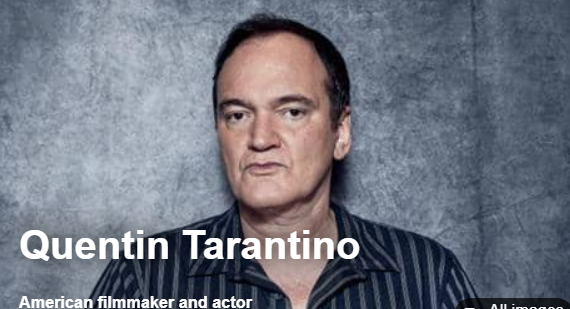
He’d dropped out of high school that same year. His mother had reluctantly signed the paperwork, believing her son’s certainty about his path even when no evidence supported it. The other clerks thought he was annoying, brilliant, possibly insane.
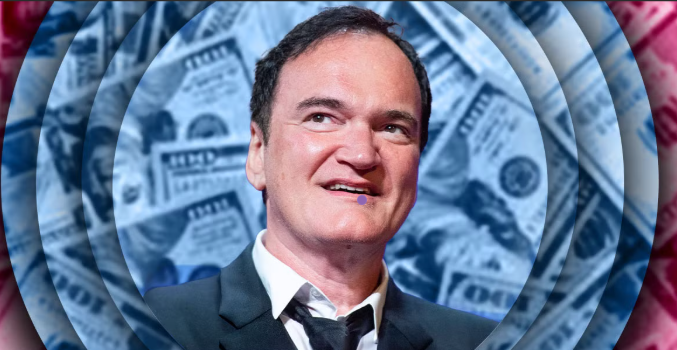
Today, that high school dropout commands a $120 million fortune and has redefined what American cinema can be. He still argues about movies with the same manic intensity, except now the world argues back. The video store is gone. The kid who memorized its shelves created his own genre.
Quentin Tarantino Net Worth 2025: The Dropout Who Knew Everything
Connie Zastoupil was sixteen when she gave birth to Quentin Jerome Tarantino in Knoxville, Tennessee, in 1963. The father, Tony Tarantino, was a musician and actor who left before his son turned two. Quentin wouldn’t meet him until decades later, long after the fame arrived.
Connie moved the family to Los Angeles when Quentin was four, chasing better opportunities and eventually marrying musician Curtis Zastoupil. The marriage gave young Quentin a stepfather but little stability. Curtis left too.
The Mother Who Believed
What Connie provided was permission. She took her son to see R-rated films when he was still in elementary school: Carnal Knowledge, Deliverance, The Wild Bunch. Other mothers would have covered their children’s eyes. Connie explained the craft behind the carnage.
She also gave him something rarer: belief in his obsession. When teachers complained that young Quentin wrote violent screenplays instead of essays, Connie defended his work. When he announced at sixteen that formal education had nothing left to teach him, she signed the dropout papers. According to interviews, she told him: “You’re going to be okay. You know things other people don’t.”
The Self-Education
Tarantino’s real education happened in darkened theaters and fluorescent-lit video stores. He didn’t just watch films; he studied them with forensic intensity. Shot compositions. Dialogue rhythms. How directors built tension and released it.
The dropout was building his own film school in his head, one rental at a time. Consequently, by his early twenties, he possessed an encyclopedic knowledge that actual film school graduates couldn’t match. He hadn’t attended university. He’d memorized the canon instead.
The Chip: Five Years Behind the Counter
Video Archives in Manhattan Beach became Tarantino’s laboratory. From 1985 to 1989, he worked as a clerk, recommending films with evangelical fervor and writing screenplays in the gaps between customers.
His coworker Roger Avary would later collaborate on Pulp Fiction. Another regular customer was a young screenwriter named Craig Hamann, who’d star in Tarantino’s unreleased debut My Best Friend’s Birthday. The video store wasn’t just employment. It was a creative incubator disguised as minimum wage.
The Rejected Screenplay
During the video store years, Tarantino wrote constantly. True Romance. Natural Born Killers. Projects that would eventually reach the screen through other directors’ hands. Hollywood read his scripts. Hollywood loved his dialogue. Hollywood wouldn’t let him direct.
The rejections accumulated. Agents told him his scripts were too violent, too dialogue-heavy, too indebted to obscure genre films that nobody remembered. Tarantino listened politely. Then he kept writing exactly what he wanted, confident that Hollywood was wrong and he was right.
The Sundance Gambit
Reservoir Dogs emerged from this frustration. Tarantino wrote the script intending to direct it himself on a micro-budget. Harvey Keitel read it, loved it, and attached himself as star and executive producer. Suddenly the dropout clerk had $1.2 million and industry credibility.
The 1992 Sundance premiere became legendary. According to Vanity Fair, audience members walked out during the ear-cutting scene while others stood to applaud. The film didn’t change cinema overnight. It announced that something had arrived.
The Rise: Pulp Fiction and the Tarantino Era
Pulp Fiction in 1994 wasn’t just a film. It was a seismic event. The non-linear narrative, the pop culture-drenched dialogue, the resurrection of John Travolta’s career. Everything about it felt unprecedented.
The $8 million production grossed $213 million worldwide. Tarantino won the Oscar for Best Original Screenplay with Roger Avary. At thirty-one, the video store dropout stood on the Academy stage, vindicated beyond anyone’s expectations including possibly his own.
The Miramax Marriage
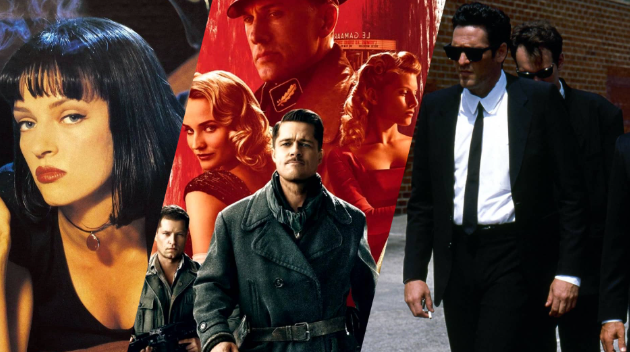
Harvey Weinstein’s Miramax distributed Pulp Fiction and became Tarantino’s creative home for the next two decades. The partnership produced Jackie Brown, the Kill Bill films, Inglourious Basterds, and Django Unchained.
Each film expanded Tarantino’s budget and ambition while maintaining his distinctive voice. Django Unchained grossed $425 million worldwide and won Tarantino his second screenwriting Oscar. The $120 million fortune accumulated through directing fees, backend deals, and screenplay sales.
The Ten Film Promise
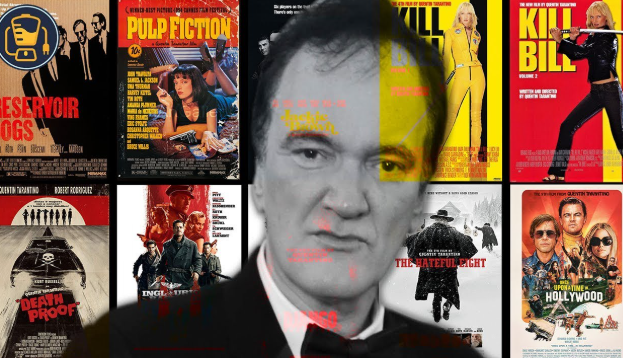
Tarantino has long promised to retire after ten films, preserving a perfect filmography rather than declining into mediocrity. As of 2025, he’s completed nine: Reservoir Dogs, Pulp Fiction, Jackie Brown, Kill Bill Vol. 1 and Vol. 2 (counted as one), Death Proof, Inglourious Basterds, Django Unchained, The Hateful Eight, and Once Upon a Time in Hollywood.
The final film remains in development. According to Deadline, various projects have been considered and abandoned. Tarantino insists on retiring while still capable of greatness, a discipline that would have seemed impossible for the manic video store clerk who once couldn’t stop talking about movies.
The Tell: The Anti-Streaming Crusader
Tarantino has become cinema’s most vocal defender against streaming’s encroachment. He refuses to watch movies on his phone. His theater, the New Beverly Cinema in Los Angeles, projects only 35mm film prints. Digital projection is banned.
This isn’t nostalgia. It’s theology. For Tarantino, the theatrical experience is cinema. Everything else is television wearing a movie’s clothes. The man who learned his craft renting VHS tapes has become the medium’s most passionate defender against the digital dissolution of communal viewing.
The Weinstein Reckoning
When Harvey Weinstein’s crimes became public in 2017, Tarantino faced an impossible position. Weinstein had championed every film he’d made. The director acknowledged knowing about some of Weinstein’s behavior and expressed regret for not doing more. As documented by The New York Times, the confession was unflinching.
The reckoning didn’t destroy Tarantino’s career, but it complicated his legacy. The director who’d built a filmography celebrating tough guys and revenge fantasies had to reckon with his own failures of moral courage. Once Upon a Time in Hollywood, released in 2019, felt like a response: a meditation on masculinity, violence, and Hollywood’s sins.
The Los Angeles Connection: Where Movies Live
Tarantino has never left Los Angeles. Unlike directors who decamp for New York or London, he remains rooted in the city that raised him. His primary residence sits in the Hollywood Hills, within striking distance of the New Beverly Cinema he owns and programs personally.
The New Beverly purchase in 2007 represented something profound. The theater had shown repertory cinema for decades, the same kind of programming that educated young Quentin. When it faced closure, Tarantino bought it outright. He didn’t just preserve a theater. He preserved his own origin story.
The First Fatherhood
In 2018, Tarantino married Israeli singer Daniella Pick. Their first child, Leo, was born in 2020. A daughter followed in 2022. At sixty-one, the eternal bachelor who’d dedicated his life to cinema suddenly had a family.
The timing feels significant. Tarantino had always been too busy making movies to settle down. Now, with potentially one film remaining, he’s building something he never had: the stable two-parent household his childhood lacked. The $120 million fortune matters less than what it can provide his children.
The Paradox of Quentin Tarantino
Sixty-one years old. Nine films that have grossed over $1.5 billion combined. Two Oscars for screenwriting. The $120 million fortune places him among the wealthiest writer-directors in history. One more film to make, and then he’s promised himself done.
Yet strip away the accolades, and you still find that kid behind the video store counter, the one who talked too much about movies nobody else remembered, the dropout whose mother believed in him when schools wouldn’t. The Hollywood Hills mansion is real. The New Beverly Cinema is real. The legacy is secure. Underneath it all, Quentin Tarantino is still arguing about the ending of Rio Bravo, still certain he’s right, still the self-educated obsessive who rewired American cinema from a minimum-wage register.
Related Articles
- Steven Spielberg Net Worth 2025: The $4 Billion Dreamer of Georgica Pond
- Martin Scorsese Net Worth 2025: Little Italy to Legend at 82
- Christopher Nolan Net Worth 2025: The $250 Million Practical Effects Purist
Connect With Social Life Magazine
For features, advertising, and partnership inquiries, visit sociallifemagazine.com/contact
Experience Polo Hamptons: polohamptons.com
Subscribe to our print edition for exclusive coverage delivered to your door.
Author

Written by
Recent Posts
Legal Options for Investment Fraud Claims

How Custom DTF Printing Adds Ease and Color to Your Boutique
How Often Should You Actually Replace Your Towels?
Apartment Pet Policies: What to Know as a Pet-Owning Tenant
Why Reliable Airport Transportation Matters for Modern Travelers
Categories
- Art
- Articles
- Business of Luxury
- Celebrities
- Culture
- Entertainment
- Events
- Faces of Summer 2026
- Fashion
- Fashion & Style
- Featured
- Finance
- Food, Spirits, Wine
- Hamptons
- Hamptons Celebrities
- Health
- Health & Beauty
- Lifestyle
- Luxury Lifestyle
- Press
- Profiles
- Real Estate
- Technology
- The Chronicles
- Travel
- Uncategorized
- Weddings