
We all know that household appliances make our lives easier. It is only when one breaks down that one actually realizes how much our home relies upon them. We cannot ignore a refrigerator that does not function, a washing machine with no spin setting, and an oven that does not generate sufficient heat – as consumers, the decision can be more difficult to make than it sounds. Should I have this repaired, or buy a new one?
It is never that easy a decision, as there are factors to consider, such as how old it is, whether you have had it serviced, how much energy it uses, and whether it has enough value to repair. The decision to repair or replace should be clear, so you do not waste money. Also consider how technical repairers determine what to fix before they begin any work.
The best appliance repair company will also advise you on whether to repair or replace your appliance.
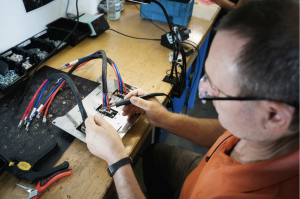
Evaluating Any Appliance
Before you decide, you should approach the decision logically rather than react to the inconvenience.
Start by asking:
- How old is the appliance?
- Has it required frequent repairs?
- Is performance noticeably declining?
- Would replacement reduce energy usage?
By calculating the life span of your machinery, you will have sufficient knowledge to establish a rational budget for repairing or replacing your machinery, depending on which one makes financial sense for you.
This evaluation process forms the foundation of a smart appliance repair decision.
Key Signs Your Appliance Should Be Repaired
Not all faults signal the end of a domestic appliance’s life. Most of the issues faced will probably be small enough that they do not require much money to resolve.
At what point does it make economic sense to fix a frequently broken appliance?
- In case the appliance has not exceeded half its lifetime
- The issue involves replaceable components.
- Performance was otherwise reliable before failure.
- Repair costs remain significantly lower than replacement.
Detecting early signs of appliance failure is important because small issues can cost you a lot if left unaddressed. Abnormal noises, malfunctions, delayed cycles, and abnormal vibrations can be signs.
When comparing appliance repair and replacement, keep in mind that repair is always more justified for newer appliances.
Clear Indicators: It’s Time to Replace
Sometimes, repair simply delays an inevitable outcome. Replacement becomes easier to justify when:
- Repairs happen repeatedly within short periods.
- Energy efficiency has dropped noticeably.
- Replacement parts are unavailable.
- Safety concerns emerge.
The total cost of repairing appliances can quietly exceed the value of keeping the unit alive. If repair estimates continue stacking up year after year, replacement may become the more economical choice.
Another factor is reliability. Repeated interruptions often create hidden costs in time and inconvenience.
Appliance-Specific Decision Guide
The rules vary by appliance:
Refrigerators: Can be worth repairing for cooling problems only if under 10 years old. Repair washers and dryers when only one mechanical component breaks or a few components malfunction.
Dishwashers: Water circulation and sensor issues may justify repair; persistent leaks often require broader evaluation. Ovens and stoves: Repairs to the heating coils and ignition system are relatively common.
What is interesting is that organizations such as Fusion Repair tend to argue that an appliance’s age does not always indicate the correct answer; sometimes other factors are at play. This awareness allows one to make a more informed decision about appliance repair.
Cost vs Value Analysis
Never view a repair estimate in isolation. Think about value across several categories:
- Immediate repair expense
- Expected remaining lifespan
- Energy efficiency
- Replacement purchase cost
The cost of repairing appliances becomes more meaningful when compared to future operating expenses. Budgeting is where appliance repair vs. replacement becomes a practical financial question rather than an emotional one. Spending moderately on a reliable appliance may produce better value than buying a cheaper replacement that performs poorly.
Repairing vs Calling a Professional
DIY appliance repair can be a lot easier these days, thanks to the abundance of instructions in manuals. However, only professionals can fix certain home appliances.
Examples of such activities one can do at home include replacing visible parts and cleaning filters. A trained professional should handle anything involving electricity, closed systems, gas lines, or appliance diagnostics.
Paying no attention to warnings, such as an appliance breaking down, or trying to repair your appliance with all the information or equipment unavailable, will cause the appliance to fail at the time, which will be very expensive.
Whichever choice you make, always prioritize safety, whether you replace the appliances or attempt to repair them.
Warranty Problems
The first, and perhaps one of the most important, things to consider when your appliance breaks is the warranty you received with it.
If the warranty is valid, it may well save you a substantial amount of cash.
A covered repair changes the entire appliance repair-versus-replacement calculation and may extend the appliance’s useful life at minimal cost.
Even outside warranty periods, manufacturers sometimes provide support programs or discounted service options.
In conclusion
It is impossible to define a single correct or incorrect answer regarding when to replace or repair your appliances; you need to evaluate multiple variables, including age, reliability, efficiency, prior repairs, etc.
More than just saving money today, be prepared for potential future savings by taking into account everything you read in this article regarding your appliance’s efficiencies, signs of malfunction, and costs associated with both fixing and replacing an appliance.
What method do you use when deciding if you should maintain or replace an appliance? What criteria do you use to determine which route to take?
Author

Written by
Recent Posts

Unlocking the Berkshires

Dalia Forman Design

Alberto Luzzi
How to Pick a Homecoming Dress for Your Body Type and Feel Amazing in It
How to Prepare a Home for Sale When Major Repairs Are Not Affordable
Categories
- Art
- Articles
- Business of Luxury
- Celebrities
- Culture
- Entertainment
- Events
- Faces of Summer 2026
- Fashion
- Fashion & Style
- Featured
- Finance
- Food, Spirits, Wine
- Hamptons
- Hamptons Celebrities
- Health
- Health & Beauty
- Lifestyle
- Luxury Lifestyle
- Press
- Profiles
- Real Estate
- Technology
- The Chronicles
- Travel
- Uncategorized
- Weddings