
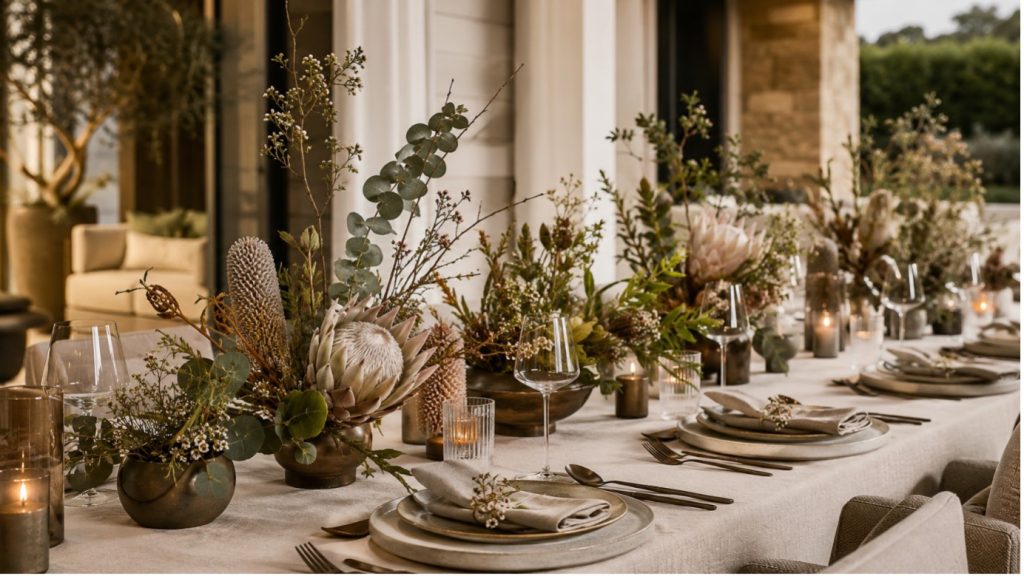
In luxury event design, the most powerful floral statement is no longer the loudest one. The new language of refinement is quieter, more sculptural, and far more intentional. It is not built around abundance for abundance’s sake, but around rarity, restraint, texture, and botanical presence. For private celebrations, destination weddings, gallery dinners, brand launches, and estate events, flowers are being treated less like decoration and more like living art.
As a Premium Floral Stylist working from Perth, Western Australia with an international design perspective, I see this shift as part of a larger movement in luxury: the desire for materials that feel rare, natural, and deeply considered. The same clients who appreciate hand-finished interiors, artisan tableware, architectural lighting, and discreet fashion are now drawn to florals that feel collected rather than manufactured. This is where wild botanicals, sculptural native flowers, and exotic structural blooms have become central to high-end event styling.
For hosts and designers seeking a more refined floral direction, Australian natives and wildflowers offer extraordinary potential through their texture, form, and longevity. They speak beautifully to the idea of luxury exotic botanical sourcing, especially when arranged with restraint and architectural sensitivity. For those interested in seeing how this look can be interpreted by a premium botanical design studio, the appeal lies in how naturally these flowers bridge luxury, artistry, and authenticity.
The New Quiet Luxury in Flowers
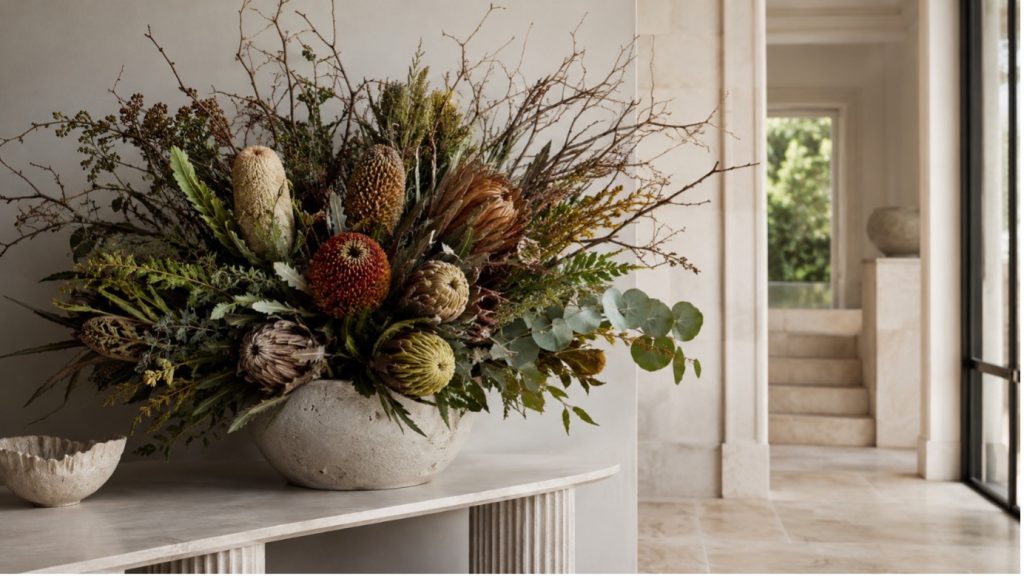
Quiet luxury in floral design is not about using fewer flowers simply to appear minimalist. It is about selecting each bloom with purpose. Instead of filling a room with predictable roses and hydrangeas in perfect symmetry, the modern luxury arrangement may feature only a few strong botanical forms, placed with precision.
Think of a tall banksia stem rising from a stone vessel, a cluster of proteas arranged low across a dining table, or sculptural foliage bending over a candlelit tablescape. The effect is calm but unforgettable. It suggests confidence. It does not need to shout because the materials themselves carry weight.
This style suits sophisticated audiences because it feels personal and edited. In the Hamptons, where private homes, coastal estates, and summer events often blend relaxed elegance with high design, wild botanicals offer a fresh alternative to overly polished floral styling. They bring nature into the room without making it feel rustic. They feel organic, but still expensive.
Scarcity Creates Desire
Luxury has always understood the power of scarcity. A rare fabric, a limited vintage, a hand-carved stone, or a one-of-a-kind artwork holds value because it cannot be easily replicated. Flowers are no different.
The most compelling botanical materials are often seasonal, limited, or region-specific. Australian native flowers, for example, are admired for their unusual shapes, earthy palettes, and structural strength. They do not look like every other flower on the market. They have personality. They carry a sense of place.
This is what makes them so powerful in luxury event design. A wild botanical arrangement feels curated, not copied. It gives an event a distinctive visual identity. Guests may not know every flower by name, but they remember the feeling: something rare, tactile, and unexpected.
In high-end styling, that memory matters. A table arrangement should not simply match the napkins. It should create atmosphere. It should contribute to the story of the evening.
Sculptural Blooms as Living Architecture
The most exciting floral work happening now treats flowers like sculpture. Designers are thinking in terms of line, negative space, proportion, and movement. A stem is not just a stem; it is a gesture. A seed pod is not filler; it is a focal point. A branch can define the height and energy of an entire room.
Australian natives are especially suited to this approach. Banksias, proteas, leucadendrons, waratahs, kangaroo paw, waxflower, eucalyptus, and textural wildflowers all offer forms that feel architectural. They can be dramatic without being excessive. Their strength allows them to hold space in a way softer flowers often cannot.
For an intimate dinner, one sculptural vessel placed at the centre of the table may be more elegant than a dozen matching arrangements. For a wedding ceremony, asymmetrical native foliage and structural blooms can frame the couple without overwhelming the landscape. For a luxury brand event, a botanical installation can echo the lines of the architecture and create a stronger emotional impression than conventional décor.
This is where floral design becomes spatial design.
Why Wild Botanicals Feel Modern
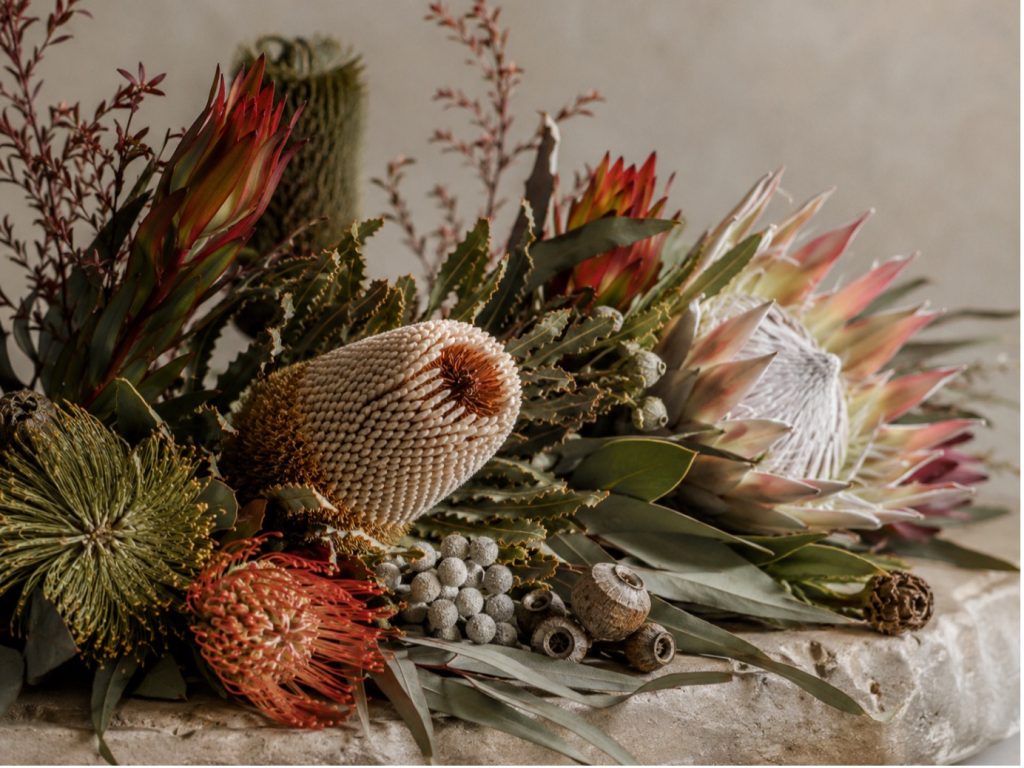
Part of the appeal of wild botanicals is that they resist perfection. Their beauty is not smooth, uniform, or overly controlled. A banksia cone, a twisted gum branch, or a protea head has irregularity. It has texture. It feels alive.
That natural imperfection is exactly what makes the style feel modern. Today’s luxury interiors and events often seek warmth, craftsmanship, and individuality. People want spaces that feel layered and intentional, not sterile. Wild botanicals support that mood because they bring depth and natural character.
In a Hamptons setting, this can be especially powerful. Coastal homes already have a relationship with landscape, light, wind, and texture. Wild botanical arrangements can echo that environment beautifully. They can sit beside linen, stone, timber, glass, ceramic, and candlelight without feeling forced.
The result is understated drama: flowers that belong to the space but still command attention.
Exotic Does Not Have to Mean Excessive
There is a misconception that exotic floral design must be colourful, tropical, and extravagant. In reality, some of the most luxurious exotic arrangements are quiet and tonal. They may use muted blush, ochre, sand, cream, rust, olive, bronze, and deep green. These colours feel elevated because they are drawn from nature rather than trend forecasts.
Australian native flowers often live in this palette naturally. Their tones work beautifully with coastal luxury, modern organic interiors, and refined event styling. They can be paired with orchids, roses, anthuriums, branches, grasses, or seasonal foliage, but they are equally striking on their own.
The key is restraint. Exotic flowers should not be used merely because they are unusual. They should be chosen because their shape, tone, and texture serve the design. When used thoughtfully, they create a sense of worldly sophistication.
Designing for Global Luxury Clients
Although my studio operates in Australia, the principles behind luxury botanical design are global. Whether styling for a Perth wedding, a New York dinner, a Hamptons estate event, or a destination celebration, the foundation is the same: understand the setting, respect the architecture, and choose botanicals that elevate the atmosphere.
For high-end clients, flowers must do more than look pretty in photographs. They must feel appropriate to the occasion. A private anniversary dinner calls for intimacy and softness. A fashion event may call for stronger lines and more editorial forms. A memorial tribute requires dignity and emotional sensitivity. A summer estate lunch may need flowers that feel relaxed but still carefully designed.
Wild botanicals offer flexibility across all of these settings because they can be styled in many ways. They can feel raw and windswept, polished and sculptural, romantic and textural, or dramatic and gallery-like.
The Return of Botanical Individuality
For years, event flowers were often judged by volume: bigger installations, fuller arches, denser table runners, more blooms, more colour. While abundance still has its place, the most refined floral work now often comes from editing.
A luxury arrangement might feature fewer stems, but each one earns its place. A single branch may create movement. One extraordinary bloom may define the colour story. A textured pod may provide contrast. A soft rose may be used not as the main attraction, but as a quiet counterpoint to something wilder and more sculptural.
This return to botanical individuality is what makes native and wildflowers so relevant. They are not anonymous. Each stem has a profile. Each flower has a presence. In the hands of a skilled stylist, they become part of a visual composition rather than simply a floral product.
A More Meaningful Kind of Luxury
The rise of wild botanicals reflects a deeper change in how people define luxury. It is no longer only about polish, cost, or status. It is about meaning, provenance, originality, and emotional atmosphere.
Guests remember how an event feels. They remember walking into a room where the flowers looked as though they had been gathered with an artist’s eye. They remember the unusual bloom beside their place card, the sculptural arrangement near the entrance, or the dramatic native installation framing a ceremony.
That is the beauty of this new floral language. It is rare without being cold. Stylish without being obvious. Natural without being casual. It carries the confidence of quiet luxury and the emotional pull of the wild.
For the world’s most discerning hosts, from Australia to the Hamptons, the future of high-end event flowers is not about more. It is about better: better sourcing, better styling, better form, and a deeper respect for the extraordinary botanicals that nature already gives us.
Author

Written by
Recent Posts
Unlocking the Berkshires
Dalia Forman Design
Alberto Luzzi
How to Pick a Homecoming Dress for Your Body Type and Feel Amazing in It
How to Prepare a Home for Sale When Major Repairs Are Not Affordable
Categories
- Art
- Articles
- Business of Luxury
- Celebrities
- Culture
- Entertainment
- Events
- Faces of Summer 2026
- Fashion
- Fashion & Style
- Featured
- Finance
- Food, Spirits, Wine
- Hamptons
- Hamptons Celebrities
- Health
- Health & Beauty
- Lifestyle
- Luxury Lifestyle
- Press
- Profiles
- Real Estate
- Technology
- The Chronicles
- Travel
- Uncategorized
- Weddings