
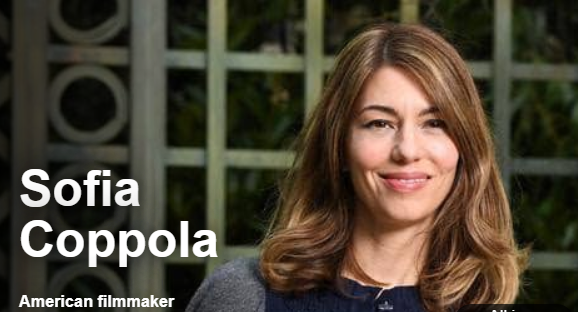
Christmas 1990, Sofia Coppola was nineteen years old and already famous for the wrong reasons. Her father’s third Godfather film had just opened to brutal reviews, and critics had found their target. “Hopelessly amateurish,” wrote one. “Single-handedly ruins the movie,” declared another. In restaurants, strangers would recognize her and smirk. At parties, conversations would halt when she entered. The daughter of Francis Ford Coppola had become a national punchline, and she hadn’t even chosen to be in the film.
Today, Sofia Coppola’s net worth stands at an estimated $40 million, accumulated through a career that transformed public humiliation into quiet artistic triumph. Yet the money tells only part of the story. The real fortune lives in Napa Valley vineyards, a Paris apartment, and films that capture what it feels like to be trapped in gilded cages. She would know. She grew up in one.
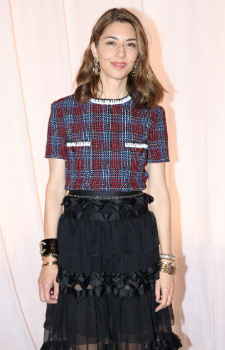
The Wound: Growing Up Coppola
Sofia Carmina Coppola was born in New York City on May 14, 1971, the third child and only daughter of Francis Ford Coppola and documentary filmmaker Eleanor Coppola. Her christening took place on the set of The Godfather, where she played the infant Michael Francis Rizzi in the baptism scene. Before she could speak, she was already on film. Before she could choose, her path had been chosen.
The Weight of the Name
Childhood meant following her father from location to location as he created some of the most celebrated films in American history. The Philippines during Apocalypse Now. Tulsa during The Outsiders. Manhattan during The Cotton Club. Consequently, Sofia never had a normal school experience, never planted roots in a single neighborhood, never knew what it meant to be anonymous.
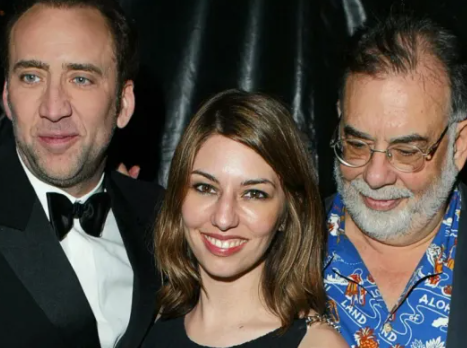
Her mother documented the chaos in journals that would become the memoir Notes on a Life. Eleanor wrote about financial terror during Apocalypse Now, when Francis mortgaged everything and teetered toward bankruptcy. The children absorbed the stress. They learned that brilliance and instability often shared the same bed.
The Invisible Girl in Famous Rooms
Growing up Coppola meant sitting at dinner tables with Marlon Brando and Robert De Niro. It meant birthday parties where George Lucas might appear. Yet it also meant being perpetually in shadow, the quiet daughter observing giants. Sofia developed an almost anthropological detachment, watching famous people perform their fame. That observer’s eye would eventually make her a director. First, though, it made her lonely.
“I always felt like I was watching from the outside,” she told Vanity Fair in 2017. The statement carries weight when you consider that she was watching from inside the most celebrated filmmaking family in America. If she felt like an outsider there, where could she possibly belong?
The Chip: Proving the Critics Wrong
The Godfather Part III disaster could have destroyed her. The role of Mary Corleone had originally gone to Winona Ryder, who dropped out at the last minute due to exhaustion. Francis, desperate and overbudget, cast his eighteen-year-old daughter as a replacement. The result was a mismatch of inexperience and impossible expectations.
The Public Crucifixion
Critics who had spent years praising Francis Ford Coppola suddenly had a target for their disappointment. Sofia received the Razzie Award for Worst Supporting Actress and Worst New Star. The pile-on felt personal, mean-spirited, almost gleeful. Meanwhile, she retreated from public life and tried to figure out who she was outside her father’s shadow.
Fashion became her first escape. She enrolled at Central Saint Martins in London, then transferred to CalArts for fine art studies, launched a clothing line called Milkfed with a friend, photographed for magazines, and appeared in small film roles under pseudonyms. Each venture was an experiment in identity, a way of asking: What can I do that has nothing to do with my last name?
The Slow Pivot to Directing
The answer came gradually. In 1998, she directed a short film called Lick the Star about teenage girls and power dynamics. The critical response was muted but positive. No one mentioned her father. No one referenced Mary Corleone. For fifteen minutes of screen time, she had been judged on her own merits.
That taste of artistic independence proved addictive. She began writing a screenplay about a suburban family losing their teenage daughter to suicide. The story wasn’t autobiographical, but the emotional landscape was familiar: wealthy people drowning in emptiness, beauty concealing rot, the prison of having everything and feeling nothing.
The Rise: $40 Million Built on Mood and Melancholy
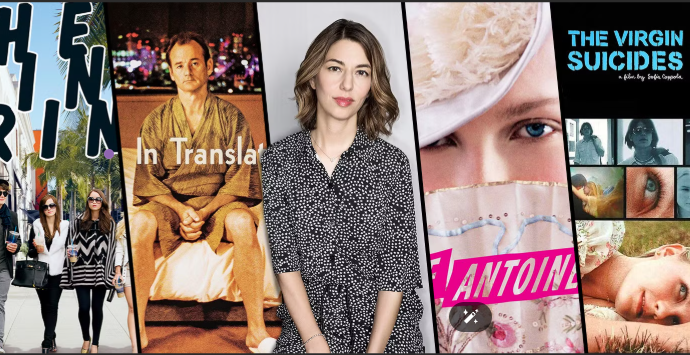
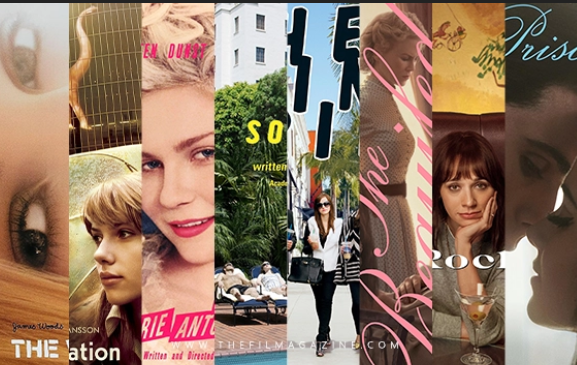
The Virgin Suicides premiered at the 1999 Cannes Film Festival and announced Sofia Coppola as a filmmaker worth watching. Adapted from Jeffrey Eugenides’ novel, the film starred Kirsten Dunst as one of five sisters in 1970s Michigan whose mysterious deaths obsess the neighborhood boys. Critics praised the dreamy cinematography, the atmospheric soundtrack, the way Coppola captured adolescent yearning.
Lost in Translation: The Oscar Moment
Then came Lost in Translation in 2003, and everything changed. The story of an aging actor and a young wife adrift in Tokyo, the film grossed $44 million against a $4 million budget. Bill Murray received an Oscar nomination for Best Actor. Sofia won the Academy Award for Best Original Screenplay. At thirty-two, the woman humiliated in Godfather III had become only the third woman ever nominated for Best Director.
The $40 million she would eventually accumulate traces largely to this period. Lost in Translation proved she could deliver commercial success with auteur credibility. Studios lined up with offers. Subsequently, she gained the power to make exactly the films she wanted, on her terms, at her pace.
The Coppola Winery Connection
Money also flows from the family wine business. Francis Ford Coppola’s Napa Valley vineyards have grown into a significant enterprise, with the Francis Ford Coppola Winery producing award-winning bottles. Sofia maintains her own involvement in the business, and her lifestyle reflects the family’s land holdings. The Napa estate, the Paris apartment, the homes in New York, all represent the accumulated wealth of a dynasty that diversified beyond film decades ago.
The Tell: Isolation as Artistic Signature
Watch any Sofia Coppola film and you’ll notice the recurring theme: beautiful people trapped in beautiful prisons. Marie Antoinette at Versailles. A faded movie star in a luxury hotel. A celebrity hiding from the world. The settings change, but the emotional texture remains constant. Loneliness. Disconnection. The particular sadness of having everything but the thing you actually need.
The Cannes Victory
When The Beguiled won Best Director at Cannes in 2017, making her only the second woman to receive the honor, the vindication felt complete. The girl who had been savaged for her father’s casting choice had become one of the most respected directors of her generation. Yet even in triumph, her films kept returning to themes of confinement and escape.
“I make films about my own experience,” she explained to interviewers. The statement seems obvious until you consider what that experience entails. Growing up on movie sets. Being judged before she could judge herself. Finding identity in shadow. Her $40 million fortune funds a career built on articulating what privilege can’t purchase.
The Napa-Paris Connection: Geography of Escape
Sofia Coppola splits her time between Napa Valley, Paris, and New York, each location serving a different psychological function. Napa represents family legacy, the vineyards her father cultivated, and the California creative community where she was raised. Paris offers anonymity. In France, she’s a celebrated filmmaker, not a Coppola first and artist second.
The Aesthetic of Elsewhere
Her films often take place in locations of transit or temporary residence. Hotels figure prominently. So do foreign cities experienced through jet-lagged eyes. The recurring imagery suggests a woman who has never quite felt at home anywhere. Consequently, she makes art about the beauty of displacement.
The Paris apartment, reportedly elegant and filled with art, functions as a retreat from American media scrutiny. New York serves professional obligations. Meanwhile, Napa grounds her in family history while providing the creative solitude she needs to write. At $40 million, she can afford to be everywhere and nowhere, which is exactly how her characters live.
The Paradox of the Dynasty Daughter
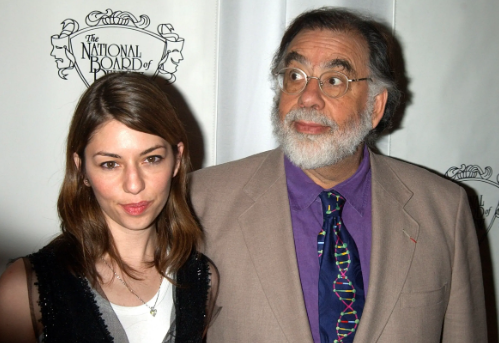
Sofia Coppola built a career by making films about isolation, loneliness, and the emptiness of privilege. Those themes emerged from lived experience. The daughter of Hollywood royalty understood early that wealth doesn’t cure disconnection. Indeed, it often deepens the chasm between self and world.
Her net worth in 2025 reflects both family inheritance and personal achievement. The Academy Award, the Cannes prize, the critical respect, those belong entirely to her. The name opened doors, certainly. However, she had to prove she deserved to walk through them, and she did it by transforming her deepest wounds into her greatest work.
The girl humiliated in Godfather III became the woman who made Lost in Translation. The observer watching famous people perform their fame became the director who captured what performance costs. At fifty-three, Sofia Coppola has $40 million, multiple homes, and a body of work that will outlast any of them. Yet her films keep asking the same question she’s been asking since childhood: Why does having everything feel like having nothing at all?
Related Articles
- Greta Gerwig Net Worth 2025: Sacramento Girl to Billion-Dollar Director
- Jordan Peele Net Worth 2025: From Key & Peele Sketches to Horror Empire
- Ava DuVernay Net Worth 2025: The Distribution Disruptor Who Built Array Alliance
For features, partnerships, and advertising inquiries, visit sociallifemagazine.com/contact. Experience luxury lifestyle events at polohamptons.com. Subscribe to our print edition or support independent journalism with a $5 donation.
Author

Written by
Recent Posts

He Inherited Everything, Except the Feeling He Deserved It
What a Concierge Medicine Company Does to Help Practices Thrive

Personal Injury Attorney: Understanding Your Legal Options After an Accident
Things to Consider Before Hiring a Lafayette Truck Accident Lawyer

Navigating the Road to Recovery After a Winchester Car Accident
Categories
- Art
- Articles
- Business of Luxury
- Celebrities
- Culture
- Entertainment
- Events
- Faces of Summer 2026
- Fashion
- Fashion & Style
- Featured
- Finance
- Food, Spirits, Wine
- Hamptons
- Hamptons Celebrities
- Health
- Health & Beauty
- Lifestyle
- Luxury Lifestyle
- Press
- Profiles
- Real Estate
- Technology
- The Chronicles
- Travel
- Uncategorized
- Weddings