
The term has exploded in popular culture. TikTok videos tagged #oldmoneyaesthetic have accumulated billions of views. HBO’s Succession turned inherited wealth wardrobes into a cultural obsession. But the aesthetic itself predates social media by centuries—rooted in actual aristocratic dress codes, prep school traditions, and country club standards that evolved when such institutions were the only places that mattered for certain families.
This guide examines what the old money look actually entails, where it comes from, and how it differs from contemporary luxury fashion. Whether you’re studying it academically or building a wardrobe that fits this world, understanding the codes requires going deeper than surface aesthetics.
What Is the Old Money Aesthetic?
The old money aesthetic describes a specific approach to dress, décor, and presentation associated with families whose wealth spans multiple generations. Unlike new money—fortunes made within a single lifetime—old money has had decades or centuries to develop codes around how wealth should and shouldn’t be displayed.
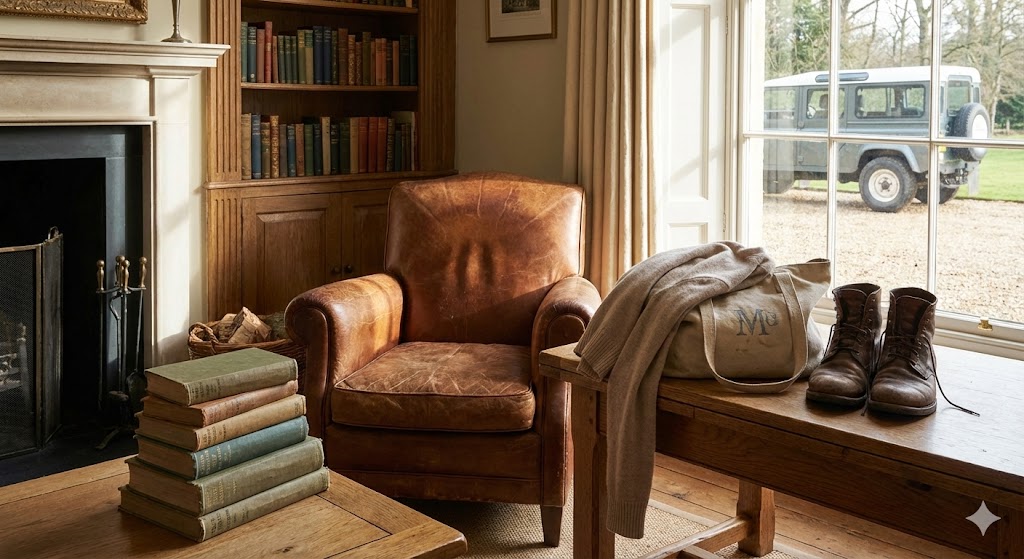
The core principle is restraint. Where new money often defaults to obvious luxury signifiers—large logos, flashy cars, expensive-looking everything—old money style deliberately underplays material success. The thinking goes: if you need to announce wealth, you probably don’t have the kind that matters. True belonging comes from being recognized by those who belong, not from impressing those who don’t.
This manifests in specific visual choices: quality over novelty, fit over fashion, heritage over trend. An old money wardrobe favors navy blazers over designer jackets, leather penny loafers over statement sneakers, simple gold jewelry over branded accessories. The aesthetic prizes what lasts—both because durability signals quality and because caring about longevity itself signals a certain relationship with time and money.
Old Money vs New Money: The Real Differences
The distinction between old money and new money isn’t merely about when wealth was acquired—it’s about the culture, values, and visual language that develop around inherited versus earned fortune. Understanding these differences illuminates why the old money aesthetic looks the way it does.
The Psychological Divide
New money often carries what sociologists call “wealth anxiety”—the fear of losing what was just gained, combined with the desire to validate achievement through visible markers. This isn’t character flaw; it’s logical. If you built something from nothing, displaying success makes psychological sense. The Rolex, the luxury car, the designer wardrobe serve as proof that the climb was real.
Old money operates from the opposite position. Wealth is assumed, inherited, and—crucially—expected to continue indefinitely. There’s no need to prove anything because proof isn’t relevant. The Patek Philippe isn’t purchased to signal success; it was grandfather’s and will be grandson’s. This security breeds a different relationship with display: showing too much suggests insecurity, which suggests your money might be newer than you’d like people to think.
According to research published in the Harvard Business Review, first-generation wealth creators tend to spend significantly more on visible status goods than third-generation inheritors, who instead allocate resources toward experiences, education, and assets that don’t announce themselves.
Visual Markers: How to Tell the Difference
Clothing Fit and Condition — New money wardrobes tend toward brand new everything, purchased at full retail, worn for one season then replaced. Old money wardrobes include pieces that have been re-soled, tailored, and maintained for years or decades. A slightly worn Barbour jacket with real patina reads differently than a pristine one purchased last week.
Brand Selection — New money gravitates toward recognizable luxury: Louis Vuitton, Gucci, Rolex. Old money prefers brands known within specific circles but invisible to broader audiences: J. Press, Murray’s Toggery, Charvet, Patek Philippe. The test isn’t expense—it’s recognition. If the average person on the street would identify it as expensive, it’s probably too obvious.
Jewelry and Accessories — New money accessories announce themselves: large watches, prominent logos, statement pieces. Old money jewelry tends toward simple gold, family pieces, understated watches from heritage brands. A plain gold signet ring with a family crest says more than any branded accessory.
Vehicle Choices — Perhaps nowhere is the divide more visible than in the parking lot. New money drives new: current-year Range Rovers, Mercedes S-Class, Tesla Model X. Old money drives old: vintage Land Rover Defenders, wood-paneled station wagons maintained by the same mechanic for twenty years, or deliberately modest vehicles that suggest money isn’t something requiring automotive announcement.
Old Money Style for Women
The old money aesthetic for women centers on what fashion editors call “stealth wealth”—expensive materials and expert tailoring that register as quality without screaming designer. Think less red carpet, more garden party at an estate you’ve never heard of.
Wardrobe Foundations
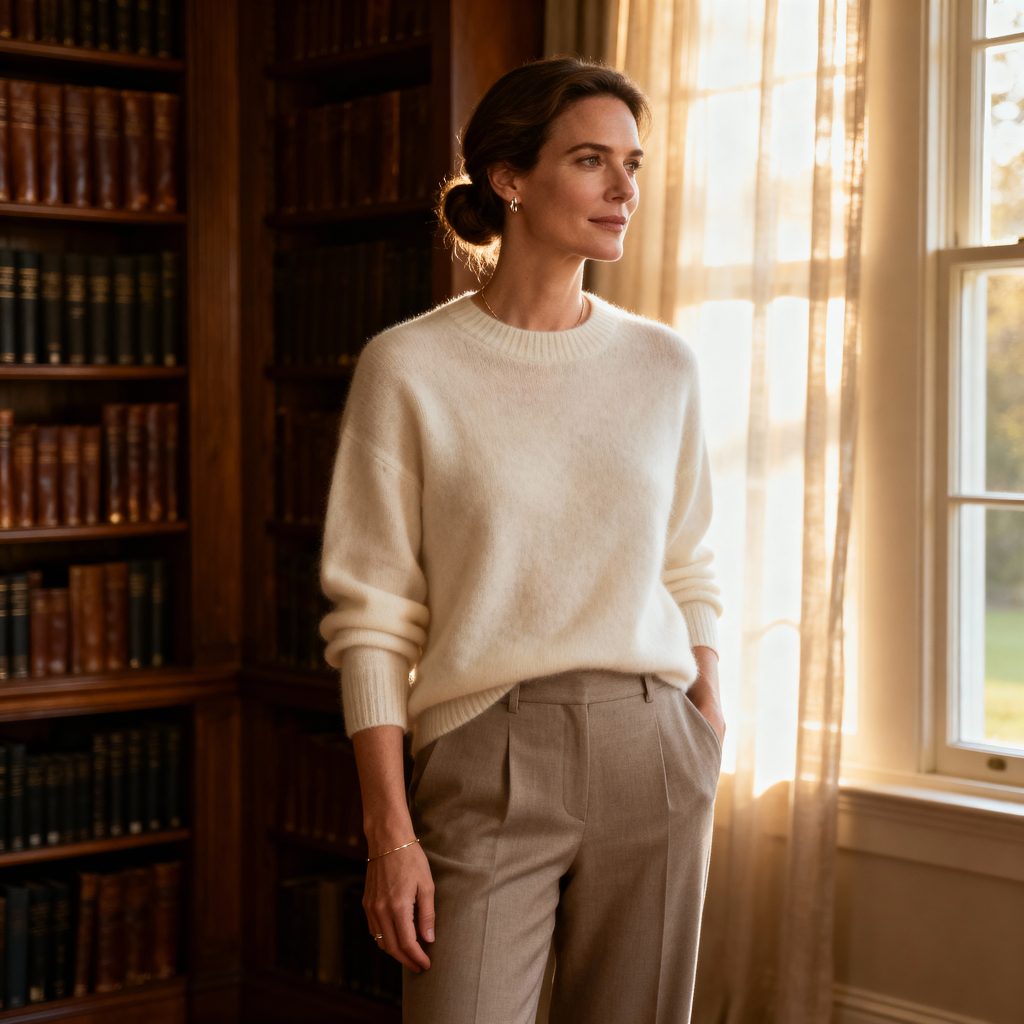
The Cashmere Sweater — The cornerstone of old money female dress. Quality cashmere in navy, camel, cream, or soft gray, worn slightly loose but never sloppy. Brands like Brunello Cucinelli, Loro Piana, or Scottish specialists like Johnstons of Elgin represent the standard. The sweater might cost $800-$2,000 but will last decades with proper care.
Tailored Trousers and Quality Denim — High-waisted, wide-leg trousers in wool or linen for dressier occasions. For casual moments, well-fitting straight-leg or boyfriend jeans—never distressed, never obviously trendy. The Row, Totême, and Nili Lotan offer contemporary versions; vintage Levi’s properly tailored work equally well.
The Button-Down Shirt — Oxford cloth button-downs in white or pale blue, worn tucked or untucked depending on context. Thomas Pink, Brooks Brothers, or The Row’s elevated versions. The shirt should look like it could belong to your father—heritage pieces often do.
Classic Outerwear — A camel coat (Max Mara’s 101801 is iconic), a navy peacoat, a Barbour waxed jacket, and a quality trench from Burberry or Aquascutum. These pieces rotate through decades of use, developing character rather than deteriorating.
Old Money Dresses: What to Wear When
Summer Events — Simple shift dresses in solid colors or subtle prints. Linen midi dresses that don’t cling. Nothing strapless or overly revealing—the aesthetic assumes you have nothing to prove. Reformation, Zimmermann’s simpler pieces, and vintage finds from the ’90s work well.
Formal Occasions — Clean lines, quality fabric, minimal embellishment. A simple black dress from The Row or vintage Valentino beats anything covered in logos or crystals. The goal is looking appropriate, not memorable—blending with the right crowd rather than standing out from it.
Country Weekend — Corduroy, tweed, wool in autumnal colors. Vintage hunting jackets. Wellies for actual mud, not fashion statements. The clothing should look like you actually use it for its intended purpose.
Old Money Style for Men
The male old money aesthetic owes everything to prep school traditions, Ivy League style, and British country dressing. It’s a look that developed in specific institutions—Choate, Andover, Harvard, the Knickerbocker Club—and still signals membership in those worlds today.
The Essential Pieces
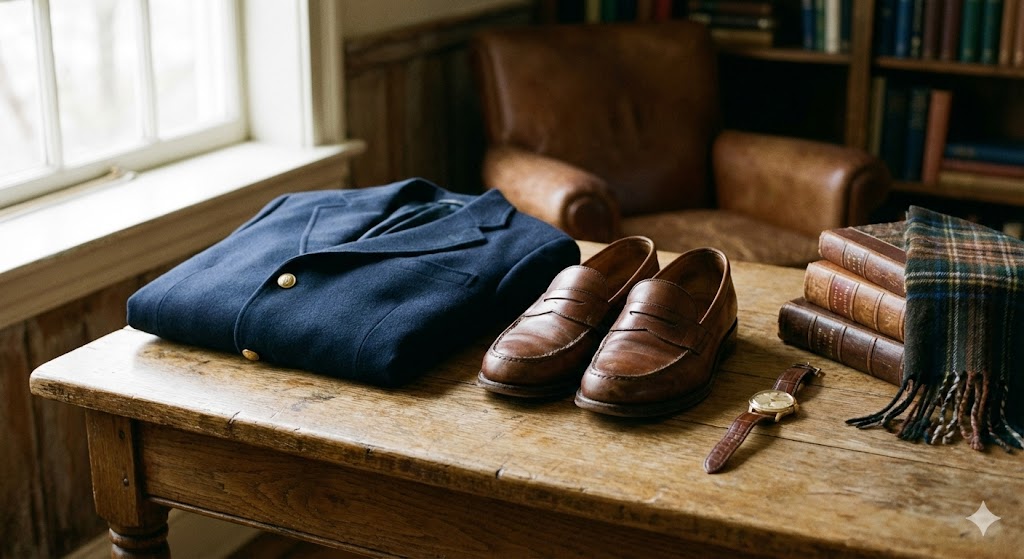
The Navy Blazer — The single most important piece in old money male dress. Brass buttons, slightly relaxed fit, worn until the elbows show wear. Brooks Brothers made the template; Italian makers like Boglioli and Isaia offer refined versions. A blazer that looks brand new is less valuable than one that’s been to a hundred club dinners.
Oxford Cloth Button-Down (OCBD) — In white, blue, and pink. The collar rolls softly, never stiff. Brooks Brothers invented the style; Kamakura and Mercer & Sons carry the tradition. Wear them slightly rumpled—pressed to perfection suggests trying too hard.
Khakis and Chinos — Flat front or single pleat, never trendy skinny cuts. Bills Khakis, Sid Mashburn, or vintage military surplus properly tailored. The color should be actual khaki—not bright, not dark, the specific shade of worn cotton that’s impossible to fake.
Penny Loafers — The quintessential old money shoe. Alden, Bass Weejuns, or Church’s in burgundy or brown leather. Worn sockless in summer, with wool socks in winter. The leather should develop patina; resoling them repeatedly is expected.
The Watch — A simple three-hand dress watch from Patek Philippe, Vacheron Constantin, or A. Lange & Söhne—worn because it was inherited, not purchased to impress. Alternatively, a vintage Rolex Submariner or Explorer from the 1960s-70s, before the brand became a status symbol for hedge fund managers.
Seasonal Considerations
Summer — Linen trousers, Nantucket red pants, seersucker for actual hot weather. Polo shirts (actual polo shirts, from J. Press or Lacoste, not branded athletic wear). White bucks. Navy blazer for evening.
Fall/Winter — Tweed jackets in herringbone or windowpane. Shetland sweaters in oatmeal or forest green. Corduroy trousers. Barbour jackets for anything outdoors. A camel hair overcoat for formal occasions.
Old Money Brands: The Names That Matter
Authentic old money wardrobes draw from specific brands—some well-known, others almost invisible to anyone outside certain circles. These aren’t necessarily the most expensive options; they’re the ones that signal belonging.
American Heritage Brands
Brooks Brothers — Founded 1818, still the default for old money basics. Their oxford shirts, blazers, and suits have dressed generations of the same families. The brand has had corporate ownership changes but maintains the core products that matter.
J. Press — The more refined alternative to Brooks Brothers, with a stronger Ivy League connection. Their sack-cut suits and sports coats remain unchanged because the customers don’t want change. Locations near Yale and Harvard aren’t coincidental.
L.L. Bean — The Bean Boot is non-negotiable for New England old money. Not as a fashion statement—as actual functional footwear for actual weather. The Norwegian sweaters and chamois shirts matter too.
Murray’s Toggery (Nantucket Reds) — The tiny Nantucket shop that produces the faded red cotton canvas pants that signal summer membership on the island. Authentic Nantucket Reds fade to salmon pink; the fading is the point.
British Heritage Brands
Barbour — Waxed cotton jackets worn by British royals and American old money alike. The Beaufort and Bedale models are correct; rewaxing them every few years extends their life indefinitely.
Church’s — Northampton-made shoes that represent the quiet alternative to flashier English shoemakers. Simple designs, exceptional construction, improved by decades of wear.
Johnstons of Elgin — Scottish cashmere since 1797. Their sweaters and scarves appear in old money closets because the quality justifies the price across decades of use.
European Luxury (The Quiet Kind)
Loro Piana — Italian cashmere and vicuña without visible branding. The Summer Charms line for warm weather, storm system outerwear for cold. Expensive but genuinely superior materials.
Brunello Cucinelli — Cashmere everything in neutral colors. The Solomeo atelier represents a lifestyle as much as a brand. Quality that announces itself through touch, not labels.
Charvet — The Parisian shirtmaker where old money places orders for custom pieces. Their tie selection in particular signals to those who recognize it.
How to Dress Like Old Money (Without Being Old Money)
Adopting old money style as someone without generational wealth requires understanding both what to do and what to avoid. The aesthetic can be approximated, but certain mistakes will immediately reveal the performance.
What to Do
Invest in quality basics — One excellent navy blazer beats five trendy jackets. Build slowly, choosing pieces that will last decades. The cashmere sweater, the leather loafers, the well-made coat.
Learn proper fit — Old money clothing fits well but not tight. Find a good tailor and build a relationship. Sleeves properly hemmed, trousers correctly broken, jackets that move naturally.
Embrace maintenance — Rewax your Barbour. Resole your shoes. Have sweaters professionally cleaned. The aesthetic values pieces that have been cared for over pieces that look new.
Shop vintage and consignment — Old money wardrobes include inherited pieces. Without family pieces to inherit, vintage and consignment shopping provides alternatives with similar character. A ’90s Hermès scarf or ’80s Burberry trench fits the aesthetic better than this season’s equivalent.
What to Avoid
Visible logos — The primary rule. Nothing with prominent branding. No monogram bags, no logoed belts, no branded sunglasses. If a stranger can identify what you’re wearing from across the room, it’s probably wrong.
Obviously new everything — Avoid looking like you purchased your entire wardrobe last week. Mix new pieces with vintage finds, or at least break in new purchases before wearing them prominently.
Talking about brands or prices — Nothing betrays the performance faster than discussing where things came from or what they cost. Authentic old money considers such conversations vulgar.
Trend-chasing — The aesthetic specifically rejects fashion. If something is obviously current-season, it’s probably wrong. The style is meant to look timeless because it actually is.
Where to Shop for Old Money Style
The Established Brands — Brooks Brothers, J. Press, and their equivalents maintain retail locations and comprehensive e-commerce. For British brands, Mr Porter and End Clothing offer good selection; for Italian luxury, direct brand websites typically provide better service.
Vintage and Consignment — The RealReal, Vestiaire Collective, and 1stDibs carry authenticated vintage pieces that fit the aesthetic. Local consignment shops in wealthy areas (think Palm Beach, Greenwich, Southampton) often yield better finds than general platforms.
Estate Sales — Actual old money wardrobes occasionally appear at estate sales. The quality can be exceptional and the prices reasonable for those willing to search.
Contemporary Quiet Luxury — Brands like The Row, Totême, and Khaite offer modern interpretations that align with old money principles. Not strictly authentic, but compatible. See our comprehensive quiet luxury guide for detailed brand analysis.
The Old Money Aesthetic: Beyond Fashion
The old money aesthetic represents more than clothing choices—it’s a complete philosophy about the relationship between wealth and display. Understanding it requires appreciating why certain families developed these codes: not to exclude (though they certainly do that) but to identify fellow members of a specific world.
For those outside that world, the aesthetic offers valuable lessons regardless of adoption. The emphasis on quality over quantity, investment over impulse, maintenance over replacement—these principles apply whether you’re building a wardrobe for Southampton or anywhere else. The most enduring pieces tend to be the simplest, the best-made, and the least desperate for attention.
Whether you’re studying the codes academically, adopting elements that appeal to your sensibility, or simply curious about what makes certain wardrobes work, the old money aesthetic rewards close attention. It developed over generations for reasons that remain relevant: looking appropriate matters more than looking impressive, and true quality announces itself without help.
Continue Your Journey
For more on Hamptons society, luxury lifestyle, and the people who define East End style, visit SocialLifeMagazine.com. Join us at Polo Hamptons for the season’s signature events. Subscribe to our print edition or email list for insider access to the world that shapes these codes.
Related Reading:
Author

Written by
Recent Posts
Behind the Scenes of Weddings Involving Long-Distance Relationships
Why Karaoke Is the Ultimate Entertainment Choice for a Hen Party
Easy Recipes That Feed A Crowd Without The Stress
The Influence Of Social Media On Interior Style Trends
Where Can You Find the Best Made-to-Measure Bespoke Suits in NYC
Categories
- Art
- Articles
- Beauty & Skincare
- Celebrities
- Celebrities|Movies
- Celebrities|The Chronicles
- Chronicles
- Entertainment|Culture
- Event Photos
- Events
- Fashion
- Fashion & Style
- Featured
- Food & Beverage
- Food, Spirits, Wine
- Hamptons
- Hamptons Celebrities
- Hamptons Celebrities|Celebrities|The Chronicles
- Health
- Health & Beauty
- Lifestyle
- Luxury Lifestyle
- Movies|Culture
- Movies|Hamptons Lifestyle
- Press
- Profiles
- Real Estate
- Technology
- The Chronicles
- Travel
- Uncategorized
- Weddings