
The upper tier of luxury travel is shifting, and the change has little to do with larger suites, higher thread counts, or more elaborate spa menus.
The world’s most discerning travelers, the kind who have already stayed in the finest properties on every continent, are increasingly moving beyond the resort model altogether. They are booking private expeditions instead.
Recent industry data points in the same direction. Virtuoso has reported rising demand for exclusive-use expedition experiences, while 360 Private Travel notes that ultra-high-net-worth clients are moving away from static beach stays toward multi-centre itineraries built around exploration.
More than 80 percent of UHNW travelers planned to maintain or increase travel spend in 2025, with expedition cruising ranking among leading luxury trends alongside private aviation and exclusive villas.
This is not a seasonal preference. It reflects a larger change in what wealthy travelers now value. Many have already exhausted the conventional luxury circuit.
What they are seeking next is something the standard market cannot easily provide: remoteness, privacy, expert-led access, and experiences that cannot be replicated by anyone with a booking engine.
Alaska has become one of the clearest expressions of this shift.
What the resort model can no longer offer
The modern five-star resort remains an impressive achievement. Climate-controlled comfort, seamless service, curated wellness, architectural beauty, and serious dining all still matter. For many travelers, they are exactly right.

But for those who have spent decades at the top of the market, the resort model has a limitation: it is fixed. The experience arrives fully designed, polished, and delivered at scale. Every detail has been anticipated for a generalized version of the guest.
That consistency is part of the appeal, but it is also what eventually becomes limiting. When everything is controlled, little feels surprising.
A day shaped by poolside service, spa appointments, and dinner reservations can begin to feel less like discovery and more like a beautiful holding pattern.
Private expedition travel offers something different. It does not remove comfort; it redefines it. Comfort is no longer only about interiors and service rituals. It is about having the right vessel, the right team, and the right operational support around you in a place no hotel can reproduce.
Why Alaska is at the centre of the shift
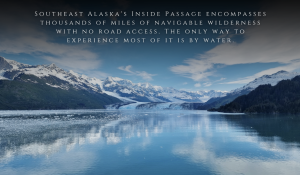
Alaska resists ordinary luxury-travel categories. It is too vast, variable, and alive to be reduced to a resort destination. Southeast Alaska alone stretches across thousands of miles of temperate rainforest, tidewater glaciers, narrow fjords, and remote passages that large vessels and road-based travel cannot easily reach.
For UHNW travelers, that is exactly the point.
A first-class flight to Juneau and a room in the best available hotel may get you to the edge of the wilderness, but it does not take you deep into it. Closing that final distance requires the right vessel, field expertise, local knowledge, and an itinerary that can respond to the landscape in real time.
Alaska’s wildlife does not operate on a schedule. Humpback whales may feed cooperatively in bubble nets. Brown bears may work salmon streams at the tide line. Steller sea lions may haul out on exposed rock. Orca pods may move through a passage without warning.
These are not staged wildlife encounters. They are field events. To experience them properly, an expedition must be able to respond, stay, wait, reposition, or change the day entirely.
The Inside Passage also runs through the Tongass National Forest, the largest national forest in the United States. Access here requires more than enthusiasm. It requires permits, relationships, and operational experience.
EYOS Expeditions, for example, holds a special use permit on the Tongass, reflecting long-standing engagement with the land management frameworks that govern this wilderness.
What a Private expedition delivers differently
The difference between an expedition charter and a private expedition is not semantic. A charter moves guests through scenic points. A true expedition is shaped by what the environment is doing.
The vessel is not the destination. The wilderness is the destination, and the vessel is the mobile base that makes access possible.
In practical terms, this means a well-run Alaska expedition may delay a meal because humpbacks are feeding ahead. It may reposition overnight because a bear has been regularly seen at a river mouth. It may hold an anchorage longer because conditions near a glacier face are exceptional.
These decisions require leadership with both authority and field knowledge. They also require guests who understand that the itinerary is not a rigid schedule but a framework.
This is the real value of exclusive Alaska expeditions by EYOS: not simply a private vessel, but a field-led journey where routing, pacing, and daily experiences are shaped by tides, wildlife movement, weather windows, and the specific interests of the group.
In Southeast Alaska, that responsiveness is what separates true expedition travel from scenic cruising.
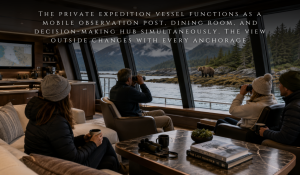
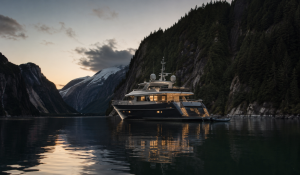
EYOS Expeditions’ dedicated Alaska vessel, Hanse Explorer, carries just 12 guests on a 47.7-metre ice-classed hull, with Zodiacs, kayaks, paddleboards, and a purpose-built dive tender for accessing coves and inlets beyond the reach of larger ships.
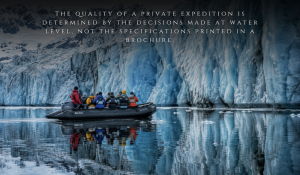
That scale changes the experience. In a channel where a 200-guest expedition ship becomes an event in itself, 12 guests in a Zodiac can move quietly through the landscape.
That kind of low-impact presence creates a form of access no conventional luxury infrastructure can buy.
The values driving the shift
Several forces are pushing UHNW travelers from resorts toward expeditions.
-
Privacy as the new premium
For ultra-wealthy travelers, genuine privacy has become one of the scarcest luxuries. Even the most exclusive resort still involves shared corridors, pools, restaurants, and common spaces.
A private expedition vessel carries only the invited group. Every meal, anchorage, landing, and wildlife encounter belongs to the people on board. Privacy is not a service tier. It is built into the structure of the journey.
-
Experience over acquisition
A growing number of wealthy travelers are moving away from acquisition-led status toward experience-led meaning. The question is no longer only what was purchased, but what was lived.
A private expedition to a tidewater glacier in the Tongass, or to an anchorage where the only sounds are calving ice and birds, cannot be replicated by budget alone. It requires timing, expertise, and a willingness to meet the environment on its own terms.
-
Legacy and shared memory
Expedition travel also resonates with affluent families because it creates shared experiences that outlast the trip itself.
Children who watch a brown bear fish a salmon stream, kayak within sight of a glacier, or see whales surface close to the vessel carry memories that no resort pool or spa day can quite produce. For many families, private expeditions have become a way to create stories that belong to the family as a whole.
What to ask before committing to a private Alaska expedition
For travelers entering the private expedition market for the first time, the usual luxury-purchase framework does not fully apply. Price point, fleet size, and brand recognition matter less than operational capability.
The better questions are field questions.
How flexible is the daily routing when conditions change?
Who has authority to delay, reposition, or abandon a planned stop?
What is their field background?
What happens if the primary destination is inaccessible due to weather, ice, or wildlife movement?
How does the operator manage its relationship with the ecosystems it moves through?
In Southeast Alaska, permits also matter.
Access to protected areas is governed by strict frameworks. The Tongass National Forest requires a special use permit for commercial expedition operations. Operators with long-standing relationships in these systems have credibility and access that newer entrants may not.
Vessel specification matters too, but not only in the way yacht brochures suggest. The meaningful details are operational: ice-class rating, Zodiac and tender capacity, shallow-draft access, and specialist equipment for the activities the group wants to pursue.
A beautiful saloon is pleasant. The ability to anchor where other vessels cannot reach is what changes the quality of every day.
The season, the access, and the decision
Southeast Alaska’s main expedition season runs from May to September. Within that window, timing changes the character of the journey. Early seasons can bring clearer weather and quieter wildlife conditions. Mid-summer offers long days and salmon runs that concentrate brown bear activity along shorelines accessible only by water.
Booking windows for private expedition vessels with genuine Alaska credentials are often longer than first-time clients expect. The strongest operators, vessels, and permit-backed programs fill their seasons well in advance.
For ultra-luxury travelers who have already covered the conventional circuit, Southeast Alaska is not simply another destination. It is a different category of experience.
Here, the landscape sets the agenda. Expertise is real rather than performed. Privacy is structural rather than promised. And the memories produced are not easily commodified or repeated.
That, in the end, is what luxury has always been about: not what can be bought at scale, but what cannot be replicated at all.
Author

Written by
Recent Posts
How to Measure Whether a Hair Loss Treatment Is Working
Is Online Psychiatry Covered by Insurance? What to Know Before Booking
Four Habits of Quietly Successful Entrepreneurs

The Most Common Preventable Health Concerns Doctors See Today
What Affects a Rideshare Injury Settlement?
Categories
- Art
- Articles
- Business of Luxury
- Celebrities
- Culture
- Entertainment
- Events
- Faces of Summer 2026
- Fashion
- Fashion & Style
- Featured
- Finance
- Food, Spirits, Wine
- Hamptons
- Hamptons Celebrities
- Health
- Health & Beauty
- Lifestyle
- Luxury Lifestyle
- Press
- Profiles
- Real Estate
- Technology
- The Chronicles
- Travel
- Uncategorized
- Weddings