
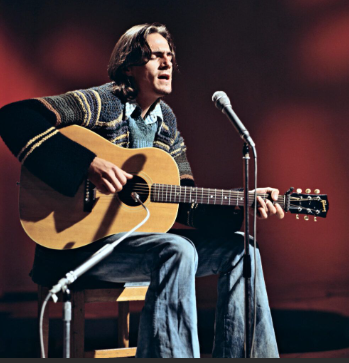
The boy was sleeping twenty hours a day. Not because he was lazy. Because staying awake meant feeling everything.
In the fall of 1965, seventeen-year-old James Taylor sat in his room at Milton Academy, one of New England’s most prestigious boarding schools. His father was a Harvard-trained physician on his way to becoming dean of the University of North Carolina’s medical school. His mother had trained at the New England Conservatory. The family summered on Martha’s Vineyard. Everything was perfect on paper.
Yet something inside the boy had collapsed. His grades cratered. His friends grew distant. Most troubling was the sleep. It wasn’t rest. It was escape.
Eventually, his parents made a decision that would both save his life and set the course for everything that followed. They committed their son to McLean Hospital, a psychiatric facility in Belmont, Massachusetts. The same institution that had housed Sylvia Plath. The same place where Ray Charles dried out and Robert Lowell wrestled his demons.
Taylor would later call those nine months “a lifesaver… like a pardon or a reprieve.” He earned his high school diploma there. He also began writing the songs that would eventually make him worth $80 million and cement his place as America’s most enduring voice of gentle heartbreak.
The Wound: When Father Went to the End of the Earth
James Vernon Taylor arrived on March 12, 1948, at Massachusetts General Hospital in Boston. His father Isaac was a rising star in medicine. His mother Gertrude had abandoned her opera dreams when she married him in 1946. James was the second of five children who would all, remarkably, become musicians. Alex, Kate, Livingston, and Hugh would each release albums, though none would achieve James’s stratospheric success.
In 1951, when James was three, Isaac Taylor moved the family to Chapel Hill, North Carolina. They built a home in a sparsely populated area called Morgan Creek. Years later, Taylor would describe the landscape as formative: “Thinking of the red soil, the seasons, the way things smelled down there, I feel as though my experience of coming of age there was more a matter of landscape and climate than people.”
That last phrase is telling. Consequently, the absence of people became central to young James’s emotional architecture.
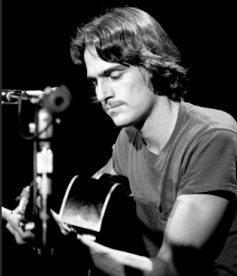
A Father at the South Pole
In 1955, when James was seven, Isaac Taylor volunteered for Operation Deep Freeze, a Naval expedition to Antarctica. For two years, Dr. Taylor lived at the bottom of the world. His wife Trudy, a Boston Brahmin who never quite fit in with North Carolina culture, was left to raise five children alone in a place that felt increasingly foreign to her.
The timing was devastating. James was at the age when boys most need their fathers. Instead, his father had literally gone to the end of the earth.
“During his two years there, Trudy Taylor became increasingly alienated from the politics and culture of North Carolina,” according to accounts from Taylor’s family. “It became a major dynamic in all of our lives.” When Isaac returned, the rift in the marriage never fully healed. Furthermore, both parents struggled with their own demons. Isaac was an alcoholic. Trudy suffered from depression and was frequently hospitalized during James’s childhood.
The Taylor children grew up in a beautiful house filled with music and pain in equal measure. Subsequently, mental illness and addiction would touch nearly every member of the family.
The Chip: Music as the Only Safe Place
Taylor first learned cello as a child, but he switched to guitar in 1960, developing a distinctive fingerpicking style that drew from his bass clef training. The summers on Martha’s Vineyard proved crucial. There, in 1963, a fifteen-year-old James met guitarist Danny Kortchmar. “I knew James had that thing,” Kortchmar later recalled.
Music became Taylor’s refuge. At age fourteen, he was already performing in coffee shops around the Vineyard. A contemporary newspaper article described him as “probably the most outstanding young folksinger on the Island.” Notably, he had found something he could control, something that felt like home when home itself was fracturing.
The Breaking Point
But the depression was patient. It waited.
By his junior year at Milton Academy, Taylor was sleeping most of his life away. “My folks were educated people, and they had expectations,” he later told the Chicago Tribune. “I assumed it meant finishing school, finding a career, probably an academic one. But my family fell apart, and I fell apart. It was mysterious to me why. I had no expectations of what would happen to me.”
In late 1965, Taylor checked himself into McLean Hospital. The Milton headmaster later observed that “James was more sensitive and less goal-oriented than most students of his day.” Perhaps. Or perhaps he was simply the one who felt the family’s unspoken pain most acutely.
At McLean, Taylor was heavily medicated with chlorpromazine. However, the structure helped. The organized days gave him “a sense of time and structure.” More importantly, he wrote songs. “Knocking ‘Round the Zoo” emerged from those months, an early meditation on institutional life that hinted at the confessional genius to come.
The Rise: From Heroin to the Cover of Time
After leaving McLean in 1966, Taylor formed a band called the Flying Machine with Kortchmar and began playing Greenwich Village clubs. “I learned a lot about music and too much about drugs,” Taylor would say of this period. Specifically, he learned about heroin.
“I just fell into it, since it was as easy to get high in the Village as get a drink,” he recalled. The addiction consumed him. He let runaways and criminals stay at his apartment. His manager abandoned him. The Flying Machine crashed.
A Father’s Midnight Rescue
One night, broke and desperate, James called his father. Isaac Taylor flew to New York, rented a car, and drove thirteen hours through the night back to Chapel Hill with his son and his possessions. That act of fatherly devotion would later be immortalized in Taylor’s song “Jump Up Behind Me.”
After six months of treatment and a throat operation to repair vocal cords damaged from singing too harshly, Taylor tried again. In late 1967, he moved to London. Remarkably, he caught the ear of Peter Asher, a talent scout for the Beatles’ Apple Records. Paul McCartney was impressed. Taylor became the first American artist signed to the label.
His self-titled debut was recorded with contributions from McCartney and George Harrison. Nevertheless, Taylor was still battling heroin. He returned to another psychiatric hospital, this time Austin Riggs in Massachusetts.
Sweet Baby James Changes Everything
In 1970, everything changed. Taylor signed with Warner Bros. and released Sweet Baby James, named for his newborn nephew. The album included “Fire and Rain,” a song that distilled years of pain into three devastating verses.
The first verse mourned Suzanne Schnerr, a friend from the Flying Machine days who had committed suicide while Taylor was in London recording his debut. His friends had hidden the news for six months, afraid it would derail his career. The second verse addressed his heroin addiction directly: “Won’t you look down upon me Jesus, you gotta help me make a stand.” The third referenced McLean and his shattered dreams.
Both the album and the single reached number three on the Billboard charts. Sweet Baby James sold over three million copies. In 1971, Taylor appeared on the cover of Time magazine, heralded as the harbinger of the singer-songwriter era.
His next album, Mud Slide Slim and the Blue Horizon, featured his version of Carole King’s “You’ve Got a Friend.” King had written it as a direct response to “Fire and Rain,” specifically the line “I’ve seen lonely times when I could not find a friend.” Taylor’s recording reached number one. In 1972, he won his first Grammy.
James Taylor Net Worth 2025: Breaking Down the $80 Million Fortune
As of 2025, James Taylor’s net worth stands at approximately $80 million, according to Forbes and Celebrity Net Worth. This figure reflects five decades of consistent commercial success, strategic career management, and prudent investment. Here’s how the fortune breaks down.
Music Catalog and Royalties
Taylor’s music catalog generates substantial ongoing revenue. His 1976 Greatest Hits compilation has been certified Diamond, selling over 11 million copies in the United States alone. According to industry estimates, Taylor’s catalog and streaming royalties account for approximately $20-25 million of his net worth, with ongoing annual earnings from this source reaching $1-2 million.
Songs like “Fire and Rain,” “You’ve Got a Friend,” and “Sweet Baby James” continue to receive significant radio play and streaming. “Fire and Rain” was ranked at number 227 on Rolling Stone’s list of the 500 greatest songs of all time, and number 82 on BMI’s “Top 100 Songs of the Century.”
Touring Revenue
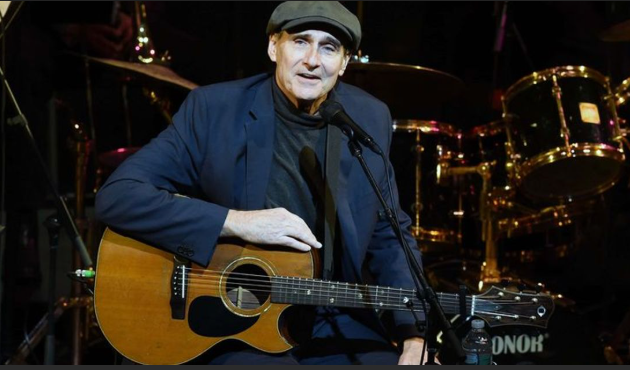
Even in his mid-seventies, Taylor remains a formidable touring act. His concerts command between $200,000 and $500,000 per show, with larger stadium dates and joint tours grossing over $1 million per night. On average, touring generates $3-5 million annually.
Taylor frequently tours with fellow legends like Bonnie Raitt and Jackson Browne, drawing devoted audiences who have followed his music for generations. His 2024 Tanglewood Medal from the Boston Symphony Orchestra recognized not just his artistry but his significant contributions to the Berkshires musical community.
Real Estate Holdings
Taylor’s real estate portfolio represents a significant portion of his wealth. In the 1970s, at the height of his initial fame, he purchased a 145-acre estate on Martha’s Vineyard. Today, that property alone could fetch between $10 million and $20 million based on comparable island sales.
His primary residence is in Lenox, Massachusetts, a quiet town in the Berkshires that’s home to Tanglewood, the summer residence of the Boston Symphony Orchestra. The connection is significant: Taylor met his third wife, Caroline “Kim” Smedvig, when she was the BSO’s director of public relations.
Interestingly, Taylor’s ex-wife Carly Simon also owns property on Martha’s Vineyard, just 25 minutes from his estate. They reportedly haven’t spoken since their 1983 divorce.
Album Sales and Recording Income
Taylor has sold over 100 million records worldwide. Every album he released from 1977 to 2007 sold over one million copies. His combined album and single sales in the United States alone are certified at 33 million.
In 2015, Before This World became his first number-one album on the Billboard 200, forty-five years into his recording career. His 2020 album American Standard won the Grammy for Best Traditional Pop Vocal Album, making him the first artist to have a Billboard Top 10 album in each of the past six decades.
The Tell: The Wound That Never Fully Heals
Taylor finally got sober in 1983, spurred by the deaths of friends John Belushi and Dennis Wilson and by his desire to be a better father to Sally and Ben, his children with Carly Simon. He discontinued methadone over four months and has remained clean for over four decades.
Nevertheless, the psychological scars remain visible. “I’ve been institutionalized four times,” he told iNews in 2020. “I describe myself as suffering from ‘inappropriate programming.’ If I could just get out of my own way, life would be a dream. I would have thought that by this time I would have learned to get it right.”
His 1997 album Hourglass confronted his pain directly. “Jump Up Behind Me” paid tribute to his father’s midnight rescue from New York. “Enough To Be on Your Way” mourned his brother Alex, who died of an alcohol-induced heart attack in 1993. The tragedy had a cruel symmetry: Alex died on James’s 45th birthday.
“It’s an inseparable part of my personality that I have these feelings,” Taylor has said of his depression. “Challenges like mental health struggles open people up and motivate people to make art. It’s sort of the root of compassion for others as well.”
The Connection: Why the Berkshires Make Sense
Taylor now lives in Lenox, Massachusetts, with his third wife Caroline and their twin sons, Rufus and Henry, born in 2001. The choice of location is psychologically illuminating.
The Berkshires offer the same qualities Taylor found healing in Chapel Hill: rolling hills, quiet beauty, a connection to nature. Yet they’re in New England, closer to his Boston roots. Tanglewood provides access to serious music without the chaos of a major city.
His home is described as large but understated, tucked away in the woods and surrounded by trees. He owns a vintage plane worth roughly $600,000 and maintains an extensive guitar collection. But unlike many peers, Taylor never pursued flashy status symbols.
The man who once slept twenty hours a day to escape his pain has built a life of deliberate calm. Six Grammy Awards. Induction into both the Rock and Roll Hall of Fame and the Songwriters Hall of Fame. The Presidential Medal of Freedom from Barack Obama in 2015. The Kennedy Center Honors in 2016.
All of it earned by a man who was once too broken to stay awake.
The Beautiful Paradox
James Taylor’s net worth of $80 million represents far more than commercial success. It’s the accumulated value of a man who transformed his deepest wounds into art that has comforted millions.
His mansion on Martha’s Vineyard is beautiful. So is the estate in the Berkshires. But they’re also bandages on a wound that will never fully close. Every time Taylor sings “I’ve seen fire and I’ve seen rain,” he returns to that moment when his friends told him Suzanne was dead. Every time he performs “Sweet Baby James,” he’s still the boy whose father went to Antarctica.
“Our culture isn’t very supportive of bringing kids to adulthood, particularly in the States,” Taylor observed recently. “It was the perfect storm, my family coming off the rails.”
And yet from that wreckage came one of America’s most enduring musical voices. The hurt child is still there, visible in every performance. But so is the survivor. So is the father who broke the cycle. So is the man who turned twenty hours of sleep into fifty years of songs that have helped others stay awake.
Success doesn’t erase childhood. Money doesn’t heal wounds. That $80 million fortune is real. And it was built on beautiful brokenness.
Related Articles:
- Carly Simon Net Worth 2025: The Songwriting Queen’s Musical Empire
- Carole King Net Worth 2025: You’ve Got a Friend and $90 Million
- Joni Mitchell Net Worth 2025: Blue Became Gold
- Jackson Browne Net Worth 2025: Running on Empty to $50 Million
For features, advertising, and partnership inquiries: Contact Social Life Magazine
Join us at Polo Hamptons: polohamptons.com
Subscribe to our print edition | Join our email list | Support our journalism with $5
Author

Written by
Recent Posts
The Renegade Housewives of Pop Art: A Memoir of the 1960s

Nicole Miller

Unlocking the Berkshires

Dalia Forman Design

Alberto Luzzi
Categories
- Art
- Articles
- Business of Luxury
- Celebrities
- Culture
- Entertainment
- Events
- Faces of Summer 2026
- Fashion
- Fashion & Style
- Featured
- Finance
- Food, Spirits, Wine
- Hamptons
- Hamptons Celebrities
- Health
- Health & Beauty
- Lifestyle
- Luxury Lifestyle
- Press
- Profiles
- Real Estate
- Technology
- The Chronicles
- Travel
- Uncategorized
- Weddings