
Today, these four men command a combined fortune exceeding $4.5 billion. Their films have grossed over $15 billion worldwide. They’ve won twelve Academy Awards between them. More importantly, they’ve shaped what American cinema can be, each one processing childhood wounds through the only therapy that worked: the camera.
This is the definitive guide to the directors shaping culture in 2025. Not their box office numbers, though those are staggering. Not their awards, though those fill walls. The real story is simpler and more human: four boys who found salvation in storytelling, and never stopped.
The Directors Shaping Culture: Four Origin Stories
What connects Steven Spielberg, Martin Scorsese, Christopher Nolan, and Quentin Tarantino isn’t generation or genre. It’s wound. Each filmmaker built his empire on a fracture that never fully healed. Their films are bandages applied at scale, projected onto screens worldwide.
Understanding their net worth requires understanding their origins. The money follows the obsession. The obsession follows the pain.
Steven Spielberg: The $4 Billion Dreamer of Georgica Pond
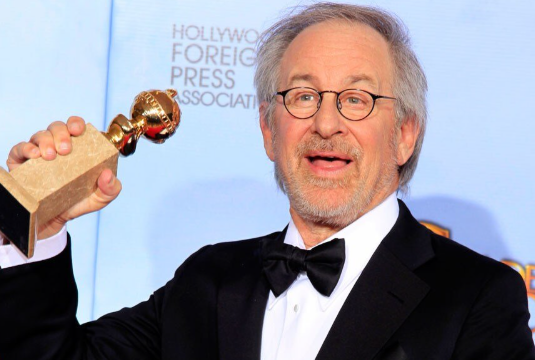
Estimated net worth: $4 billion
The wound: parental divorce and the mythology of paternal abandonment he carried for decades before learning the truth.
Steven Spielberg grew up in Phoenix, Arizona, watching his parents’ marriage disintegrate. His father Arnold, an electrical engineer, seemed emotionally absent. His mother Leah filled the void with manic creative energy. When they divorced, teenage Steven blamed his father completely.
Only in his fifties did Spielberg discover the full story: his mother had fallen in love with his father’s best friend. The abandonment narrative he’d built his entire filmography around had been wrong. By then, he’d already made E.T., Hook, Catch Me If You Can, and dozens of other films exploring absent fathers and broken families.
The reconciliation came late. The fortune came earlier. Backend deals on blockbusters, DreamWorks equity, and shrewd investments accumulated into the largest personal wealth of any filmmaker in history. His Georgica Pond estate in East Hampton represents the ultimate arrival: the Jewish kid from Arizona tract homes living among old money he’d only dreamed about.
Read the full origin story: Steven Spielberg Net Worth 2025: The $4 Billion Dreamer Who Never Stopped Running
Martin Scorsese: The $200 Million Saint of Elizabeth Street
Estimated net worth: $200 million
The wound: severe childhood asthma that made him an observer rather than a participant, combined with the failure to become a priest.
Martin Scorsese spent his childhood on a fire escape in Little Italy, watching life he couldn’t participate in. Asthma kept him indoors while other boys played stickball. The seminary rejected him after one year. Both exclusions shaped everything that followed.
If he couldn’t serve God through the Church, he’d serve through cinema. His films became confessionals: Mean Streets, Taxi Driver, Raging Bull, Goodfellas. Each one explored men seeking salvation in all the wrong places. Catholic guilt permeates every frame.
At eighty-two, Scorsese shows no signs of slowing. Killers of the Flower Moon proved he could still command three-and-a-half hours of screen time. His $200 million fortune has funded film preservation efforts that have saved over 950 classic movies. The boy who watched from the sidelines became the keeper of cinema’s flame.
Read the full origin story: Martin Scorsese Net Worth 2025: The $200 Million Saint of Elizabeth Street
Christopher Nolan: The $250 Million Architect of Time
Estimated net worth: $250 million
The wound: a transatlantic childhood split between London and Chicago that left him belonging fully to neither place.
Christopher Nolan’s parents maintained homes in two countries. Young Christopher held dual citizenship, dual accents, dual identities. Friends made in one country were abandoned for the other. Continuity was a concept for other children.
His films obsess over time’s malleability because he lived its distortions. Memento runs backward. Inception layers dream-time. Interstellar bends relativity into father-daughter pathos. Tenet inverts causality entirely. Each film is a blueprint for the fractured childhood he’s still processing.
The $250 million fortune came through the Dark Knight trilogy, which grossed over $2.4 billion, and original films that proved audiences would embrace complexity. His Oppenheimer Oscar vindicated a career built on refusing to simplify. Unlike his childhood, his adult life features permanence: one wife since college, four children, a Los Angeles home that doesn’t require crossing oceans.
Read the full origin story: Christopher Nolan Net Worth 2025: The $250 Million Architect of Time
Quentin Tarantino: The $120 Million Video Store Auteur
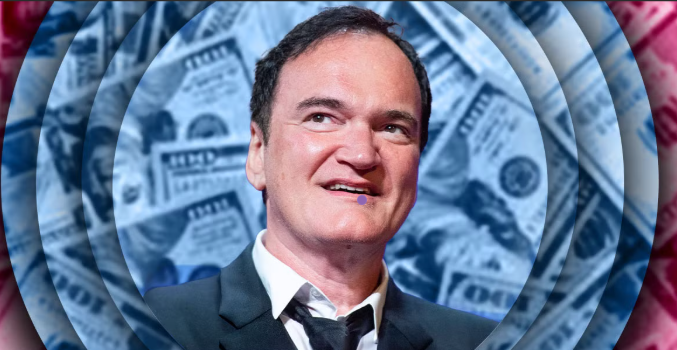
Estimated net worth: $120 million
The wound: abandonment by his biological father and the dropout’s need to prove formal education wrong.
Quentin Tarantino’s father left before he turned two. His mother Connie believed in his obsession when schools wouldn’t. She signed his dropout papers at sixteen and told him he’d be okay because he knew things other people didn’t.
Five years behind the counter at Video Archives in Manhattan Beach became his film school. He memorized the shelves, argued about obscure directors with anyone who’d listen, and wrote screenplays during slow hours. Hollywood read his scripts, loved his dialogue, and refused to let him direct.
Then Reservoir Dogs premiered at Sundance, Pulp Fiction won the Oscar, and the dropout who’d memorized VHS boxes became the most distinctive voice in American cinema. The $120 million fortune accumulated through directing fees and backend deals. His New Beverly Cinema, which he purchased in 2007, preserves the repertory programming that educated him.
One film remains before his promised retirement. The video store clerk is almost done proving everyone wrong.
Read the full origin story: Quentin Tarantino Net Worth 2025: The $120 Million Video Store Auteur
The Combined Fortune: $4.57 Billion in Cinematic Wealth
Together, these four directors represent unprecedented concentration of creative and financial power:
| Director | Net Worth 2025 | Combined Box Office | Oscar Wins |
|---|---|---|---|
| Steven Spielberg | $4 billion | $10.6 billion | 3 |
| Christopher Nolan | $250 million | $6.1 billion | 2 |
| Martin Scorsese | $200 million | $2.3 billion | 1 |
| Quentin Tarantino | $120 million | $1.6 billion | 2 |
| Total | $4.57 billion | $20.6 billion | 8 |
The numbers tell one story. The origins tell another. Each fortune traces back to a specific wound: divorce, illness, displacement, abandonment. The camera became the coping mechanism. The coping mechanism became an empire.
What Connects These Directors
Beyond the billions, certain threads run through all four careers:
The Outsider Origin
None of these directors came from Hollywood families. Spielberg was a Jewish kid in Arizona. Scorsese was an asthmatic Italian in Little Italy. Nolan was a British-American without a fixed home. Tarantino was a dropout. Each brought an outsider’s hunger that never fully faded, even after the awards and the estates.
The Practical Obsession
All four prefer practical effects over CGI when possible. Spielberg famously hid the malfunctioning shark in Jaws. Scorsese choreographs violence with balletic precision. Nolan crashes real planes and builds rotating hallways. Tarantino shoots on film and bans digital projection from his theater. The commitment to physical reality isn’t nostalgia. It’s philosophy.
The Backend Deal
Each director negotiated profit participation that transformed directing fees into fortunes. Spielberg pioneered gross participation deals that have generated over $1 billion personally. Nolan’s Dark Knight contracts included substantial backend. These weren’t accidents. They were strategic moves by filmmakers who understood their leverage.
The Refusal to Stop
Spielberg is seventy-eight and developing new projects. Scorsese is eighty-two and just released a three-hour epic. Nolan is fifty-four and planning his next original. Tarantino, at sixty-one, insists on stopping at ten films specifically because he doesn’t want to decline. The work ethic is pathological, but it’s also the point. Making films isn’t what they do. It’s what they are.
The Wounds That Built Empires
There’s a temptation to celebrate these fortunes as pure success stories. Certainly, the money is real. The cultural impact is undeniable. The films have shaped how generations understand cinema.
But the deeper truth is less comfortable. Every one of these directors is still processing something that broke in childhood. Spielberg’s films about absent fathers. Scorsese’s films about guilt-racked men seeking absolution. Nolan’s films about fractured time and identity. Tarantino’s films about outsiders who talk their way to power.
The $4.57 billion combined fortune is impressive. The wound beneath the wealth is more interesting. These men found a way to transmute pain into art, and art into empire. Their estates are beautiful. Their legacies are secure. Both are bandages on fractures that never fully healed.
That’s not tragedy. That’s just the truth about how great art gets made.
Related Articles
- Steven Spielberg Net Worth 2025: The $4 Billion Dreamer Who Never Stopped Running
- Martin Scorsese Net Worth 2025: The $200 Million Saint of Elizabeth Street
- Christopher Nolan Net Worth 2025: The $250 Million Architect of Time
- Quentin Tarantino Net Worth 2025: The $120 Million Video Store Auteur
Connect With Social Life Magazine
For features, advertising, and partnership inquiries, visit sociallifemagazine.com/contact
Experience Polo Hamptons: polohamptons.com
Subscribe to our print edition for exclusive Hamptons coverage delivered to your door.
Support independent journalism: Donate $5
Author

Written by
Recent Posts

How to Pick a Homecoming Dress for Your Body Type (and Feel Amazing in It)

World Cup Injury Attorney for Vancouver Events
What a 3-Carat Engagement Ring Actually Costs in 2026: The Real Numbers
The Skincare Habits That Make a Real Difference Over Time
Hamptons-Ready Beauty: Polished Makeup for Long Summer Days
Categories
- Art
- Articles
- Business of Luxury
- Celebrities
- Culture
- Entertainment
- Events
- Faces of Summer 2026
- Fashion
- Fashion & Style
- Featured
- Finance
- Food, Spirits, Wine
- Hamptons
- Hamptons Celebrities
- Health
- Health & Beauty
- Lifestyle
- Luxury Lifestyle
- Press
- Profiles
- Real Estate
- Technology
- The Chronicles
- Travel
- Uncategorized
- Weddings