The music industry has one playbook: release often, post constantly, stay visible, repeat. Adele’s net worth — estimated at $220 million — was built by ignoring every word of it. Between albums she went quiet. Not strategically quiet, not PR-managed quiet. Actually quiet. No brand partnerships. No festival appearances — and certainly no carefully curated Instagram grid. Meanwhile, the artists who followed the playbook released singles every six weeks and watched their streaming numbers spike and flatten and spike again. Adele released three albums in twelve years and became one of the wealthiest musicians alive. The math is not complicated. The discipline required to run it, however, is another matter entirely.
The Before: Tottenham, a Big Voice, No Plan
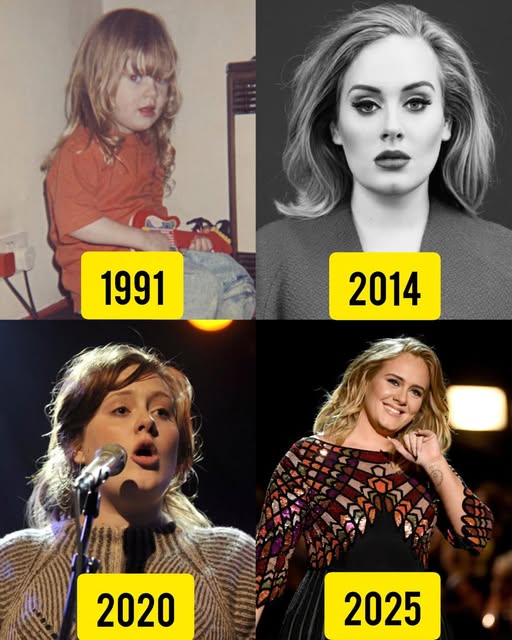
Adele Laurie Blue Adkins grew up in Tottenham, north London, raised by a single mother who moved the family repeatedly through her childhood. The household was not musical in any formal sense. However, it was loud — emotionally alive, full of the kind of domestic drama that teaches a child, without anyone intending it, how feelings work. She enrolled at the BRIT School for Performing Arts at 14, where classmates included Jessie J and Leona Lewis. Notably, the school does not manufacture pop stars through formula. Instead, it tends to produce artists who know what they sound like before anyone tells them what to be.
Adele 4 photos
The teacher who almost wasn’t
Adele has said, in various interviews over the years, that she expected to work in the music industry — not as a performer, but behind the scenes. She imagined managing artists, possibly teaching. The performing felt incidental. A MySpace demo uploaded by a friend in 2006 reached an XL Recordings executive who signed her within months. Consequently, the career began not with auditions or showcases but with the internet doing what it occasionally does: finding something real before the industry does and sending it upward.
The Pivot Moment: The Gap Between Records
19 arrived in 2008. 21 followed in 2011. The gap between them was three years — unremarkable by the standards of an earlier industry era, but already longer than the new digital release cycle encouraged. 21 sold 31 million copies worldwide. It won six Grammy Awards. Adele became the first artist to win Album, Record, and Song of the Year twice. Then she went home. Not to a studio. Home.
Four years passed before 25 appeared in 2015. Harvard Business Review’s research on scarcity and brand value is precise about what happens in that kind of gap: perceived value rises when supply withdraws and evidence of quality exists in the market. Both conditions applied. Furthermore, the absence created something no PR campaign could manufacture — genuine, unmanaged anticipation. When “Hello” dropped in October 2015, it broke the record for most Spotify streams in a single day. The gap had done its work.
What six years of silence actually built
Between 25 and 30, six years elapsed. A marriage. A divorce. Therapy. A son growing up. Adele documented none of it in real time. Additionally, she gave no interviews, announced no projects, and offered no content to fill the space the audience left open for her. That open space became productive. Fans wrote essays about what her next album might sound like. Meanwhile, publications speculated about her personal life on minimal evidence. By the time 30 released in November 2021, the cultural appetite was not casual interest. It was something closer to genuine need — and genuine need pays premium prices for its resolution.
The Climb: Three Albums, $220M, Zero Content Strategy
Forbes tracked Adele’s Las Vegas residency — titled Weekends with Adele, launched at Caesars Palace in November 2022 — as one of the highest-grossing residency runs in the venue’s history. Tickets sold out within minutes of release. Resale prices reached multiples of face value within hours. Among celebrities who built leverage by pulling back from the market, the residency model represents the logical endpoint of the scarcity strategy: a fixed location, a finite number of shows, a price point that reflects genuine demand rather than wishful supply.
Why the Las Vegas residency changed the math
McKinsey’s research on experience economy premiums documents why location-specific, finite events command pricing that touring cannot match. The ceiling on a tour ticket is set by the number of venues and dates available. A residency compresses the same demand into fewer slots, concentrates the audience geographically, and creates the conditions for a pilgrimage rather than a concert. Fans flew from London. From Australia. From Tokyo. Furthermore, the intimacy of a residency venue — smaller than a stadium, purpose-built for performance — delivered something the album cycle alone never could: Adele in a room, doing what she does, for an audience that had waited years for the privilege.
The Hamptons Chapter: The Summer She Didn’t Show Up
Adele does not summer in the Hamptons in any documented, recurring sense. That absence is itself worth examining. The East End social circuit rewards presence — the right dinners, the right events, the slow accumulation of face-to-face relationships that convert over time into deals, collaborations, and invitations. Adele’s social strategy, to the extent she has one, runs on different logic entirely. She builds depth with a small group rather than breadth across many. Consequently, she appears in the Hamptons conversation the same way she appears everywhere: intermittently, on her own terms, and only when something genuine pulls her there.
Nevertheless, the Hamptons dining scene and the East End summer calendar operate on precisely the values she embodies: restraint, selectivity, and the understanding that not every room deserves your presence. The people who matter most on the East End know this instinctively. It is why, when Adele does appear somewhere, the room registers it — and why the same cannot be said for celebrities who are everywhere all the time.
What She Actually Built: The Adele Net Worth Breakdown
Adele’s net worth of approximately $220 million derives from a concentrated set of sources rather than a diversified brand portfolio. Album sales and streaming royalties form the foundation — 21 alone generated revenues that would constitute a career for most artists. Live performance is the second pillar. The Las Vegas residency extended through multiple run dates and generated reported nightly grosses that rival the top-earning tours of any given year. Additionally, publishing rights — ownership of her songwriting catalog — compound quietly in the background, generating income each time the music is used, covered, or licensed.
The scarcity premium in numbers
What makes the number notable is what it does not include. The list is striking in its restraint: no fragrance line, no fashion collaboration, no wellness brand, no podcast. Social media monetization does not appear anywhere in the picture. Bain’s research on luxury scarcity pricing identifies a consistent pattern among premium brands: the refusal to extend into adjacent categories preserves the core product’s perceived value. Every time a luxury house launches a budget line, the flagship suffers. Adele has never launched a budget line. Moreover, she has never licensed her name to a product that would place her in a consumer’s bathroom cabinet or gym bag. Among celebrities who stepped back from fame and won, she alone achieved the result without building a business alongside the art. The art was the business.
The Soft Landing: The Pivot That Became the Template
Adele spin
Adele did not invent scarcity as a strategy. Artists from Lauryn Hill to Kate Bush operated on long release cycles, by choice or circumstance, and generated cult followings as a result. What Adele did, however, was execute the strategy at mainstream pop scale — in an era when every structural incentive pushed in the opposite direction. The streaming economy rewards frequency. Platforms reward consistency above all else. Meanwhile, the social media machine demands daily presence. She declined every incentive and collected the premium that refusal created.
What every artist misreads about the Adele model
The misread is predictable. Artists observe the gap between records and conclude that the silence is the strategy. It is not. Rather, the silence works because the music is undeniable when it arrives — because the emotional content is specific and earned rather than manufactured to a release schedule. BCG’s research on emotional brand equity documents the distinction: consumers will wait for something they believe is genuine. By contrast, they will not wait for something that merely performs genuineness on a slower schedule. Furthermore, Adele’s silences are not empty. They are full of the life that produces the songs. The divorce that produced 30 was not a content strategy — it was a marriage that ended. Ultimately, the album arrived when she had something real to say about it, not when a quarterly release plan required a product.
Adele Elegant
The currency that actually appreciates
That is the thing about Adele’s net worth that no spreadsheet quite captures. The $220 million is not the product of a plan. It is the product of a person who understood, without necessarily articulating it, that the most valuable thing she had was not her output. It was the audience’s faith that when she did appear, it would be worth the wait. She has never given them reason to doubt that. Consequently, they have never stopped believing it — and belief, in the attention economy, is the only currency that consistently appreciates.
Related Articles: