
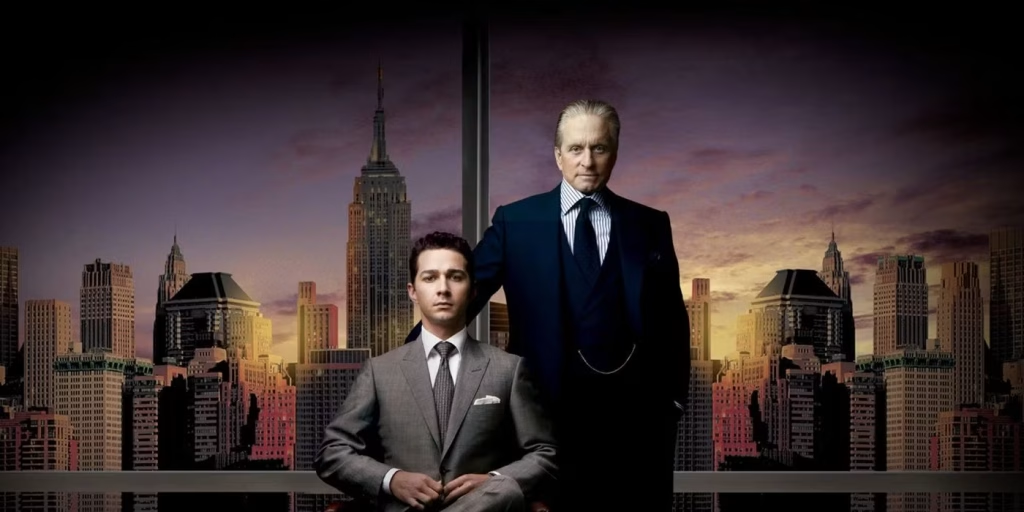
Meanwhile, gordon Gekko went to prison in 1987 for insider trading and securities fraud. He served eight years. Indeed, when he walked out of Otis Federal Prison in 2001, a guard handed him his personal effects in a clear plastic bag. A gold money clip. One brick-sized cell phone. A watch worth less than the processing fee. Nobody waited for him outside.
Meanwhile, the world had moved on. Ultimately, corporate raiders gave way to a new breed: derivatives traders, CDO architects, and mortgage-backed securities engineers. By contrast, their instruments grew so complex that regulators couldn’t explain them and rating agencies wouldn’t question them. In particular, the public wouldn’t understand any of it until September 2008. Then the system collapsed. Specifically, ten trillion dollars in household wealth evaporated in eighteen months. As a result, oliver Stone released Wall Street: Money Never Sleeps on September 24, 2010, hoping to do for the 2008 crisis what the original had done for 1980s excess. He failed. But the failure teaches, and the film’s position as the final chapter in the Wall Street cinema canon makes its shortcomings as revealing as the original’s strengths.
The Real Crisis Behind the Fiction: Bear Stearns, Lehman, and the Weekend That Broke the System
Stone’s fictional framework maps directly onto real events. Similarly, keller Zabel Investments — where Shia LaBeouf’s Jake Moore works as an energy prop trader — blends Bear Stearns and Lehman Brothers into a single doomed institution. Frank Langella plays Louis Zabel, the managing director whose firm crumbles when insolvency rumors trigger a liquidity crisis. Bear Stearns provides the template. In March 2008, its stock dropped from $62 to $2 per share in a single week. JPMorgan then swallowed the firm in a Federal Reserve-brokered fire sale.
Bretton James and the $3 Insult
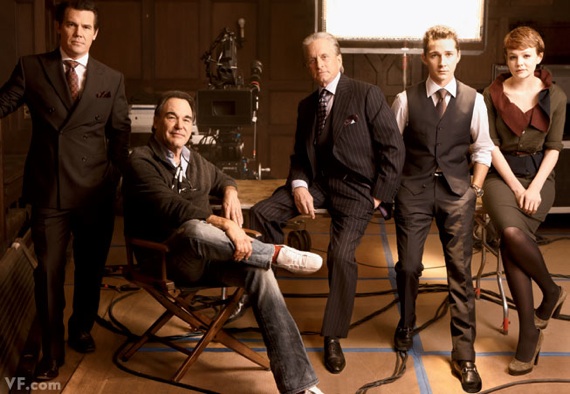
In the film, Bretton James — Josh Brolin’s character, whose firm Churchill Schwartz stands in for Goldman Sachs — blocks Zabel’s bailout request at the Federal Reserve. He offers to buy Keller Zabel stock at $3 per share against its $75 trading value from the prior week. Zabel commits suicide the next morning. That suicide is fiction. The humiliation that drives it is not.
Dick Fuld, Lehman Brothers’ CEO, watched his firm’s stock collapse from $82 to $0.16 before the September 15, 2008 bankruptcy. It remains the largest in American history. Weekend sessions at the Federal Reserve, where bank CEOs and Treasury officials negotiated which institutions would survive, played out repeatedly that year. Stone consulted with Nouriel Roubini, the NYU economist who predicted the crisis, and Jim Chanos, a hedge fund manager who pushed Stone toward a bigger target. Chanos told him: “There was a much more important story in what happened with the system.” Stone listened but could not fully execute the advice. Dramatizing a system through a personal lens proved too difficult. His film captures the crisis’s emotional texture — the panic, the brutality, the survival instinct — while failing to explain the mechanics that produced it.
The Return of Gekko: A Villain Rebranded as a Prophet Nobody Believed
Michael Douglas returns as Gordon Gekko in a role that should have crowned his career and instead constrained it. Prison has not reformed Gekko. It has repositioned him. By 2008, he promotes a book titled Is Greed Good? and delivers university lectures. He warns students they belong to “the NINJA Generation: No Income, No Job, No Assets.” He publicly predicts the collapse everyone in the audience already lived through.
Why Being Right Makes a Character Boring
Dramatic irony should create tension here: a character warns about a crisis we know is coming. Instead, it creates distance. Gekko is right about everything, which makes him dull. In the original, he seduced you. In the sequel, he lectures you. Stone and Douglas both understood they needed to recalibrate the character for a world that absorbed the original’s warning rather than heeding it.
Gekko addresses his famous line directly. Speaking to an auditorium, he says, “Someone reminded me I once said ‘Greed is good.’ Now it seems it’s legal.” Accurate — and also a confession of defeat. The original argued that greed endangered. This sequel acknowledges that greed won. Instruments so abstract that exploitation no longer requires lawbreaking — credit default swaps, synthetic CDOs, mortgage-backed securities — replaced the corporate raiding Gekko once practiced. All of it stayed legal. Gekko, the individual villain, becomes irrelevant when the villainy runs on autopilot.
Jake Moore and the Two-Fathers Structure — Again
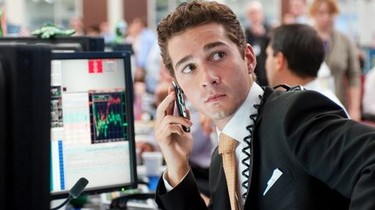
Shia LaBeouf’s Jake Moore fills the same structural position Charlie Sheen’s Bud Fox held in the original: a young man torn between two mentors. Louis Zabel (Langella) reimagines Carl Fox as a financier — decent, paternal, ultimately destroyed by the system he served honorably. Bretton James (Brolin) updates Gekko as a predator who bets against the subprime market while securing a government bailout for his own firm.
When Every Father Is Corrupt
Stone deployed this two-fathers architecture in Platoon (Berenger versus Dafoe), in the original Wall Street (Gekko versus Carl Fox), and now again in the sequel. In 1986 and 1987, the template worked because the moral landscape offered clarity: a right father and a wrong father, with the son forced to choose. By 2008, that landscape had collapsed.
No right father exists in this film. Zabel is honest, but his firm participates in the same system that destroys it. James stays predatory, yet his predation remains legal. Gekko shows perception, then steals $100 million from his own daughter’s trust fund the moment he can. Carey Mulligan’s Winnie Gekko — the film’s conscience, the only character who rejects the system entirely — forgives her father only to face his betrayal again. Jake’s choice runs not between good and evil but between flavors of complicity. Stone originally shot a darker conclusion. Neither the studio nor the audience could face it, so the film delivers a reconciliation that critics uniformly called false.
Bud Fox Returns: The Cameo That Closes the Loop
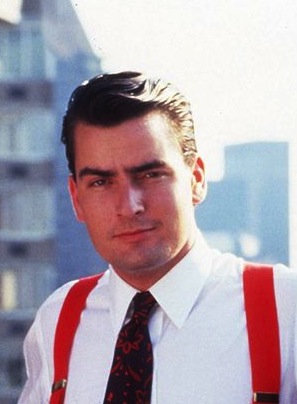
Charlie Sheen appears in a single scene as Bud Fox. According to the film’s timeline, Fox served his own prison sentence, bought Bluestar Airlines, built it into a success, sold it for millions, and retired to play golf. Nostalgia drives the cameo rather than narrative necessity, but the implications run deep. Fox cooperated with prosecutors, went to jail, came out, and built a legitimate fortune.
At a $10,000-a-seat fundraiser, Fox encounters Gekko — the former protégé and the former mentor, both freed from the system that created them. Gekko confronts Bretton James at the same event. James delivers the sequel’s most devastating line: “No one cares what you think anymore.” With nine words, the new villain captures what the old villain cannot accept. Personal, visible, punishable corruption has given way to something impersonal, invisible, and immune to prosecution.
Churchill Schwartz and the Goldman Problem
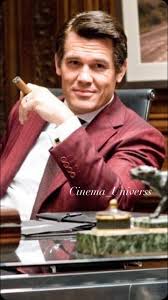
Josh Brolin’s Bretton James stands as the sequel’s most interesting character and its most underwritten one. Churchill Schwartz operates as Goldman Sachs with a different nameplate. The firm profited from the crisis it helped create, betting against the same mortgage-backed securities it sold to clients. Then it secured a government bailout while competitors died. Brolin plays James with physical confidence bordering on contempt — a man who knows the system will protect him because it cannot afford not to.
Where Other Films Succeeded
Failing to prosecute Churchill Schwartz fully remains the film’s central artistic mistake. The Big Short, released five years later, succeeded precisely where Money Never Sleeps fell short. It explained CDOs and credit default swaps, named the institutional culprits, and made audiences feel the moral outrage the crisis deserved. Margin Call succeeded through compression: one firm, one night, one decision.
Stone attempted everything at once: the crisis, the family drama, the mentor-protégé betrayal, the clean energy subplot, the Gekko redemption arc. The ambition diluted the indictment. Rodrigo Prieto’s cinematography delivers visual gorgeousness. The Federal Reserve set pieces rank among Stone’s strongest sequences. Yet the film goes soft in exactly the places where the original cut hard.
Why the Sequel Failed Where the Original Succeeded
Wall Street (1987) worked because it put a face on corruption. Gordon Gekko was a person. You could see his suits, hear his voice, watch his hands move as he explained why your pension fund would make him rich. That corruption was personal, theatrical, and therefore comprehensible.
By contrast, the 2008 crisis had no Gekko. It had spreadsheets, tranches, and correlation assumptions embedded in Gaussian copula models that sellers couldn’t explain to buyers. No man sat in a corner office pulling strings. A formula did. Stone’s great gift — making the personal political, putting ideology in a human body — proved precisely wrong for a crisis designed to eliminate individual responsibility. Nobody pulled the trigger because the gun fired automatically.
A Commercial Success, a Cultural Footnote
Grossing $134 million worldwide on a $70 million budget, the film performed adequately at the box office and landed as a cultural footnote. It premiered at Cannes to polite reception. Stone changed the ending after the festival, softening Gekko’s final betrayal into a reconciliation. CBS declared: “The 2008 crash deserves a defining film. This isn’t it.” Defining films arrived later: Margin Call in 2011, Wolf of Wall Street in 2013, The Big Short in 2015. Each found a formal strategy that matched its subject. Money Never Sleeps applied the original’s template to a crisis that had outgrown it.
Gekko’s Final Line and the Canon’s Last Word
“Bulls make money. Bears make money. Pigs? They get slaughtered.” Gekko delivers the line with the casual authority of a man who has spent decades on both sides of the transaction. In the original, he would have aimed it at a protégé he was about to betray. Here, he aims it at an audience that already knows the punchline.
That difference captures the entire problem. Wall Street told a story about discovery — Bud Fox discovering the system is rigged, the audience discovering it alongside him. Money Never Sleeps tells a story about confirmation — Jake Moore confirming what everyone already knew, the film confirming that 1987’s tools cannot contain 2008’s crisis.
The Distance Between 1987 and 2008
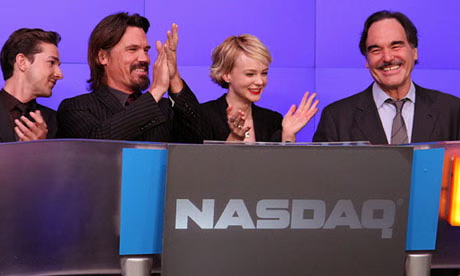
As the canon’s final chronological entry, Money Never Sleeps demonstrates something no other film in the cluster can: the limits of narrative cinema as a vehicle for explaining systemic financial corruption. The original worked because corruption fit inside one man’s story. Boiler Room worked because fraud fit inside one firm. Margin Call worked by compressing the decision to one night. The Big Short worked by breaking the fourth wall and teaching the audience directly. Money Never Sleeps tried to fit $10 trillion in losses inside a love story. It does not fit. Watch this film not for what it achieves but for what it reveals: the distance between 1987 and 2008. The distance between a villain you can arrest and a system you cannot.
If you’ve ever watched a system grow so large that no single person could shoulder the blame — and understood that the inability to assign blame is itself the problem — then you already know why Social Life Magazine exists. We name names. Reach out to our editorial team to be featured.
Want to position your brand inside the culture that understands the difference between a correction and a collapse? Submit a Paid Feature and let our editors build something worth reading.
Join 82,000+ subscribers who get our take on luxury, culture, and the Hamptons scene before anyone else. Subscribe to our email list.
Experience the intersection of sport, style, and status at Polo Hamptons — Bridgehampton’s premier luxury polo event, now in its seventh year with BMW as title sponsor.
Never miss a print issue. Subscribe to Social Life Magazine and get five summer issues delivered from Memorial Day to Labor Day.
Love what we do? Support Social Life Magazine and help us keep covering the culture that matters.
Author

Written by
Recent Posts

The First Decision After a Collision Can Be the Most Important One
Two Weeks in Rome and Beyond: Turkish Airlines Itineraries from Boston, Chicago and Onward to India

Top 10 Hair Transplant Clinics in Turkey 2026

Artist Alley to Online Store: How Convention Artists Can Keep Selling After the Event
When an 18-Wheeler Crash Leaves Lasting Consequences
Categories
- Art
- Articles
- Business of Luxury
- Celebrities
- Culture
- Entertainment
- Events
- Faces of Summer 2026
- Fashion
- Fashion & Style
- Featured
- Finance
- Food, Spirits, Wine
- Hamptons
- Hamptons Celebrities
- Health
- Health & Beauty
- Lifestyle
- Luxury Lifestyle
- Press
- Profiles
- Real Estate
- Technology
- The Chronicles
- Travel
- Uncategorized
- Weddings