
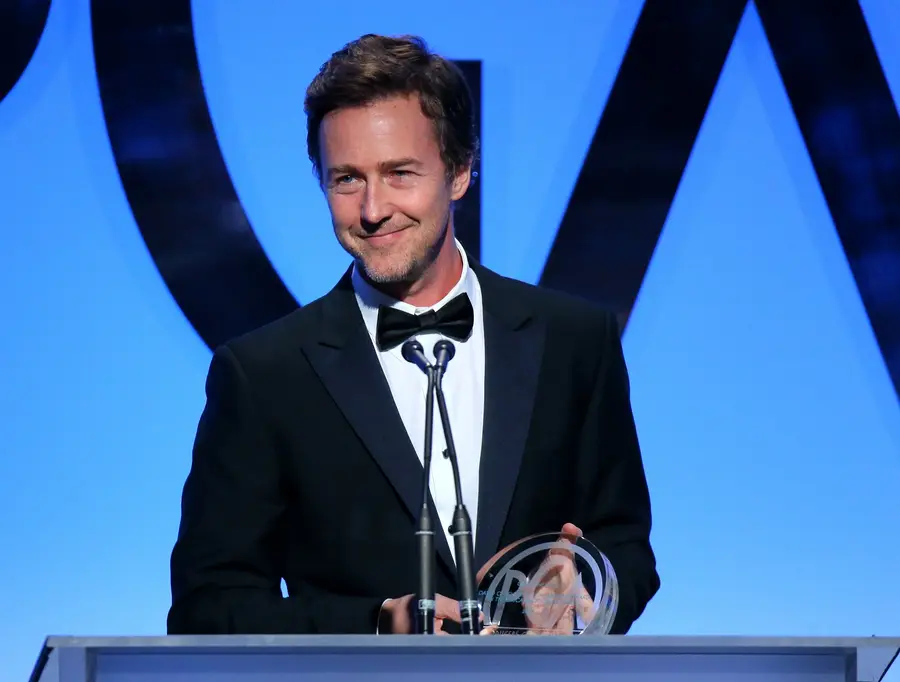
Edward Norton net worth is estimated at $300 million, and the wildest part of that number is where it came from. In 1999, Norton earned $2.5 million for Fight Club while Brad Pitt took home $17.5 million for the same film. Twenty-five years later, Norton is worth more than most of his higher-paid costars. The difference wasn’t acting. It was Uber.
| Full Name | Edward Harrison Norton |
|---|---|
| Net Worth | $300 Million |
| Primary Income Source | Technology Investments, Film Acting, Entrepreneurship |
| Career Span | 1996 – Present |
| Key Films | Fight Club, Primal Fear, American History X, Birdman, The Incredible Hulk |
| Notable Business Ventures | Uber (early investor), CrowdRise (acquired by GoFundMe), EDO, Zeck |
| Residence | New York City / Malibu, CA |
Before the Money
Edward Harrison Norton was born in Boston in 1969 and raised in Columbia, Maryland, a planned community his own grandfather built. That grandfather was James Rouse, the legendary real estate developer who founded The Rouse Company and created Faneuil Hall Marketplace in Boston and Harborplace in Baltimore. Norton grew up inside the architecture of generational wealth without inheriting the fortune directly.
His father was an environmental lawyer and former Marine lieutenant. His mother taught English. Norton attended Yale, studied history, rowed competitively, and acted in university productions. After graduating in 1991, he spent time working in Japan for his grandfather’s Enterprise Community Partners before moving to New York to grind through off-Broadway theater. In fact, it was playwright Edward Albee who first recognized Norton’s talent and cast him in the world premiere of Fragments.
By 1995, casting agent Shirley Rich discovered him. Within a year, Norton would land a role opposite one of Hollywood’s biggest stars and change the economics of his life permanently.
ERA 1: The $5,000 Debut (1996-1999)
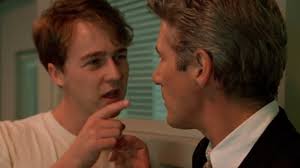
Norton’s film career began with what remains one of the most electric debut performances in modern Hollywood. Primal Fear (1996) cast him opposite Richard Gere as a young man accused of murder. Norton reportedly earned just $5,000 for the role. The film grossed $102 million on a $30 million budget. Norton’s performance earned him a Golden Globe for Best Supporting Actor and an Academy Award nomination. Consequently, his quote jumped from scale to seven figures overnight.
The $500K Gamble and the $2.5M Ceiling
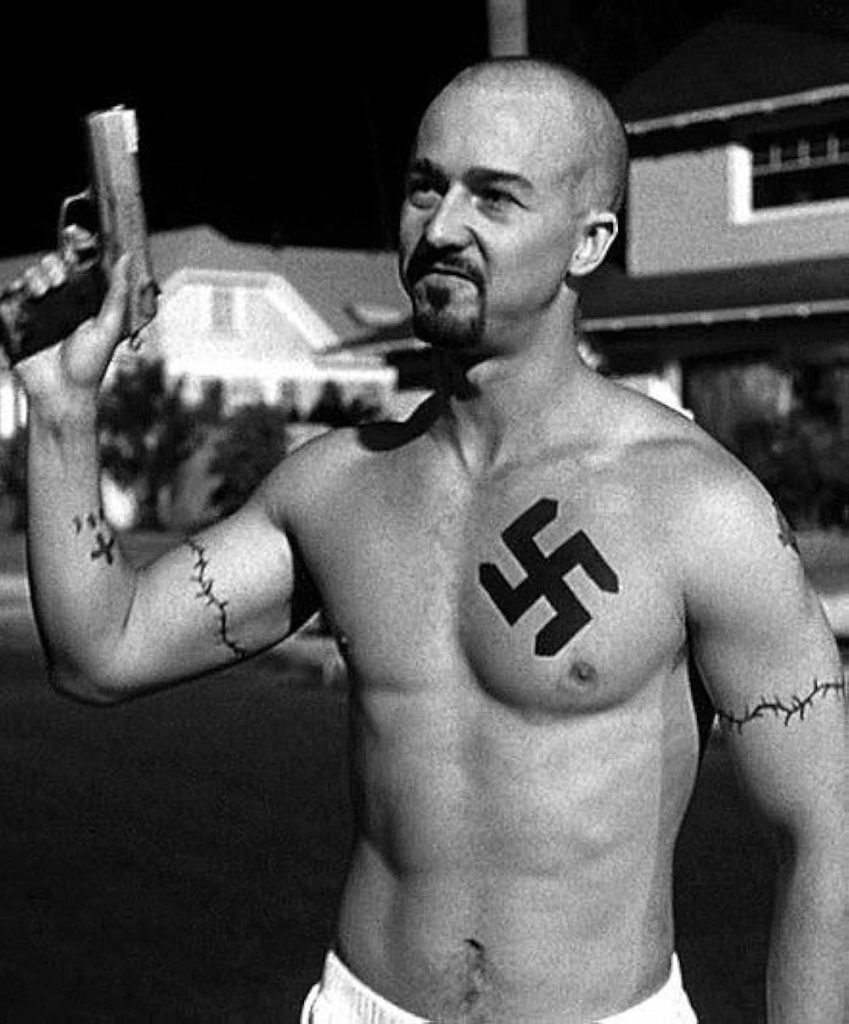
What followed was a three-year run that built Norton’s reputation as the most intense actor of his generation. It also proved Hollywood would never pay him what he was worth. American History X (1998) earned him a second Oscar nomination, this time for Best Actor. However, his salary was less than $500,000. Producers confirmed he took “considerably less than half his normal price” for the role.
That same year, Rounders (1998) paired him with Matt Damon in a poker drama that became a cult classic. Then came Fight Club (1999), directed by David Fincher, costarring Brad Pitt. Norton earned $2.5 million. Pitt earned $17.5 million. The gap between those two numbers tells the entire story of Norton’s early career: universally respected, chronically underpaid.
Fight Club flopped at the domestic box office but became a cultural phenomenon on DVD. Norton’s profit participation in the film continues to generate residuals decades later. Still, the initial payday established a pattern. Norton would take less money for better work, trusting that the long game would pay off. It did, but not through acting.
ERA 2: The Reputation Tax (2000-2008)
The 2000s introduced a new variable into Norton’s economics: his reputation for being “difficult.” Directors loved his preparation. Studios feared his rewrites. The tension between those two realities cost him roles, reduced his leverage, and ultimately exiled him from the biggest franchise in Hollywood history.
De Niro, Brando, and the Rewrite Problem
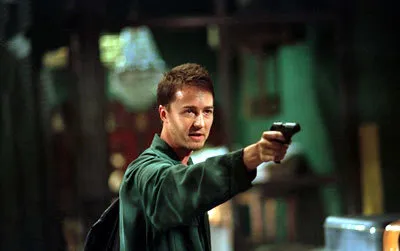
The Score (2001) grossed $114 million and gave Norton a scene partner list that doesn’t exist anymore. He shared the screen with Robert De Niro and Marlon Brando. On paper, it was a prestige payday. In practice, it reinforced Norton’s image as an actor who would rewrite your script whether you asked or not.
Red Dragon (2002) paired him with Anthony Hopkins and grossed $209 million. Director Brett Ratner told the press that Norton’s instinct was to “take over” every film he worked on. 25th Hour (2002) was a critical triumph with Spike Lee, but a modest earner. Meanwhile, The Italian Job (2003) grossed $176 million, though Norton reportedly fulfilled it as a contractual obligation rather than a creative choice.
The Hulk That Got Away
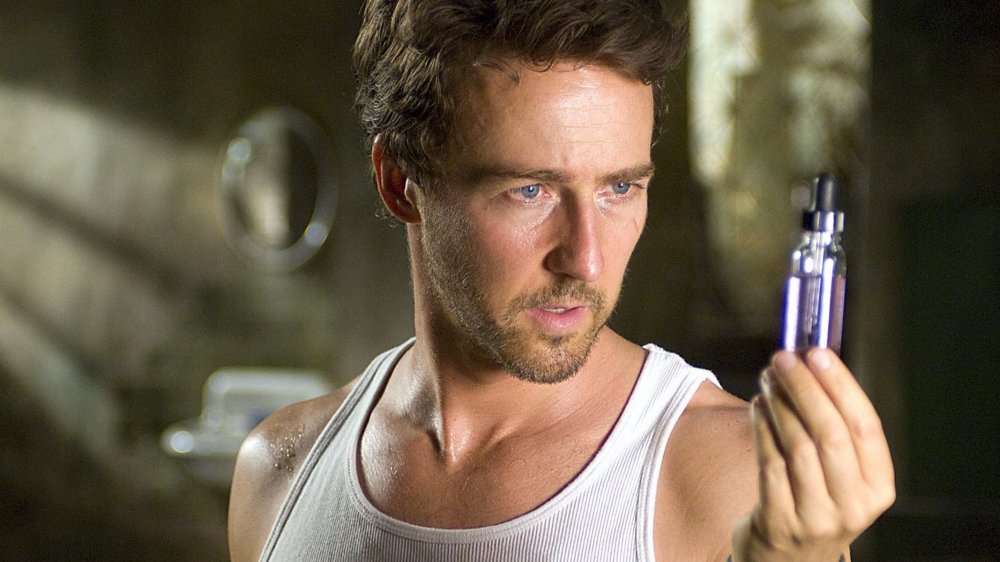
In 2008, Norton joined the Marvel Cinematic Universe as Bruce Banner in The Incredible Hulk, which grossed $265 million worldwide. He rewrote significant portions of the screenplay during pre-production. Director Louis Leterrier welcomed the contributions. The Writers Guild did not, crediting Zak Penn as sole writer.
Norton skipped the press tour and went to Africa for humanitarian work instead. Marvel chose not to bring him back for The Avengers. Mark Ruffalo replaced him. Kevin Feige wanted someone “more collaborative.” The MCU went on to gross $30 billion. Norton walked away from billions in franchise participation for the same reason he always walked: creative control mattered more than the check.
ERA 3: The Wes Anderson Discount (2009-2019)
After Marvel, Norton entered a decade defined by deliberate underpricing. He took roles for fractions of his quote because the directors were worth more to him than the money. The strategy looked like career decline from the outside. From the inside, it was a calculated bet on cultural capital while his real money was compounding elsewhere.
The Money-Losing Proposition
Moonrise Kingdom (2012) and The Grand Budapest Hotel (2014) were both Wes Anderson films. Norton admitted publicly that every Anderson project was “a money-losing proposition” for him personally. Grand Budapest grossed $175 million worldwide. Norton’s take was a fraction of what the box office suggested. He didn’t care. “It’s worth it,” he told People. “It’s like being in the best theater company ever.”
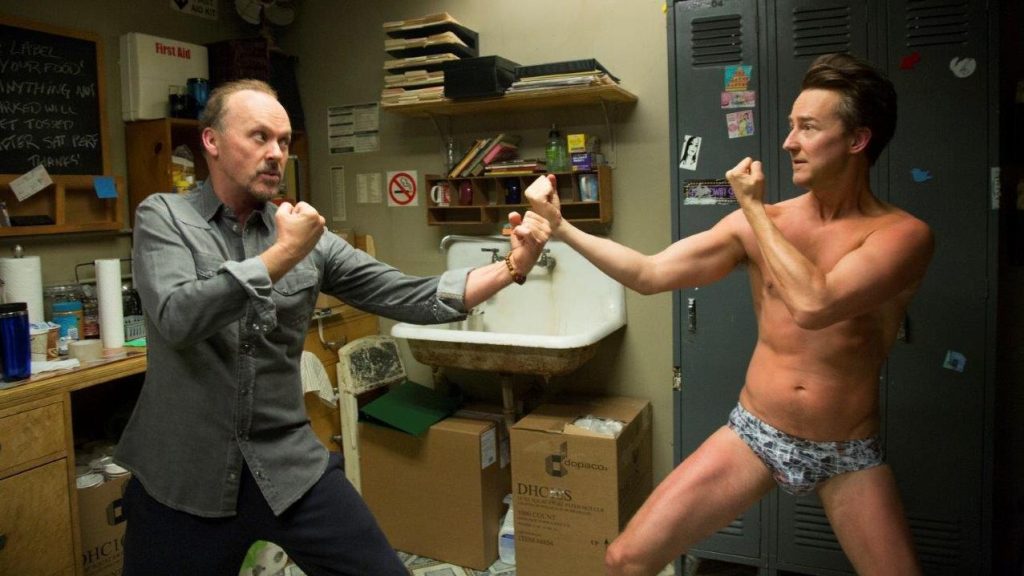
Then came Birdman (2014), directed by Alejandro González Iñárritu, costarring Michael Keaton. Norton played an arrogant actor who hijacks a Broadway production, a role that felt uncomfortably autobiographical. The film won Best Picture. Norton earned his third Academy Award nomination. Notably, it reminded Hollywood that his intensity was a feature, not a bug.
The Director’s Chair
In 2019, Norton directed, wrote, produced, and starred in Motherless Brooklyn, adapted from Jonathan Lethem’s novel. The film received mixed reviews and modest box office returns. But the project represented something the balance sheet doesn’t capture: Norton proving he could control every element of a film on his own terms. The $26 million budget was a bet on his own vision. It didn’t pay off commercially, but it deposited creative equity that still compounds in his reputation.
ERA 4: The Portfolio Nobody Saw (2010-Present)
Here’s where the net worth story turns. While Hollywood was busy calling Norton “difficult,” he was quietly building a technology portfolio that would dwarf his entire acting career. By the time anyone noticed, the math had already changed.
The First Uber Ride in LA
Norton was the first person outside of founder Travis Kalanick’s family to take an Uber ride in Los Angeles. He wasn’t a passenger. He was an investor. His early stake in the company predated Uber’s $82 billion IPO by years. The exact return has never been disclosed. However, early Uber investors who entered at the stage Norton did have seen returns of 1,000x or more on their initial capital.
Additionally, Norton co-founded CrowdRise, a crowdfunding platform for charitable giving, with his wife Shauna Robertson. GoFundMe acquired it, adding another exit to Norton’s portfolio. He then co-founded EDO, an enterprise data analytics company that measures real-time TV ad performance. By 2024, his latest venture, Zeck (a board management software platform), raised $7.5 million from Salesforce Ventures, Khosla Ventures, and Breyer Capital.
The Return to Screen
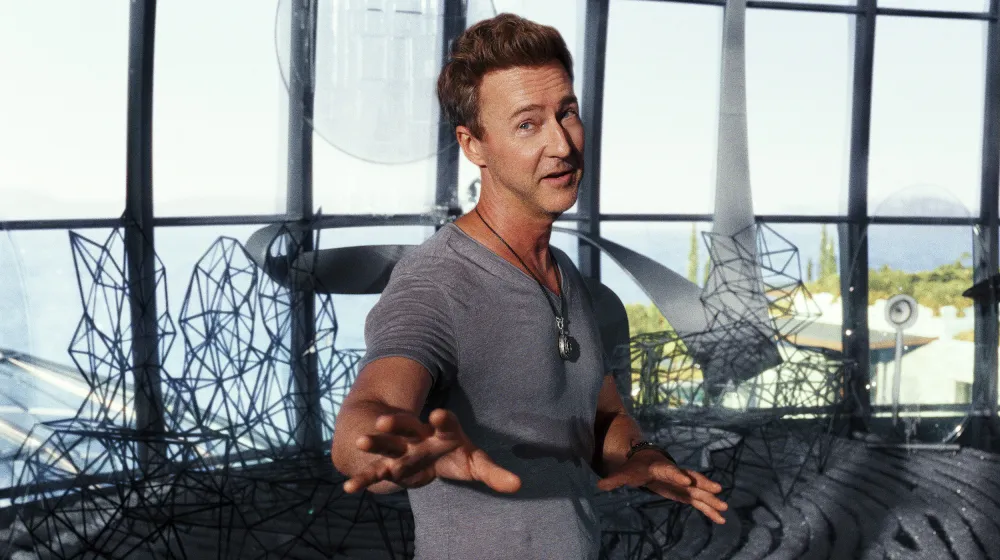
Glass Onion: A Knives Out Mystery (2022) paired Norton with Daniel Craig in Rian Johnson’s murder mystery sequel. He played a tech billionaire, a role that felt less like acting and more like field research. The film was a Netflix exclusive with a brief theatrical window and a $40 million budget. In contrast to his earlier career, the paycheck was secondary to the platform.
In 2024, A Complete Unknown cast Norton as folk legend Pete Seeger opposite Timothée Chalamet‘s Bob Dylan. Norton had a dentist alter his teeth to match Seeger’s crooked smile. He earned his fourth Academy Award nomination for the performance. Overall, it confirmed what the industry already knew: Norton at 55 was still operating at a level most actors never reach.
How Edward Norton’s $300M Fortune Breaks Down
Norton’s wealth architecture is unlike any other actor in Hollywood. The majority of his $300 million net worth comes from technology investments, not film salaries. His total acting earnings across 38 films are estimated between $40-60 million, anchored by a typical quote in the $10 million range for studio pictures. However, the Uber stake alone is likely worth more than every film paycheck combined.
CrowdRise’s acquisition by GoFundMe, his equity in EDO, and his founding stake in Zeck add additional layers of tech wealth that compound independently of Hollywood’s economic cycles. Enterprise value from these ventures is difficult to estimate publicly, but the portfolio positions Norton as a serious venture operator, not a celebrity angel investor.
Real estate adds further ballast. Norton purchased the John Lautner-designed Stevens House in Malibu, a 37-foot beachfront architectural landmark, for $11.8 million. He also maintains a residence in New York City. His BMW Hydrogen 7, one of the few in private hands, reflects an environmental commitment that runs through both his personal life and his investment thesis.
In the end, the most instructive number is the gap. Norton earned $2.5 million for Fight Club. Pitt earned $17.5 million. Today Norton’s net worth exceeds Pitt’s by approximately $100 million. The actor who always took the pay cut built the bigger fortune. He just built it outside Hollywood.
Where the Money Stands Now
At 56, Norton continues to act selectively while expanding his tech portfolio. A Complete Unknown demonstrated he can still command Oscar-caliber attention. His venture investments are in growth phase, with Zeck gaining traction among corporate governance platforms and EDO expanding its enterprise client base.
Unlike actors who depend on per-project income, Norton has built a portfolio that generates returns whether or not he ever makes another film. Ultimately, that independence is the real product of his career. He took less money for better roles, invested the difference in technology, and let compounding do what Hollywood salaries never could.
The question his $300 million answers is the one every underpaid genius asks: what happens if you stop chasing the big check and start building equity instead? Norton’s career is the answer. The actor who earned $2.5 million for Fight Club is now worth more than the one who earned $17.5 million. Patience, conviction, and a well-timed Uber investment turned out to be worth more than any franchise.
Where The Conversation Continues
Social Life Magazine covers the intersection of wealth, culture, and influence from the Hamptons to Manhattan. Our celebrity net worth coverage traces the economics, the leverage, and the decisions that built the fortune.
Our readers are family office principals, exit founders, fashion executives, and the advisors who serve them. For premium editorial placement and integrated advertising across print and digital, submit a paid feature or contact our business development team.
Want insider access to the events, launches, and gatherings that define the Hamptons social calendar? Sign up for Event Invites & Specials and never miss a moment.
Social Life Magazine. Twenty-three years of covering the people and places that define luxury in America.
Author

Written by
Recent Posts

The First Decision After a Collision Can Be the Most Important One
Two Weeks in Rome and Beyond: Turkish Airlines Itineraries from Boston, Chicago and Onward to India

Top 10 Hair Transplant Clinics in Turkey 2026

Artist Alley to Online Store: How Convention Artists Can Keep Selling After the Event
When an 18-Wheeler Crash Leaves Lasting Consequences
Categories
- Art
- Articles
- Business of Luxury
- Celebrities
- Culture
- Entertainment
- Events
- Faces of Summer 2026
- Fashion
- Fashion & Style
- Featured
- Finance
- Food, Spirits, Wine
- Hamptons
- Hamptons Celebrities
- Health
- Health & Beauty
- Lifestyle
- Luxury Lifestyle
- Press
- Profiles
- Real Estate
- Technology
- The Chronicles
- Travel
- Uncategorized
- Weddings