
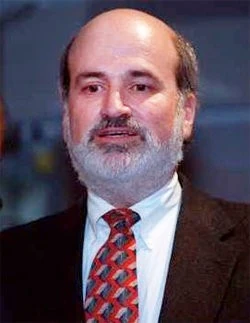
Terrence Malick net worth is estimated at $10 million, a number that reflects neither his genius nor his influence. He is the director who made Days of Heaven and then vanished from Hollywood for two decades. The man who won the Palme d’Or and has never given a press interview. A Harvard philosopher, Rhodes Scholar, and former MIT professor who chose cinema over academia and then chose silence over cinema. His fortune is modest because his output was deliberate, and his disappearance was the most expensive creative decision any director has ever made.
| Full Name | Terrence Frederick Malick |
|---|---|
| Net Worth | $10 Million |
| Primary Income Source | Film Directing, Screenwriting, Producing |
| Career Span | 1969 – Present (with 20-year hiatus 1978-1998) |
| Key Films | Badlands, Days of Heaven, The Thin Red Line, The Tree of Life |
| Notable Achievements | Palme d’Or, Golden Bear, 3 Oscar nominations, Cannes Best Director |
| Residence | Austin, Texas |
Before the Money
Terrence Frederick Malick was born in Ottawa, Illinois, in 1943. His father Emil was a geologist. His mother Irene raised three sons, one of whom would become a tragedy that haunted Malick’s films for decades. Brother Larry was a gifted guitarist who studied under Andrés Segovia in Spain, then deliberately broke his own hands under the pressure. He died shortly after. The loss runs through Malick’s work like a current beneath still water.
Malick graduated summa cum laude from Harvard in 1965 with a degree in philosophy. He won a Rhodes Scholarship to Oxford’s Magdalen College but left before finishing his thesis after a dispute with his advisor. He returned to the United States, taught philosophy at MIT, and translated Martin Heidegger from German. Then he enrolled at the American Film Institute. The pivot from Heidegger to Hollywood is the kind of career move that only makes sense in retrospect.
ERA 1: The Philosopher Who Made Movies (1969-1978)
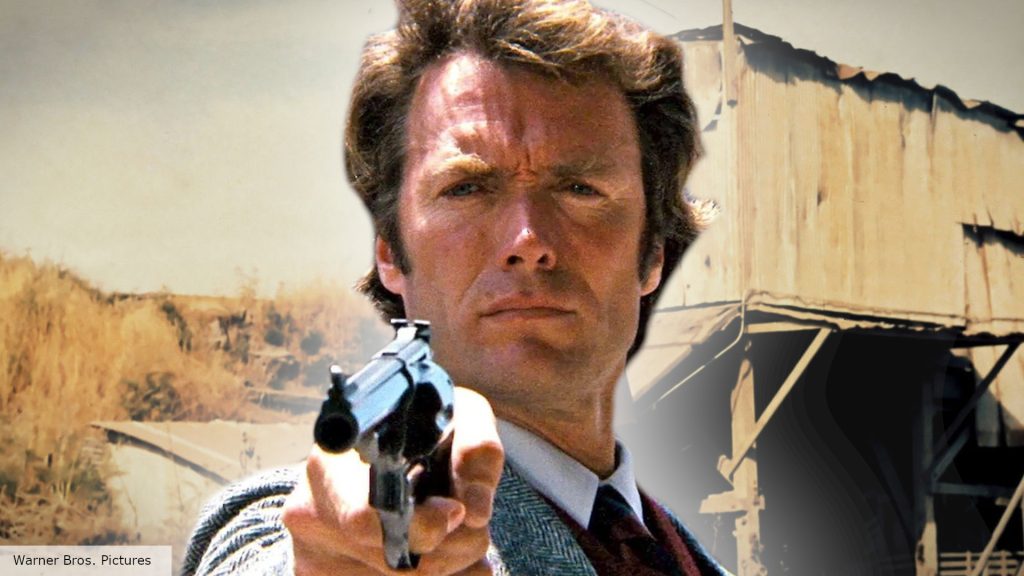
Malick’s film career began with uncredited script work. He wrote early drafts of Dirty Harry (1971) and the screenplay for Pocket Money (1972) starring Paul Newman. When Paramount deemed his screenplay Deadhead Miles unreleasable, Malick decided he would direct his own scripts from then on. Consequently, every film he has made since carries his fingerprints on both the page and the lens.
Badlands and the $25,000 Bet
Badlands (1973) was funded the way desperate artists fund art: Malick contributed $25,000 from personal savings and raised the rest from doctors and dentists. The film starred Martin Sheen and Sissy Spacek as a young couple on a killing spree across the Midwest. Critics called it extraordinary. Malick was 29. His directorial fee was negligible. The cultural deposit was immeasurable.
Days of Heaven and the Golden Hour
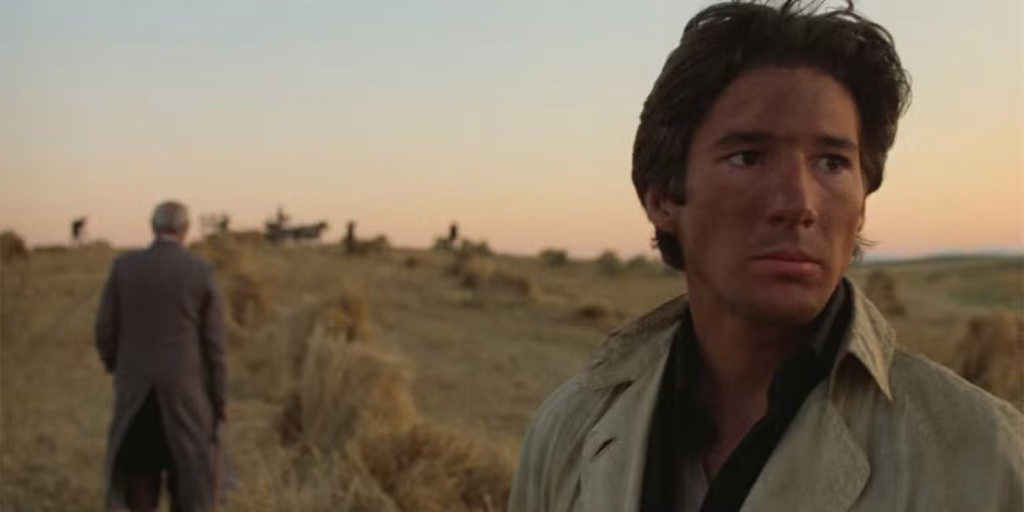
His second film, Days of Heaven (1978), starred Richard Gere in one of his earliest leading roles. The production was famously difficult. Crew members quit over Malick’s insistence on shooting almost exclusively during the golden hour, the brief window of natural light before sunset. Post-production took two years. However, the result won the Academy Award for Best Cinematography and the Cannes Film Festival prize for Best Director.
Days of Heaven did not make significant money at the box office. It made something rarer: it established Malick as the most visually gifted director of his generation. For Gere, the film provided the critical credibility that separated him from the action stars. For Malick, it provided the reputation that would survive a 20-year silence.
ERA 2: The Disappearance (1979-1997)
After Days of Heaven, Terrence Malick did something that has no parallel in the history of major filmmaking. He stopped. For twenty years. No films, no public appearances, no interviews. He lived in Paris, traveled, and existed outside the industry entirely while his two films grew in reputation with every passing year.
The Economics of Absence
The financial cost of the gap is incalculable. Between 1978 and 1998, the directors who were Malick’s peers built fortunes. Steven Spielberg, Francis Ford Coppola, and Martin Scorsese were all part of the same New Hollywood generation. They directed dozens of films across those decades. Malick directed zero. At a conservative estimate of $2-5 million per directing fee in the 1980s and 1990s, the hiatus cost him somewhere between $20 million and $50 million in unrealized income.
No one has ever fully explained why he left. Malick has never given an interview about it. The silence around the silence is, in its own way, the most Malick thing imaginable. Whatever the reason, the absence preserved his mystique while erasing his earning power. By the time he returned, he was a legend who had made exactly two films.
ERA 3: The Return Nobody Expected (1998-2011)

The Thin Red Line (1998) announced that Malick was back. His World War II epic featured an ensemble cast so deep it read like a casting director’s fantasy: Sean Penn, Adrien Brody, Nick Nolte, Woody Harrelson, George Clooney, John Travolta, and Jim Caviezel. The film earned seven Academy Award nominations and won the Golden Bear at Berlin.
The Prestige Paradox
Notably, the film’s commercial performance was modest relative to its awards profile. It grossed $98 million worldwide, respectable but far from blockbuster territory. This became the Malick paradox: his films win the most prestigious prizes in cinema while generating box office numbers that barely cover their budgets. Prestige compounds his reputation. Box office limits his fee.
The New World (2005) continued the pattern. Then came The Tree of Life (2011), starring Brad Pitt and Sean Penn. The film won the Palme d’Or at Cannes, the highest honor in international cinema, and earned nominations for Best Picture and Best Director at the Academy Awards. It grossed $61 million worldwide on a $32 million budget. Malick had reached the absolute peak of critical recognition. His net worth barely moved.
ERA 4: The Late Burst (2012-Present)
After decades of extreme selectivity, Malick’s output accelerated unexpectedly. Between 2012 and 2019, he released five films: To the Wonder (2013), Knight of Cups (2015) with Christian Bale, the documentary Voyage of Time (2016), Song to Song (2017), and A Hidden Life (2019). Combined, these five films grossed less than $30 million worldwide.
The Way of the Wind

As of 2026, Malick is still editing The Way of the Wind, a film about the life of Jesus told through parables. The cast includes Géza Röhrig as Jesus and Mark Rylance as four versions of Satan. Filming began in 2019 near Rome. Seven years later, Malick is still in post-production. For any other director, this timeline would signal disaster. For Malick, it signals Tuesday.
His collaboration with cinematographer Emmanuel Lubezki across five films has produced some of the most visually stunning footage in cinema history. Lubezki’s three consecutive Oscars for Gravity, Birdman, and The Revenant were built, in part, on techniques developed shooting for Malick. The economic value of that influence flows to others. It does not flow to Malick’s bank account.
How Terrence Malick’s $10M Fortune Breaks Down
Malick’s net worth of $10 million reflects the economics of being cinema’s most respected minimalist. Across 50+ years, he has directed approximately 10 feature films. Directing fees for prestige projects typically range from $2-10 million per film, but Malick’s films operate on modest budgets where directorial compensation is proportionally lower.
Screenwriting income adds a second layer. Malick writes his own scripts and has done uncredited work on several major productions (including early Dirty Harry drafts). Residuals from screenwriting credits provide ongoing but modest income.
Unlike directors who build production companies (Spielberg’s Amblin, Nolan’s Syncopy), Malick has never scaled his operation beyond the single film. There is no merchandise, no franchise, no streaming deal, no sequel. Every dollar he has earned came from making one film at a time, often years apart, with no commercial infrastructure around it.
Ultimately, the $10 million represents the purest form of artistic income in this cluster: money earned exclusively from the work itself, with zero leverage applied. It is the financial equivalent of shooting only during the golden hour. Beautiful, precise, and deliberately limited.
Where the Money Stands Now
At 82, Malick remains active in post-production on The Way of the Wind and reportedly developing additional projects. His earning potential is tied entirely to whether and when these films are completed and released. There is no passive income engine, no portfolio compounding in the background.
The contrast with his peers is stark. Spielberg, who began directing feature films the same year Malick did, has a net worth of approximately $4 billion. The gap between $10 million and $4 billion is the gap between making art and making an industry. Malick chose art every time.
In the end, his $10 million fortune answers the question that every artist secretly asks: what happens if you only make exactly what you want, exactly when you want, with no concessions to the market? You get Badlands, Days of Heaven, The Thin Red Line, and The Tree of Life. You get a Palme d’Or, a Golden Bear, and three Oscar nominations. And you get $10 million. Whether that’s a tragedy or a triumph depends entirely on what you think movies are for.
Where The Conversation Continues
Social Life Magazine covers the intersection of wealth, culture, and influence from the Hamptons to Manhattan. Our celebrity net worth coverage traces the economics, the leverage, and the decisions that built the fortune.
Our readers are family office principals, exit founders, fashion executives, and the advisors who serve them. For premium editorial placement and integrated advertising across print and digital, submit a paid feature or contact our business development team.
Want insider access to the events, launches, and gatherings that define the Hamptons social calendar? Sign up for Event Invites & Specials and never miss a moment.
Social Life Magazine. Twenty-three years of covering the people and places that define luxury in America.
Author

Written by
Recent Posts
Jetsetter Style: Castello del Sole

The First Decision After a Collision Can Be the Most Important One
Two Weeks in Rome and Beyond: Turkish Airlines Itineraries from Boston, Chicago and Onward to India

Top 10 Hair Transplant Clinics in Turkey 2026

Artist Alley to Online Store: How Convention Artists Can Keep Selling After the Event
Categories
- Art
- Articles
- Business of Luxury
- Celebrities
- Culture
- Entertainment
- Events
- Faces of Summer 2026
- Fashion
- Fashion & Style
- Featured
- Finance
- Food, Spirits, Wine
- Hamptons
- Hamptons Celebrities
- Health
- Health & Beauty
- Lifestyle
- Luxury Lifestyle
- Press
- Profiles
- Real Estate
- Technology
- The Chronicles
- Travel
- Uncategorized
- Weddings