
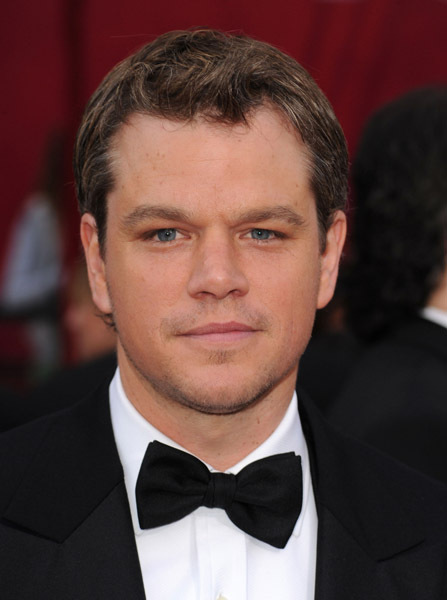
In 2009, James Cameron offered Matt Damon the lead role in Avatar. The deal included 10% of the film’s worldwide box office gross. Damon said no. He had already committed to Paul Greengrass and the Bourne Ultimatum crew, and loyalty to the people who built the franchise with him mattered more than whatever Cameron’s blue aliens might earn. Avatar grossed $2.9 billion. Damon’s 10% would have been worth more than $250 million, the largest payday any actor has ever left on a table.
That single decision tells you everything about the Matt Damon net worth story. Not the $170 million he accumulated across three decades of leading roles, Oscar-winning screenplays, and franchise anchoring. The $250 million he chose not to accumulate. Because the man who turned down a quarter-billion dollars to honor a handshake with his director is the same man who, fifteen years later, built a production company designed to share Netflix profits with electricians and stunt coordinators.
Cameron later joked that Damon should stop beating himself up. He said he’d love a cameo in an Avatar sequel, but Damon definitely doesn’t get 10% this time. Damon has told the story in interviews with the practiced ease of someone who made peace with the math long ago. He doesn’t regret it. Not with the performative humility that actors deploy when discussing money they didn’t make. Simply chose the crew over the check. On May 14, 2026, Artists Equity, the production company he co-founded with Ben Affleck, announced that all 1,200 cast and crew members of their Netflix film The Rip would receive performance bonuses after the film hit its streaming targets. The man who walked away from Cameron’s table is now setting tables for everyone else.
Cambridge, Two Blocks Apart
Matthew Paige Damon was born on October 8, 1970, in Cambridge, Massachusetts. His father, Kent Damon, was a stockbroker. His mother, Nancy Carlsson-Paige, was an early childhood education professor at Lesley University. They divorced when Matt was two. He and his older brother Kyle moved with their mother into a six-family communal house in Cambridge, the kind of arrangement that signals a very specific slice of 1970s academic New England: progressive, underfunded, and quietly proud of both.
Two blocks away lived Ben Affleck. The proximity was geographic. The bond was something else entirely. Affleck once intervened in a schoolyard fight on Damon’s behalf, putting himself in what Damon later called “a really bad spot.” Two kids from Cambridge, choosing each other’s side before either of them could drive. That decision foreshadowed everything. The partnership would eventually produce two Oscars, two production companies, and a combined net worth exceeding $320 million.
Damon attended Cambridge Rindge and Latin School, where he performed in theater productions with Affleck. He enrolled at Harvard as an English major in 1988. He kept leaving to pursue acting jobs. Mystic Pizza (1988), a small role. School Ties (1992), a slightly larger one. Courage Under Fire (1996), where he lost 40 pounds and was later hospitalized for adrenal gland problems. Harvard never got its 12 remaining credits. Damon has never expressed visible regret about this, either. The pattern was already forming: choose the work over the credential.
Good Will Hunting: The Script on the Legal Pad
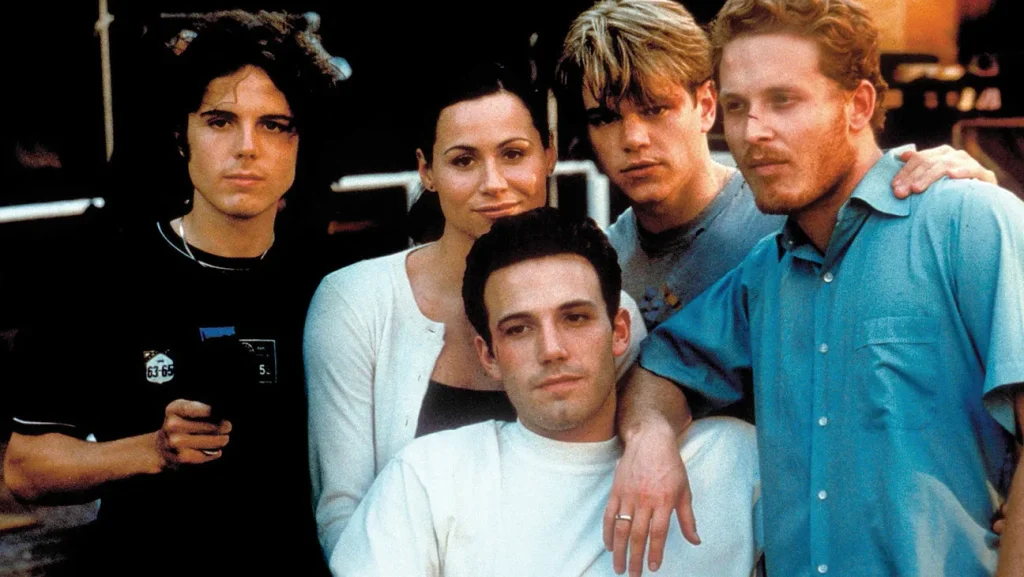
The origin story that built the early Matt Damon net worth foundation is, by now, Hollywood scripture. Damon and Affleck, broke and underemployed, wrote a screenplay about a janitor at MIT who could solve equations that tenured professors could not. The script started as a writing assignment in one of Damon’s Harvard classes. It expanded into something neither of them had the credits to produce.
They shopped it for years. Castle Rock Entertainment bought the script for $675,000 in 1994, then sat on it. Damon and Affleck had built in a contractual time bomb: if production didn’t begin within a specific window, the rights reverted. The studio missed the window. The script went to Miramax. Harvey Weinstein greenlit it. Gus Van Sant directed. Robin Williams took the supporting role of Sean Maguire, the therapist who breaks through Will Hunting’s defenses with a monologue on a park bench that every actor born after 1975 can quote from memory.
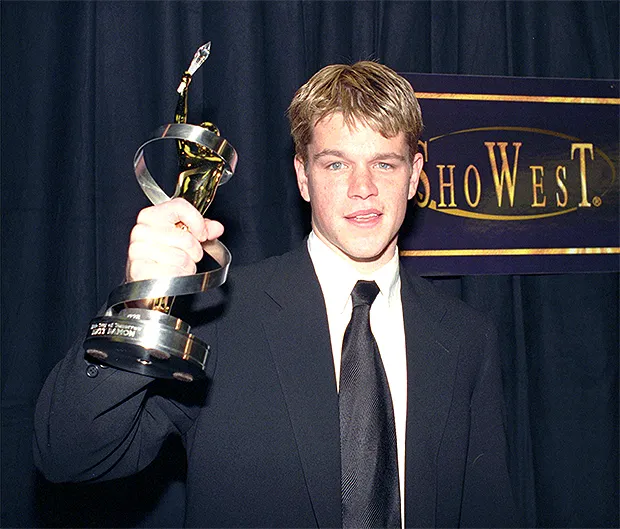
Williams won the Oscar for Best Supporting Actor. Damon and Affleck won for Best Original Screenplay. Damon was 27. Miramax reportedly paid each of them around $300,000 for the screenplay plus their acting salaries. Worldwide, the film grossed $225 million on a $10 million budget. The gap between what Good Will Hunting generated and what its creators took home is the kind of structural asymmetry that would later drive Damon to build Artists Equity. He just didn’t know it yet.
Robin Williams and the Park Bench
Williams’ presence in the film deserves its own accounting. Already worth an estimated $50 million when he signed on, he didn’t need the role. He took it because Van Sant asked and because the script had something most scripts don’t: a character who earns the monologue. Williams died in 2014 at 63. His estate was valued at approximately $50 million. Damon has spoken about Williams sparingly and carefully since, with the restraint of someone who understood that the most important person in that film’s legacy is the one who can’t collect residuals from it.
The Bourne Identity: Building the Quote
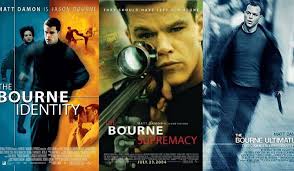
Before Bourne, Damon’s per-film salary sat in the $5 to $8 million range. After the trilogy concluded in 2007, his quote had climbed past $25 million. The franchise grossed $945 million across three films and redefined what an action movie could feel like: handheld cameras, practical stunts, a protagonist who looked like he might actually bruise.
Damon committed to the physicality with a discipline that separated him from every other actor who’d ever played a spy. He trained in Filipino martial arts. He did his own driving. Doug Liman directed the first film. Greengrass took the second and third, bringing a documentary rawness that made every car chase feel like a war crime caught on someone’s phone.
Franchise economics tell a precise story. Bourne Identity (2002) cost $60 million and grossed $214 million. Supremacy (2004) cost $75 million and grossed $288 million. By Ultimatum (2007), the budget hit $110 million and the return reached $443 million. Each film cost more, earned more, and paid Damon more. By the third installment, his backend participation meant the headline salary understated the real number by a significant margin.
The Franchise He Let Go
Then he stopped. Universal made The Bourne Legacy (2012) with Jeremy Renner. It grossed $276 million, proving the brand still had commercial value without Damon’s face. He returned once more for Jason Bourne (2016), which grossed $415 million but received a cooler critical reception. After that, the rights lapsed from Universal entirely. The Ludlum estate began shopping them to Skydance, Apple, and Netflix. As of May 2026, the franchise has no home, no greenlit sequel, and no confirmed star.
Damon’s relationship to Bourne mirrors his relationship to money itself. He built it, profited from it, and walked away from it without the compulsive need to extract every remaining dollar. Most actors would have signed for Bourne 6, 7, and 8. Damon let the lease expire.
The Talented Mr. Ripley: Performing Capital
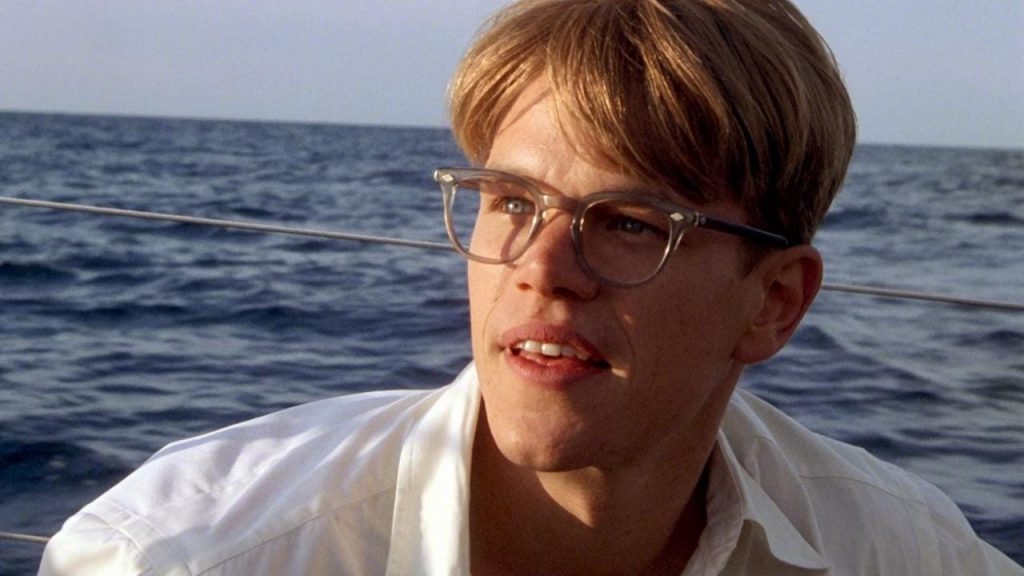
In 1999, between Good Will Hunting and Bourne, Damon made a choice that no agent would have recommended. He played Tom Ripley, a broke New Yorker who cons his way into the Italian leisure class by learning to play piano, forge handwriting, and murder the only people who see through him. Anthony Minghella directed. The film was shot on location in Ischia, Rome, and the Amalfi Coast. The supporting cast included Jude Law, Gwyneth Paltrow, Cate Blanchett, Philip Seymour Hoffman, and James Rebhorn as the shipping magnate whose money starts the whole con.
Variety wrote that Damon “outstandingly conveys his character’s slide from innocent enthusiasm into cold calculation.” That review identified, probably without intending to, the quality that separates Damon’s career from his peers. He can play the fraud and make you root for the fraud. Ripley is a character study in the performance of class, a man converting zero economic capital into pure social access through discipline, mimicry, and the willingness to eliminate anyone perceptive enough to notice.
The Ripley Cast, Twenty-Five Years Later
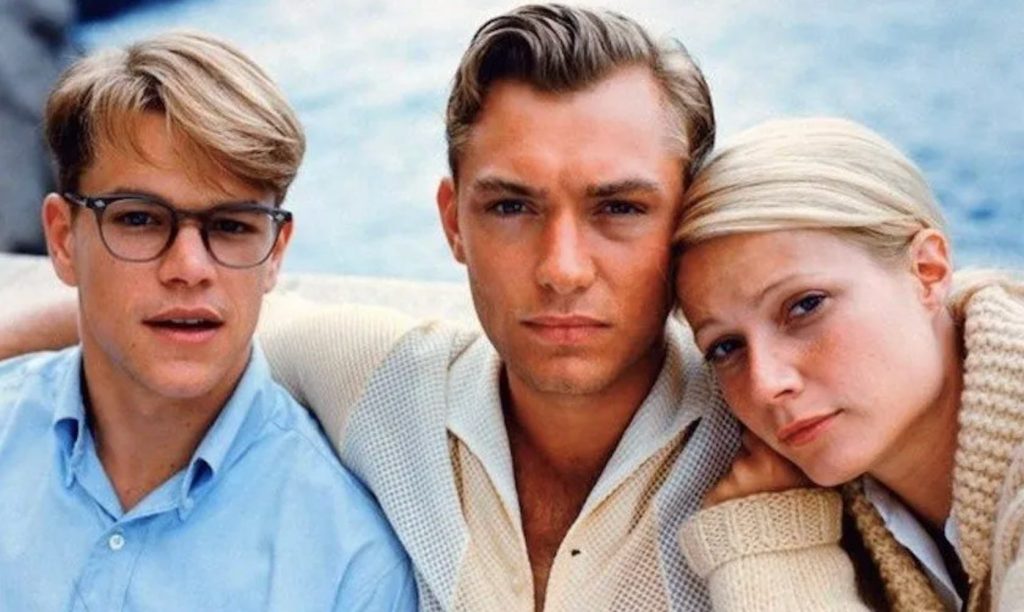
The wealth dispersion from that single Ischia set tells a story no spreadsheet could. Gwyneth Paltrow, who played the old-money girlfriend, is worth over $200 million. She built Goop, a company that essentially sells the feeling of being Marge Sherwood to women who will never vacation in Positano on someone else’s inheritance. Cate Blanchett, who played the woman with social radar, has two Oscars and an estimated $85 million. Jude Law, who played the golden boy, peaked commercially in the five years after Ripley and settled into a $45 million working-actor career.
The Two Men Who Died
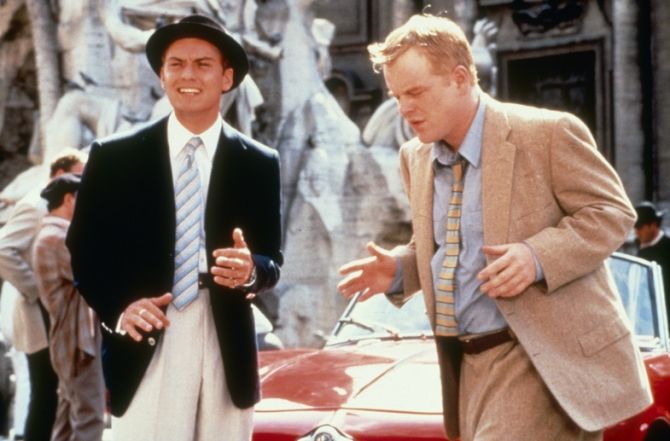
Philip Seymour Hoffman played Freddie Miles, the loud-money trust fund kid perceptive enough to see through Ripley’s performance. Freddie is the only character in the film who calls out the fraud in real time, and Ripley kills him for it. Hoffman died in 2014 at 46 from acute mixed drug intoxication. His estate was valued at approximately $35 million. Before that, he won the Oscar for Capote, anchored Boogie Nights, The Master, and Doubt, and delivered performances in Magnolia and Almost Famous that other actors study the way athletes study game film. Arguably the most talented person on that Ischia set, and the one whose fortune least reflected it.
James Rebhorn played Herbert Greenleaf, the shipping magnate who sets the entire plot in motion by hiring Ripley to retrieve his son from Italy. Rebhorn was the quintessential character actor: over 100 films and television appearances playing judges, generals, fathers, and FBI agents. Scent of a Woman. My Cousin Vinny. Independence Day. Meet the Parents. The district attorney in the Seinfeld finale. He spent four decades portraying institutional authority without ever accumulating the wealth those characters represented. Rebhorn died in 2014 at 65 from melanoma. He wrote his own obituary before he passed. His net worth at death was modest by any Hollywood standard. The man who played old money on screen never had it off screen.
Damon played the fraud. He’s worth $170 million. He outearned every co-star except Paltrow, and Paltrow had to build an entire wellness empire to do it. Damon just kept picking scripts.
Ocean’s Trilogy: The Deal Room on Film
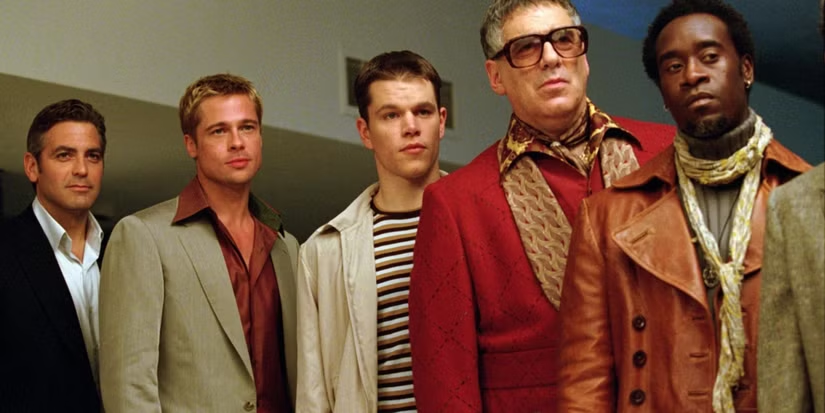
Steven Soderbergh’s Ocean’s Eleven (2001) assembled George Clooney, Brad Pitt, Damon, Julia Roberts, Andy Garcia, Don Cheadle, Bernie Mac, Elliott Gould, and Casey Affleck into a heist film that grossed $450 million worldwide. Damon played Linus Caldwell, the youngest member of the crew, the one still learning the game. It was a smart piece of casting because it placed Damon adjacent to Clooney and Pitt without requiring him to compete for alpha position.
The trilogy’s combined worldwide gross exceeded $1.1 billion. More importantly for the Matt Damon net worth trajectory, those sets functioned as something the camera never showed: a deal room. Clooney was already building the social infrastructure that would later produce Casamigos, the tequila brand he sold to Diageo in 2017 for $1 billion (Clooney’s personal cut: an estimated $233 million). Pitt was developing the architectural interests that would lead to his Miraval estate and Brad’s rosé empire. Damon watched. He learned. He filed the information under “what it looks like when an actor stops being an employee and starts being a principal.”
That education took fifteen years to produce visible results. When Damon and Affleck launched Artists Equity in 2022, the profit-sharing model they built didn’t come from a business school case study. It came from watching Clooney operate on the Ocean’s set and understanding that the real money in entertainment isn’t on the call sheet. It’s in the ownership structure.
The Departed: Scorsese’s Boston
Martin Scorsese’s 2006 crime epic placed Damon opposite Leonardo DiCaprio, Jack Nicholson, and Mark Wahlberg in a Boston underworld film that grossed $291 million and won the Best Picture Oscar. Damon played Colin Sullivan, the mole inside the Massachusetts State Police, feeding intelligence to Nicholson’s Frank Costello.
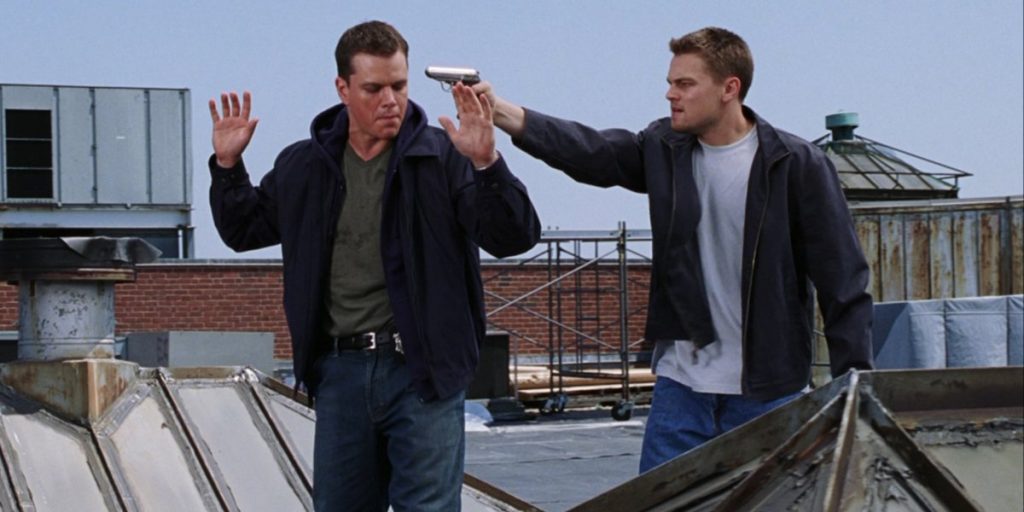
The casting mathematics deserve attention. DiCaprio, who played the undercover cop, was already worth an estimated $200 million and climbing. Nicholson, deep in his legacy era, sat at approximately $400 million. Wahlberg, the Dorchester native playing the foul-mouthed sergeant, was building a portfolio that would eventually include Wahlburgers and a $400 million fortune of his own. Damon played the traitor. He played him with the practiced calm of a man who knows the room will eventually figure out what he is, and has decided to stay anyway.
Scorsese paid Damon an estimated $10 million. DiCaprio reportedly earned $20 million. Nicholson’s fee is undisclosed but historically fell in the $10 to $15 million range for this period. The film connected Damon to Scorsese’s universe and, through crosslinks to Nicholson’s filmography, to a lineage of American screen performance that runs from Five Easy Pieces through The Shining through As Good as It Gets. For the full arc of that lineage, the Jack Nicholson net worth profile maps every dollar.
The Martian and the Mid-Career Architecture
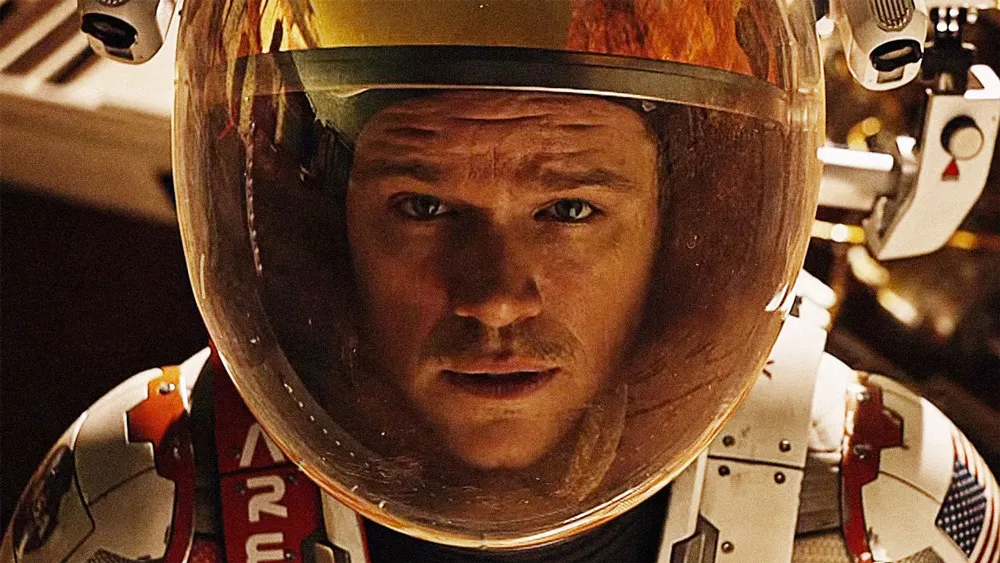
Ridley Scott’s The Martian (2015) grossed $630 million worldwide and earned Damon a Golden Globe for Best Actor. He was paid an estimated $25 million against backend points. The film’s commercial success at a $108 million budget represented exactly the kind of return that studios build franchise offers around.
Damon didn’t franchise it. One film. One performance. One payday. Move on.
Ford v Ferrari (2019) paired him with Christian Bale in a racing drama that grossed $225 million on a $97 million budget. The dynamic between them was precise: Bale played the genius driver who couldn’t stop alienating people, Damon played the businessman who protected the genius from the consequences of his own personality. It was a film about the relationship between talent and capital, which is another way of saying it was a film about Hollywood told through Le Mans.
Between these anchor roles, Damon made strategic choices that optimized for craft over extraction. The Adjustment Bureau (2011) with Emily Blunt, his neighbor in Brooklyn Heights’ Standish building. We Bought a Zoo (2011) opposite Scarlett Johansson, a Cameron Crowe family drama that nobody expected from the Bourne star. Interstellar (2014), a Nolan cameo that added prestige without requiring a promotional tour. Downsizing (2017), an Alexander Payne film that underperformed commercially but let Damon play a version of middle-class anxiety that most $20-million-per-film actors would never touch.
Oppenheimer: The $4 Million Lesson

Christopher Nolan’s Oppenheimer (2023) grossed $950 million worldwide and won seven Academy Awards, including Best Picture. Damon played General Leslie Groves. His salary was a reported $4 million, a fraction of his standard quote, which reflects both the Nolan discount (every actor takes a pay cut to work with him) and Damon’s willingness to value the project over the paycheck.
Robert Downey Jr. won the Best Supporting Actor Oscar for the same film. His net worth sits at approximately $300 million, built primarily on a Marvel Cinematic Universe run that paid him an estimated $500 to $600 million gross across ten films. Cillian Murphy won Best Actor. His net worth, roughly $30 million, reflects the economics of prestige television and independent film. The three men stood on the same set. Their net worths span a $270 million range. The gap between them is not talent. It is franchise architecture, negotiating leverage, and the willingness to let intellectual property own your public identity.
Damon chose not to let any single franchise define him. That choice cost him hundreds of millions of dollars. It also bought him something no franchise star possesses: range without baggage. At 55, he can play a corrupt cop, a military general, or a castaway botanist on Mars. Nobody in the audience thinks “that’s Jason Bourne in a spacesuit.”
Artists Equity: The Business Model as Moral Argument
In 2022, Damon and Affleck launched Artists Equity with backing from RedBird Capital. The company’s thesis is simple and radical: the people who make movies should share in the profits when those movies succeed. Below-the-line crew members, the grips and electricians and production assistants who never see backend points, receive participation in the film’s commercial performance.
Their first major release was Air (2023), directed by Affleck, starring Damon, telling the story of Nike’s pursuit of Michael Jordan for a signature shoe deal. Amazon purchased the distribution rights for a reported $130 million. Damon earned an estimated $30 to $40 million between acting salary and producing fees. The film’s economics proved the Artists Equity model could work at scale.
Then came The Rip. Released on Netflix in January 2026, the film stars Damon and Affleck as Miami narcotics officers whose trust fractures when their team discovers $24 million in cartel cash. Artists Equity negotiated a first-of-its-kind deal with Netflix: all 1,200 cast and crew members became eligible for a performance bonus tied to viewership thresholds. Netflix historically pays flat upfront fees. This deal broke that model.
The Bonus That Landed Today
On May 14, 2026, Artists Equity announced The Rip had crossed its performance threshold. Every member of the 1,200-person production team will receive a bonus. Affleck and Damon released a joint statement: “We built Artists Equity on the belief that filmmakers should share in the value they bring to a project.” Following the film’s success, Netflix signed Artists Equity to a multi-year first-look production and distribution deal. Their next project, Animals, stars Affleck and Gillian Anderson. They are also producing Turbulence, a documentary tracking Formula One engineer Adrian Newey across the 2026 season.
The defamation lawsuit filed May 7 by two Miami-Dade deputies who claim The Rip’s fictional characters damaged their reputations is, for the moment, a legal footnote. Artists Equity has responded that the film does not portray real people and includes a standard disclaimer. Litigation will play out in civil court. The bonus has already paid out.
The Real Estate Ledger
The Matt Damon net worth calculation includes a real estate portfolio spread across four states and reflecting someone who optimizes for family logistics, not trophy addresses.
Brooklyn Heights, New York: a six-bedroom penthouse in The Standish, purchased for $16.5 million. The building also houses Emily Blunt and John Krasinski. Pacific Palisades, Los Angeles: the primary residence for industry proximity. Bedford, New York: a Westchester County retreat purchased in 2022 for $8.5 million. Los Angeles (second property): a condo purchased in April 2024 for $9 million.
The portfolio is concentrated in high-appreciation coastal and suburban markets. No Miami beach compounds. No Lake Como villas. Not a single Wyoming ranch with a private airstrip. Damon’s real estate philosophy matches his career philosophy: functional, diversified, and completely uninterested in announcing itself.
The Crypto.com Interlude
In 2021, Damon filmed a Super Bowl commercial for Crypto.com. He walked past images of astronauts and explorers while comparing cryptocurrency investing to humanity’s greatest achievements. “Fortune favors the brave,” he said, directly into the camera, with the conviction of a man being paid millions to say six words.
The ad aged catastrophically. Crypto markets crashed. Retail investors lost savings. The New York Times called the broader celebrity crypto campaign “unseemly.” The Observer’s Carole Cadwalladr described it as “advertising a Ponzi scheme and comparing it to the moon landings.” Damon has not publicly discussed the commercial since, which is itself a form of answer.
The episode is a useful data point in the Matt Damon net worth story precisely because it is the exception. One bad endorsement in three decades of public life. The ratio of good decisions to bad ones is so overwhelmingly favorable that the Crypto.com ad functions less as a scandal and more as proof that even the most disciplined career architect occasionally signs something he shouldn’t.
Water.org and the Philanthropy Layer
Damon co-founded Water.org with engineer Gary White. The organization provides microfinance solutions for water and sanitation access in developing countries. It has mobilized more than $4 billion in capital and reached over 60 million people. Unlike most celebrity philanthropy platforms, Water.org operates with a financial mechanism (microloans for water infrastructure) rather than a donation mechanism. It is structured to be self-sustaining.
The choice of water access over a more media-friendly cause (children’s hospitals, environmental conservation, arts education) is characteristic. Water infrastructure is invisible, essential, and generates no red carpet moments. It produces no galas. Nobody puts a microfinanced well in a press release. Damon chose it anyway, which tells you the same thing the Avatar decision tells you, the same thing the Bourne departure tells you, the same thing the Artists Equity profit-sharing model tells you. He optimizes for impact, not visibility.
The Matt Damon Net Worth Calculation
Celebrity Net Worth places the figure at $170 million. Other aggregators push it toward $200 million when accounting for real estate appreciation and Artists Equity equity. The honest calculation requires acknowledging what the number excludes.
Start with the $250 million he declined from Avatar. Add the hundreds of millions he could have extracted from Bourne sequels 6 through 10. Factor in whatever a Damon-branded tequila, clothing line, or wellness platform might have generated. George Clooney sold Casamigos for $1 billion. Paltrow built Goop past $250 million in valuation. Dwayne Johnson’s Teremana stake is valued at $600 million. Every one of those playbooks was available. Damon never opened any of them.
Instead, he built a production company that redistributes profits to below-the-line workers, co-founded a water philanthropy that operates on microfinance rather than galas, and continued choosing scripts based on whether they interested him rather than whether they maximized his quote.
The Matt Damon net worth of $170 million is not a number that tells you how much he earned. It is a number that tells you how much he decided was enough.
Where the Conversation Continues
His films have grossed over $14.3 billion worldwide. His co-star roster reads like a roll call of every significant American actor of the last three decades: Affleck, Clooney, Pitt, DiCaprio, Nicholson, Williams, Hanks, Blanchett, Paltrow, Bale, Murphy, Downey. Each of those names connects to a fortune built differently, on different principles, with different relationships to the question of what money is actually for.
The answer Damon arrived at is not the only answer. It may not even be the best answer, measured purely in dollars. But it is the most internally consistent answer any major American actor has produced in the last twenty-five years. Every decision, from Cambridge to Cameron’s table to today’s Netflix bonus payout, follows the same logic: choose the people over the payday, and the payday will be enough.
Explore the co-star fortunes that intersect with Damon’s career: Ben Affleck net worth | George Clooney net worth | Leonardo DiCaprio net worth | Jack Nicholson net worth | Robin Williams net worth | Scarlett Johansson net worth | Tom Hanks net worth | Christian Bale net worth | Emily Blunt net worth | Cillian Murphy net worth | Robert Downey Jr net worth | Martin Scorsese net worth | Demi Moore net worth | Tom Cruise movies ranked | Brad Pitt’s early career
Feature your brand alongside the names that define luxury, culture, and the Hamptons. Contact Social Life Magazine for editorial features, brand partnerships, and advertising. For brands and entrepreneurs seeking elevated visibility, our Paid Feature program offers guaranteed placement in the publication the East End actually reads. 25,000 copies per summer issue across boutiques from Westhampton to Montauk.
Polo Hamptons returns July 18 and July 25, 2026, to Bridgehampton. BMW is in its eighth year as title sponsor. 1,200 guests. Average net worth $3.62 million. If your brand belongs in the conversation, it belongs on the field. polohamptons.com
Subscribe to Social Life Magazine and get 23 years of the East End delivered before anyone else reads it.
Author

Written by
Recent Posts
Why Coast2Coast Leather Is New Jersey’s Trusted Source for Automotive and Aviation Leather
The Step and Repeat Banner NYC Event Planners Actually Rely On

Why the Wealthy Are Finally Questioning Their Grocery Receipts
How 3D Rendering Is Changing the Way Luxury Homes Are Sold
What to Consider Before Investing in Modern Pivot Front Doors
Categories
- Art
- Articles
- Business of Luxury
- Celebrities
- Entertainment
- Events
- Faces of Summer 2026
- Fashion
- Fashion & Style
- Featured
- Finance
- Food, Spirits, Wine
- Hamptons
- Hamptons Celebrities
- Health
- Health & Beauty
- Lifestyle
- Luxury Lifestyle
- Press
- Profiles
- Real Estate
- Technology
- The Chronicles
- Travel
- Uncategorized
- Weddings