
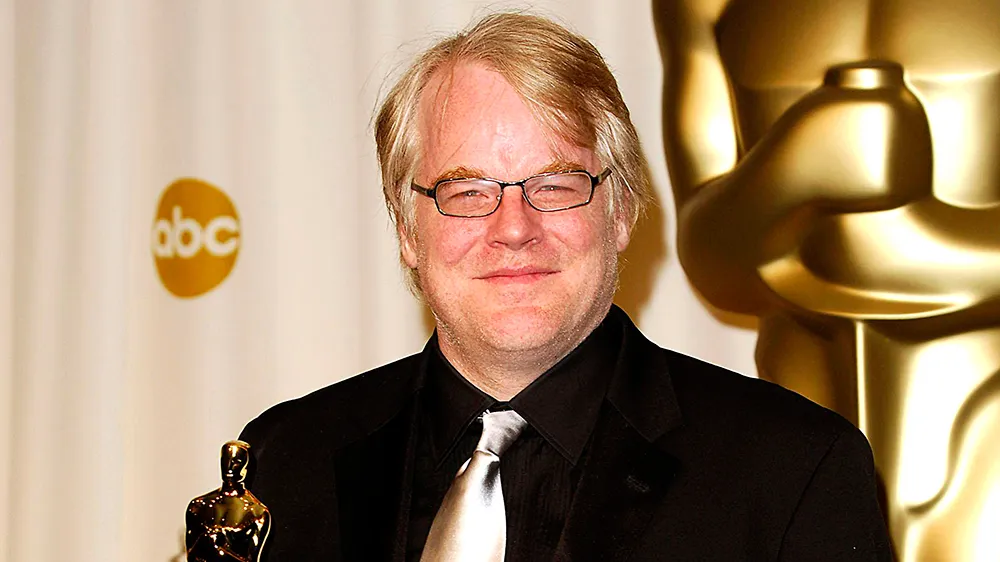
On the morning of February 2, 2014, Philip Seymour Hoffman was found on the bathroom floor of his West Village apartment at 35 Bethune Street. A syringe in his left arm. Seventy bags of heroin in the living room, some stamped with brand names the way luxury goods are stamped with logos. He was 46 years old, had three children under eleven, and left behind an estate valued at $35 million. That number, every dollar of it, was earned the hardest way an actor can earn money: by being so good that people paid to watch him disappear.
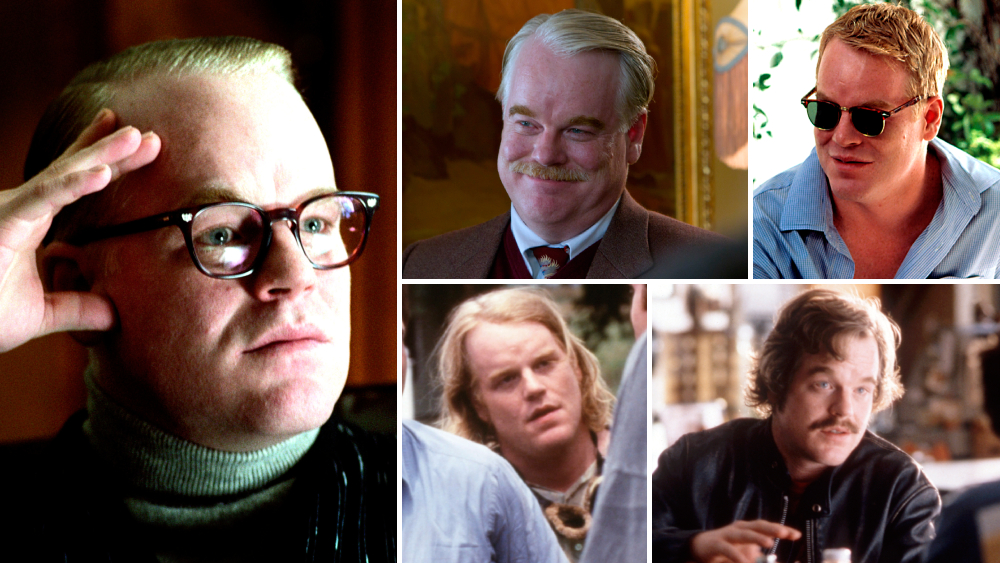
The Philip Seymour Hoffman net worth of $35 million is, on its surface, a respectable fortune. It is also a document of structural failure. Not his failure. The industry’s. Hoffman appeared in 55 films across 22 years. Won the Academy Award for Best Actor. Earned three additional Oscar nominations. Anchored a billion-dollar franchise, played the villain opposite Tom Cruise, and delivered performances in Boogie Nights, Magnolia, and The Master that other actors study the way med students study anatomy. For all of that, he died with roughly the same net worth as a mid-tier real estate agent in Greenwich, Connecticut. His co-star in The Talented Mr. Ripley, Matt Damon, is worth $170 million. Damon chose not to build an empire. Hoffman never had the option.
Fairport, New York: The Wound
Philip Seymour Hoffman was born on July 23, 1967, in Fairport, a suburb of Rochester in upstate New York. His mother, Marilyn O’Connor, was an elementary school teacher who later became a lawyer and family court judge. His father, Gordon Stowell Hoffman, worked at Xerox. They divorced when Philip was nine. He and his three siblings were raised primarily by their mother, in the kind of middle-class household where ambition was encouraged but resources were finite.
Growing up, Hoffman was an athlete. Wrestling and baseball. Competitive, physical, channeling whatever internal weather he carried into sports that rewarded controlled aggression. At twelve, he saw a stage production of Arthur Miller’s All My Sons and felt something rearrange. At fourteen, a neck injury ended the athletic career. He joined the drama club with the quiet desperation of someone who had just lost the only language he knew and needed to learn another one immediately.
By seventeen, he’d been selected for the New York State Summer School of the Arts in Saratoga Springs. He applied to drama programs and landed at NYU’s Tisch School of the Arts, where he supported himself by working as an usher. He co-founded the Bullstoi Ensemble acting troupe with classmates. Earned his drama degree in 1989. Then he did what every serious actor does after graduating from a prestige program: he took customer service jobs and performed in off-Broadway productions that paid in exposure and subway fare.
The Supporting Player Economy
Hoffman’s screen career began in 1991 with an episode of Law & Order. His first cinema role came the following year in an independent film called Triple Bogey on a Par Five Hole, a title that tells you everything about the budget. After that, he added his grandfather’s name, Seymour, to distinguish himself from another actor named Philip Hoffman. Even his name required a workaround.
Scent of a Woman (1992) was the first film where audiences noticed him. Small role, prep school kid, completely overshadowed by Al Pacino’s operatic performance. Then Twister (1996), playing the excitable storm chaser, which gave him mainstream visibility without mainstream money. The economics of supporting roles in mid-budget studio films during the 1990s were precise and ungenerous: a few hundred thousand dollars per film, no backend, no residual leverage.
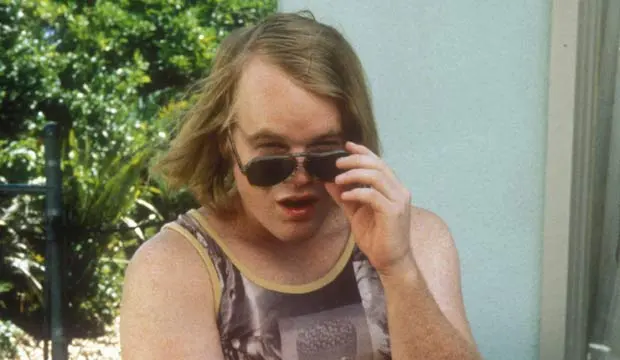
Paul Thomas Anderson changed the math. Not the financial math. The reputational math. Anderson cast Hoffman in Boogie Nights (1997) as Scotty J., the crew member whose unrequited devotion to Dirk Diggler produced one of the most painfully human scenes in American cinema. Hoffman played the parking lot confession as if his internal organs were being removed through his facial expressions. Every actor who watched that scene understood something had shifted. A character with maybe twelve minutes of screen time had just outacted everyone else in a film starring Mark Wahlberg, Julianne Moore, and Burt Reynolds.
The Capote Equation
Anderson kept casting him. Happiness (1998). The Big Lebowski (1998). Magnolia (1999). The Talented Mr. Ripley (1999), where he played Freddie Miles opposite Damon, Jude Law, Gwyneth Paltrow, and Cate Blanchett. Almost Famous (2000), where his Lester Bangs delivered rock criticism as life philosophy. Each role paid modestly. Each role compounded his reputation in a currency that doesn’t convert cleanly to dollars.
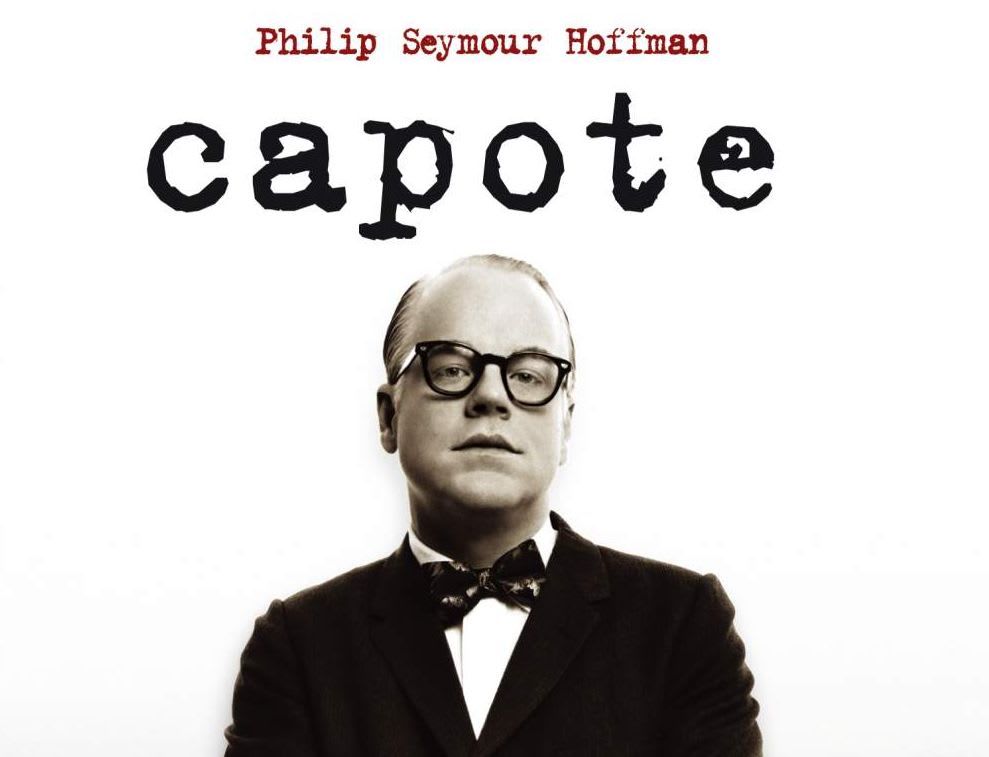
The conversion finally happened with Capote (2005). Hoffman co-produced the film and took the title role, portraying Truman Capote during the years he researched and wrote In Cold Blood. The transformation was total. Hoffman lost weight, spent four months studying video footage of Capote, and stayed in character throughout filming to avoid losing the voice and posture. Relaxing would let his body “bail on me,” he later explained.
Critics used words like “definitive” and “transcendent.” Hoffman won the Oscar for Best Actor, plus the Golden Globe, the BAFTA, and the Screen Actors Guild Award. Premiere listed the performance as the 35th-greatest in movie history.
What the Oscar Paid
Here is the gap that defines the Philip Seymour Hoffman net worth story. Capote was made for approximately $7 million. It grossed $49 million worldwide. Hoffman’s salary for the role that defined his career and won him the highest honor in his profession was, by all available reporting, in the low single-digit millions. Compare this to what an Oscar does for actors who possess the physical template Hollywood considers bankable. After winning for The Revenant, Leonardo DiCaprio’s quote rose past $25 million. After Gladiator, Russell Crowe’s hit $20 million. Hoffman won the same award, delivered a performance most critics considered superior, and his quote barely moved. His peak annual income was estimated at roughly $10 million, and that required him to work constantly.
The reason is structural. Hoffman did not look like a movie star. He looked like a high school English teacher who knew too much about Chekhov and drank slightly more than his colleagues suspected. Hollywood rewards beauty, youth, and the ability to open a film on name recognition alone. Hoffman could do none of these things. What he could do was inhabit another human being so completely that the audience forgot they were watching an actor. This skill is worth a fortune in reputation and almost nothing in leverage.
The Blockbuster Detours
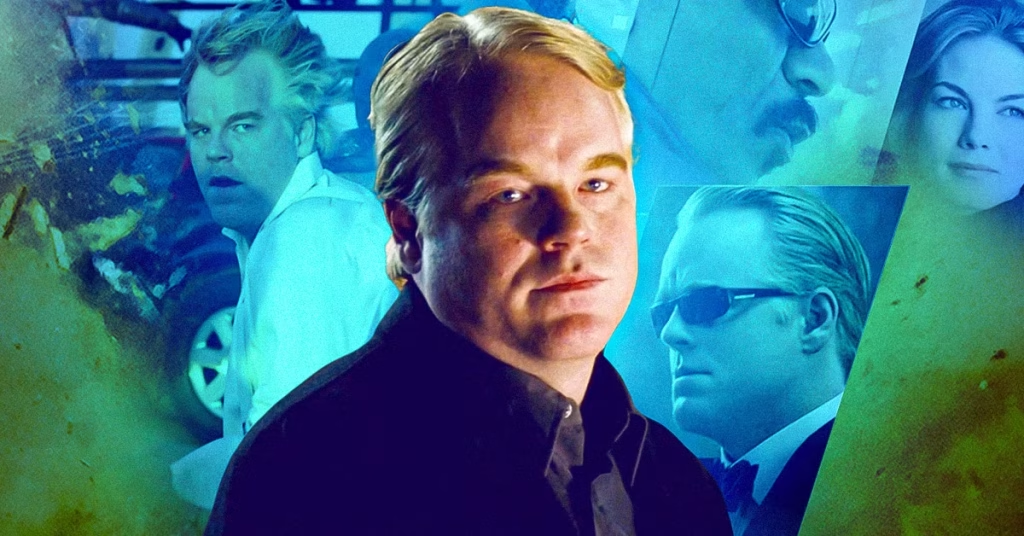
Mission: Impossible III (2006) was Hoffman’s closest approach to franchise money. He played Owen Davian, the arms dealer villain opposite Tom Cruise. Vanity Fair called the performance one of the most satisfying villain turns since Alan Rickman in Die Hard. The film grossed $400 million worldwide. Hoffman’s salary was reportedly between $3 and $5 million, a fraction of Cruise’s $75 million total package.
After Capote, the Oscar nominations kept coming. Charlie Wilson’s War (2007), playing a real-life CIA agent opposite Tom Hanks. Doubt (2008), playing a priest accused of misconduct opposite Meryl Streep. The Master (2012), playing a cult leader opposite Joaquin Phoenix in a film that Paul Thomas Anderson essentially wrote for him.
The Hunger Games Factor

In 2013, Hoffman joined The Hunger Games franchise as Plutarch Heavensbee. Catching Fire grossed $865 million worldwide. His salary was reportedly $10 million, the highest single paycheck of his career. Mockingjay Part 1 premiered nine months after his death. Part 2 was released in November 2015 with his remaining scenes rewritten around his absence. The franchise ultimately grossed over $3 billion. Hoffman was in three of the four films. His total franchise compensation across all three was likely in the range of $15 to $20 million, a number that sounds large until you compare it to Jennifer Lawrence’s estimated $40 million for the same series.
The Estate That Failed
The Philip Seymour Hoffman net worth discussion cannot be separated from the estate planning disaster that followed his death. His will was thirteen pages long, signed in October 2004, and never updated. In the decade between signing and dying, Hoffman had two more children, won an Oscar, and multiplied his net worth several times over. None of these events prompted a revision.
The will left everything to Mimi O’Donnell, his longtime partner and the mother of his three children. They never married. They had separated in 2013 due to his recurring drug problems. Because O’Donnell was not his legal spouse, the estate could not claim the unlimited marital deduction. Federal and state estate taxes were estimated at $12 to $15 million, roughly 35 to 40 percent of the total estate. His accountant had repeatedly advised him to establish trusts for his children. Hoffman ignored the advice.
The Will That Went Public
Because Hoffman used a will rather than a revocable living trust, the entire document became public record the moment it was filed for probate. The New York Post published it online within hours. Suddenly, everyone knew that Hoffman wanted his son Cooper raised in Manhattan, Chicago, or San Francisco so the boy would be “exposed to the culture, arts and architecture” those cities offered. Everyone knew that his two daughters, born after the will was drafted, were not named as beneficiaries. Everyone knew that a man who could inhabit Truman Capote’s psyche with clinical precision had failed to update a thirteen-page document that would determine his children’s financial future.
The contrast is the point. Hoffman could become anyone on screen. Off screen, he couldn’t become the person who sits in a lawyer’s office for two hours and signs the updated paperwork. The addiction that killed him was the same force that prevented him from administering the most basic protections for the people he loved.
The 1,300 Square Feet
Hoffman’s primary residence was a West Village apartment, approximately 1,300 square feet, purchased in 2004 for $3.2 million. He also owned a home in upstate New York. Compare this to his Talented Mr. Ripley co-star Damon, whose real estate portfolio includes a $16.5 million Brooklyn Heights penthouse. Or to George Clooney, whose Lake Como villa alone is worth more than Hoffman’s entire estate.
The apartment tells the Philip Seymour Hoffman net worth story in miniature. 1,300 square feet in the West Village is comfortable. It is not a status address. It is the home of someone who valued proximity to the theater district, to the LAByrinth Theater Company he co-founded, to the off-Broadway world where he felt most alive. Hoffman co-founded LAByrinth with John Ortiz and directed nineteen stage productions during his career. Theater directing pays almost nothing. He did it anyway, because the stage was where the work lived closest to the nerve.
The Co-Star Ledger
Every film Hoffman made placed him adjacent to actors whose fortunes dwarfed his own. The disparity was not about talent. It was about the machinery of fame and the economics of being watchable versus being beautiful.
In The Big Lebowski, Jeff Bridges anchored the film with a performance built on charisma and ease. Bridges is worth approximately $100 million. In Moneyball (2011), Hoffman played the Oakland A’s manager opposite Brad Pitt. Pitt is worth $400 million. In Charlie Wilson’s War, he matched Tom Hanks scene for scene. Hanks is worth $400 million. In The Ides of March, he worked with George Clooney. Clooney is worth $500 million.
Hoffman outperformed most of these actors in critical estimation. None of them could have played Capote, or Scotty J., or Lancaster Dodd in The Master. But all of them could open a film on their name. Hoffman could not. Opening a film requires the audience to want to spend two hours looking at you before they know what the film is about. That transaction is fundamentally about physical appeal, and it is the transaction that separates a $35 million career from a $400 million career.
The Philip Seymour Hoffman Net Worth Calculation
Celebrity Net Worth places the figure at $25 million. Estate filings and other sources estimate $35 million. The discrepancy likely reflects the difference between liquid assets and total estate value including future royalties, which for a 55-film catalog are substantial.
After estate taxes of $12 to $15 million, the amount available to O’Donnell and the three children was likely in the $20 to $23 million range. For a family of four in New York City, this is comfortable but finite. Not generational wealth. Not an empire. Just what remains when the most talented actor of his generation dies at 46 without a trust, without a marriage certificate, and without the time that converts a career into a dynasty.
A statue of Hoffman was unveiled in Fairport, New York, in 2022. It stands in the town where he grew up watching Arthur Miller plays and wrestling competitively. The statue costs less to maintain annually than Hoffman earned per day during The Hunger Games. Nobody who visits it thinks about the money. Instead, they think about Scotty J. in the parking lot. About Capote in the Kansas jail. About Lancaster Dodd telling Freddie Quell that he is the bravest man he has ever met. What stays is the image of someone so good at their job that the job consumed them entirely.
Explore more on the actors who shared the screen with Philip Seymour Hoffman: Matt Damon net worth | Tom Hanks net worth | George Clooney net worth | Tom Cruise movies ranked | Leonardo DiCaprio net worth | Jack Nicholson net worth | Robin Williams net worth | Ben Affleck net worth | Christian Bale net worth | Robert Downey Jr net worth | Martin Scorsese net worth
Feature your brand
alongside the names that define luxury, culture, and the Hamptons. Contact Social Life Magazine for editorial features, brand partnerships, and advertising. For brands and entrepreneurs seeking elevated visibility, our Paid Feature program offers guaranteed placement in the publication the East End actually reads. 25,000 copies per summer issue across boutiques from Westhampton to Montauk.
Polo Hamptons returns July 18 and July 25, 2026, to Bridgehampton. BMW is in its eighth year as title sponsor. 1,200 guests. Average net worth $3.62 million. If your brand belongs in the conversation, it belongs on the field. polohamptons.com
Subscribe to Social Life Magazine and get 23 years of the East End delivered before anyone else reads it.
Author

Written by
Recent Posts
hiTechMODA Season 16
How to Keep Your Personal Number Private When Booking Events, Rentals and Services
Understanding Compensatory Damages in a Personal Injury Case

When Online Family Therapy Makes Sense for Modern Families

Carrier Oils, Essential Oils, and Oil Blends: What Beauty Brands Need to Know
Categories
- Art
- Articles
- Business of Luxury
- Celebrities
- Culture
- Entertainment
- Events
- Faces of Summer 2026
- Fashion
- Fashion & Style
- Featured
- Finance
- Food, Spirits, Wine
- Hamptons
- Hamptons Celebrities
- Health
- Health & Beauty
- Lifestyle
- Luxury Lifestyle
- Press
- Profiles
- Real Estate
- Technology
- The Chronicles
- Travel
- Uncategorized
- Weddings