
| Category | Details |
|---|---|
| Full Name | Robert Selden Duvall |
| Net Worth at Death (2026) | $50 million (est.) |
| Date of Death | February 15, 2026 |
| Age at Death | 95 |
| Godfather Salary (1972) | $36,000 |
| Godfather Part III Salary | $1 million |
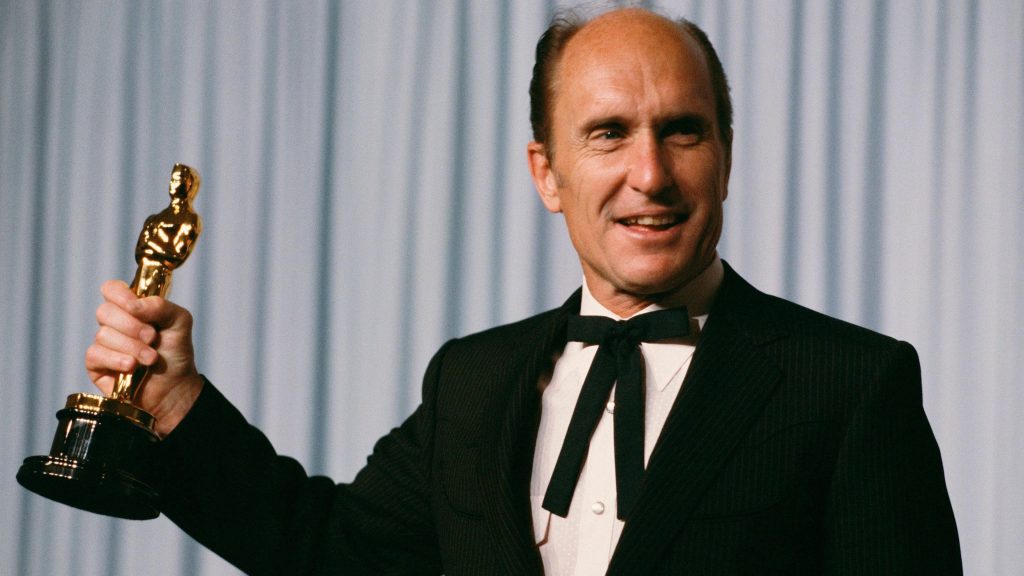
| Academy Awards | 1 win (Tender Mercies), 7 nominations |
| Key Real Estate | Byrnley Farm, 361 acres, The Plains, Virginia |
| Spouse | Luciana Pedraza (m. 2005–2026) |
| Children | None |
| Reported By | Social Life Magazine |
Robert Duvall Net Worth: The Origin Story
In 1972, Robert Duvall earned $36,000 for playing Tom Hagen in The Godfather. His co-star Al Pacino made roughly the same. Marlon Brando, the man whose gravitational pull organized the entire production, accepted $50,000 with a backend deal that eventually paid $2 million. Robert Duvall’s net worth at the time of his death on February 15, 2026, sat at an estimated $50 million, accumulated not through franchise blockbusters or vanity deals but through seven decades of showing up, disappearing into characters, and making everybody else on screen look like they were trying too hard.
Duvall was born January 5, 1931, in San Diego, California, the eldest son of a rear admiral in the United States Navy. His mother, Mildred Virginia Hart, was an amateur actress from a Virginia family with roots in the Shenandoah Valley. The Navy moved the family constantly. Duvall attended schools in Annapolis, Maryland, and various military postings before landing at Principia College in Illinois, where he studied drama and discovered that performance, unlike the Navy, did not require permission to speak freely.
The Meisner Years: Sanford’s Three Future Legends
After a two-year stint in the Army during the Korean War, Duvall moved to New York City and enrolled at the Neighborhood Playhouse School of the Theatre. His teacher was Sanford Meisner, the man who taught actors to live truthfully under imaginary circumstances. Duvall’s roommates during these lean years were Dustin Hoffman and Gene Hackman. Three future legends sharing rent, eating cheaply, and dreaming about careers that had not yet started. Hackman later told interviewers that Duvall was the most naturally gifted of the three, a compliment Duvall deflected with the observation that Hackman was the hardest working.
Small theater roles and television guest spots filled the late 1950s. Duvall’s first significant screen appearance came in 1962 as Boo Radley in To Kill a Mockingbird, a role that required him to speak almost nothing and communicate everything through posture and stillness. He appeared on screen for fewer than ten minutes. Critics remembered him for years.
Tom Hagen and The Godfather Economy
Francis Ford Coppola cast Duvall as Tom Hagen, the adopted Irish-German consigliere of the Corleone family, in what became the defining American film of the 1970s. For $36,000, Duvall created a character whose calm was more terrifying than any of the violence surrounding him. Hagen was the family’s legal infrastructure, the man who made brutality administrative. Duvall played him as a man who had chosen loyalty over identity and was fully aware of the cost.
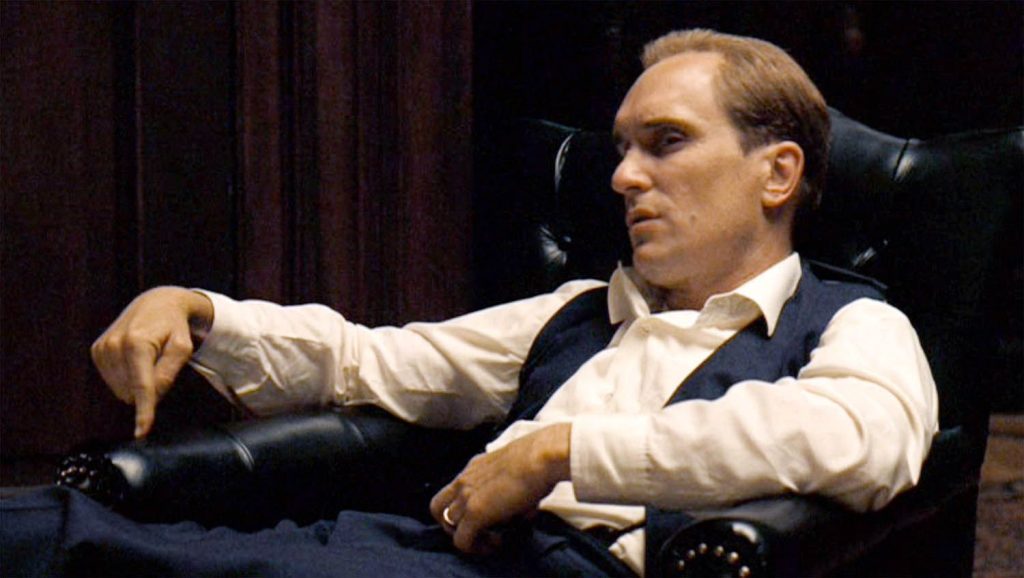
He reprised the role in The Godfather Part II (1974), reportedly for a modest salary increase. When Coppola began assembling The Godfather Part III (1990), Duvall demanded $5 million and a share of the gross, arguing that his pay should reflect his actual contribution to the franchise. Paramount offered $1 million. Duvall walked. The studio replaced Tom Hagen with a new character played by George Hamilton. For the complete financial architecture of the ensemble Coppola assembled, read our Godfather Cast Net Worth hub, a substitution that critics and audiences treated as a downgrade. Duvall’s absence from the third film remains one of the most discussed casting decisions in Hollywood history, and his willingness to leave money on the table rather than accept what he considered an insult tells you everything about how he valued his work.
Apocalypse Now: Six Minutes That Defined a Career
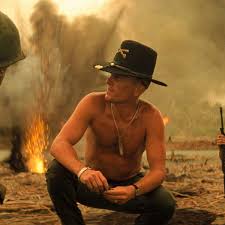
Duvall’s screen time in Apocalypse Now (1979) totaled roughly six minutes. In those six minutes, he created Lieutenant Colonel Bill Kilgore, the Air Cavalry officer who surfs during combat and loves the smell of napalm in the morning. Coppola later said that Duvall arrived on set in the Philippines with the character already fully built, requiring almost no direction. He earned an Academy Award nomination for Best Supporting Actor.
The performance illustrates a financial paradox that defined Duvall’s career. Supporting roles in landmark films generated cultural capital that exceeded what the paychecks could measure. Kilgore became one of the most quoted characters in American cinema. Duvall’s salary for Apocalypse Now was modest compared to Brando’s $3.5 million for Colonel Kurtz. But the role cemented Duvall’s reputation as the actor directors trusted to deliver iconic work without drama, delay, or demands for cue-card accommodations.
Tender Mercies and the Oscar
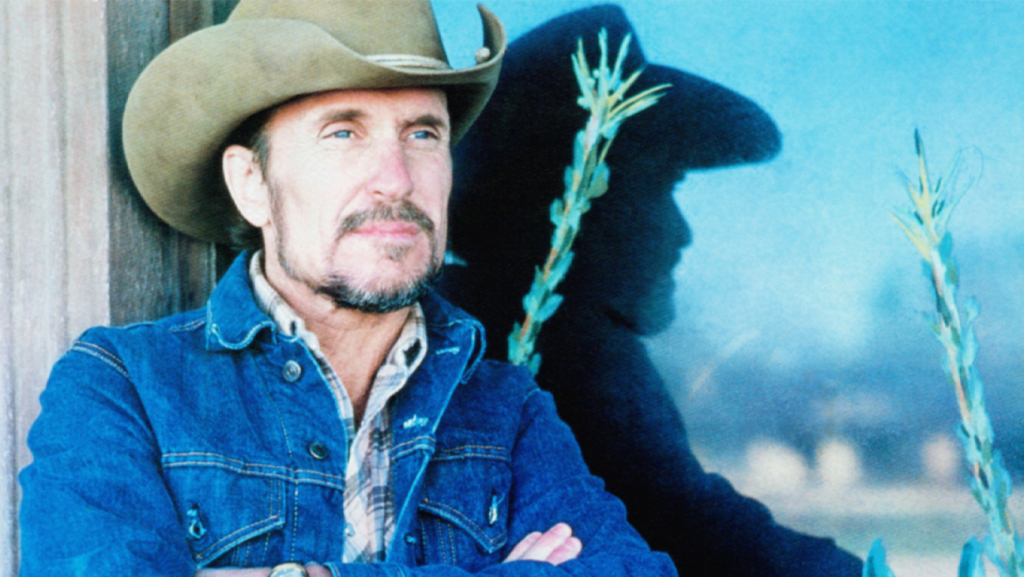
In 1983, Duvall won the Academy Award for Best Actor for Tender Mercies, playing Mac Sledge, a broken-down country singer rebuilding his life in rural Texas. The film earned $8.4 million against a $4.5 million budget. Not a blockbuster. Not even close. But the role required Duvall to sing his own songs, learn guitar, and inhabit a character defined by quiet damage rather than explosive confrontation. He prepared for months. He moved to a small Texas town and lived among the people whose rhythms the character was built from.
Seven Oscar nominations across a career spanning six decades. One win. The ratio frustrated some observers, but Duvall seemed genuinely indifferent to the mathematics. He told interviewers repeatedly that the work was the point, not the trophy. Nominations arrived for The Godfather, Apocalypse Now, The Great Santini, The Apostle (which he also wrote and directed), A Civil Action, and The Judge.
Lonesome Dove: Television’s Greatest Performance
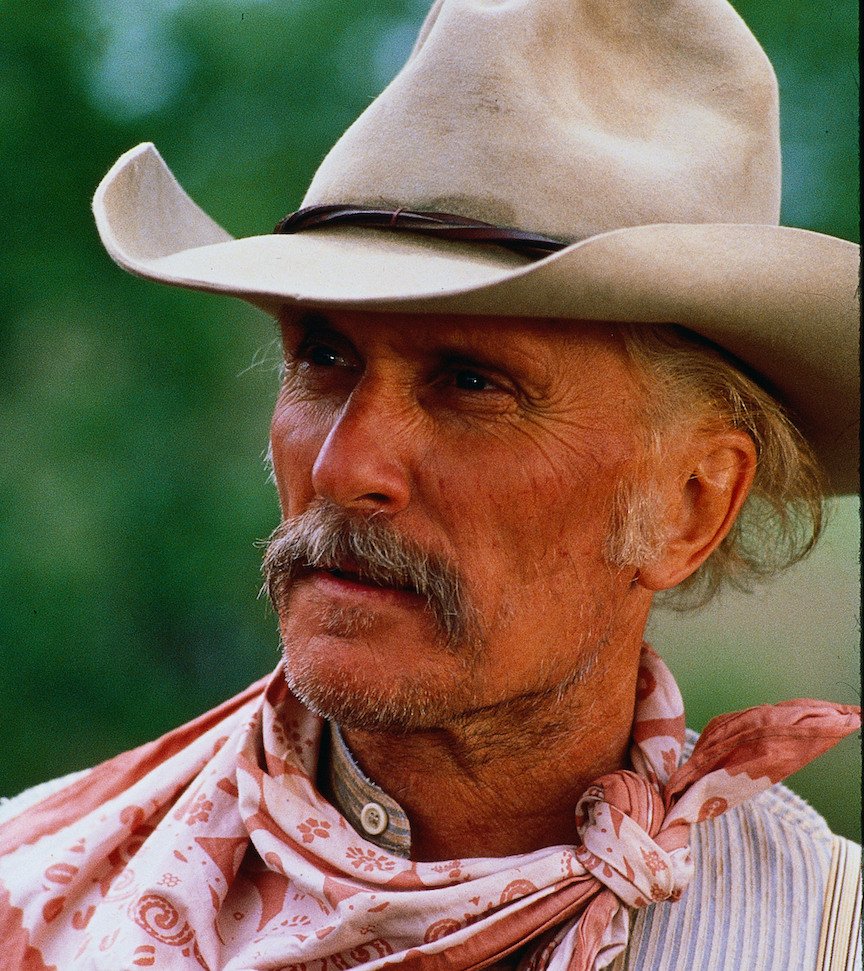
In 1989, Duvall starred as Augustus McCrae in the CBS miniseries Lonesome Dove, an adaptation of Larry McMurtry’s Pulitzer Prize-winning novel about two retired Texas Rangers driving a cattle herd from South Texas to Montana. The performance is widely considered one of the finest in television history. Duvall’s McCrae was gregarious, philosophical, funny, and heartbreaking, a man who understood that the frontier was closing and chose to ride through it one last time anyway.
Lonesome Dove attracted 26 million viewers per episode and won seven Emmys. Duvall was paid handsomely by television standards of the era, though the exact figure remains undisclosed. More importantly, the role demonstrated that Duvall could anchor a project entirely. He was not Hollywood’s Number One Number Two anymore. He was the whole show.
Robert Duvall Net Worth Breakdown
Film and Television Earnings
Over sixty years of continuous work, Duvall accumulated earnings from more than 100 film and television credits. Peak-era film salaries in the 1990s and 2000s reached several million dollars per project. Earlier work paid modestly, but residuals from The Godfather, Apocalypse Now, and Lonesome Dove generated steady annual income for decades. Court documents or public disclosures of specific salary figures remain rare for Duvall, a man who kept his financial life as private as his personal one.
Directing and Producing
The Apostle (1997), which Duvall wrote, directed, produced, and starred in, was made for $5 million, largely self-financed. It earned $20 million at the box office and an Oscar nomination for Duvall’s performance. The project represented both a creative triumph and a savvy financial bet. Duvall also directed Assassination Tango (2002) and produced several independent projects through his company Butcher’s Run Films, named after his Virginia estate.
Virginia Horse Country
Duvall’s primary residence was Byrnley Farm, a 361-acre estate in The Plains, Virginia, purchased in 1994 for $3.65 million (roughly $7.5 million in 2026 dollars). Located in Fauquier County, eight miles from Middleburg, the property served as both home and creative studio. An editing annex on the grounds was where Duvall cut The Apostle. Before Byrnley Farm, he owned a 28-acre property near Philomont called Butcher’s Run, purchased in 1985 and sold in 2009 for $2.265 million. His real estate portfolio reflected a man who preferred land, horses, and privacy over coastal glamour.
The Argentine Connection
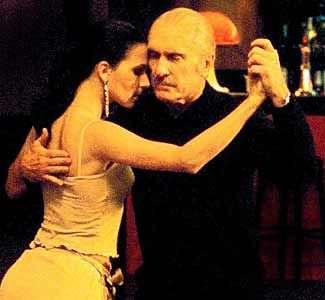
In 1996, Duvall met Luciana Pedraza, an Argentine actress twenty-three years his junior, at a bakery in Buenos Aires during a trip to study tango. They married in 2005. Duvall’s passion for Argentine tango was genuine and deep. He learned to dance at a level that impressed Argentine professionals and incorporated tango into Assassination Tango. The couple divided their time between Virginia and Argentina, where Duvall found the kind of anonymity that Los Angeles and New York could never provide.
Duvall had no children, an unusual fact for a man of his generation and stature. He and Luciana appeared publicly as a deeply bonded couple. When Duvall died at home in Middleburg on February 15, 2026, Luciana confirmed that he passed peacefully, surrounded by the people who mattered to him in the place he had chosen to live.
The Craft Over Celebrity Equation
Duvall’s $50 million net worth at death places him well below the wealth levels of peers who prioritized commercial projects. Jack Nicholson’s fortune exceeds $400 million. De Niro’s surpasses $500 million. Pacino sits around $120 million. Duvall turned down Blade Runner, Kramer vs. Kramer, and roles in Star Wars and Apocalypse Now‘s lead. Each rejection cost him millions in potential earnings and earned him something the paycheck could not: the freedom to choose work that interested him rather than work that paid.
Coppola once called Duvall one of the four or five best actors in the world. That assessment was shared by nearly every major director who worked with him. The label that stuck longest was coined by a journalist: Hollywood’s Number One Number Two, the best supporting actor in a generation of leads. Duvall did not object to the characterization. He simply kept working until the body of evidence made the label irrelevant.
Frequently Asked Questions
What was Robert Duvall’s net worth when he died?
Robert Duvall’s net worth was estimated at $50 million at the time of his death on February 15, 2026, at age 95. His wealth came from seven decades of acting, directing, producing, and strategic real estate investments in Virginia horse country.
How much did Robert Duvall earn for The Godfather?
Duvall earned approximately $36,000 for his role as Tom Hagen in The Godfather (1972). By The Godfather Part III (1990), he demanded $5 million and walked when Paramount offered $1 million.
Did Robert Duvall have children?
No. Robert Duvall had no biological or adopted children despite being married four times. He was married to Argentine actress Luciana Pedraza from 2005 until his death in 2026.
Where did Robert Duvall live?
Duvall’s primary residence was Byrnley Farm, a 361-acre estate in The Plains, Virginia, purchased in 1994 for $3.65 million. He lived there until his death, dividing time between Virginia and Argentina with his wife Luciana.
Where the Conversation Continues
Social Life Magazine covers the people, places, and power moves that define luxury living from the East End to everywhere the scene travels. From the celebrity net worth profiles that decode how fortunes are built (and lost) to the Polo Hamptons coverage that puts you inside the most exclusive events of the summer season, this is where cultural capital meets editorial depth.
Duvall earned $36,000 for a role that helped define American cinema. He walked away from $5 million because the offer insulted the work. He bought 361 acres in Virginia horse country and edited an Oscar-nominated film in a barn on the property. The Robert Duvall net worth story is the story of a man who understood that the most valuable asset in Hollywood is the willingness to leave when the terms are wrong.
For more profiles that unpack how Hollywood legends build and protect wealth over careers measured in decades, explore our full editorial library. We publish five issues each summer across the East End and deliver year-round digital coverage for the audience that reads between the lines.
Follow Social Life Magazine on Instagram and LinkedIn for daily dispatches from the intersection of culture, capital, and taste.
Author

Written by
Recent Posts
Jetsetter Style: Castello del Sole

The First Decision After a Collision Can Be the Most Important One
Two Weeks in Rome and Beyond: Turkish Airlines Itineraries from Boston, Chicago and Onward to India

Top 10 Hair Transplant Clinics in Turkey 2026

Artist Alley to Online Store: How Convention Artists Can Keep Selling After the Event
Categories
- Art
- Articles
- Business of Luxury
- Celebrities
- Culture
- Entertainment
- Events
- Faces of Summer 2026
- Fashion
- Fashion & Style
- Featured
- Finance
- Food, Spirits, Wine
- Hamptons
- Hamptons Celebrities
- Health
- Health & Beauty
- Lifestyle
- Luxury Lifestyle
- Press
- Profiles
- Real Estate
- Technology
- The Chronicles
- Travel
- Uncategorized
- Weddings