
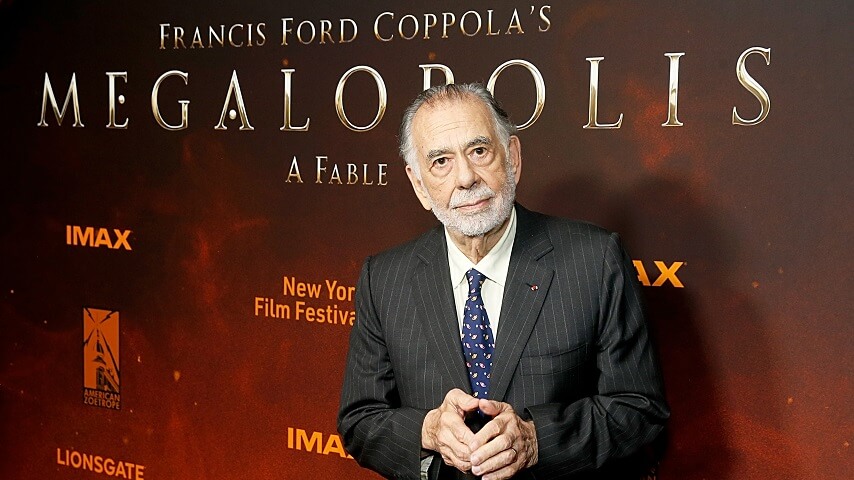
Francis Ford Coppola net worth is estimated at $400 million, a number that tells you almost nothing about the financial chaos behind it. He directed The Godfather, the most celebrated film in American cinema. Nearly bankrupted himself making Apocalypse Now. Lost everything on One from the Heart. Then he rebuilt a fortune through wine. Then he sold the wine empire, bet $120 million of his own money on Megalopolis, and watched it gross $14 million. As of 2026, he is 87 years old and selling watches to keep the ship afloat. No director in history has built and burned more wealth more times.
| Full Name | Francis Ford Coppola |
|---|---|
| Net Worth | $400 Million (estimated; significantly reduced by Megalopolis losses) |
| Primary Income Source | Film Directing/Producing, Winemaking, Hospitality |
| Career Span | 1963 – Present |
| Key Films | The Godfather I & II, Apocalypse Now, The Conversation, The Cotton Club |
| Notable Business Ventures | Inglenook Winery, Francis Ford Coppola Winery, Turtle Inn Belize, American Zoetrope |
| Residence | Napa Valley, California |
Before the Money
Francis Ford Coppola was born in Detroit in 1939 to an Italian-American family that understood both art and ambition. His father, Carmine Coppola, was a flutist for the NBC Symphony Orchestra under Arturo Toscanini. His mother, Italia Pennino, was the daughter of a Neapolitan composer. Music was the family trade. Film would become the family fortune.
Coppola contracted polio as a child and spent long stretches isolated in bed, entertaining himself with puppets, a projector, and whatever stories he could invent. He attended Hofstra University for theater, then earned an MFA in film at UCLA, where his student screenplay won the Samuel Goldwyn Writing Award. The award was worth money. More importantly, it was worth attention. Roger Corman hired him, and Coppola began learning how to make films cheaply. He would spend the rest of his career forgetting that lesson.
ERA 1: The Godfather Coronation (1969-1979)
In 1969, Coppola co-founded American Zoetrope with George Lucas, financing it partly with his own savings. The studio’s first major production, Lucas’s THX 1138, underperformed. Warner Bros. demanded repayment, and Coppola was $400,000 in debt before he had directed a single major film. This pattern of risking personal money on artistic vision would define every decade of his career.
The Godfather Machine
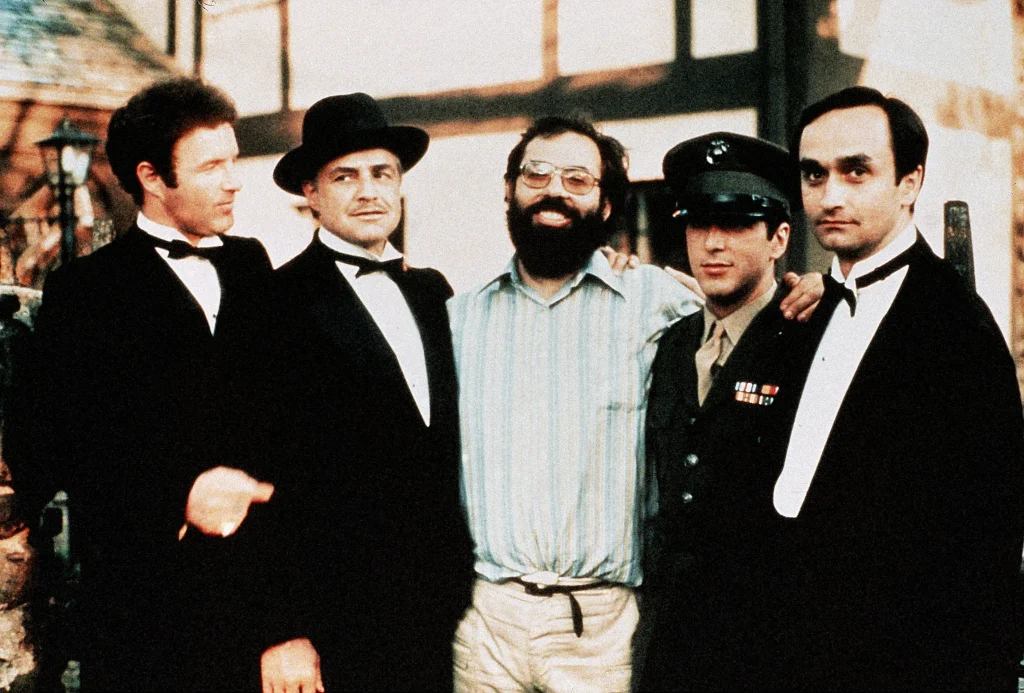
The Godfather (1972) grossed $245 million worldwide on a $6 million budget. Adjusted for inflation, it remains one of the highest-grossing films ever made. Coppola directed Al Pacino and Marlon Brando in performances that redefined the gangster genre. The film won three Academy Awards, including Best Picture and Best Adapted Screenplay for Coppola.
The Godfather Part II (1974) did something almost unprecedented: the sequel surpassed the original. It grossed $193 million, won six Oscars, and introduced Robert De Niro as young Vito Corleone. Coppola won Best Director. In the same year, The Conversation won the Palme d’Or at Cannes. Between 1972 and 1974, Coppola was arguably the most powerful filmmaker alive.
Apocalypse Now and the First Fire
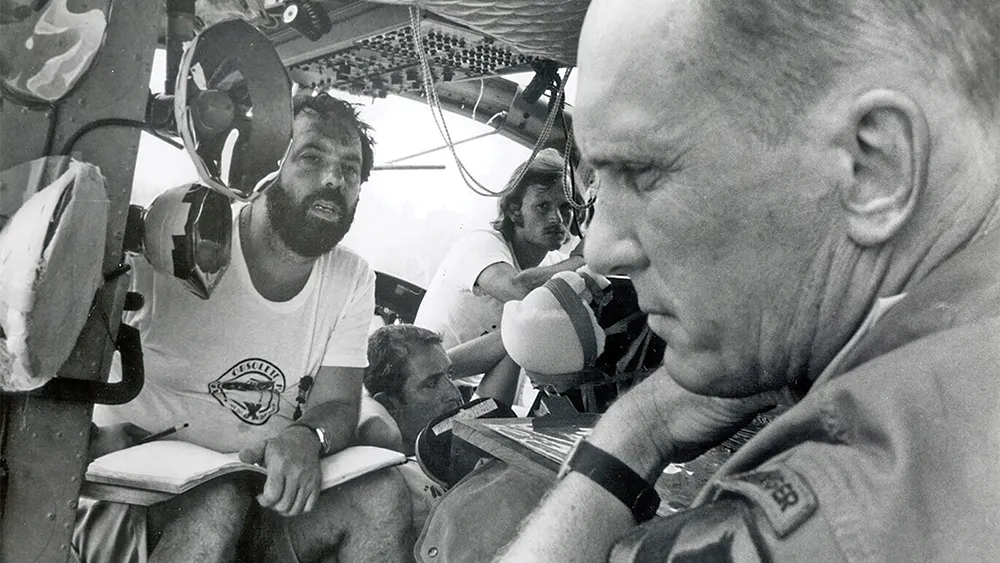
Apocalypse Now (1979) was the film that established Coppola’s financial pattern: spend everything, risk everything, nearly lose everything. The budget ballooned from $13 million to over $31 million. Coppola mortgaged his home. Martin Sheen had a heart attack on set. A typhoon destroyed the sets in the Philippines. Production lasted 16 months.
The film grossed $150 million worldwide and won the Palme d’Or. It also proved that Coppola’s genius and his financial recklessness were the same quality viewed from different angles. The mortgage was repaid. The debt was cleared. But the template was set: Coppola would always bet the house on the art.
ERA 2: The First Bankruptcy (1980-1989)
One from the Heart (1982) was the bet that broke him. Coppola spent $25 million (over $80 million adjusted) on a romantic musical filmed entirely on sets built inside his Zoetrope Studios. The film grossed $636,000. Not $636 million. Not even $636,000 per screen. The total domestic gross was less than the catering budget.
Zoetrope Falls
The loss forced Coppola into personal bankruptcy. American Zoetrope was seized by creditors. He owed an estimated $98 million in debts. At 43, the director of The Godfather was functionally broke. To survive, he began taking directing-for-hire jobs, a concept that would have been unthinkable five years earlier.
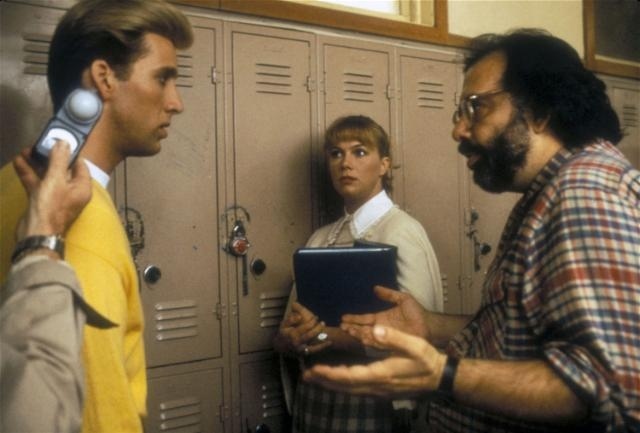
The Outsiders (1983) featured a young Tom Cruise. Rumble Fish (1983) paired him with Matt Dillon and Mickey Rourke. The Cotton Club (1984) reunited him with Richard Gere in an expensive production that cost $58 million and grossed just $25 million. Peggy Sue Got Married (1986) starred his nephew Nicolas Cage. Each film paid fees that chipped away at the mountain of debt. None rebuilt the fortune.
By the end of the 1980s, Coppola had worked his way through the worst of the bankruptcy. He had also learned something that would reshape the next three decades of his life: film was a terrible way to build wealth. Wine, on the other hand, was not.
ERA 3: The Wine Redemption (1990-2021)
In 1975, Coppola had used his Godfather earnings to purchase part of the historic Inglenook estate in Napa Valley for $2.2 million. Over the next 20 years, he acquired the remaining parcels, eventually spending over $30 million to reassemble the entire property. What began as a filmmaker’s vanity purchase became the foundation of a business empire worth hundreds of millions.
From Grapes to Gold
By the late 2000s, Coppola’s wine operation had expanded far beyond Inglenook. The Francis Ford Coppola Winery in Sonoma County became a destination property with a swimming pool, a gallery of film memorabilia, and a restaurant. His Diamond Collection wines became bestsellers at price points that moved volume. He launched labels including Director’s Cut, Sofia (named after daughter Sofia Coppola), and Votre Sante.
He also built a hospitality portfolio: Turtle Inn in Belize, Palazzo Margherita in Italy, Blancaneaux Lodge in the Belizean jungle. Restaurants, olive oil, pasta sauces, and spirits carried the Francis Ford Coppola brand. The man who once owed $98 million had rebuilt himself into a lifestyle mogul whose net worth reportedly exceeded $200 million.
In 2021, Coppola merged the Francis Ford Coppola Winery with Delicato Family Wines in a deal valued at approximately $650 million. He retained his beloved Inglenook estate. The deal was, by any measure, the financial triumph of his career. It was also the funding source for what would become his greatest financial disaster.
ERA 4: The Final Bet (2022-Present)
Megalopolis had been Coppola’s dream project for decades. A utopian sci-fi epic about an architect trying to rebuild a crumbling city, the film existed in various forms of development since the 1980s. In 2022, Coppola announced he would self-finance the film. He reportedly borrowed $200 million against his Delicato stake. Of that, $120 million went directly into production.
$120 Million In, $14 Million Out

Megalopolis debuted at Cannes in May 2024 and was released in theaters on September 27, 2024. Its cast included Adam Driver, Shia LaBeouf, Aubrey Plaza, Dustin Hoffman, and Laurence Fishburne. Reviews were polarized. The box office was not: the film grossed $14 million worldwide. On a $120 million self-financed budget, the loss was catastrophic.
In March 2025, Coppola told the New York Times: “I need to get some money to keep the ship afloat.” He began auctioning watches, including a custom-designed timepiece made with watchmaker Francois-Paul Journe, valued at approximately $1 million. He sold his private island in Belize, Coral Caye. Reports indicated he was liquidating personal assets to manage the debt from the Megalopolis production.
The $400 million net worth figure that appears on most estimation sites likely reflects pre-Megalopolis valuations, including the Delicato stake, Inglenook, remaining real estate, and Godfather residuals. The actual liquid position is almost certainly far lower. However, Coppola still owns Inglenook, still receives residuals from one of the highest-grossing film franchises in history, and still has his name on products that sell. The fortune is diminished but not extinguished.
How Francis Ford Coppola’s Fortune Breaks Down
Coppola’s financial picture is the most complex in this cluster because his fortune has been built, destroyed, rebuilt, and partially destroyed again across six decades.
Film earnings across his career include directing fees from The Godfather trilogy, Apocalypse Now, and dozens of subsequent films, plus backend participation and residuals. The Godfather franchise has earned well over $1 billion in cumulative revenue. Coppola’s ongoing residual cut, while modest by today’s standards, provides a steady baseline.
Wine and hospitality represented the majority of his peak net worth. The 2021 Delicato deal valued the combined wine operation at roughly $650 million. Inglenook, which Coppola retained, is worth an estimated $40-100 million as Napa Valley vineyard real estate. However, the $200 million borrowed against the Delicato stake for Megalopolis and other projects significantly reduced the equity position.
Real estate holdings have included properties in Napa Valley, the Palazzo Margherita in Italy, multiple Central American resorts, and the now-sold Belize islands. Post-Megalopolis asset sales have reduced this portfolio, though exact remaining holdings are not fully public.
Against these assets, the Megalopolis loss of approximately $106 million ($120M budget minus $14M gross) represents the largest single financial setback. When combined with the borrowed $200 million against wine equity, the net impact on Coppola’s balance sheet is severe. The $400 million estimate may reflect total asset value before debt, not net worth in the traditional sense.
Where the Money Stands Now
At 87, Coppola is in a position no one could have predicted for the director of The Godfather. He is liquidating personal property to manage Megalopolis debt. He is selling a private island, auctioning watches, and telling journalists he needs cash. At the same time, he still owns one of the most valuable vineyard estates in Napa Valley, still receives residuals from a $1 billion film franchise, and presides over a family dynasty that includes Sofia Coppola ($40 million net worth) and grandson Gio Coppola, who is building his own film career.
Ultimately, Coppola’s financial story is the mirror image of every other profile in this cluster. Norton made his fortune outside acting. Gere built through real estate. Winger walked away from money entirely. Gossett was never given the chance to build. Malick chose to earn less by making less. Coppola alone made the same bet twice: pour everything into a film, then live with what comes back. The Godfather returned a fortune. Apocalypse Now returned a legend. Megalopolis returned $14 million and a watch auction.
The number on his balance sheet has never been the point. The man who made The Godfather will always be worth more than whatever remains in his accounts. But the gap between artistic worth and financial worth is, for Coppola, the widest it has ever been.
Where The Conversation Continues
Social Life Magazine covers the intersection of wealth, culture, and influence from the Hamptons to Manhattan. Our celebrity net worth coverage traces the economics, the leverage, and the decisions that built the fortune.
Our readers are family office principals, exit founders, fashion executives, and the advisors who serve them. For premium editorial placement and integrated advertising across print and digital, submit a paid feature or contact our business development team.
Want insider access to the events, launches, and gatherings that define the Hamptons social calendar? Sign up for Event Invites & Specials and never miss a moment.
Social Life Magazine. Twenty-three years of covering the people and places that define luxury in America.
Author

Written by
Recent Posts

He’s Got Millions. He Still Flinches at the Bill.

Streamlining Ground Station Data Pipelines for Deep Space Missions

The Coordination Problem That Kills Growing Marketing Teams
Why Personalized Skincare Is Replacing One-Size-Fits-All Beauty Products
The Return of the Transatlantic Crossing
Categories
- Art
- Articles
- Business of Luxury
- Celebrities
- Culture
- Entertainment
- Events
- Faces of Summer 2026
- Fashion
- Fashion & Style
- Featured
- Finance
- Food, Spirits, Wine
- Hamptons
- Hamptons Celebrities
- Health
- Health & Beauty
- Lifestyle
- Luxury Lifestyle
- Press
- Profiles
- Real Estate
- Technology
- The Chronicles
- Travel
- Uncategorized
- Weddings