
The Best Beach in America Has a $50 Cover Charge
Cooper’s Beach in Southampton is the number one beach in the United States. Not by reputation. Not by Instagram consensus. By the measured judgment of Dr. Stephen Leatherman, the Florida International University coastal scientist known as “Dr. Beach,” who has been evaluating America’s beaches across over 50 criteria since 1991. In 2025, Cooper’s took the top spot for the second time (after its first win in 2010), placing second in 2024 and consistently ranking in the top five since 2017. It was the first beach outside of Hawaii or Florida to win the title in 35 years of the ranking’s existence.
The criteria are not subjective: water cleanliness, sand quality, dune preservation, safety, scenic beauty, and dozens of additional metrics. Cooper’s Beach Southampton scored highest on all of them. It is, by the most rigorous measurement available, the best beach in the country.
And it costs $50 to park.
The Scene at 10:47 AM
She pulls into the Cooper’s Beach lot at 10:47 AM on a Saturday in July. The attendant takes her $50 without eye contact, which she appreciates, because the woman in the Range Rover behind her is someone she knows from the office and she would prefer not to explain why she is spending a summer Saturday on a public beach rather than at the club.
She carries a canvas tote, a paperback she will not finish, and a folding chair that cost $14 at the hardware store on Jobs Lane. She walks past the concession stand and the bathhouse and the chair rentals and sets up forty yards from the water, where the sand is still warm from yesterday. Behind her, past the dunes and the American beach grass, is a house that sold for $45 million. In front of her is the Atlantic Ocean, which has not been sold yet. She opens the paperback. She does not check her phone for ninety minutes. This is the most expensive free thing she has ever experienced.
Cooper’s Beach: The Complete Guide
What You Are Looking At
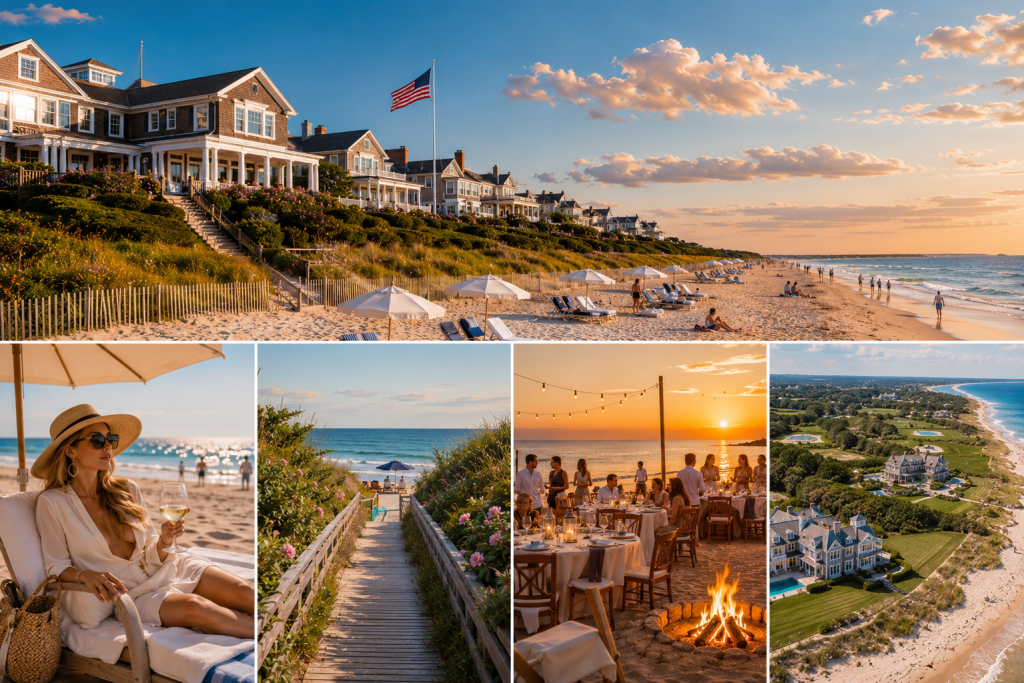
Cooper’s Beach occupies a stretch of Atlantic oceanfront at the end of Meadow Lane in Southampton Village. The beach itself is approximately 500 feet of grainy white quartz sand, wide enough to hold several hundred people without feeling crowded (on weekdays) and narrow enough to feel like a well-curated event (on July Saturdays). The dunes behind the beach rise high enough to frame, but not conceal, the oceanfront mansions of Meadow Lane and Gin Lane, creating the essential Southampton paradox: the nation’s best public beach sits directly in front of some of the most expensive private real estate on earth.
The sand is raked regularly. The garbage is picked up. The lifeguards are on duty from 10 AM to 5 PM daily during beach season. The bathhouse has restrooms and changing facilities. The concession stand serves the basics. Chair and umbrella rentals are available for those who did not bring their own (and who are willing to pay rental prices that reflect the zip code).
The water temperature ranges from the mid-50s in late May to the low 70s by August. The surf varies from gentle rollers on calm days to legitimate Atlantic swells when a storm system passes offshore. Swimming is restricted to the area between the lifeguard flags. The undertow, particularly during and after storms, is real and respected by the lifeguards who have been watching it for decades.
Address and Access
Address: 268 Meadow Lane, Southampton, NY 11968
By car: From Main Street, Southampton, head south on Meadow Lane. Cooper’s Beach is approximately 1.5 miles from the village center. The parking lot is on the left. On peak summer Saturdays, the lot fills by 10:30 AM.
By shuttle: The Hamptons Free Ride (ridecircuit.com) operates a free electric shuttle service from downtown Southampton to Cooper’s Beach during the summer months. The shuttle holds six to eight passengers, runs on a loop, and eliminates both the $50 parking fee and the experience of navigating Meadow Lane in traffic while $80 million hedgerows slide past your windows.
By bike: Meadow Lane is flat and bikeable, though the lack of a dedicated bike lane means sharing the road with Range Rovers, Porsche Cayennes, and the occasional construction vehicle heading to a renovation site. Bike racks are available at the beach. No permit required.
On foot: If you are staying in the village proper or at a Southampton hotel, Cooper’s Beach is a seven-minute walk from Main Street. This is the access method that most clearly communicates you are either a local, a guest of a local, or someone who has read this guide.
Parking and Permits
Daily parking: $40 to $50 per day during beach season (Memorial Day through Labor Day). Cash or card. No reservations. First-come, first-served.
Village season permit: $450 for the full season (May 15 through September 15). Valid at all Southampton Village beaches, including Cooper’s, Fowler, Halsey Neck, Old Town, and Dune Beach. Available through the Village of Southampton (southamptonvillage.org). Apply by mail or drop off at Village Hall, 23 Main Street.
Town beach permit (different system): Southampton Town permits ($50 for residents, $500 for non-residents) cover town-operated beaches (Flying Point, Scott Cameron/Mecox, and others) but are NOT valid at Cooper’s Beach or other village beaches. This distinction confuses first-time visitors annually and without mercy.
The math: Essentially, if you plan to visit Cooper’s Beach more than nine times in a summer, the $450 village season permit pays for itself. If you are buying Southampton real estate south of the highway, the permit is the first thing your broker should help you obtain.
When to Go
Peak season (July 4 through Labor Day): Arrive before 10:30 AM for parking. The beach fills from left to right (facing the ocean), with the area closest to the parking lot filling first and the stretch toward Gin Lane filling last. The further you walk, the fewer people you encounter. This is a metaphor for Southampton itself.
June: The water is still cold (mid-50s to low 60s). The crowds are manageable. The light is extraordinary. This is when the photographers come.
September: Dr. Beach’s own recommendation. The summer tourists have departed. The ocean water is still warm (low 70s). Parking is free after September 15. The beach belongs to the year-round residents and the visitors wise enough to come when the village exhales.
Weekdays vs. weekends: The difference between a Tuesday at Cooper’s Beach and a Saturday at Cooper’s Beach is the difference between a private screening and a premiere. Both show the same film. One has a line.
The Other Southampton Beaches
Cooper’s gets the headlines, but the Southampton coastline extends for miles in both directions, and the village and town operate a network of beaches that offer different experiences at different price points and access levels.
Fowler Beach
End of Fowler Street, Southampton Village. Village permit required ($450/season).
Fowler is the local’s beach. No concession stand. No chair rentals. One trash can. Yet the smaller lot, fewer visitors, and the same Atlantic Ocean at the same temperature as Cooper’s make it appealing. Stop by Fowler’s farm stand on the way home for dinner ingredients. The beach and the farm stand together constitute one of the more honest Southampton experiences available.
Halsey Neck Beach
End of Halsey Neck Lane, Southampton Village. Village permit required ($450/season).
A popular spot for photography (the dunes frame the ocean against the estate section skyline) and for beachgoers who want the village beach experience without Cooper’s visibility. Notably, Halsey Neck Lane is one of the estate section’s premier streets, so the drive to the beach is its own kind of tour.
Old Town Beach
End of Old Town Road, Southampton Village. Village permit required ($450/season).
Recognized by the tall wooden pole with a colorful surfboard nailed to it. In general, Old Town carries a slightly younger, slightly more casual energy than Cooper’s. Restroom available. Village permit required during open hours. The surfboard is not for sale.
Dune Beach
1678 Meadow Lane, Southampton Village. Resident parking only.
Dune Beach sits on Meadow Lane and is restricted to residents, though permits are still required during open hours. The most exclusive of the village beaches, Dune is where the Meadow Lane homeowners walk when they want to avoid the Cooper’s Beach crowd, which is to say, when they want to avoid everyone. Restroom and trash can. No concession, no pretension, no one who does not already live on the most expensive street in America.
Flying Point Beach
1055 Flying Point Road, Water Mill. Southampton Town permit required. No daily passes.
Flying Point occupies one of the most geographically dramatic positions on the South Fork: a narrow strip of sand between the Atlantic Ocean and Channel Pond/Mecox Bay, with water on both sides and the sensation of standing at the edge of the continent. Excellent surfing and boogie boarding on the ocean side. Calm water, paddleboarding, and kayaking on the bay side. Lifeguards, restrooms, volleyball, a mobile food stand.
The catch: no daily passes. You need a Southampton Town seasonal permit ($50 residents, $500 non-residents) or a pass from the Water Mill Beach Club. This exclusivity keeps the crowd smaller and the experience closer to what the East End felt like before Instagram discovered it.
Scott Cameron/Mecox Beach
End of Dune Road, Bridgehampton. Southampton Town permit or $25 daily pass (weekdays only).
At the western end of Dune Road where Mecox Bay meets the Atlantic, Scott Cameron Beach offers 300 feet of ocean frontage, an overlook platform with bay views, restrooms, showers, and a beach volleyball court. The daily pass (Monday through Friday only) makes it one of the few Southampton-area beaches accessible to non-residents without a full seasonal permit.
The Paradox: Public Sand, Private Everything Else
What Cooper’s Beach Reveals About Southampton
Of course, the best beach in America is open to anyone with $50. This fact coexists, without apparent tension, with the fact that the houses behind the best beach in America are owned by people whose combined net worth exceeds the GDP of a small European nation. The Bathing Corporation, the most exclusive beach club on the East End, sits on Gin Lane less than a mile from Cooper’s Beach. Its members have access to a private stretch of sand that no amount of money can buy entry to (only lineage will do). Meanwhile, Cooper’s Beach charges $50 for parking and provides the same ocean, the same sand, the same dune grass, and (arguably) a better concession stand.
This is the Southampton arrangement: the public and the private exist side by side, sharing the same coastline, breathing the same salt air, and maintaining a distance that is measured not in feet but in generations. The hedgerows do not reach the waterline. The ocean is the one thing in Southampton that has not been zoned, permitted, or privatized.
The 6:45 AM Ritual
He swims at Cooper’s Beach every morning from June through September. Eleven years now, since he bought the house on a street he will not name in a price range he will not specify. He arrives at 6:45 AM, before the lifeguards, before the parking attendant, before the first Range Rover.
Twenty minutes parallel to the shore in water that is cold enough in June to remind him he is alive and warm enough in August to make him wonder if he has been alive all along. He dries off on a towel he has owned since 2008. Barefoot, he walks home. He passes three houses worth a combined $120 million. Not once does he look at them. He looks at the ocean, which is not for sale, and this is the only thought he carries back to the house: the best thing in Southampton is the thing nobody owns.
The Environmental Stewardship
Cooper’s Beach did not win the number one ranking by accident. Indeed, the Village of Southampton maintains an active dune preservation program, regular water quality testing, beach raking, and waste management that exceeds what most coastal communities consider standard. The American beach grass that covers the dunes is replanted annually. The dune system itself serves as both ecological infrastructure (protecting the estate section from storm surge) and aesthetic architecture (framing the oceanfront mansions in a way that feels natural rather than constructed).
Mayor William Manger credited “the tireless dedication of so many individuals who care for it every single day” in the village’s response to the 2025 ranking. The Cooper’s Beach staff, from the lifeguards to the maintenance crews, are part of the reason the beach scores highest on criteria that most visitors never think about: dune preservation, water cleanliness, safety protocol, accessibility.
The Beach Day Playbook
The Perfect Cooper’s Beach Saturday
9:30 AM: Coffee and pastry at Sant Ambroeus (30 Main Street). The cappuccino imports Milan. The croissant is local.
10:00 AM: Walk or shuttle to Cooper’s Beach. If driving, arrive by 10:15 to guarantee parking.
10:15 AM to 1:00 PM: Beach. Bring your own chair (the hardware store on Jobs Lane sells folding chairs for $14, which is the most underpriced item in Southampton). Sunscreen. A book you have been meaning to read since March. Do not bring your laptop. Do not bring your phone’s charger. Bring the phone for photos, then put it in the bag.
1:00 PM: Lunch at the concession stand (adequate) or walk to the village for something better. Lunch Lobster Roll on County Road 39 serves the gold standard lobster roll to an outdoor-only crowd that includes a dog-friendly grass area and zero pretension. Order the “whale.”
2:30 PM: Return to the beach or explore the village. The Parrish Art Museum (279 Montauk Highway, Water Mill) is a ten-minute drive and offers air-conditioned galleries, skylit paintings, and the kind of cultural credibility that makes the beach day feel like more than a beach day.
5:00 PM: Shower. Change. Dinner reservation at FENIKS (if you booked the Chef’s Counter three weeks ago) or walk-in at Southampton Publick House (if you value honesty over spectacle).
8:00 PM: The sun sets behind you. The ocean is still there. It will be there tomorrow.
For the full weekend version, see 72 Hours in Southampton: A Weekend Itinerary (coming soon).
The Numbers
| Detail | Information |
|---|---|
| Dr. Beach ranking (2025) | #1 in America |
| Previous #1 ranking | 2010 |
| Years in top five | Every year since 2017 |
| Daily parking | $40 to $50 |
| Village season permit | $450 (May 15 to Sept 15) |
| Lifeguards | 10 AM to 5 PM daily (summer) |
| Sand type | Grainy white quartz |
| Beach width | ~500 feet |
| Water temp (June) | Mid-50s to low 60s °F |
| Water temp (August) | Low 70s °F |
| Free shuttle | Hamptons Free Ride from downtown |
| Distance from Main Street | 1.5 miles (7 min walk) |
| Closest restaurant | Sant Ambroeus (7 min walk back) |
| Most expensive house behind beach | Approximately $112.5 million (Mylestone, Meadow Lane) |
Where the Conversation Continues
Social Life Magazine has covered the East End’s beaches, from Westhampton to Montauk, for twenty-three years. The Southampton Village Dossier places Cooper’s Beach in the context of the village’s full social, culinary, and cultural landscape. For the complete East End beach guide, see Hamptons Beaches: A Complete Visitor’s Guide.
If your brand serves the audience that reads this guide on a beach towel at Cooper’s Beach (sunscreen, swimwear, resort fashion, wellness, hospitality, real estate), Social Life Magazine’s paid feature program places your story in front of 25,000 copies per issue, distributed at the restaurants, hotels, and beach clubs where the sand gets in everything, including the conversation.
Polo Hamptons 2026 (July 18 and 25, 900 Lumber Lane, Bridgehampton) is where the beach crowd changes into something more formal and watches polo alongside BMW North America and Christie Brinkley. Cabana packages, VIP tables, and sponsorship opportunities. The tan you earned at Cooper’s Beach is the accessory that completes the outfit.
To receive Social Life Magazine delivered to your door, visit our subscription page.
Cooper’s Beach is the best beach in America. The parking is $50. The ocean is free. The houses behind the dunes cost more than you will earn in several lifetimes. The sand does not know the difference, and this, if you pay attention, is the lesson Southampton has been teaching since 1640: the best things are the things that cannot be bought. Everything else is just the cover charge.
Author

Written by
Recent Posts

50 Cent X ZOI NoMad

How to Read Your Brokerage Statement (and Spot What It’s Costing You)

IRA or Taxable Account? Where Your Next Dollar Should Go

How to Move a Brokerage Account Without Losing a Dime

The Credit Cards That Pay You in Stock
Categories
- Art
- Articles
- Business of Luxury
- Celebrities
- Culture
- Entertainment
- Events
- Faces of Summer 2026
- Fashion
- Fashion & Style
- Featured
- Finance
- Food, Spirits, Wine
- Hamptons
- Hamptons Celebrities
- Health
- Health & Beauty
- Lifestyle
- Luxury Lifestyle
- Press
- Profiles
- Real Estate
- Technology
- The Chronicles
- Travel
- Uncategorized
- Weddings