

Watch Manhattan on a summer Friday at four, because the whole argument is visible from the sidewalk. The towers of Midtown and the Financial District begin discharging eastward, by Jitney, by train, by helicopter, by the long chrome crawl of the Expressway, one hundred miles down an island to a set of villages that produce, in the strict economic sense, almost nothing. The commodities out there are hedges, light, and proximity. Yet the migration moves more purchasing power every weekend than most American cities hold, and it has run on schedule for forty years.
The Wall Street Hamptons pipeline looks like a lifestyle. But it is actually a machine, and the machine has a design. The Street produces two things in enormous quantity, liquidity and status anxiety, and neither one can be consumed in Manhattan, where everyone is at the office and nobody can see your August. So the East End is where both get spent. This piece is about why the machine was built there, and what it converts.
The Wall Street Hamptons Pipeline
Finance is the perfect feeder industry for a display economy, for reasons worth stating plainly. The money arrives young, in large annual pulses, attached to people whose entire professional life is ranking. A trader knows his number, his desk’s number, and his rival’s number, and the knowing does not switch off at the beach. Instead it changes denomination.
But Manhattan itself is a terrible theater for the spending. Apartments hide. Offices standardize. The city compresses a managing director and his analyst into the same subway car, which is intolerable to the entire system. So the industry required a second location, engineered for visibility, where the year’s ranking could be performed in square footage, hedge height, and invitations.
The Hamptons was not the only candidate. Ultimately it won, and the winning had rules.
Consider also what the industry does all day, because the day job explains the weekend. Finance prices things. Pricing is the reflex, the training, the entire skill, and a reflex that strong does not idle on Saturdays. So the coastline became the one market where the pricers price each other, openly, with the family watching. It is the only exchange that serves rosé, and the only one where the ticker is a tan.
The Distance Is the Product
One hundred miles is a number with a job. Close enough that the Street can reach it Friday and return Monday, far enough that reaching it costs real time, and the cost is the filter. In fact every mile of the Expressway is a velvet rope laid horizontally. So the people who cannot spare the trip are precisely the people the destination exists to exclude.
Better still, the trip itself comes tiered, a price ladder in transportation. The Jitney is the retail product. A Cannonball seat sells a faster version of the same aisle. The helicopter clears the whole ladder in forty minutes, at a price that rounds to a monthly mortgage, and its passengers are buying exactly what the ticket says: altitude over everyone in traffic below.
The filter even self-tightens in season. As traffic worsens, the time price rises, and the people most able to pay it gain share. Congestion, which every civic meeting treats as the region’s failure, is financially speaking the product working. Nobody says this at the civic meetings. The rope, in other words, is made of minutes, and minutes are the one thing the Street prices best.
Notably, no other New York escape offers this combination. Closer retreats filter nobody. Farther ones break the weekly rhythm the Street’s calendar demands. The East End sits at the one distance where exclusivity and attendance can both be maintained, which is not romance. It is siting, as deliberate as any exchange floor.
The Bonus Built the Season
The season’s true architecture is the compensation calendar, and once you see it you cannot unsee it. Numbers land in January and February. Then rentals get signed in February and March. Memorial Day opens the books on the new fiscal year of standing, and the whole summer is the Street’s annual report, published in lawns.
As a result, good years and bad years print directly onto the coastline. The vintage is legible by June: which houses upgraded, which held, which quietly went from full season to August, the downgrade everyone notices and nobody mentions. A comp cycle that happened behind closed doors in winter becomes public record by the Fourth, translated into leases.
So the season is not adjacent to the industry. It is the industry’s settlement layer, where the year’s abstract rankings get converted into a currency everyone’s family can see. No other American profession built itself a reporting season like it. The Street needed one, because the Street is the only industry whose product is also just money.
Watch the February listings if you doubt the wiring. Brokers out here read comp season the way farmers read frost, and in fact the rental market’s entire clock is set to it. Inventory prices in January, moves in February, and clears before the equinox. A beach economy, running on a fiscal calendar printed in Midtown.
Why Not Newport
The Gilded Age already ran this experiment once, of course, and its display terminal was Newport. Industrial fortunes built marble there, performed there, married there. Then the fortunes institutionalized, the tax code arrived, and Newport calcified into a museum of a competition that had ended. A display economy dies when its feeder industry stops producing new competitors.
The Street learned the lesson without studying it. Finance produces new competitors every single year, a fresh class of them, which means its display economy never runs out of entrants and never calcifies. The Hamptons is Newport with a renewable fuel source, and the renewal is the whole difference.
There is a warning inside the comparison, still. Display economies die from the supply side, not the demand side. If the Street ever stopped minting entrants, the East End would begin its own slow conversion into exhibit, and parts of the coastline already argue about whether that has started. The argument itself sells houses. Museums, as Newport learned, still charge admission. They just stop setting prices.
Greenwich, the other candidate, lost for the opposite reason. Greenwich is where the money lives, and residence is the wrong register for display. A stage needs a season, a run, an opening and a closing night. Year-round wealth is furniture. Summer wealth is theater, and the industry, whatever it tells its analysts, always understood it was in show business.
The Org Chart in the Dunes
Because the colonizing industry was a hierarchy, the geography became one, and the mapping is nearly exact. The shared house north of the highway is the analyst pool. The seasonal rental is the vice presidency. Ownership is the managing directorate, south of the highway is the partnership, and the oceanfront is the letterhead. An entire org chart, laid out in zip codes, readable from a bicycle.
Equally, the industry’s internal etiquette came east intact. Deference travels: who defers to whom at a Bridgehampton dinner tracks desk seniority with embarrassing fidelity, decades after everyone involved stopped sharing an office. The Street is the only tribe out here whose members can be ranked by other members in under a minute, and they perform the ranking constantly, recreationally, the way the rest of the coastline discusses weather.
Watch a July benefit sort itself and the fidelity is almost touching. Analysts cluster near the bar with the urgency of people who paid for the ticket. Principals orbit. True seniors arrive late, leave early, and greet the staff by name, because at the top of any hierarchy the flex is comfort. The org chart came for the weekend, and it brought its whole personality.
The one mercy is that the ladder has a top, and the top changes the game. Past a certain altitude the competition stops being denominated in houses at all, a conversion this series maps elsewhere. The dunes only rank you until you matter. After that, the room does.
What the Street Actually Buys Here
Yet strip the theater and the purchase underneath is rational. The Street runs on counterparties, and counterparties are made in rooms, and for one season a year the rooms all sit within twenty miles of each other. The dinner that cannot be scheduled in Manhattan for six weeks assembles itself out here on a Saturday, with spouses, which changes its chemistry entirely.
Also, careers move measurably in those twenty miles. The allocator meets the founder at a benefit. The seat gets discussed at a clambake. Nothing signs, because nothing needs to sign. What the season manufactures is familiarity, and familiarity is the Street’s actual reserve currency, whatever the term sheets say.
Spouses matter more than the industry admits, equally. A Saturday table rearranges professional distance in ways no conference can, because a man who has met your family holds different paper on you afterward. The Street understood this before the sociologists did. It invented the client dinner, after all. The season is simply the client dinner, extended to ninety nights.
In fact the industry’s presence out here is best understood as a professional position, held for the same reason every position is held. It pays. The lawn is margin and the party is origination. The Street never spends without a thesis, and the East End thesis has now compounded, uninterrupted, for two generations.
The Long Position
So here is the last turn of the machine. The traders who built the pipeline have heirs now, and the heirs did not choose the place. Instead they inherited it, with the houses and the memberships and the manners. Wall Street came out here to convert money into standing. The conversion worked. Their grandchildren are the old money now. The machine ran exactly as designed. It just took forty years, and nobody read the manual, because nobody wrote one. The place was the manual.
Where The Conversation Continues
If you recognized your own zip code on the org chart, so does everyone you had dinner with last weekend. The map was never secret. It was just never printed.
Social Life Magazine has covered the Street’s season for over two decades. For editorial inquiries, reach the editorial desk.
For brands and individuals ready to be part of the story, explore a feature in Social Life.
The people in these pages get the invitations first. Sign up for Event Invites and Specials and read the season before it happens.
The counterparty room assembles every July. Polo Hamptons, Bridgehampton.
Print still carries a weight the feed cannot. Subscribe to the print edition and hold the season in your hands.
Independent coverage of this world stays independent because readers keep it that way. Support Social Life’s editorial desk.
Author

Written by
Recent Posts

Why the Supplement Market Is Shifting From More Products to Smarter Choices
5 Ways Engraved Custom Trophies Boost Employee Engagement
Creating Beautiful Mix-and-Match Tablescapes for Any Occasion
Is It Cheaper to Drive or Ship Your Car? We Ran the Numbers
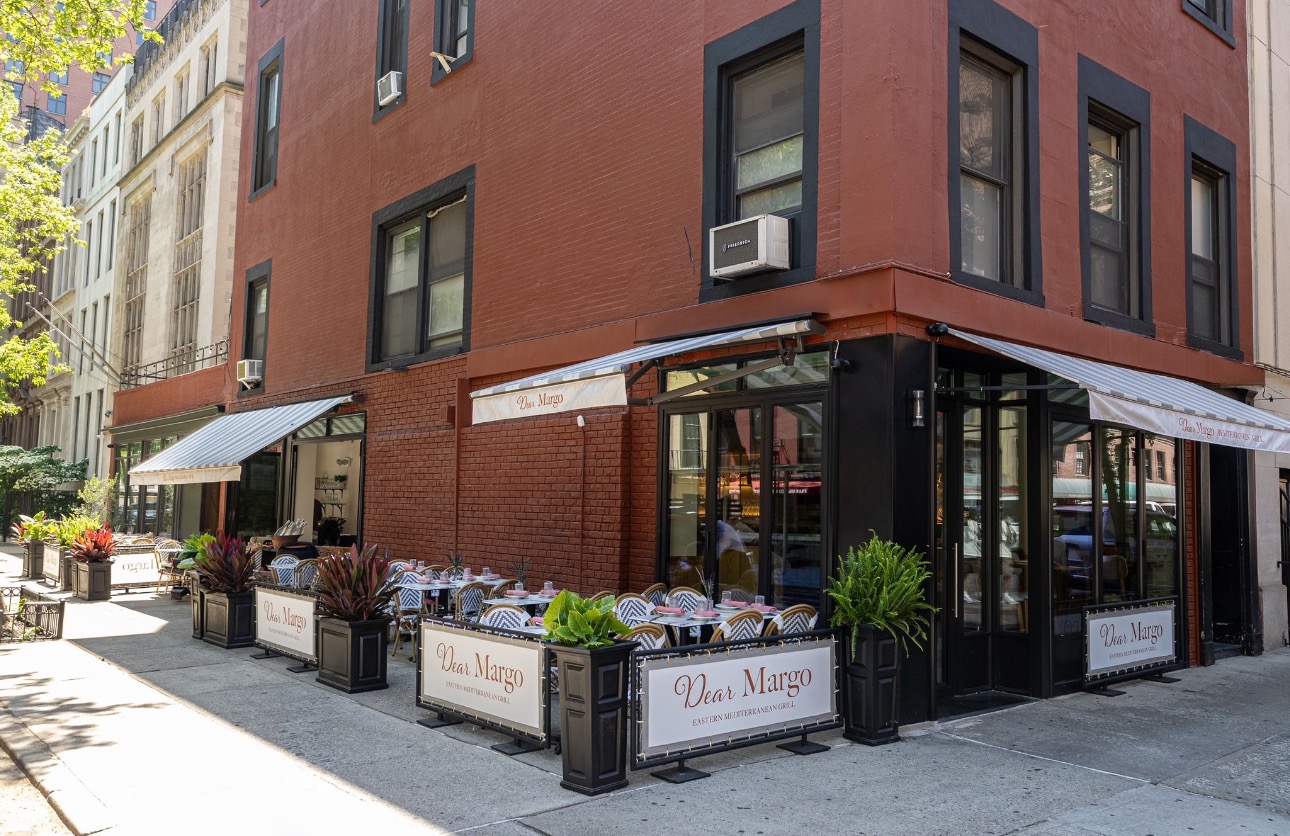
Dear Margo: Restaurateur Dean Pashilis’ Tribute to Family, Food and Hospitality
Categories
- Art
- Articles
- Business of Luxury
- Celebrities
- Culture
- Entertainment
- Events
- Faces of Summer 2026
- Fashion
- Fashion & Style
- Featured
- Finance
- Food, Spirits, Wine
- Hamptons
- Hamptons Celebrities
- Health
- Health & Beauty
- Lifestyle
- Luxury Lifestyle
- Press
- Profiles
- Real Estate
- Technology
- The Chronicles
- Travel
- Uncategorized
- Weddings