
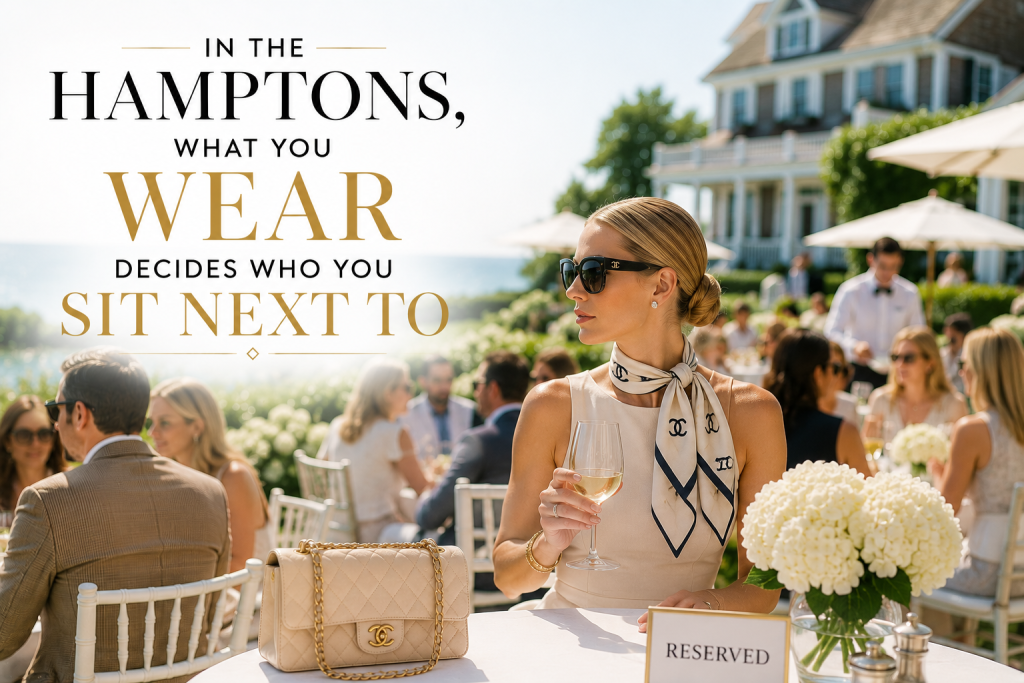
At a certain Bridgehampton dinner, the seating was decided before anyone sat down. Not by the host, exactly, but by what each guest was wearing, driving, and carrying. In the Hamptons, social codes do that sorting quietly and constantly, and almost nobody admits it out loud.
Your possessions are not just things out here. They are signals, read instantly by people fluent in a language you may not even know you are speaking. Every label is a sentence. Each choice is a claim about who you are and where you belong.
So the real question in the Hamptons is never what you can afford. It is what your choices say, and whether the right people read them the way you hoped. Brand, out here, is politics.
Why Consumption Became a Language
As the middle of the market collapses, what you buy stops being a preference and becomes a position, a shift we map in the death of the middle. Your brands now signal your tribe, your values, and the rung you are claiming, so every purchase reads like a vote.
People are not only choosing products. They are choosing sides, and they want everyone nearby to read the choice correctly. A handbag, a watch, a car. Each is a flag planted to say who you stand with.
How the Codes Actually Read
The codes are subtle, and that subtlety is the point. Loud logos read as new money trying too hard. Quiet, knowing choices read as someone who already belongs, since real status whispers while anxiety shouts.
This is why old names can spot a newcomer in seconds. They are reading the codes, not the price tags, and we go deep on those tells in old money versus new money. The same fluency decides which brands get welcomed and which get politely ignored.
The Codes Are Information, Not Snobbery
It is tempting to dismiss all of this as snobbery, but that misreads what the codes do. They are information, a fast way for a crowded social world to sort who knows the rules from who does not. Snobbery is the ugly version, yet the underlying system is just pattern recognition.
For a brand, that reframing is freeing. You are not being judged for being new. Rather, you are being read, and a read can be learned, practiced, and improved. The codes reward study far more than they reward spending.
So treat the codes as a language to learn rather than a wall to resent. Fluency is available to anyone willing to pay attention, which is exactly why the smartest new arrivals catch up fast. Resentment changes nothing. Fluency changes everything.
What This Means for a Brand
If consumption is a language, then a brand is a word people use to describe themselves. The brands that win are the ones worth being seen with, because being seen with them says something the buyer wants said. That is a far higher bar than being liked.
It is also why the right room matters more than the biggest spend. A label welcomed into the correct Hamptons setting borrows the whole room’s status, while a label that crashes in loudly borrows nothing. We trace the fashion version in how a fashion brand wins the Hamptons.
So a brand is not really choosing a marketing plan out here. It is choosing which tribe it wants to speak for, and which table it wants its buyers seated at.
Dressing for the Table You Want
The practical lesson is the same for a person and a brand. Decide which table you want to sit at, then learn the codes that table respects. Fluency, not spend, is what earns the seat.
Status anxiety pushes people to buy louder, which almost always backfires, as we explain in Hamptons status anxiety and the new rich. The fix is to buy more knowingly instead. Read the codes, speak the language, and let the right people seat you where you belong.
In the Hamptons, what you wear really does decide who you sit next to. So choose your signals the way you would choose your seat, because out here they are the same decision.
Where The Conversation Continues
Social Life Magazine has spent twenty three summers fluent in the codes that decide who sits where on the East End. That fluency is the product, because a feature places your brand inside the right conversation rather than outside it. Placement is limited on purpose, since scarcity is the point, and the names that move early are the ones seated well all season.
If you would rather be read correctly than merely seen, the desk is open now, though the summer fills fast. Join the list to see who gets seated before the rest of the East End does. And if this sharpens how you read the room, you can support the work here.
Author

Written by
Recent Posts

AI for personal finance: where PennyGuard fits
How to Pick a Homecoming Dress for Your Body Type (and Feel Amazing in It)

World Cup Injury Attorney for Vancouver Events
What a 3-Carat Engagement Ring Actually Costs in 2026: The Real Numbers
The Skincare Habits That Make a Real Difference Over Time
Categories
- Art
- Articles
- Business of Luxury
- Celebrities
- Culture
- Entertainment
- Events
- Faces of Summer 2026
- Fashion
- Fashion & Style
- Featured
- Finance
- Food, Spirits, Wine
- Hamptons
- Hamptons Celebrities
- Health
- Health & Beauty
- Lifestyle
- Luxury Lifestyle
- Press
- Profiles
- Real Estate
- Technology
- The Chronicles
- Travel
- Uncategorized
- Weddings