
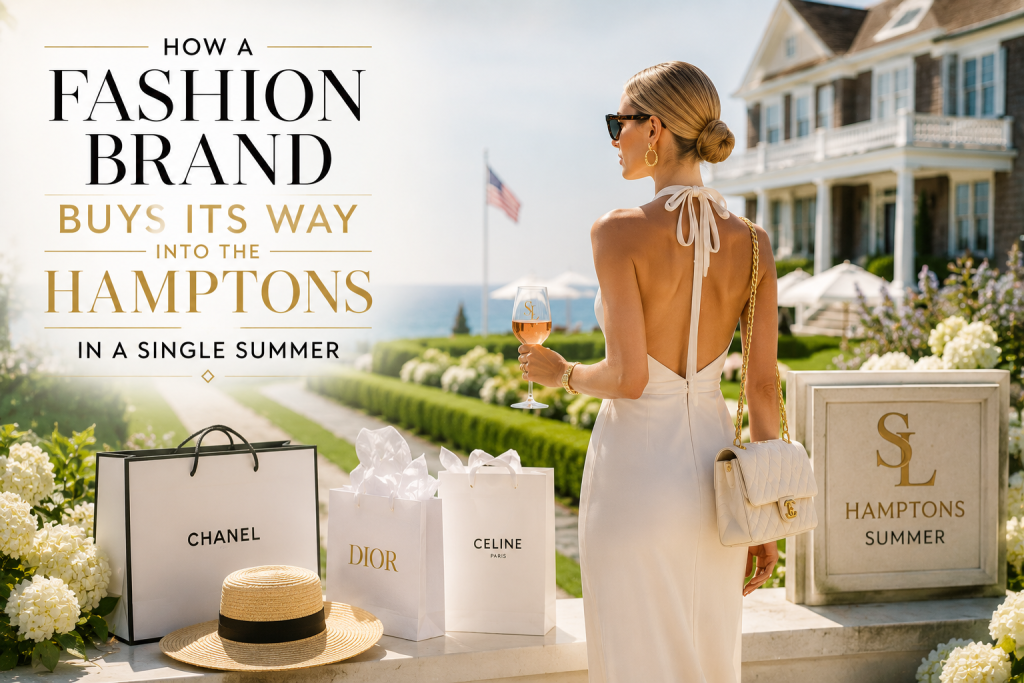
Two labels launched the same summer with the same budget. By Labor Day, one was on every right wrist and the other was on a markdown rack. The difference was not the product. It was that one of them understood how a fashion brand wins the Hamptons, and the other just showed up. Getting a fashion brand into the Hamptons is not about spending more. It is about spending where the season actually sorts.
For a label stuck in the crowded middle, the East End is the rare shortcut. Three good months out here can do what three years of paid posts cannot. Still, the shortcut only works if you play it the way the room expects.
So here is the honest map. This is how a brand goes from invisible to inevitable between Memorial Day and Labor Day, and how to avoid the moves that get you quietly mocked instead.
Why Accessible Luxury Just Died
The phrase accessible luxury was always a polite way of saying middle, and the middle is now collapsing. Shoppers are splitting hard, since they either want the cheapest thing that works or the costliest thing that confers a story. A label sitting comfortably between the two is being abandoned from both directions.
This is the wider shift we map in the death of the middle. For fashion specifically, it means the safe middle position is now the dangerous one. Being reasonably nice at a reasonable price is no longer a brand. It is a slow slide into the discount bin.
That leaves one real move for a middle label. Climb, and learn to sell meaning instead of value, because meaning is the only thing that holds a premium now. The Hamptons happens to be the fastest place on earth to make that climb in public.
The Hamptons Is a One-Season Shortcut
Most markets make a brand earn status slowly, over years of consistent presence. The Hamptons compresses that timeline brutally. A few square miles hold the exact buyers, photographers, and tastemakers who decide what counts, so the right summer can rewrite a label’s whole story.
The reason is density. When the people who confer status are all in one place for one season, a single well-placed moment travels fast. One great room, seen by the right eyes, becomes the thing everyone repeats by July, and repetition is how a brand becomes a name.
The catch is that the same density punishes mistakes just as fast. A wrong move out here is seen by everyone too, so the upside and the downside both compound. That is why the playbook matters more than the budget.
The Activation Playbook That Actually Works
The brands that win the season tend to run the same handful of moves. None of them is about buying the biggest sign. Each is about being seen beside the right people, in the right rooms, with a story attached.
Borrow the Right Context
Place the brand inside moments that already carry status, rather than building status from scratch. A presence at the polo, a dressed host at a charity dinner, a feature in a title the right people read. Each one lends you the credibility of the room, so you inherit a reputation instead of begging for one.
Give Before You Sell
Host generously and let the selling happen sideways. The label that throws the dinner everyone wanted to attend wins more than the one running a hard pop-up, because generosity reads as belonging while pushing reads as desperation. Patronage is still the oldest status play out here, and it works on brands exactly as it works on people.
The Mistakes That Get You Laughed Out
For every brand that lands, two crash, and they usually crash the same way. They mistake volume for status, so they blast logos and book the loudest possible presence. The Hamptons reads that instantly as trying too hard, and trying too hard is the one unforgivable tell.
It is the brand version of the new-money panic we describe in Hamptons status anxiety and the new money problem. The fix is the same for a label and a person. Stop announcing that you arrived. Earn a credible voice to say it on your behalf, since a vouch you did not buy outright is worth ten you did.
The other classic error is picking the wrong room entirely. Being the biggest name at a party nobody respected does nothing. Being a quiet presence at the right table does everything, so choose the room before you choose the spend.
What You Are Really Buying
Strip it all back and a Hamptons activation is not buying exposure. It is buying a story that lets you raise your price and keep it raised. That is the real return, and it lasts well past the summer.
It is the same lesson a single banana taught the beauty world, which we break down in the $175 banana and the medspa marketing lesson. Narrative is the margin. The product sets the floor, but the story you build out here sets the ceiling.
So a fashion brand does not really buy its way into the Hamptons. It buys a season to prove it belongs, then spends the next decade pricing like it does. Play it right and one summer pays for years.
Where The Conversation Continues
Social Life Magazine has spent twenty three summers deciding which labels get worn, photographed, and repeated across the East End. That is the climb, packaged, because a feature and the right summer rooms are how a brand stops competing on price. Placement is limited by design, since scarcity is the entire product, and the labels that commit early are the ones still being worn at Labor Day.
If you would rather be inevitable than invisible by August, the desk is open, though the season books out quickly. Join the list to see which brands make the cut before the rest of the market notices. And if this sharpens how you think about your own play, you can support the work here.
Author

Written by
Recent Posts

AI for personal finance: where PennyGuard fits
How to Pick a Homecoming Dress for Your Body Type (and Feel Amazing in It)

World Cup Injury Attorney for Vancouver Events
What a 3-Carat Engagement Ring Actually Costs in 2026: The Real Numbers
The Skincare Habits That Make a Real Difference Over Time
Categories
- Art
- Articles
- Business of Luxury
- Celebrities
- Culture
- Entertainment
- Events
- Faces of Summer 2026
- Fashion
- Fashion & Style
- Featured
- Finance
- Food, Spirits, Wine
- Hamptons
- Hamptons Celebrities
- Health
- Health & Beauty
- Lifestyle
- Luxury Lifestyle
- Press
- Profiles
- Real Estate
- Technology
- The Chronicles
- Travel
- Uncategorized
- Weddings