
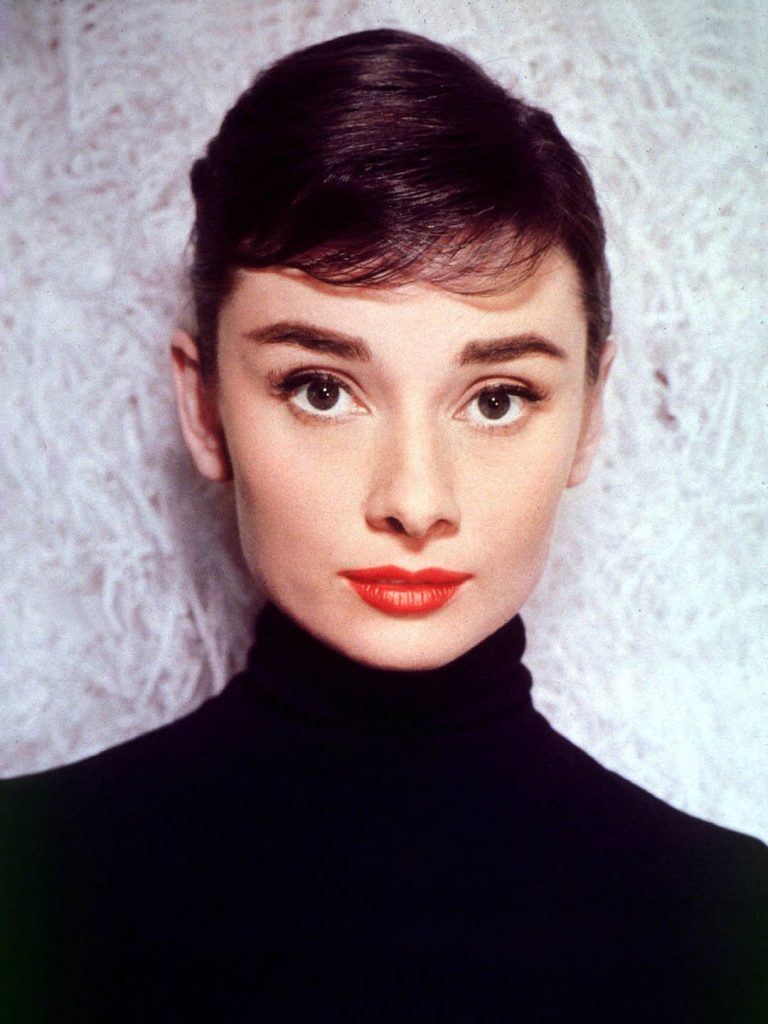
Audrey Hepburn retired from Hollywood at 38, moved permanently to a Swiss farmhouse called La Paisible, and died on January 20, 1993 with an estate estimated at approximately $100 million (credible peer estimates range from $55 to $100 million). The figure is not a Hollywood story. It is a masterclass in knowing when to stop. Audrey Hepburn net worth at death equaled Marilyn Monroe’s estate value multiplied by sixty, accumulated in roughly fourteen years of selective film work followed by twenty-five years of strategic withdrawal. She made 31 films total. Elizabeth Taylor made more than seventy. Hepburn worked less, demanded top rates when she worked, and retired before the market could discount her. The little black dress she wore in Breakfast at Tiffany’s (1961) sold at Christie’s for $923,187 in 2006. As an entry in the Movie Star Legends cluster, Hepburn is the case study in cultural capital preserved through strategic scarcity.
Audrey Hepburn Net Worth at a Glance
| Birth Name | Audrey Kathleen Ruston (later Hepburn-Ruston, born May 4, 1929) |
|---|---|
| Net Worth | Estimated $55 to $100 million at death (January 20, 1993) |
| Primary Income Source | Film salaries (escalating from $12,500 to $1 million); Givenchy partnership; UNICEF compensation; La Paisible property; posthumous estate licensing |
| Career Span | 1948 (Dutch in Seven Lessons) to 1989 (Always); UNICEF Goodwill Ambassador 1988-1993 |
| Key Credits | Roman Holiday (1953 Oscar), Sabrina, Funny Face, Breakfast at Tiffany’s, My Fair Lady, Wait Until Dark |
| Notable Achievements | Academy Award Best Actress 1953; Tony Award 1954; Grammy 1994 (posthumous); UNICEF Goodwill Ambassador; Presidential Medal of Freedom 1992 |
| Residence at Death | La Paisible, Tolochenaz, Switzerland (purchased 1963) |
Before the Money: The Hongerwinter And A Career Made Possible By Survival
Audrey Kathleen Ruston arrived May 4, 1929 in Ixelles, Brussels, the only child of Joseph Victor Anthony Ruston (a British banker) and Baroness Ella van Heemstra (a Dutch aristocrat). Joseph abandoned the family in 1935 when Audrey was six. The mother moved Audrey to Arnhem in the Netherlands in 1939 to escape what she expected to be British war losses. The decision proved catastrophic. Germany invaded the Netherlands in May 1940. The family remained inside occupied territory through the war.
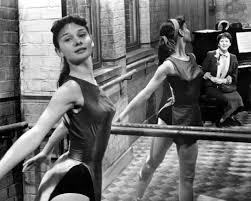
Audrey trained as a ballerina through the occupation. She danced in clandestine performances to raise funds for the Dutch resistance. Her uncle Otto van Limburg Stirum was executed by the Germans in 1942 in retaliation for resistance activities. The Hongerwinter, the Dutch famine of 1944 to 1945, left Audrey severely malnourished. She survived on tulip bulbs, sugar beets, and ground bread. Her weight dropped to 88 pounds at age 15. The childhood malnutrition permanently affected her metabolism and would later limit her ballet career. Survival shaped her relationship with money: she never confused fame with security.
Roman Holiday To Tiffany’s: $12,500 To Six-Figure Star
How The First Oscar Win Set The Pace For A Selective Filmography
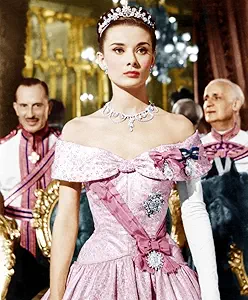
Hepburn moved to London in 1948 to study at the Ballet Rambert. The ballet career foundered. She turned to chorus-line work on the West End. Modeling shoots and small film roles followed. Colette discovered her in Monte Carlo in 1951 and cast her in Gigi on Broadway. The play opened November 24, 1951 and ran 217 performances. Paramount signed Hepburn for Roman Holiday in 1952 at $12,500 for the lead role opposite Gregory Peck. Peck recognized her star potential and insisted his contract be revised mid-production to give Hepburn equal above-the-title billing.
Roman Holiday released in August 1953. Hepburn won the Academy Award for Best Actress in March 1954 in her first major American role. Sabrina (1954) followed at $15,000. Funny Face (1957) at $150,000. The Nun’s Story (1959) at $250,000 plus an additional percentage. Breakfast at Tiffany’s (1961) at $750,000 plus 10 percent of gross. Hepburn’s salary doubled or tripled on every successive picture. Paramount and Warner Bros. competed for her contracts because she remained selective about projects.
The economic structure was simple. Hepburn took roughly one film every 18 to 24 months. She refused roles that did not match her brand. She turned down West Side Story, Forty Carats, and other commercial vehicles. Each role she rejected made the films she accepted more valuable. Her 1963 contract for My Fair Lady paid $1 million flat. Wait Until Dark (1967) paid another $1 million. Hepburn earned an estimated $9 million in salary across her active career (1948 to 1976 with a 1989 cameo), roughly $80 million inflation-adjusted.
The Givenchy Partnership: Cultural Capital Without A Standard Endorsement Fee
How A Friendship With A French Designer Became Brand IP
Hepburn met Hubert de Givenchy in July 1953 when Billy Wilder sent her to Paris to costume for Sabrina. Givenchy had launched his couture house the prior year and was expecting Katharine Hepburn (the famous one). The other Hepburn walked in instead. Givenchy almost refused to dress her. He relented after lunch. The partnership lasted forty years until her death.
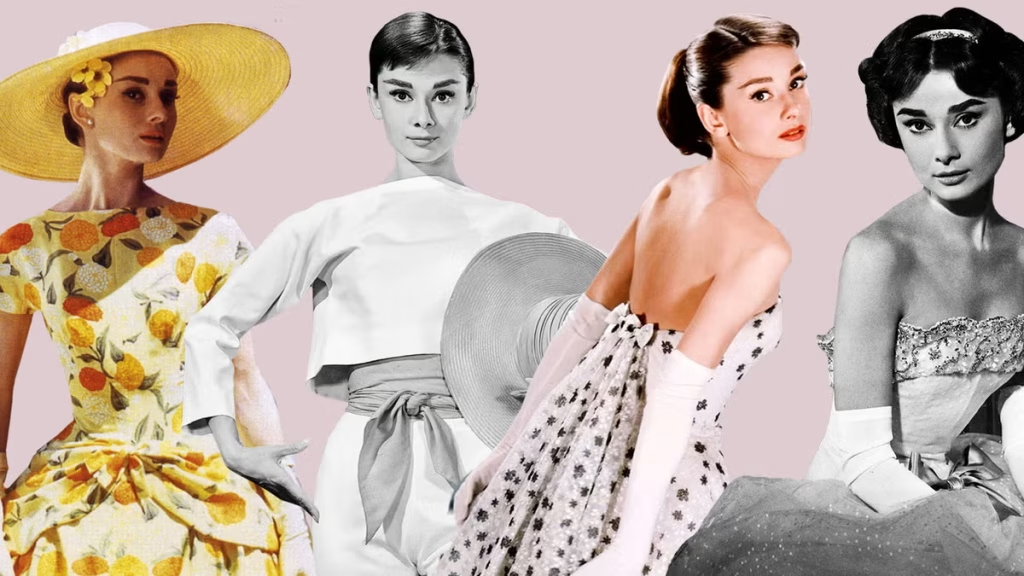
Hepburn wore Givenchy in Sabrina, Funny Face, Love in the Afternoon, Breakfast at Tiffany’s, Charade, Paris When It Sizzles, How to Steal a Million, and Two for the Road. She never accepted a standard endorsement fee. Givenchy provided her wardrobe at cost or below cost. She wore his designs publicly at every premiere, photo session, and red-carpet appearance. Givenchy named his first commercial perfume L’Interdit (1957) after Hepburn and gifted the launch. The partnership was a mutual capital exchange: she gave him cultural legitimacy in America, he gave her the visual identity that made her immortal.
The little black dress in Breakfast at Tiffany’s (1961) became the single most influential garment in film history. Three versions of the dress exist. One sold at Christie’s London on December 5, 2006 for £467,200 ($923,187), a record for a film costume at auction. The buyer was reportedly an anonymous British collector. The other two versions sit in private archives. Modern fashion houses still trace direct lineage to that dress in current commercial collections. The Givenchy-Hepburn collaboration predated the modern celebrity-brand partnership by half a century.
La Paisible And The Strategic Withdrawal
Why Retiring At 38 Was The Most Profitable Career Move She Ever Made

Hepburn bought La Paisible in 1963 with first husband Mel Ferrer. The 1830s farmhouse sat on 1.5 acres in Tolochenaz, Switzerland, fifteen minutes from Lake Geneva. Purchase price ran roughly $200,000 in 1963 dollars (approximately $2 million adjusted). Property value at her death in 1993 was estimated at $8 to 12 million. Current valuation runs $15 to 20 million. La Paisible appreciated steadily across three decades of Hepburn ownership.
Hepburn divorced Ferrer in 1968 after his affair with Yul Brynner’s wife. She married Italian psychiatrist Andrea Dotti in 1969 and moved between La Paisible and Rome for the next decade. Hepburn essentially retired from acting after Wait Until Dark (1967). She filmed a handful of supporting roles through the 1970s and 1980s (Robin and Marian in 1976, They All Laughed in 1981, Always in 1989) but the active career had ended. She raised her two sons Sean and Luca. Cooking, gardening, and Switzerland-quiet replaced studio work.
The retirement was strategic capital management even when it did not look like it. Hepburn left the screen before audiences could discount her aging. She protected her brand at peak symbolic value. Compare to Joan Crawford, Bette Davis, and other peers who continued working into the 1970s and 1980s in B-grade horror films that damaged their long-tail brand value. Hepburn refused those projects. She traded short-term income for long-tail brand integrity. The math vindicated her thirty years after her death.
UNICEF And The Final Five Years
How $1-A-Year Service Built Permanent Moral Capital
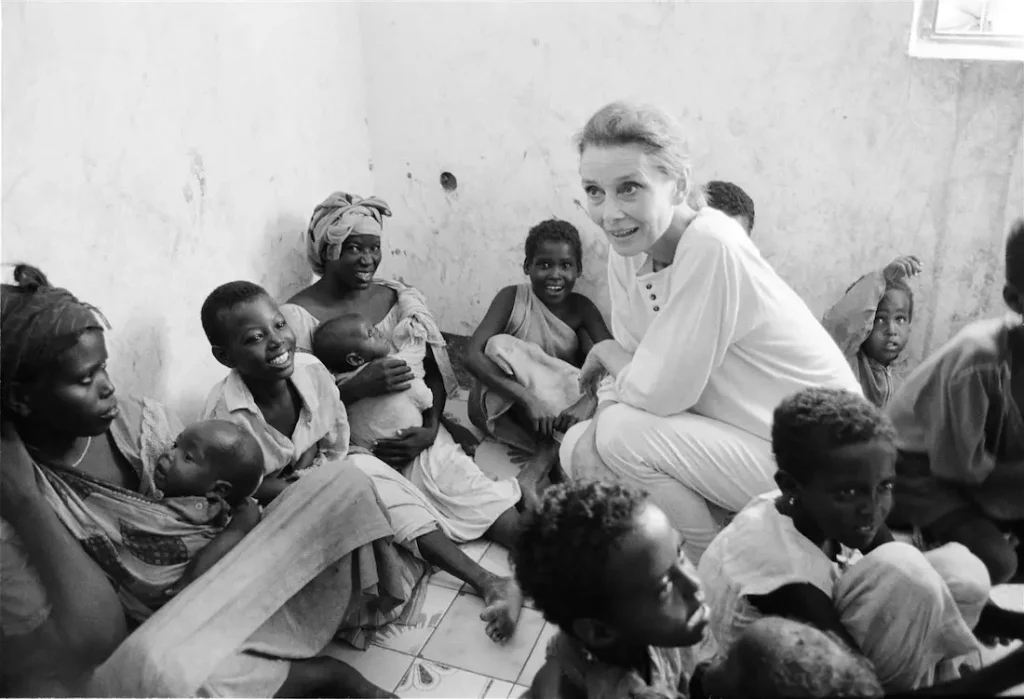
Hepburn was named a UNICEF Goodwill Ambassador in March 1988 at age 58. The role paid $1 per year by UN convention. She traveled to Ethiopia, Turkey, Venezuela, Ecuador, Central America, Sudan, Bangladesh, Vietnam, and Somalia across the next five years. She delivered congressional testimony, addressed the UN General Assembly, and conducted more than fifty field missions. Her UNICEF work raised an estimated $40 million in direct contributions across the period.
The motivation traced back to the Hongerwinter. UNICEF had helped feed Audrey and her mother in 1945 when they were starving in Arnhem. She told reporters she was paying back a personal debt rather than performing celebrity charity. The Presidential Medal of Freedom arrived in December 1992. The Jean Hersholt Humanitarian Award (an honorary Oscar) followed in March 1993, two months after her death from colon cancer.
UNICEF work converted economic and symbolic capital into moral capital, the same maneuver Elizabeth Taylor ran through AIDS activism. The differential was tone. Taylor stayed glamorous and used the activism to amplify her existing brand. Hepburn dropped the glamour entirely and let the work itself rebrand her. Both strategies succeeded. Hepburn’s version produced quieter results that compounded longer. She died on January 20, 1993 at La Paisible at age 63. The estate included real estate, residual film royalties, and image-rights licensing that her sons would eventually consolidate into a tightly controlled brand.
How Audrey Hepburn’s $100M Estate Built A Posthumous Empire
Stack the estate at death. La Paisible (Tolochenaz, Switzerland): $8 to 12 million in 1993, $15 to 20 million today. Film residuals across major studios (Paramount, Warner Bros., Universal): estimated $5 to 8 million annual stream during the 1990s, diminishing as classic-Hollywood royalty structures aged. Personal property including Givenchy archive, jewelry, and Cecil Beaton portraits: tens of millions across multiple lots. Image-rights catalog: held in trust for her two sons Sean Ferrer and Luca Dotti. Wardrobe pieces and memorabilia: priced at premiums after the 2006 LBD auction validated the market.
The estate continues to generate an estimated $8 to 10 million annually in licensing revenue across cosmetics (Lancome, controversial CGI Galaxy chocolate ad 2013), fashion (Gap, Tiffany, Longchamp), and digital media. Hepburn’s image earns more in 2026 than during her active career. The quiet luxury aesthetic she defined in the 1950s became the dominant fashion philosophy of the 2020s. Compare to Marilyn Monroe at $13 million per year and Elizabeth Taylor at $25 to 35 million. Hepburn’s licensing runs lighter but cleaner. The estate has refused most aggressive monetization opportunities. Sean Ferrer specifically blocked an attempt to use Hepburn’s image in 2013 Galaxy chocolate advertising once the CGI rendering proved controversial. The brand strategy prioritizes integrity over short-term revenue. Hepburn herself made the same choice in 1967 when she retired.
Where Audrey Hepburn’s Money Stands Now
The Audrey Hepburn Children’s Fund operates as the primary philanthropic vehicle, founded by Sean Ferrer in 1994. The Fund continues UNICEF-adjacent work focused on children in crisis zones. Hubert de Givenchy’s personal archive (separate from the Hepburn estate but connected through forty years of partnership) sold at Christie’s Paris in June 2022 across 1,200 lots for €114 million ($118 million). Givenchy himself had died in March 2018. The auction included Hepburn-related pieces that commanded extraordinary premiums. La Paisible remains in family hands.
Hepburn sits inside the Movie Star Legends cluster as the case study in strategic withdrawal as capital strategy. Marilyn Monroe burned bright and was consumed. Elizabeth Taylor fought the system and won. Hepburn simply left the system and let scarcity do the work. The cross-cluster bridge runs into Quiet Luxury (Hepburn is the patron saint of the aesthetic), the Supermodel cluster (her gamine body type defined high fashion for forty years), and the Old Money universe (the European aristocracy on her mother’s side, the Swiss farmhouse, the deliberate distance from Hollywood vulgarity). Her estate is smaller than Taylor’s. The brand influence is arguably greater. Quiet luxury, the aesthetic that dominates the 2026 fashion conversation, started with Audrey Hepburn refusing to show up.
Audrey Hepburn Net Worth FAQ
What was Audrey Hepburn’s net worth at death?
Audrey Hepburn net worth at her death on January 20, 1993 totaled an estimated $55 to $100 million, with the wider figure including the La Paisible property in Tolochenaz, Switzerland, film residuals across Paramount, Warner Bros., and Universal, image-rights licensing, personal art and jewelry, and the Givenchy wardrobe archive. The estate continues to generate $8 to 10 million annually in licensing revenue under the management of her sons Sean Ferrer and Luca Dotti.
How much did Audrey Hepburn earn for Breakfast at Tiffany’s?
Hepburn earned $750,000 plus 10 percent of gross for Breakfast at Tiffany’s (1961), equivalent to roughly $7.5 million in 2026 dollars. The film grossed $14 million worldwide on a $2.5 million budget. Her percentage participation paid out across multiple years. The little black Givenchy dress she wore in the film sold at Christie’s for $923,187 in 2006, a record for a film costume at auction.
How long was Audrey Hepburn’s career?
Hepburn’s active film career ran from 1948 to 1967 (twenty years, 26 films) with intermittent supporting roles through 1989 (Always, her final film). She essentially retired from acting at age 38 after Wait Until Dark (1967) to raise her two sons. The retirement was strategic capital management. She protected her brand at peak symbolic value rather than working into the era of B-grade roles that damaged peer reputations.
What is the Audrey Hepburn Children’s Fund?
The Audrey Hepburn Children’s Fund was founded in 1994 by Hepburn’s son Sean Ferrer as the primary philanthropic continuation of her UNICEF work. Programs operate in crisis zones aligned with Hepburn’s 1988 to 1993 UNICEF Goodwill Ambassador tenure. The Fund draws funding from estate licensing revenue, individual contributions, and partnerships with luxury brands that license Hepburn’s image.
Where The Conversation Continues
Social Life Magazine covers the intersection of wealth, culture, and influence from the Hamptons to Manhattan. Our celebrity net worth coverage traces the economics, the leverage, and the decisions that built the fortune.
Our readers are family office principals, exit founders, fashion executives, and the advisors who serve them. For premium editorial placement and integrated advertising across print and digital, submit a paid feature or contact our business development team.
Want insider access to the events, launches, and gatherings that define the Hamptons social calendar? Sign up for Event Invites & Specials and never miss a moment.
Social Life Magazine. Twenty-three years of covering the people and places that define luxury in America.
Author

Written by
Recent Posts
Legal Options for Investment Fraud Claims

How Custom DTF Printing Adds Ease and Color to Your Boutique
How Often Should You Actually Replace Your Towels?
Apartment Pet Policies: What to Know as a Pet-Owning Tenant
Why Reliable Airport Transportation Matters for Modern Travelers
Categories
- Art
- Articles
- Business of Luxury
- Celebrities
- Culture
- Entertainment
- Events
- Faces of Summer 2026
- Fashion
- Fashion & Style
- Featured
- Finance
- Food, Spirits, Wine
- Hamptons
- Hamptons Celebrities
- Health
- Health & Beauty
- Lifestyle
- Luxury Lifestyle
- Press
- Profiles
- Real Estate
- Technology
- The Chronicles
- Travel
- Uncategorized
- Weddings