
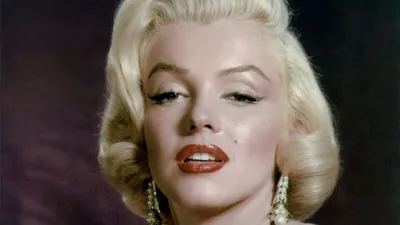
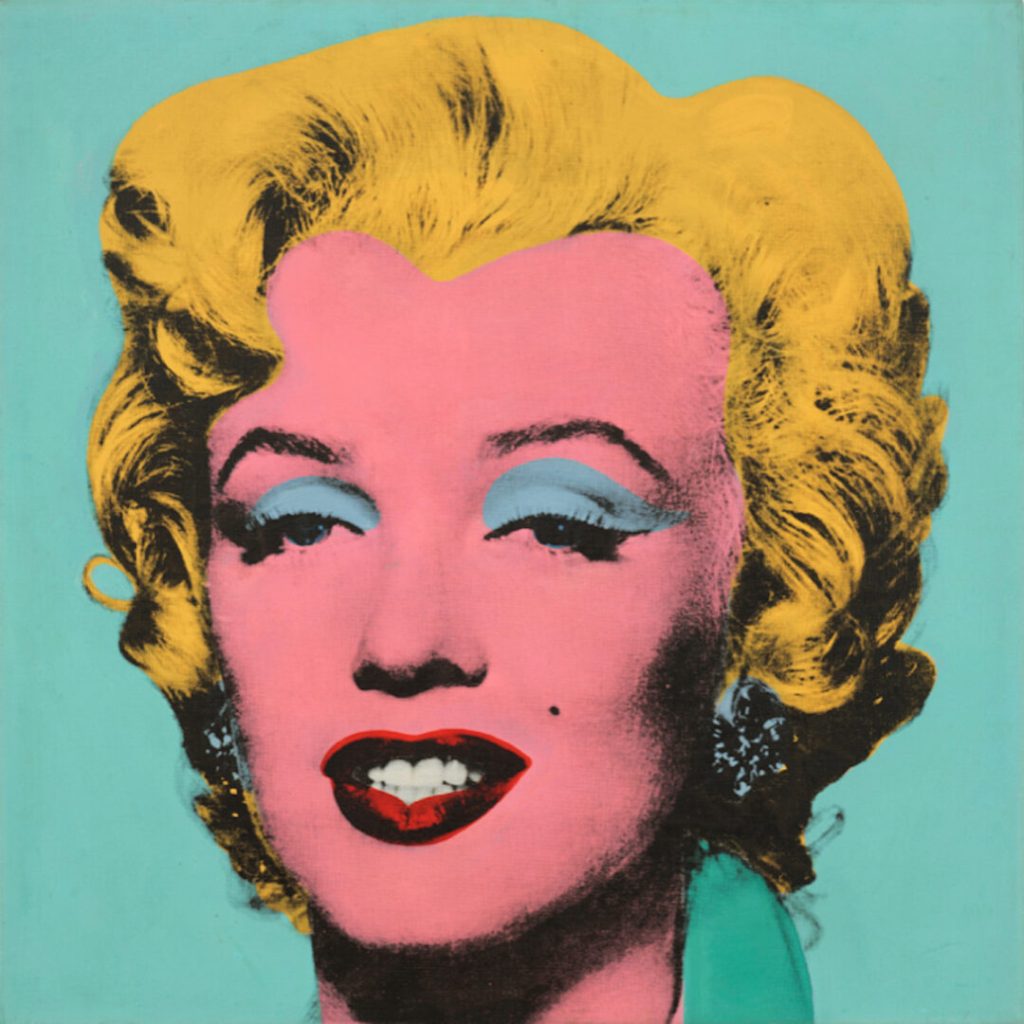
In May 2022, Christie’s sold a single Andy Warhol painting of her face for $195 million. The number ran higher than every dollar Marilyn Monroe earned across a sixteen-year acting career. Marilyn Monroe net worth at death in August 1962 totaled roughly $1.6 million, around $16 million adjusted for inflation. The figure looks small because it was. She was the most photographed woman alive. Her image now generates an estimated $13 million per year for Authentic Brands Group, the licensing conglomerate that controls the estate. She does not see a cent of it. As an entry in the Movie Star Legends cluster, Monroe is the founding case study in symbolic capital extracted by everyone except the person who generated it. The studio kept the money. The estate built the brand. She built the asset.
Marilyn Monroe Net Worth at a Glance
| Birth Name | Norma Jeane Mortenson (baptized Norma Jeane Baker) |
|---|---|
| Net Worth | $1.6 million at death (August 5, 1962); roughly $16 million inflation-adjusted |
| Primary Income Source | 20th Century Fox contract, percentage participations, modeling fees, residuals; posthumous licensing via Authentic Brands Group |
| Career Span | 1945 to 1962 (modeling, film, production) |
| Key Films / Credits | Gentlemen Prefer Blondes, How to Marry a Millionaire, The Seven Year Itch, Bus Stop, Some Like It Hot, The Misfits |
| Notable Achievements | Golden Globe Best Actress (1960, Some Like It Hot); founded Marilyn Monroe Productions (1955); first actress to win script and director approval from a major studio |
| Residence at Death | 12305 Fifth Helena Drive, Brentwood, Los Angeles (purchased February 1962 for $75,000) |
Before the Money: The Charity Ward and the Munitions Plant
Norma Jeane Mortenson arrived June 1, 1926 at the Los Angeles County Hospital charity ward. Her mother Gladys Pearl Baker worked as a film negative cutter at Consolidated Film Industries. Gladys had two prior children taken by their father, no money, and an undiagnosed mental illness that put her in Norwalk State Hospital before Norma Jeane turned eight. The girl moved through eleven foster homes and the orphanage at McCadden Place in Hollywood. California paid $20 a week to whichever family took her in. That figure was the entire economic basis of her childhood.
In 1942 she married James Dougherty at sixteen to avoid returning to the orphanage. Dougherty shipped out with the Merchant Marine. Norma Jeane took a job at Radioplane Munitions in Van Nuys spraying fire retardant on fuselages. A military photographer named David Conover walked in to shoot morale pictures for Stars and Stripes in June 1945. He shot her. The Blue Book Modeling Agency signed her two weeks later. By 1946 she had peroxided her hair, divorced Dougherty, and signed her first studio contract at 20th Century Fox for $125 a week. The name on the contract read Marilyn Monroe.
The Studio System Built A Star And Kept The Money
How Fox Earned Millions On A $500-A-Week Contract
The Fox contract that put her on the lot paid $125 a week, six months optional, no creative input. Studio chief Darryl Zanuck did not see her. He let her option lapse in 1947. Columbia signed her at $75 a week, then dropped her after one film. Monroe spent 1948 doing print work for $50 a job and posing nude for photographer Tom Kelley to pay rent. The Kelley shoot, $50 cash, sold to Western Lithograph for $500. Hugh Hefner later bought the negatives for $500 in 1953 and ran one frame as the first Playboy centerfold. Monroe never received a dollar from the magazine.
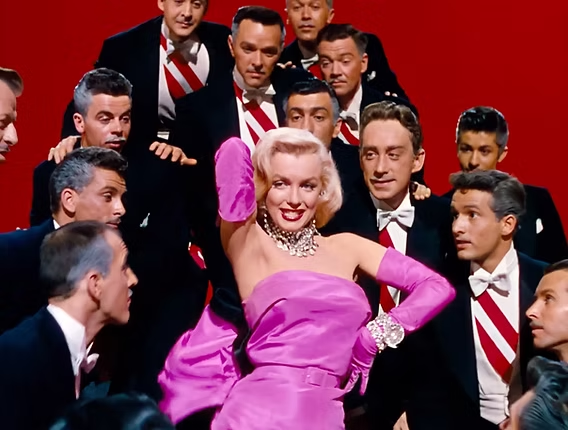
Fox brought her back in 1951 at $500 a week. Niagara grossed $6 million in 1953. Gentlemen Prefer Blondes grossed $5.3 million the same year. How to Marry a Millionaire grossed $7.3 million. The three films netted Fox somewhere north of $18 million on a combined production budget of $7 million. Monroe’s take across all three came to roughly $60,000 in salary plus a wardrobe allowance. Jane Russell, her costar on Gentlemen Prefer Blondes, was paid $200,000 for the same picture. Russell was on loan from RKO. Monroe was on a Fox contract that capped her ceiling.
The math reads simple. The most bankable actress at the studio was earning roughly three percent of what Russell pulled for the same screen time. Zanuck booked the difference as gross margin. The trade press called Monroe the discovery of the decade. Fox called her cheap.
She Invented Talent-As-Brand And Could Not Run It
Marilyn Monroe Productions And The Fight Fox Lost
On January 7, 1955, Monroe walked into the offices of attorney Frank Delaney in New York and incorporated Marilyn Monroe Productions. She owned 51 percent. Photographer Milton Greene owned 49. The move was unprecedented. No actress had ever incorporated to fight her studio. Olivia de Havilland had sued Warner Bros. in 1944 and won the right to leave contracts after seven years. Monroe went further. She incorporated to control her own production slate and license her own image. Fox put her under suspension. The studio assumed she would fold inside three months.
She did not fold. She studied at the Actors Studio with Lee Strasberg. The Waldorf Astoria housed her in a suite on $1,000 a week from Greene’s loan. Fourteen months passed without a film. Fox capitulated. The new 1956 contract paid $100,000 per picture, four pictures over seven years, with director and script approval. Monroe was the first actress in Hollywood history to win script approval from a major studio. Bus Stop and The Prince and the Showgirl filmed under the new terms. The Prince and the Showgirl, opposite Laurence Olivier, was a Marilyn Monroe Productions release.
The model she built in 1955 became the modern operator template. Reese Witherspoon ran Hello Sunshine on the same logic and sold it to Blackstone for $900 million in 2021. Ryan Reynolds built Maximum Effort and Aviation Gin into a nine-figure exit through the same playbook. Monroe wrote the original brief sixty years before either of them ran it. She never lived to collect on the file.
DiMaggio, Miller, Kennedy: Borrowed Status For A Self-Made Star
When The World Won’t Let You Own The Capital You Generate
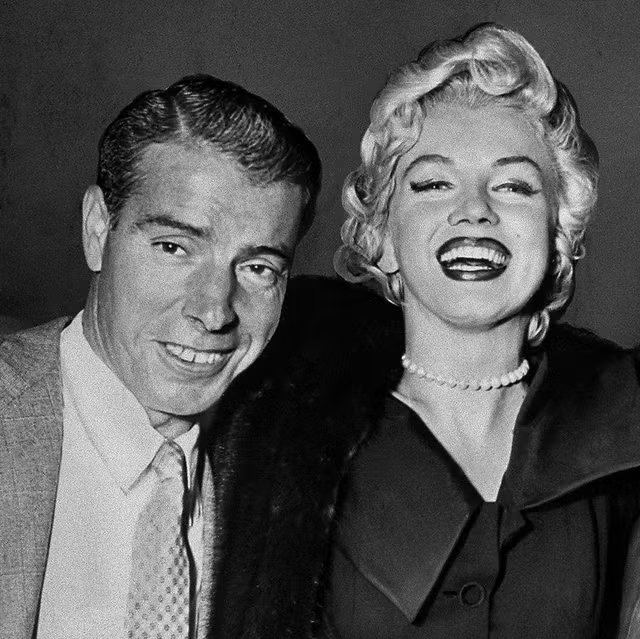
She married Joe DiMaggio on January 14, 1954 at San Francisco City Hall. The marriage lasted 274 days. DiMaggio brought athletic royalty to the union: three batting titles, two MVPs, the 56-game hitting streak. America understood the math. He was the working-class Italian who had outearned the Yankee infield. She was the foster kid who had outearned the Fox B-list. The marriage failed because DiMaggio wanted her home and she wanted the work.
She married Arthur Miller on June 29, 1956 in White Plains, New York. Miller had won the Pulitzer for Death of a Salesman in 1949. He was the most respected playwright in America. The wedding looked like a credentials transfer. The blonde bombshell married the intellectual, and the press read the union as proof she contained more than the surface. She converted to Judaism. She read Joyce on set. The Miller marriage was a cultural-capital acquisition. The Misfits was the only screenplay she got out of it.
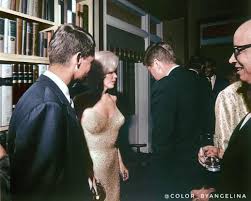
John F. Kennedy was the third borrowed-status play, never a marriage, always a presence. She sang Happy Birthday at Madison Square Garden on May 19, 1962. The dress was Jean Louis, $12,000, sequins hand-sewn onto a nude underlayer. Three institutional borrows ran through one decade: baseball, theater, the White House. Monroe’s own face was not enough.
Both marriages reveal the structural problem. The world would not let her own the capital she generated on her own merit. She had to borrow it from a baseball star, a playwright, and a president. She generated all of it. The world insisted she was nothing without the men.
$1.6M Estate, $195M Painting, $13M A Year In Licensing
How Authentic Brands Group Built A Billion-Dollar Asset From A Bedroom In Brentwood
She bought 12305 Fifth Helena Drive in Brentwood for $75,000 in February 1962. The Spanish hacienda sat behind a wrought-iron gate at the end of a cul-de-sac. The escrow closed six months before she died. She filmed eight days on Something’s Got to Give before Fox fired her for poor attendance. Fox sued the estate for $500,000 after her death. The case settled. The house, restored and landmarked, sold for $7.25 million in 2017.
Coroner Thomas Noguchi ruled the death a probable suicide on August 5, 1962. The estate inventory came to roughly $1.6 million. Anne Hathaway has built more than that in three years of post-Oscar press appearances. Elizabeth Taylor died with $600 million. Audrey Hepburn died with $100 million. Monroe died with less than a single Brentwood teardown commands today. Her acting coach Lee Strasberg inherited 75 percent of her personal property and image rights. Strasberg had no children with Monroe. He had not known her in childhood. The man had nothing to do with the Fox contracts. His heirs sold the rights to CMG Worldwide in 1999. CMG sold them to Authentic Brands Group in 2010 for an undisclosed nine-figure sum.
Authentic Brands now licenses the Monroe image across forty-plus categories. The estimated annual revenue runs $13 million. Andy Warhol’s Shot Sage Blue Marilyn sold at Christie’s on May 9, 2022 for $195 million. It was the most expensive American artwork ever sold at auction. Kim Kardashian wore the original Jean Louis “Happy Birthday Mr. President” dress to the 2022 Met Gala. The move anchored her own brand to Monroe’s. The dress did the work.
How Marilyn Monroe’s $1.6M Estate Built A Billion-Dollar Brand
The $1.6 million estate at death looks tiny against the cultural footprint. The figure is small because the structure was designed to keep it small. Fox booked the upside on Niagara, Gentlemen Prefer Blondes, How to Marry a Millionaire, and The Seven Year Itch. The 1956 contract she fought for paid $100,000 per picture, $400,000 total across the four-picture term. Her residuals were capped. Her merchandise rights at death belonged to her estate, not to her. The $13 million Authentic Brands now generates annually compounds for the licensor, not the licensed.
Stack the assets the estate did control. The Brentwood house at 12305 Fifth Helena Drive: $75,000 in 1962, $7.25 million in 2017. Jean Louis stitched the original Happy Birthday dress for $1,260 in 1962, and Julien’s auctioned it for $4.81 million in 2016 to Ripley’s Believe It Or Not. The Warhol Shot Sage Blue Marilyn: resold for $195 million in 2022. Authentic Brands estimated annual licensing revenue: $13 million across forty-plus product categories. Total downstream value generated by her image since 1962 conservatively clears one billion dollars. She captured none of it. The estate captured a fraction. Authentic Brands and the auction houses captured the rest. The system extracted upward.
Where Marilyn Monroe’s Money Stands Now
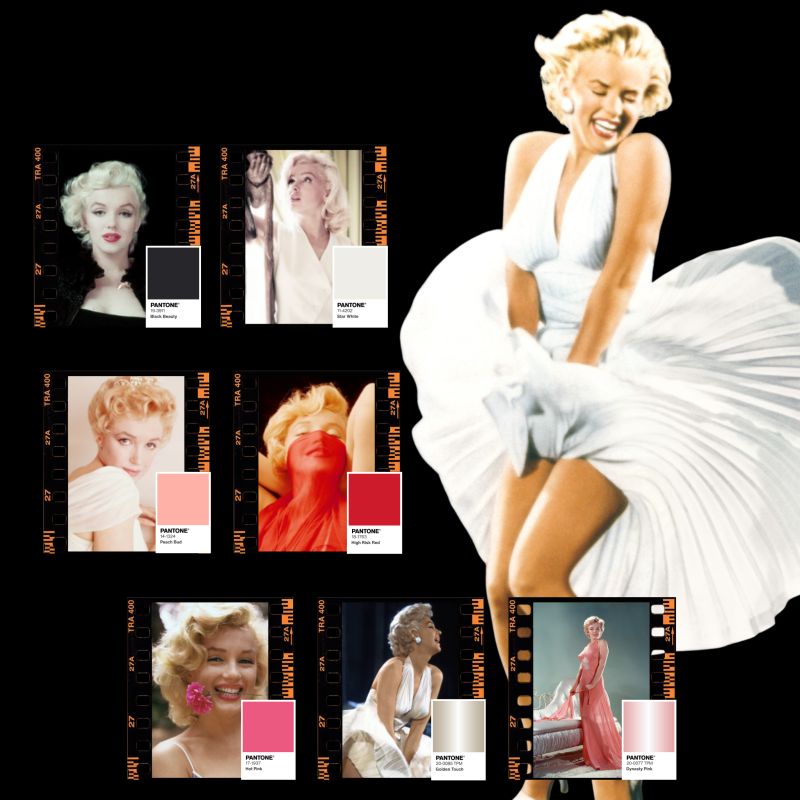
Authentic Brands Group holds the Monroe estate today. Founder Jamie Salter built the company, BlackRock and Leonard Green own the majority. The Monroe image runs across cosmetics with Smashbox and Max Factor, fragrance under Authentic Beauty, apparel through Macy’s and Dolce & Gabbana, plus home goods and digital licensing. A Netflix biopic deal produced Blonde in 2022. The estimated $13 million annual licensing line is now a floor, not a ceiling. The portfolio Monroe sits inside also holds Sports Illustrated, Reebok, Forever 21, and the Elvis Presley estate.
She is the recurring borrowed reference for every successor who has tried to claim the icon position. Madonna borrowed the look on the Material Girl video. Kim Kardashian borrowed the dress for one Met Gala night. The fashion houses borrow the lips, the wink, the breathy phrasing. She sits inside the Movie Star Legends cluster as the founding case of symbolic capital that never returned to the person who generated it. She built the template that Tony Curtis, Sidney Poitier, and Robert Redford each ran differently. The Kennedy access, the Miller intellect, the DiMaggio fame: all borrowed. The asset she generated, the face on the Warhol, the dress on Kardashian: still working, still owned by someone else.
Marilyn Monroe Net Worth FAQ
What was Marilyn Monroe’s net worth at death?
Marilyn Monroe net worth at death on August 5, 1962 totaled approximately $1.6 million. Adjusted for inflation, that figure equates to roughly $16 million in 2026 dollars. The estate included her Brentwood home at 12305 Fifth Helena Drive, purchased months earlier for $75,000, and personal property worth approximately $370,000 at inventory. The number represented a fraction of the box office revenue she generated for 20th Century Fox across her sixteen-year career.
How much does the Marilyn Monroe estate make today?
The Marilyn Monroe estate, controlled by Authentic Brands Group since 2010, generates an estimated $13 million per year in licensing revenue. Categories include cosmetics with Smashbox and Max Factor, fragrance under Authentic Beauty, apparel placements at Macy’s and Dolce & Gabbana, plus home goods and digital licensing. Andy Warhol’s Shot Sage Blue Marilyn sold for $195 million at Christie’s in May 2022. The painting is the most expensive American artwork ever sold at auction.
Why did Marilyn Monroe form her own production company?
Monroe formed Marilyn Monroe Productions on January 7, 1955 with photographer Milton Greene to fight her 20th Century Fox contract and gain creative control. She owned 51 percent of the company. The structure was unprecedented for an actress in the studio era. The eventual 1956 settlement with Fox paid her $100,000 per picture. It also gave her script and director approval, the first such deal in Hollywood history.
Who inherited Marilyn Monroe’s estate?
Monroe willed 75 percent of her personal property and image rights to her acting coach Lee Strasberg. Strasberg had no biological relationship to Monroe. His third wife Anna Strasberg inherited after his 1982 death and sold the licensing rights to CMG Worldwide in 1999. Authentic Brands Group acquired the rights from CMG in 2010 for an undisclosed nine-figure sum.
Where The Conversation Continues
Social Life Magazine covers the intersection of wealth, culture, and influence from the Hamptons to Manhattan. Our celebrity net worth coverage traces the economics, the leverage, and the decisions that built the fortune.
Our readers are family office principals, exit founders, fashion executives, and the advisors who serve them. For premium editorial placement and integrated advertising across print and digital, submit a paid feature or contact our business development team.
Want insider access to the events, launches, and gatherings that define the Hamptons social calendar? Sign up for Event Invites & Specials and never miss a moment.
Social Life Magazine. Twenty-three years of covering the people and places that define luxury in America.
Author

Written by
Recent Posts
Legal Options for Investment Fraud Claims

How Custom DTF Printing Adds Ease and Color to Your Boutique
How Often Should You Actually Replace Your Towels?
Apartment Pet Policies: What to Know as a Pet-Owning Tenant
Why Reliable Airport Transportation Matters for Modern Travelers
Categories
- Art
- Articles
- Business of Luxury
- Celebrities
- Culture
- Entertainment
- Events
- Faces of Summer 2026
- Fashion
- Fashion & Style
- Featured
- Finance
- Food, Spirits, Wine
- Hamptons
- Hamptons Celebrities
- Health
- Health & Beauty
- Lifestyle
- Luxury Lifestyle
- Press
- Profiles
- Real Estate
- Technology
- The Chronicles
- Travel
- Uncategorized
- Weddings