
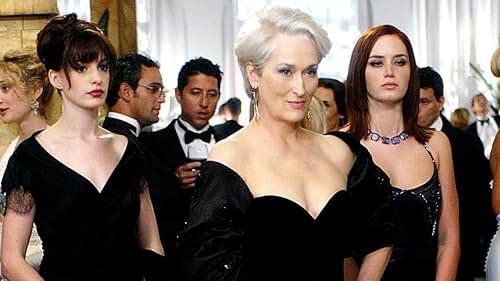
The Devil Wears Prada 2 opened on May 1, 2026 to a $234 million global weekend. Domestic take was $77 million. CinemaScore audiences gave the film an A-minus. Its 88% Rotten Tomatoes audience score ran twelve points above the original. Its trailer alone hit 222 million views in twenty-four hours, the most-viewed in 20th Century Studios’ history. The four leads (Meryl Streep, Anne Hathaway, Emily Blunt, and Stanley Tucci) walked the Lincoln Center premiere together for the first time in twenty years. Anna Wintour, the actual Vogue editor whose existence the original film rewrote into mythology, appeared on a co-cover with Streep in April 2026 as direct promotional confirmation. Lady Gaga and Doechii released a track titled Runway as the film’s sonic identity. Branded collaborations alone (Tweezerman nail clippers, Diet Coke special-edition cans, Smartwater bottles, Old Navy capsules, Walmart licensing, Starbucks ad placements) were valued by Disney’s partnership division as one of the most aggressive cross-brand campaigns in studio history.
The Devil Wears Prada cast net worth across the legacy four and the new ensemble now exceeds $1.4 billion in combined fortunes. What this hub maps is the architecture that makes that figure legible. One franchise, two films, twenty years apart, and a complete Hollywood capital ledger spanning the post-print-media decline through streaming consolidation back to theatrical event. Each cast member’s individual fortune is measurable against this single film. This hub itself functions as the index page for an empire of spokes. Each spoke is a celebrity net worth profile that traces a specific career back to either the 2006 original or the 2026 sequel.
The 2006 Salary Negotiation That Codified Brand Asset Economics
20th Century Fox offered Meryl Streep $4 million for the original Devil Wears Prada. Streep refused. Wendy Finerman’s production team came back with $5 million. Doubling itself was the point. Streep had already established, across 27 years and a dozen Oscar nominations, that her presence in a frame produced more economic value than any salary could capture. Forcing the studio to double the offer was the proof of concept. The film grossed $326 million worldwide on a $35 million budget. Patricia Field’s costume design moved entire seasons of luxury inventory at retail. Cultural footprint was so durable that twenty years later it sustained a sequel that earned more in three days than the original earned in its theatrical lifetime. Mechanics of that 2006 negotiation reshaped agency negotiation playbooks at CAA and WME. Full coverage lives in our Meryl Streep net worth pillar, where the films-as-hubs architecture maps the entire Streep fortune against the projects that built it.
The 2006 Cast: Four Careers The Film Accelerated
Hathaway: The Andy Sachs Inflection
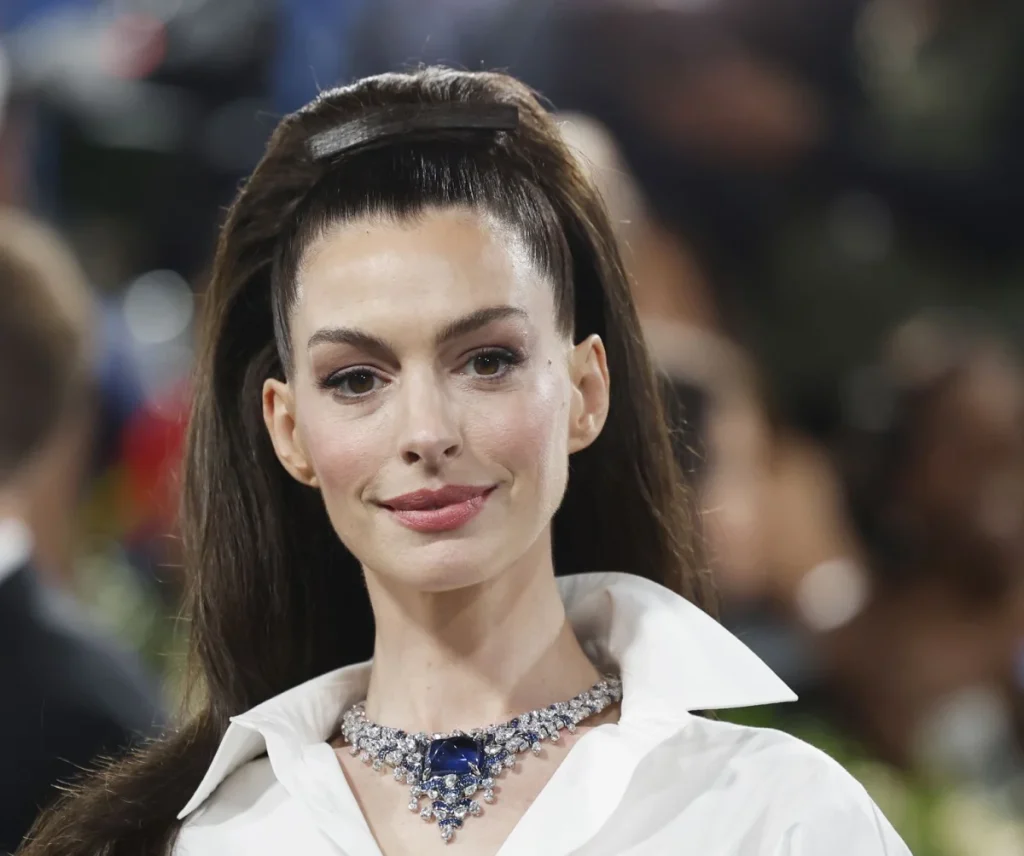
Anne Hathaway, then 23, was paid $1 million for her first seven-figure role. Princess Diaries had made her famous. Devil Wears Prada made her durable. Career architecture that followed gets traced in full in our Anne Hathaway net worth profile. That arc covers the Hathahate period, the Les Misérables Oscar, the slow-build Idea of You comeback, and eventually the DWP2 return as Features Editor. The film grossed enough that her percentage participation became the financial inflection point for everything that followed. Her current $80 million empire sits structurally on top of the Andy Sachs paycheck.
Blunt: Emily Charlton As Compounding Asset
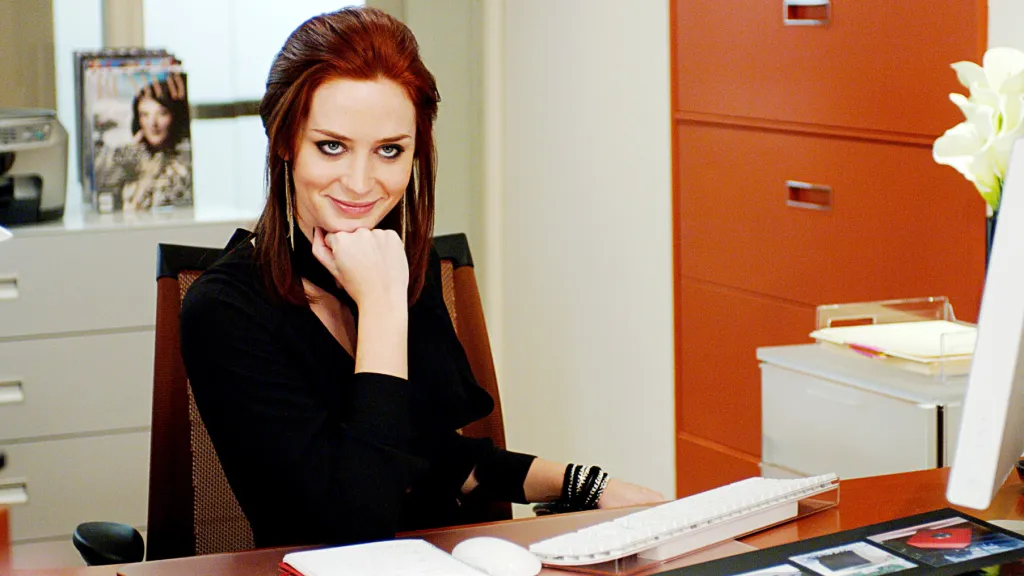
Emily Blunt’s $100 million architecture began with the same film. She was 23, recently arrived in Hollywood from a London theater background. She played Emily Charlton with a brittle precision that earned her a Golden Globe nomination. Career compounding from that role is mapped in the Blunt profile. Her arc runs through Edge of Tomorrow, Sicario, Mary Poppins Returns, A Quiet Place, Oppenheimer, the Dior endorsement architecture, and the eventual return as Emily-the-luxury-group-executive in the 2026 sequel. John Krasinski household equity, which converted The Office residuals and A Quiet Place franchise stake into a single dynastic wealth structure, made Blunt the highest individual fortune of the original four leads.
Tucci: Nigel And The Food-Media Diversification
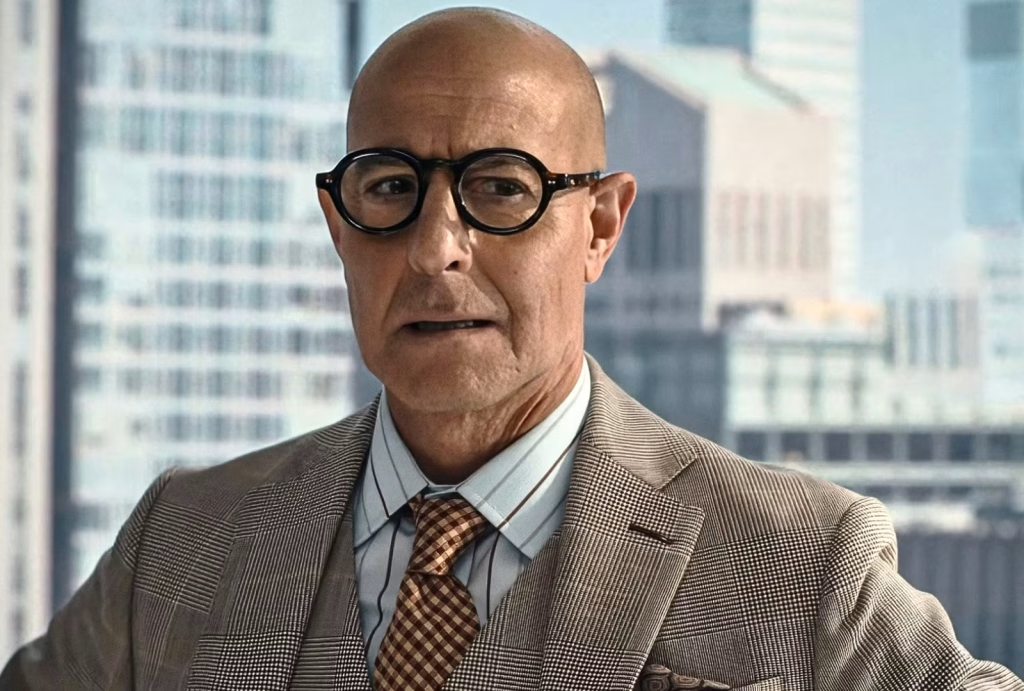
Stanley Tucci’s $25 million reflects a different structure. He was already an Oscar nominee in 2006. Nigel made him beloved. Food-media diversification followed: Searching for Italy on CNN, two cookbooks, the post-cancer survival narrative, and the Felicity Blunt marriage that turned the Devil Wears Prada cast into actual family. Together those produced compounding capital that does not show up in salary archives. Tucci is the lowest individual fortune among the four legacy leads and arguably the most culturally durable.
The Fourth Lead: Adrian Grenier And The Backbench
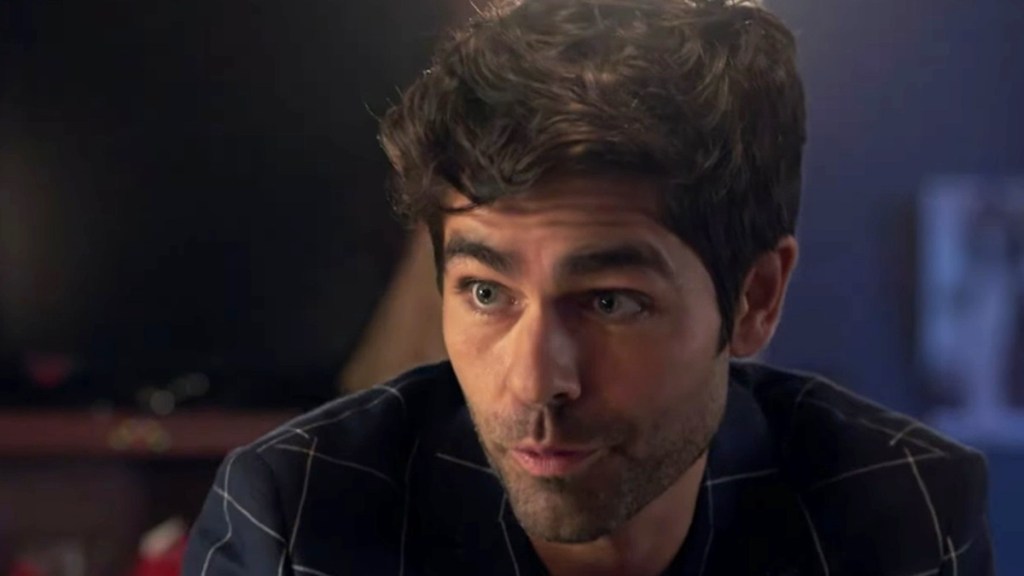
Adrian Grenier, the fourth original lead, played Andy’s boyfriend Nate. He left acting in 2017 and retreated to a sustainability-focused life in Bastrop, Texas. His Entourage residuals support a current net worth of approximately $20 million. Simon Baker, who played the post-Nate love interest, returned to Australia and built his fortune through The Mentalist syndication. Tracie Thoms, who played Andy’s friend Lily, has continued working steadily across film and prestige TV. Each of those three careers gets the full origin-story treatment as we backfill the legacy DWP1 spokes through Q3 2026.
The Twenty-Year Gap and Why The Sequel Worked
The Devil Wears Prada was released in June 2006. Print magazines were profitable. Vogue’s September issue was still the cultural currency Anna Wintour positioned it to be. Runway as a fictional placeholder for Vogue made sense because the real version still made sense. Twenty years later, print-media collapse has eliminated most of the institutional architecture the original film satirized. Condé Nast laid off staff repeatedly across 2023 and 2024. Vogue itself is half its 2006 size. Vanity Fair byline economy collapsed. By 2026, the fashion-magazine industry the original film depicted is, structurally, gone.
DWP2’s plot is autobiography for everyone who watched the print collapse from inside. In the sequel, Andy Sachs returns to Runway as Features Editor and watches her old boss Miranda Priestly fight Irv Ravitz’s plan to gut the magazine entirely. The film grossed $234 million globally in its opening weekend for a specific reason. That audience that lived through the 2006 original is now, in 2026, deeply nostalgic for an industry that no longer exists in the form they remember. Economic engine of the sequel is grief, dressed in Valentino. Reunion of the four leads is not a sequel mechanic. It is a memorial service. The audience showed up to mourn together at $14.56 per ticket.
The 2026 Cast: Ten New Architectures
Theroux And Branagh: The Antagonist Pair
Justin Theroux plays Irv Ravitz’s lieutenant in DWP2. That corporate antagonist role finally lifts the long Aniston shadow that reduced him to “Aniston’s husband” for a decade. His screenwriter-actor architecture built the Justin Theroux net worth of approximately $30 million. That arc runs through Mulholland Drive, Tropic Thunder, The Leftovers, and White Lotus. His Hamptons connection is real. His Greenwich Village loft is the home base.
Kenneth Branagh plays the new Runway publisher. His 2022 Belfast Oscar, the Marvel pivot in the early 2010s, the Christopher Nolan ensemble work on Tenet and Oppenheimer, all add up to a current Branagh fortune of approximately $40 million.
Ashley, Liu, And The Returning Talent
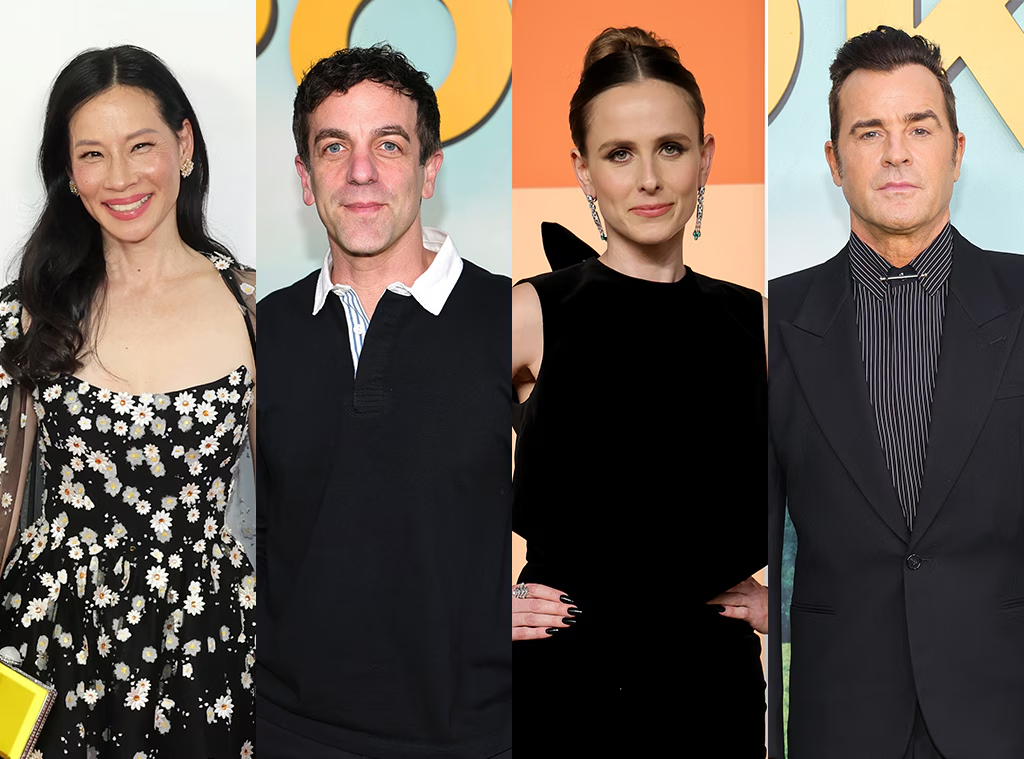
Simone Ashley, the Bridgerton breakout, plays Andy Sachs’s new assistant in the meta-mirror that the screenplay sets up explicitly. Her current net worth of approximately $4 million reflects an emerging architecture that the DWP2 role will inflect significantly. Lucy Liu plays a rival luxury-group executive. Her $20 million architecture, built on Charlie’s Angels residuals and the Elementary pension, gets the post-2024 art-career-pivot treatment in her individual spoke.
Novak, Chalamet, And The New Generation
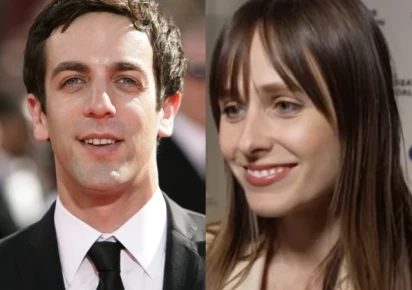
B.J. Novak plays a digital-media disruptor. His $60 million fortune, anchored in The Office writing-room equity and the Mindy Kaling alliance, is one of the cleanest examples in modern Hollywood of how a single multicam comedy can fund three decades of subsequent work. Pauline Chalamet plays a new Runway model who threads through several scenes. Her emerging architecture, distinct from her brother Timothée’s, is the sibling-SEO play we cover in her individual spoke. Sydney Sweeney plays a new advertising executive. Her $40 million architecture, built on Euphoria and the Anyone But You producer-credit pivot, is among the fastest-rising in 2026 Hollywood.
Lady Gaga: Sonic Architect Without Screen Time
Lady Gaga does not appear on screen in DWP2. She and Doechii released the original soundtrack track titled Runway in April 2026. Andrew Watt produced it specifically for the film’s trailer and end-credits sequence. Track hit 200 million streams in 24 days. Her Lady Gaga net worth of approximately $900 million reflects four parallel architectures: music, film, fashion, and beauty. She has not allowed any of them to define her at the expense of the others. Runway collaboration is the DWP2 confirmation that her cultural authority now sits at the level where she gets sound-design credit on prestige-Hollywood properties.
The Brand Collab Universe That Funded The Theatrical Release
In late April 2026, Disney’s partnership division reported a striking number. DWP2 generated cross-promotional commitments from at least fourteen major brands. That list includes Tweezerman, Diet Coke, Smartwater, Starbucks, Old Navy, Lulus, Walmart, Tangle Teezer, and several luxury houses operating under non-disclosure. Total cross-brand promotional spend was estimated at $40 million to $60 million on top of Disney’s direct marketing budget. Structure inverts the original film’s Patricia Field costume economy. In 2006, the film moved luxury inventory at retail. In 2026, the film monetizes its own cultural authority across categories that have nothing to do with fashion.
Most discussed of the collaborations was Tweezerman. That brand produced a limited-edition line of nail clippers and tweezers branded with the DWP2 logo. Dissonance between Miranda Priestly’s luxury sensibility and a drugstore grooming brand was the entire marketing point. Collab generated more earned media coverage than most $100 million product launches achieve in a quarter. Placement-economy thesis is mapped in detail in our analysis of Hollywood’s $26 billion hidden economy. That analysis treats the Tweezerman collab as a textbook case of prestige-property licensing, where the licensor’s authority elevates the licensee at a price the licensee considers a bargain.
The Anna Wintour Cameo and The Vogue Cover Economics
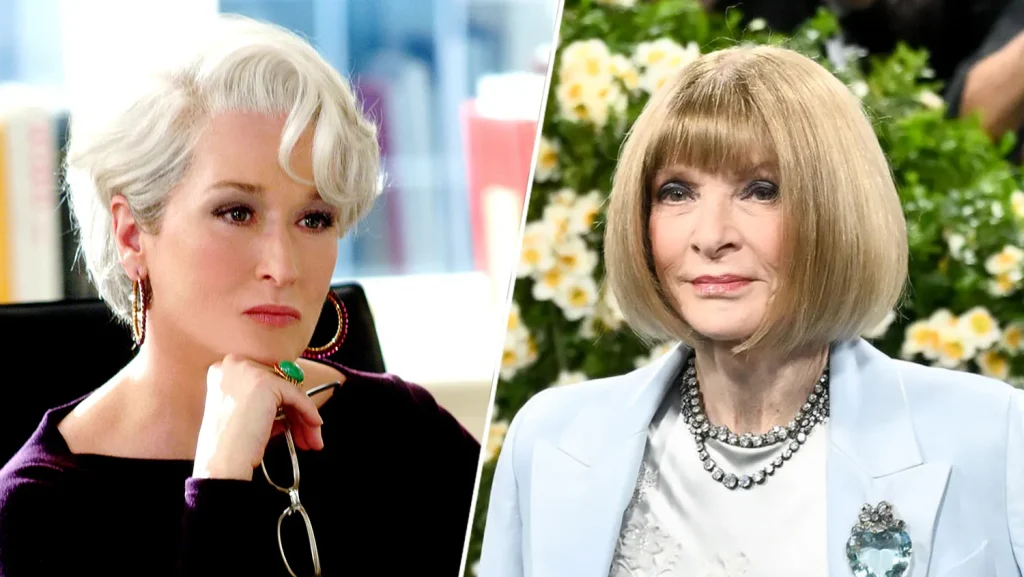
Anna Wintour has been editor-in-chief of American Vogue since 1988. She was widely understood to be the inspiration for Miranda Priestly. Her DWP2 contribution included a brief cameo. She also appeared on the April 2026 Vogue cover with Meryl Streep. That cover itself was the institutional confirmation. Vogue, as the surviving real-world version of Runway, had endorsed the sequel’s premise. Wintour was reportedly not paid for the cameo. Cover positioning, which Vogue’s commercial team treated as a co-marketing opportunity rather than a paid placement, was valued internally at approximately $4 million in equivalent media impressions.
Choosing the Vogue cover as a sequel announcement, rather than the standard Variety or Hollywood Reporter trade-press route, was a strategic move. That choice compounded the trailer’s 222-million-view 24-hour record. An audience that had watched Wintour run Vogue for thirty-eight years saw her on a cover with Streep and read the gesture correctly. This was the actual editor blessing the fictional editor’s return. Earned media coverage from that single cover was estimated by tracking firms at $30 million in equivalent advertising value.
The Lady Gaga + Doechii Runway Track Architecture
Lady Gaga and Doechii released the original track Runway as a single on April 9, 2026, three weeks before DWP2’s theatrical release. The song, a house-pop production by Andrew Watt, hit 200 million Spotify streams in 24 days. Doechii’s feature came at a calculated inflection point in her own career. She had won the 2025 Grammy for Best Rap Album for Alligator Bites Never Heal. Runway collab positioned her at the prestige-pop crossover where the Grammy authority converts into broader cultural reach. Gaga’s existing Mayhem Ball world tour grossed $230 million across its 2025-2026 legs. That run had already established her as the working pop artist closest to billionaire status without the catalog math Taylor Swift used to get there. Runway track adds an estimated $8 million to $12 million to Gaga’s annual income through performance royalties, streaming residuals, and synchronization fees on the DWP2 trailer’s continued use of the song through the international release rollout.
The Real Hamptons Connection
DWP2 cast intersects the Hamptons in three specific ways. Justin Theroux maintains a Montauk presence that predates the Aniston marriage and outlasted it. Stanley Tucci’s wine-and-pasta orbit now spans London and the East End across the summer months. Meryl Streep summers on Long Island in a small property the family has used since the 1980s. Out East, the actor circuit includes regular appearances at Almond, Sant Ambroeus, the Surf Lodge, and the kind of private dinners where Sarah Jessica Parker, Jerry Seinfeld, and the prestige-television class meet without press coverage. Polo Hamptons in 2026 enters its eleventh year as the only annual Hamptons event the prestige-acting class reliably attends in numbers.
The Cast Net Worth Reckoning
Combined fortune of the legacy four (Streep, Hathaway, Blunt, Tucci) sits at approximately $365 million by conservative methodology and $445 million by aggressive methodology. Combined fortune of the new additions (Theroux, Branagh, Liu, Novak, Sweeney, Ashley, Chalamet, plus Lady Gaga’s soundtrack contribution) exceeds $1 billion. Lady Gaga’s $900 million carries most of the weight there. Total Devil Wears Prada cast net worth spanning both films is conservatively $1.4 billion. It is credibly closer to $1.6 billion when production-equity holdings are included.
Structural lesson: one prestige property, anchored by a single prestige actress (Streep) and released twenty years apart in two films, produced enough downstream wealth to sustain a complete Hollywood mid-tier for two decades. The Devil Wears Prada Cinematic Universe is not a marketing phrase. It is an actual capital architecture. This hub is the index page for the spokes that map every individual fortune inside it.
Where The Conversation Continues
If your brand belongs in the conversation that opened at $234 million worldwide and runs through Vogue covers, Diet Coke collabs, and Lady Gaga soundtrack drops, Social Life Magazine builds the editorial features that earn that placement. Reach our editorial team at sociallifemagazine.com/contact.
For guaranteed editorial placement, the Submit a Paid Feature program offers three tiers from $950 digital to $6,500 editorial package.
Polo Hamptons returns to Bridgehampton in summer 2026 for its eleventh year. Cabanas and brand activations close as the field fills. Visit polohamptons.com before the gates close.
The print edition arrives where it matters. Subscribe to the print edition.
If this kind of writing adds value to your week, consider a $5 contribution to keep independent luxury journalism alive.
Related Reading
- Meryl Streep Net Worth: The Refusal That Built A $160M American Acting Monarchy
- Anne Hathaway Net Worth: How $80M Got Built by the One Actress Who Survived Hathahate
- Lady Gaga Net Worth: How $900M Got Built by the Pop Star Who Refused to Stay One
- Justin Theroux Net Worth: The $30M Quiet Architecture Behind the Aniston Headlines
- Emily Blunt Net Worth: How Competence Built an $80M Fortune
- Stanley Tucci Net Worth 2025: From Katonah to CNN, the $25 Million Reinvention
- Hollywood’s $26 Billion Hidden Economy: How Product Placement Built Modern Stardom
Author

Written by
Recent Posts

Powerful Strategies to Stay Ahead in a Fast-Moving Real Estate Market
How Latino Players Have Helped Shape Modern Basketball Culture
10 Best Designer iPhone 18 Pro Cases to Choose From

AI for personal finance: where PennyGuard fits
How to Pick a Homecoming Dress for Your Body Type (and Feel Amazing in It)
Categories
- Art
- Articles
- Business of Luxury
- Celebrities
- Culture
- Entertainment
- Events
- Faces of Summer 2026
- Fashion
- Fashion & Style
- Featured
- Finance
- Food, Spirits, Wine
- Hamptons
- Hamptons Celebrities
- Health
- Health & Beauty
- Lifestyle
- Luxury Lifestyle
- Press
- Profiles
- Real Estate
- Technology
- The Chronicles
- Travel
- Uncategorized
- Weddings