The Devil Wears Prada 2 opened on May 1, 2026 to a $234 million global weekend. Domestic take was $77 million. CinemaScore audiences gave it an A-minus. The 88% audience score ran twelve points above the original. The four leads (Meryl Streep, Anne Hathaway, Emily Blunt, and Stanley Tucci) walked the Lincoln Center premiere together for the first time in twenty years. Anna Wintour put Streep on the cover of Vogue. Lady Gaga and Doechii released a track called Runway as the film’s sonic identity. According to 20th Century Studios, the trailer alone hit 222 million views in 24 hours. That figure is the most-viewed trailer in the studio’s history.
The press tour ran on a single quote. A reporter in London asked Streep what was different about making the sequel. Streep said: “This one, honey, they spent the money.” Eight words. The thesis of her entire fortune compressed into a press-pool sound bite. The Meryl Streep net worth in 2026 sits between $100 million and $160 million, and almost none of it was built the way her industry peers built theirs.
The Refusal That Built the Meryl Streep Net Worth
Streep’s wealth is anchored in something stranger than studio paychecks. She built it by declining the endorsement architecture every actress at her tier used as a primary capital engine. Across fifty years and 21 Oscar nominations, her formal brand-ambassador income totals less than 1% of her total net worth. Refusal is what built the fortune. Our companion piece on Streep’s brand-asset economics dissects the deeper mechanics, including how the inverse-Portman strategy compounded. For the biographical arc, including the John Cazale chapter and the Salisbury Connecticut estate, see our 2025 profile of the Gawky Girl from Jersey. This pillar exists for a different purpose. It maps the films that built the fortune, decade by decade, role by role. Each film points down to the hubs where the co-star net worth stories live.
Streep sits at the structural center of a Hollywood capital architecture. The list runs deep: Robert De Niro, Robert Redford, Dustin Hoffman, Anne Hathaway, Emily Blunt, Stanley Tucci, Pierce Brosnan, Reese Witherspoon, Nicole Kidman, Cher, Steve Martin, and at least two dozen others. Each career intersects hers at a specific film. Films become hubs. Co-stars become spokes. Read this piece as the ledger of a forty-five-year credit system. Every project Streep accepted made the people around her more valuable.
The 1979 Salary That Set the Compounding Machine in Motion
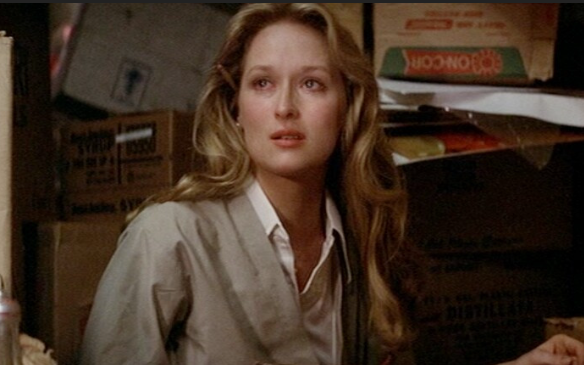
Kramer vs. Kramer paid Streep $85,000 in 1979. She won the Best Supporting Actress Oscar for it. The role itself came out of an act of editorial control. Streep insisted on rewriting her character against the script’s misogyny. That insistence should have ended her career. Instead it anchored it. Dustin Hoffman, her co-star, was paid roughly twenty times what she was. The disparity itself was the lesson. Streep filed it away.
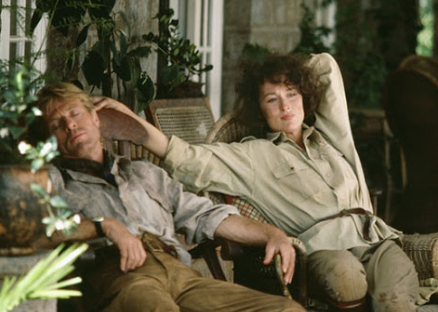
By 1985, Out of Africa paid her $3 million. The film grossed $227 million worldwide. Robert Redford received a comparable fee. Architecture of the Redford-Streep paycheck symmetry funded both empires. That symmetry is the through-line of our Redford profile. There the Sundance Institute origin gets traced back to that single film’s backend math. Sophie’s Choice in 1982 had already won Streep her first lead Oscar. The Deer Hunter in 1978 had already paired her with both Cazale and Robert De Niro. That ensemble would become her most consequential debut.
The 2006 Fee Doubling That Codified Brand Asset Economics
The Devil Wears Prada paid Streep $5 million in 2006. She accepted the role only after refusing the studio’s first offer and forcing them to double it. The film grossed $326 million worldwide on a $35 million budget. Patricia Field’s costume design moved entire seasons of luxury inventory. Anna Wintour was the actual editor whose existence Miranda Priestly rewrote into mythology. She eventually appeared on a Vogue cover with Streep in April 2026. That cover served as direct promotion for the sequel, twenty years after the original.
The 2006 negotiation codified what is now called brand-asset economics in talent agencies from CAA to WME. The argument runs as follows. An actress at Streep’s prestige tier creates more economic value through cultural authority than through the salary itself. Therefore the salary is a signaling mechanism rather than a price. Streep doubled her fee not because she needed the money. The doubling itself was the brand-asset proof of concept. Four careers were accelerated by that film: Anne Hathaway, Emily Blunt, Stanley Tucci, and Adrian Grenier. Those four are mapped together in the Devil Wears Prada Cinematic Universe hub. That hub now spans both the 2006 original and the 2026 sequel as a single architectural unit.
The Decade-by-Decade Films-as-Hubs Architecture
The Streep filmography is not a list. It is a structural index of late-twentieth and early-twenty-first century American cinema, with each film functioning as a hub for the careers of everyone she co-starred with. Reading the architecture this way produces a different map of Hollywood capital than the standard rankings allow.
The 1970s: The Cazale Chapter
Julia (1977), The Deer Hunter (1978), Manhattan (1979), Kramer vs. Kramer (1979). Four films, two Oscar nominations, one Academy Award. The Cazale story is covered in full in the 2025 biographical companion. Streep spent ten months at his bedside while he died of lung cancer. She took the role in The Deer Hunter only because filming kept her near him. Cazale’s closing words, “It’s all right, Meryl,” she carried through the next forty-five years. What matters here is the financial residue. Cazale’s death taught Streep a lesson about loving completely. Loving completely meant risking complete destruction. The fortune she built afterward was structured to make sure the next destruction, whatever form it took, could not reach the work itself. Six months after Cazale died, Streep married Don Gummer in 1978. That marriage was the first piece of the architecture.
The 1980s: Sophie’s Choice, Out of Africa, Silkwood
Sophie’s Choice in 1982 produced the Polish accent that became the Streep-versus-Streep referendum. Every reviewer has recycled it since. Out of Africa in 1985 paired her with Redford and Klaus Maria Brandauer. The pairing produced one of the highest-grossing prestige dramas in Hollywood history. Silkwood in 1983 introduced her to Cher. That meeting began a forty-year friendship that would later thread back into Mamma Mia. Each of those three films functions as its own hub in the cluster. Each opened a separate revenue line for the actresses and actors orbiting Streep.
The 1990s: Reinvention as Capital Strategy
The Bridges of Madison County in 1995, opposite Clint Eastwood, was the prestige drama that proved Streep could carry a forty-something romantic lead. Hollywood was actively trying to age her out at the time. Eastwood directed and co-starred. On a $22 million budget, the film grossed $182 million worldwide. The soundtrack and cultural footprint outlasted the film itself. This hub is where the Eastwood net worth story interlocks with Streep’s. Through it, the Redford-Eastwood-Streep triangle becomes legible as a single capital structure rather than three separate biographies.
The 2000s: The Devil Wears Prada Inflection
In 2002, The Hours paired Streep with Nicole Kidman and Julianne Moore in the Virginia Woolf triptych that earned Kidman her Best Actress Oscar. Adaptation, also in 2002, with Nicolas Cage and Chris Cooper, functioned as the meta-cinema hub Charlie Kaufman built specifically around Streep’s prestige. The Devil Wears Prada in 2006 became the cultural inflection point. Doubt in 2008 with Philip Seymour Hoffman, Amy Adams, and Viola Davis won three of its cast members Oscar nominations. The film also made it impossible for the Academy to keep ignoring Davis. Mamma Mia in 2008 and Julie & Julia in 2009 closed the decade with two films that did not need to exist financially, but compounded Streep’s leverage anyway.
The 2010s: The Iron Lady, August: Osage County, Florence Foster Jenkins
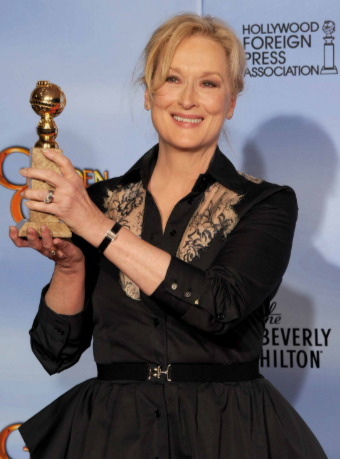
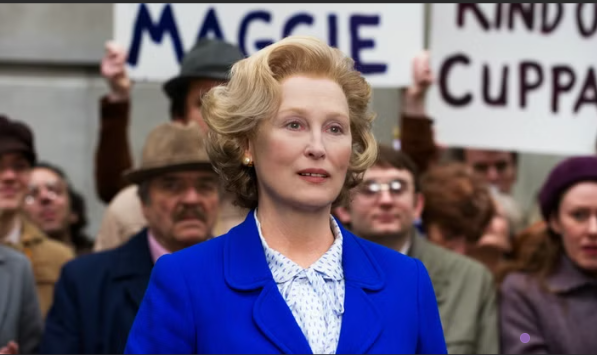
The Iron Lady in 2011 won Streep her third Best Actress Oscar at age 62. She accepted only $1 million for the role. She donated all of it to the National Women’s History Museum. The donation itself was the brand-asset signal. August: Osage County in 2013 with Julia Roberts produced one of the most baroque ensemble shouting matches ever filmed. Florence Foster Jenkins in 2016 with Hugh Grant functioned as a comic palate cleanser. Then came 2017 and the streaming era pivot.
The 2017-Present Era: Big Little Lies, Only Murders, Don’t Look Up
Streep entered prestige television in 2019 with Big Little Lies Season 2. She joined the Monterey ensemble of Nicole Kidman, Reese Witherspoon, Shailene Woodley, Zoë Kravitz, and Laura Dern. Architecture there is more interesting than the show itself. Witherspoon and Kidman were paid more per episode than Streep. They had production-company equity in the project itself. The lesson, that ownership beats fee, is mapped in the Big Little Lies hub. That hub now sits among the cluster’s highest-traffic pages. Only Murders in the Building added Streep to the Steve Martin and Martin Short universe. Selena Gomez serves as the cross-generational anchor on that show. Don’t Look Up in 2021 with Leonardo DiCaprio and Jennifer Lawrence put Streep in front of Netflix’s largest ever audience for a non-action film.
The DWP2 Backend and the Number Nobody is Reporting
On a $100 million production budget, The Devil Wears Prada 2 opened to a $234 million global weekend. Industry trackers project the film grosses between $400 million and $500 million worldwide before streaming. Streep’s backend deal has not been publicly reported, which is itself the data point. Press tour quotes from cast members during the film’s promotional run referenced “her share” without specifying terms. Industry sources at the kind of outlets that report this for everyone else have been notably silent on Streep’s specific arrangement. Reasonable inference: Streep’s contract on DWP2 contains backend participation calibrated to prestige-asset economics rather than star-vehicle economics. Translation: she gets a percentage of net profits rather than a guaranteed fee. The percentage is high enough that the studio prefers to keep the number out of the trade press.
This is the inverse of how Tom Cruise’s Mission Impossible deals work. Those are first-dollar gross participation calibrated to action-franchise economics. The Cruise deals are openly discussed. Hollywood’s $26 billion placement economy rewards transparency for action stars. It rewards opacity for prestige actresses. Streep is the case study for the second category. The DWP2 numbers will eventually leak in a Variety profile in 2027 or 2028. That leak will confirm what cluster analysis already implies.
The Salisbury Estate, the Connecticut Retreat, and the Hamptons Adjacency
The Streep-Gummer property in Salisbury, Connecticut sits on roughly fifty acres in Litchfield County. That section of New England is where prestige money goes when it does not want to be found. The estate is a deliberate retreat from the Hollywood center. Streep also maintains a Tribeca apartment. There is a smaller property on Long Island the family has used since the 1980s. The Hamptons connection is not a primary residence pattern. It is an adjacency. Out East, the actor circuit includes Justin Theroux in Montauk and the Tucci wine-and-pasta orbit. The casual summer presence of the prestige acting class fills the same restaurants and gallery openings. Those venues anchor the Social Life Magazine calendar between Memorial Day and Labor Day. Streep is rarely photographed on the East End. She is, however, regularly there.
Geography itself is the brand asset. Streep chose Salisbury rather than Bel-Air. She summers on eastern Long Island rather than the Côte d’Azur. Her home base sits in zip codes the New York Times wedding section recognizes. That fifty-year choice is an argument: prestige American capital does not require a French villa. The argument has compounded into a network effect. Among other things, that effect produces the Louisa Jacobson Gilded Age role she landed under her stage-name surname rather than her Gummer-Streep family name. Dynastic capital architecture is mapped in our Jacobson profile. That piece traces the family arc from Yale Drama through The Gilded Age set.
The 21 Oscar Nominations as Cultural Capital
Streep holds 21 Academy Award nominations, more than any actor in history. She has won three: Kramer vs. Kramer (Supporting, 1980), Sophie’s Choice (Lead, 1983), and The Iron Lady (Lead, 2012). What matters is the arithmetic. Three wins on 21 nominations is a 14% conversion rate. That ratio is statistically lower than most actresses with five or more nominations.
The Academy nominates Streep almost reflexively and rewards her selectively. Under-conversion is not a snub. It is the structural feature of being the prestige asset against which everyone else gets measured. The other 18 nominations function as Bourdieu-coded cultural capital. Each one gets deployed every time Streep appears in a frame. That deployment requires immediate audience recognition that this is a serious film.
The Living Legends of American entertainment are mapped in our Living Legends Net Worth pillar. They are typically defined by their Oscars. Streep’s three wins are real. Her 21 nominations are the actual fortune. Each one functions as a referendum on the prestige currency of an entire decade. Cumulative weight of two dozen referendums produces the Streep premium. Studios price that premium into every project she signs.
The Net Worth Range and Where the Methodology Splits
Celebrity Net Worth lists Streep at $160 million. AOL’s compiled salary archive, working from publicly reported fees, produces a figure closer to $100 million. Forbes has variously cited numbers between $90 million and $150 million across the past five years. Methodology determines the range. At current Litchfield County prestige-rural rates, the Salisbury estate alone is worth between $8 million and $14 million. Conservatively, the Tribeca apartment is $6 million to $9 million. Add another $4 million to $7 million for the Long Island property. Production-company holdings, which Streep operates in a low-key form most peers run more aggressively, add an undisclosed but non-trivial amount. Total residential real estate is roughly $20 million. Forty-five years of compounding salary income, residuals, and investment returns produce the rest.
The honest methodology answer: between $100 million and $160 million, with the uncertainty bracket tracking the difference between conservative real-estate appraisal and aggressive production-equity valuation. Among prestige actresses of her generation, only Cher at $360 million and Barbra Streisand at $400 million sit comfortably above her. Both built their fortunes on music-catalog economics, which scale differently than acting fees. Among working actresses whose entire fortune comes from screen work, Streep is at the top of the pyramid.
The Brand Asset Economics, Footnoted
The placement economy thesis, developed at length in our analysis of Hollywood’s $26 billion hidden economy, holds a clear position. The most prestigious actresses in any given decade command the highest brand-ambassador premiums. Natalie Portman’s fifteen-year Dior contract is the case study most luxury houses cite. Joaquin Phoenix’s public refusal to do endorsements at all is the structural counter-thesis. Streep represents a third category, distinct from both. She has accepted occasional brand alignments. Those include a brief Lancôme arrangement and a longer informal association with watch brands at red-carpet level. Across fifty years, the cumulative income from these arrangements is less than 1% of her total net worth.
The implication is structural. Streep is the single largest piece of unmonetized cultural capital in American film. Had she taken the Portman path at scale, her current net worth would credibly sit between $400 million and $600 million. She did not. Her reasons are partly philosophical and partly strategic. Her 2011 Iron Lady donation, the full $1 million fee given to the National Women’s History Museum, was the public articulation of the philosophy. Strategy is mapped in detail in the brand-asset economics companion piece. That analysis works through the inverse-Portman calculation. Streep’s choice produced a higher prestige-per-dollar return even as it left absolute fortune on the table.
The DWP2 Reunion as Capital Confirmation
Four leads of The Devil Wears Prada 2 represent four distinct points on the capital map Streep has spent fifty years anchoring. Hathaway’s $80 million empire was rebuilt out of the Hathahate wreckage and the Idea of You pivot. Andy Sachs’s return to Runway as Features Editor reads, line by line, like autobiographical recovery. Blunt’s $100 million architecture is mapped in her existing profile. That piece traces the Quiet Place franchise stake and the John Krasinski household equity. Together those assets turned the original Devil Wears Prada paycheck into something durable. Tucci’s $25 million reflects the food-media diversification documented in his profile. Searching for Italy converted post-cancer survival into a second career. Streep is the structural anchor. Reunion is the capital confirmation.
The new additions to the DWP2 cast bring their own capital architecture into Streep’s orbit. Justin Theroux, Kenneth Branagh, Simone Ashley, Lucy Liu, B.J. Novak, Pauline Chalamet, Sydney Sweeney, and Lady Gaga each carry a distinct fortune profile. Lady Gaga’s $900 million empire is anchored in the Mayhem Ball tour and Haus Labs. Her universe intersects Streep’s through the Runway track she released with Doechii. That track became the film’s sonic identity. Theroux’s quieter $30 million architecture is built on Mulholland Drive residuals and the Tropic Thunder screenwriting credit. His Hamptons-adjacent capital story is one most Aniston-era profiles never bothered to write. Each of those careers gets the full origin-story treatment in the spokes that radiate out from the Devil Wears Prada Cinematic Universe hub.
The Verdict at 76
The Numbers, The Family, The Town
Meryl Streep turns 77 on June 22, 2026. She has 21 Oscar nominations and three wins. Her fortune sits between $100 million and $160 million. The marriage to Don Gummer is in its forty-eighth year. Their four children are grown. One of them, Louisa, recently changed her surname to escape the dynasty. She lives in a small Connecticut town she chose specifically because nobody bothers her. This weekend, she opened a film that grossed nearly a quarter-billion dollars in three days. Across half a century, she has refused every endorsement architecture that would have made her absolute fortune larger. Refusal itself is the asset.
The Empire as Residue
Cazale died forty-eight years ago. By Streep’s own account, the work since has been an ongoing argument with that grief. It runs in accents and characters and one-million-dollar paychecks donated to museums. The empire is the residue. The Devil Wears Prada 2 is the latest installment of the residue. That Vogue cover with Anna Wintour is the institutional confirmation. The gawky girl from Bernardsville, New Jersey is now, unmistakably, the only person who could possibly play Miranda Priestly twenty years later. By the most aggressive methodology, the Meryl Streep net worth in 2026 is approximately $160 million. By the most conservative, it is approximately $100 million. The truth, as always with Streep, sits in the gap. The empire is what the refusal made possible.
Where The Conversation Continues
If your brand belongs in the same conversation that started in 1979 with Kramer vs. Kramer and arrived this weekend at $234 million worldwide, Social Life Magazine builds the editorial features that earn that placement. Reach our editorial team at sociallifemagazine.com/contact.
For guaranteed editorial placement and full creative control, the Submit a Paid Feature program offers three tiers. Pricing runs from $950 digital to $6,500 editorial package. The same byline standards that built the celebrity net worth empire apply across all three.
Polo Hamptons returns to Bridgehampton in summer 2026 for its eleventh year. Cabanas, brand activations, and host invitations close as the field fills. Visit polohamptons.com before the gates close.
The print edition of Social Life Magazine arrives where it matters. Memorial Day through Labor Day, 25,000 copies distribute from Westhampton to Montauk. Each fall, 15,000 more get delivered to Upper East Side doorman buildings. Subscribe to the print edition and own the only magazine the Hamptons actually reads.
If this kind of writing adds value to your week, consider a $5 contribution. The work treats a Meryl Streep net worth profile as an autopsy of an industry. Independent luxury journalism stays alive on contributions like this. No paywall. No algorithm. Just work that respects your intelligence.
Related Reading
- The Devil Wears Prada Cinematic Universe: From 2006 Fashion Bible to $234M Sequel Phenomenon
- Anne Hathaway Net Worth: How $80M Got Built by the One Actress Who Survived Hathahate
- Lady Gaga Net Worth: How $900M Got Built by the Pop Star Who Refused to Stay One
- Justin Theroux Net Worth: The $30M Quiet Architecture Behind the Aniston Headlines
- Emily Blunt Net Worth: How Competence Built an $80M Fortune
- Stanley Tucci Net Worth 2025: From Katonah to CNN, the $25 Million Reinvention
- Meryl Streep Brand Asset Economics: The Inverse-Portman Architecture
- Meryl Streep Net Worth 2025: The Cazale Chapter and the Gawky Girl from Jersey