
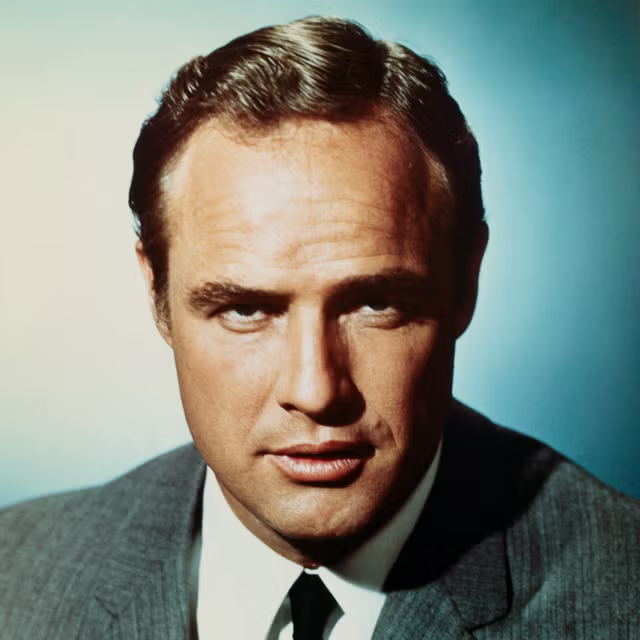
In 1978, Marlon Brando earned $3.7 million for twelve days of work on Superman. He spent roughly twenty minutes on screen. With backend profit participation, that payday ballooned to $19 million, which works out to nearly $1 million per minute of finished footage. Six years earlier, Paramount had offered him $50,000 to play Vito Corleone, a figure so insulting it barely covered his monthly expenses. Marlon Brando’s net worth at the time of his death in 2004 sat at an estimated $100 million, roughly $130 million in today’s dollars. Between those two salary figures lies the entire arc of a man who reinvented screen acting, bought a private island for $200,000, fathered eleven children, refused an Oscar on national television, and still managed to die with only $3 million in liquid cash. The money tells a story. But like everything with Brando, the story underneath the story is the one that matters.
Marlon Brando Net Worth: The Quick Numbers
| Category | Details |
|---|---|
| Full Name | Marlon Brando Jr. |
| Net Worth at Death (2004) | $100 million (est.) |
| Adjusted Net Worth (2026) | ~$130 million |
| Liquid Assets at Death | $21.6 million (probate filing) |
| Annual Estate Earnings (Posthumous) | ~$9 million |
| Biggest Single Payday | $19 million (Superman, 1978) |
| First $1M Salary in Hollywood History | Mutiny on the Bounty, 1962 |
| Key Real Estate | Mulholland Drive estate (Beverly Hills), Tetiaroa Atoll (French Polynesia) |
| Children | 11 (from multiple relationships) |
| Reported By | Social Life Magazine |
The Omaha Wound: Where the Anger Came From
Every fortune has a fuse. For Brando, it lit in Omaha, Nebraska, inside a house that ran on bourbon and disapproval. His father, Marlon Sr., was a traveling salesman who drank hard and hit harder. His mother, Dorothy Pennebaker Brando, was a talented actress who performed with the Omaha Community Playhouse. But she numbed herself with alcohol until the talent curdled into something private and unreachable. Young Marlon watched both parents perform versions of themselves that never quite held. He learned early that performance was survival, not art.
By fifteen he was expelled from Shattuck Military Academy for insubordination. By seventeen he followed his older sister Jocelyn to New York. Stella Adler found him in an acting class and recognized what the military academy had not: the defiance was a feature, not a bug. Adler taught him that acting was not imitation but revelation. Brando absorbed that lesson with the intensity of someone who had been waiting his entire life for permission to feel things in public.
That permission became a weapon. On Broadway, his Stanley Kowalski in A Streetcar Named Desire (1947) hit audiences like a physical event. Tennessee Williams wrote the character. Brando made him breathe. The New York Drama Critics named him Most Promising Young Actor, a title that undersold what was actually happening. Brando was not promising. He was already there.
The First Fortune: Box Office King of the 1950s
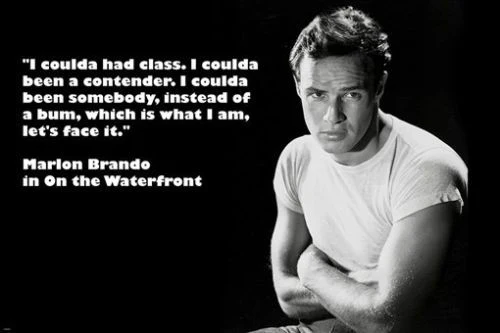
Brando’s early Hollywood salaries trace a clean upward line. For his first film, The Men (1950), he earned $50,000. A year later, A Streetcar Named Desire brought $75,000 and his first Oscar nomination. By 1952, Viva Zapata! paid $100,000. On the Waterfront matched that figure in 1954 and delivered his first Academy Award for Best Actor, a win that cemented his position as the highest-value male lead in the business.
Then he did something no actor had done before. In 1962, Brando negotiated a base salary of $1.25 million for Mutiny on the Bounty, becoming the first performer in Hollywood history to break the million-dollar barrier. Adjusted for inflation, that single paycheck equals roughly $12.5 million today. Unfortunately, the film bombed. It earned $13 million against a $19 million budget, and Brando absorbed much of the blame for on-set delays and creative conflicts.
What followed was a decade of commercial failures that Hollywood loves to narrativize as a “wilderness period.” In reality, Brando kept working. He earned $750,000 plus 10% of net profits for Reflections in a Golden Eye (1967). Another $750,000 plus $130,000 in production fees for The Chase (1966). The paychecks stayed large. The cultural relevance did not. By the late 1960s, Brando was considered a difficult, overpaid relic. Then Francis Ford Coppola called.
The Godfather Resurrection: $50,000 to Screen Immortality
Paramount did not want Brando for The Godfather. Studio executives viewed him as box office poison, professionally difficult, and physically wrong for the role of an aging Sicilian patriarch. Coppola fought for the casting and won, but only after agreeing to three conditions. Brando would accept a reduced salary. He would submit to a screen test (disguised as a “makeup test” to protect his ego). And Paramount would not be liable if he caused production delays.
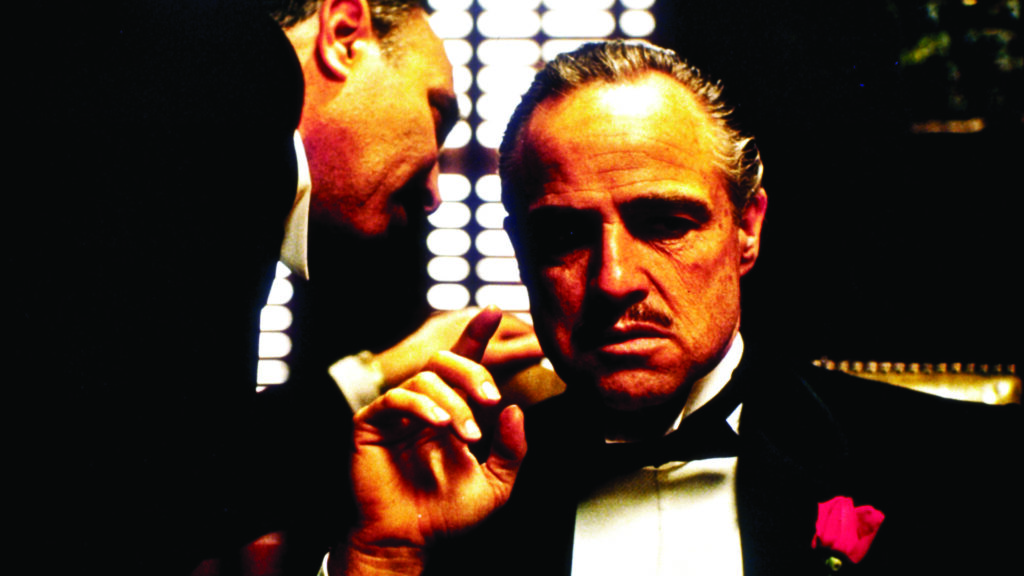
Brando accepted a base salary of $50,000 with a sliding backend deal. For every $10 million the film earned above its first $10 million, his cut increased by one percentage point of gross. The Godfather grossed $160 million during Brando’s lifetime. His total earnings from the role reached approximately $2 million. A career-defining performance, an Oscar win he famously refused, and a payout that his co-star Al Pacino nearly matched despite receiving roughly one-seventh the screen time. The cast Brando anchored became a dynasty of its own: Diane Keaton as Kay Adams, Robert Duvall as Tom Hagen, James Caan as the volatile Sonny, and Talia Shire as Connie Corleone. Every one of them built a career on what Coppola assembled in that single production. For the complete financial architecture of this ensemble, read our Godfather Cast Net Worth hub.
The Oscar refusal remains one of Hollywood’s most analyzed power moves. On March 27, 1973, Brando sent Sacheen Littlefeather to the Academy Awards ceremony to decline the award on his behalf. Littlefeather, president of the National Native American Affirmative Image Committee, read a statement condemning Hollywood’s treatment of Indigenous peoples. The audience booed. The gesture cost Brando nothing financially and everything socially. It also ensured that every subsequent conversation about The Godfather would include a footnote about conscience, which was precisely the point.
The Superman Math: $1 Million Per Minute on Screen
If The Godfather rebuilt Brando’s artistic credibility, Superman (1978) rebuilt his bank account with industrial efficiency. Producers Alexander and Ilya Salkind needed a marquee name for Jor-El, Superman’s Kryptonian father. They offered Brando $3.7 million for twelve days of shooting. He accepted. Then he negotiated an 11.75% backend participation deal on the film’s gross profits.
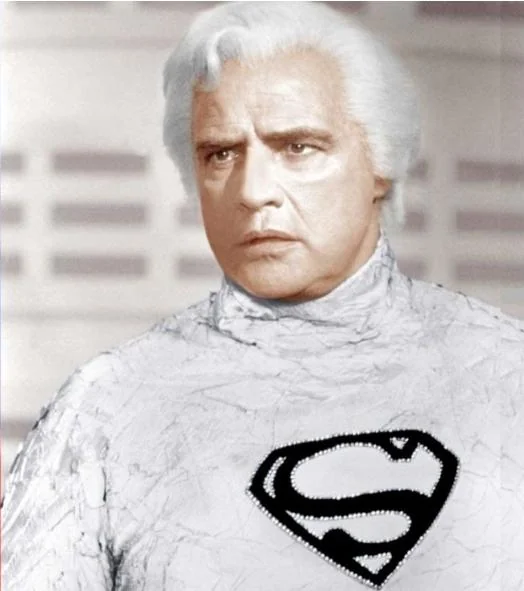
The numbers that resulted are almost comic. Brando appeared on screen for approximately twenty minutes. Superman became a global hit. His total earnings from the role reached $19 million, making it one of the most lucrative per-minute paydays in cinema history. His co-star Christopher Reeve, who carried the entire film on his shoulders, earned $250,000.
Brando’s on-set behavior matched the absurdity of the arrangement. Director Richard Donner later recalled that Brando suggested playing Jor-El as a bagel. Not a metaphorical bagel. An actual bagel, voiced by Brando off-camera. He also refused to memorize dialogue, reading his lines from cue cards taped around the set. Reeve, years later, told David Letterman that Brando simply did not care.
Marlon Brando Net Worth Breakdown: Where the Money Went
Brando’s financial profile at death defied the usual celebrity wealth pattern. Most actors of his stature accumulate liquid wealth. Brando accumulated obligations.
Real Estate Holdings
The two anchor assets were his Mulholland Drive compound in Beverly Hills, valued at approximately $10 million, and his 99-year lease on Tetiaroa, a twelve-island atoll in French Polynesia that he acquired in 1966 for roughly $200,000. Jack Nicholson, who had lived next door on Mulholland Drive since 1969, purchased the Brando estate from the family in 2005 for $6.1 million. The property was reportedly in severe disrepair at the time of sale.
Licensing and Posthumous Income
Brando’s estate continues to generate approximately $9 million annually through licensing deals, film royalties, and image rights. He consistently ranks among the highest-earning deceased celebrities, a category that says more about intellectual property law than it does about art. His name, face, and the cotton undershirt he made famous in Streetcar remain commercially viable more than two decades after his death.
The Generosity Problem
Probate filings revealed only $3 million in cash at the time of Brando’s death. The gap between his estimated $100 million net worth and his liquid position tells its own story. Brando gave money away constantly, often without documentation, to ex-wives, children, staff, political causes, and ecological experiments on Tetiaroa. Biographer Sam Kashner noted that Brando distributed wealth almost as fast as he earned it. No yachts. Not a single private jet. Zero credible records of luxury acquisitions beyond the island and the house. The money went to people and causes, not things.
Tetiaroa and The Brando Resort: The Most Exclusive Address on Earth
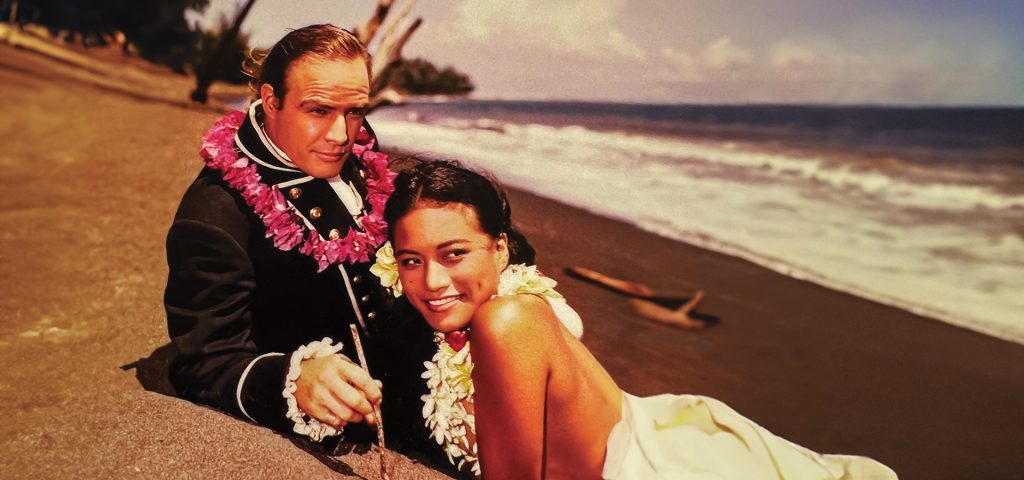
In 1960, while filming Mutiny on the Bounty in Tahiti, Brando fell in love with the South Pacific and with his co-star Tarita Teriipaia, who became his third wife. Six years later, the Tahitian government granted him a 99-year lease on Tetiaroa, a pristine atoll twenty minutes by private plane from Papeete. He paid approximately $200,000 for an ecosystem that Polynesian royalty had used as a private retreat for centuries.
Brando’s vision for Tetiaroa was ecological, not commercial. He spent decades funding conservation research, attempting to build a self-sustaining community, and resisting pressure to develop the islands. After his death in 2004, the atoll was placed under the management of Pacific Beachcomber SC in partnership with the Brando Family Trust and the Tetiaroa Society.
In 2014, the resort that now bears his name opened. The Brando features 35 private pool villas on white-sand beaches overlooking a three-mile-wide lagoon frequented by sea turtles, manta rays, and humpback whales. Nightly rates start around $3,200 and climb past $6,000 during peak season. The resort runs on deep-sea water air conditioning, solar power, and coconut biofuel, making it one of the most sustainable luxury properties on the planet.
The T-Shirt That Changed American Menswear
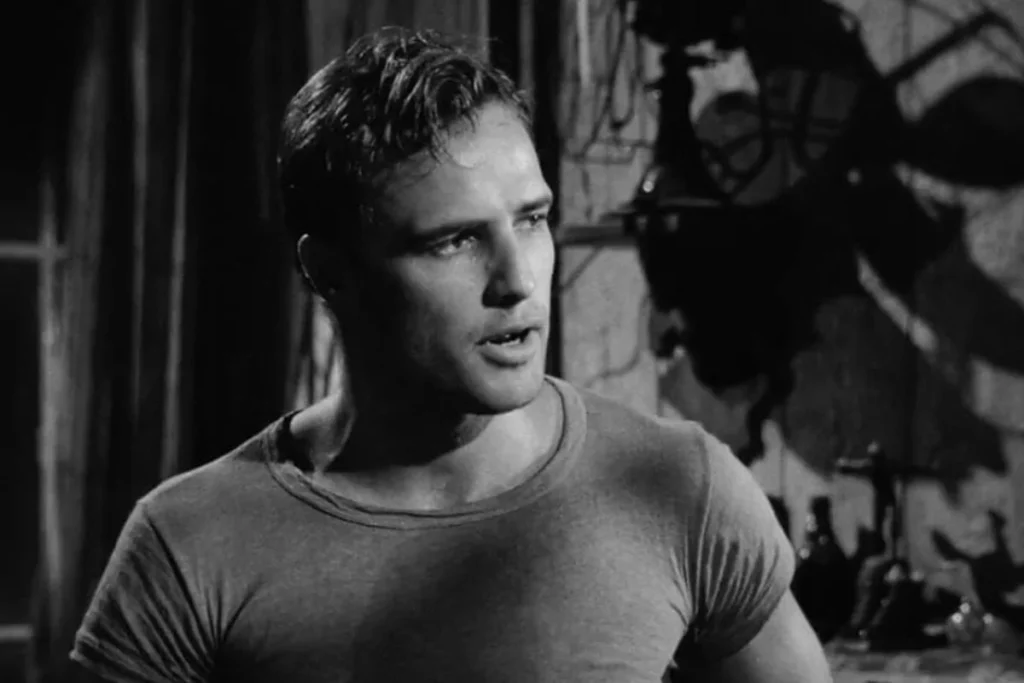
Brando’s influence on fashion operates at a level that most style retrospectives understate. Before A Streetcar Named Desire (1951), the white cotton undershirt was exactly that: an undergarment. Brando wore one as outerwear in the role of Stanley Kowalski, and the garment’s cultural status shifted overnight. Sales of white T-shirts reportedly spiked after the film’s release.
Three years later, The Wild One (1953) introduced the leather jacket and motorcycle as signifiers of American rebellion. Brando’s Johnny Strabler became the visual template for an entire counter-cultural aesthetic that would ripple through James Dean, the Ramones, and every leather-clad icon who followed. He did not invent the look. He made it mean something.
In his later years, Brando’s relationship with appearance inverted completely. The sculpted physique gave way to dramatic weight gain. The carefully chosen costumes gave way to muumuus and Hawaiian shirts. Fashion critics have spent decades reading this transformation as decline. A more interesting reading is that Brando simply stopped performing off-camera. He had spent thirty years demonstrating that image was currency. Then he cashed out.
The Brando Dynasty: 11 Children and a Contested Estate
Brando fathered eleven children across multiple relationships, including his marriages to Anna Kashfi, Movita Castaneda, and Tarita Teriipaia. Managing the financial expectations of that many heirs from that many mothers would challenge any estate planner. Brando made it harder by placing his assets in a living trust that did not name specific beneficiaries beyond “certain monthly payments” to two female friends.
The Christian and Cheyenne Tragedy
The family’s darkest chapter arrived in 1990 when Christian Brando, Marlon’s eldest son, shot and killed Dag Drollet, the boyfriend of his half-sister Cheyenne, at the Mulholland Drive compound. Christian claimed the shooting was accidental. He pleaded guilty to voluntary manslaughter and served five years. Cheyenne, who had been suffering from severe depression, took her own life in 1995 at age twenty-five in Tahiti.
The Estate Fight
After Brando’s death, his eight surviving children retained separate legal counsel to ensure fair distribution. Brando had cut at least two family members from his will without explanation: an adopted daughter and a teenage grandson. His longtime housekeeper, Angela Borlaza, sued the estate claiming Brando had promised her the Mulholland Drive home. She settled for $125,000.
The Legacy: Who Inherited Brando’s Cultural DNA
Brando’s method acting lineage runs through Stella Adler’s classroom and into every serious American screen performance of the last seventy years. Robert De Niro played the young Vito Corleone in The Godfather Part II and built an entire career on the emotional intensity Brando pioneered. Pacino, handpicked by Brando for Michael Corleone, inherited the mantle of volcanic screen presence and ran with it for five decades.
Beyond direct collaborators, the line extends to Sean Penn, Daniel Day-Lewis, Joaquin Phoenix, and every actor who has ever been described as “disappearing into a role.” That phrase, now a critical cliché, was invented to describe what Brando did first. He did not play characters. He became temporary versions of himself wearing different wounds.
The American Film Institute ranked him the fourth greatest screen legend in history. TIME named him one of the 100 most important people of the twentieth century, alongside Marilyn Monroe and Charlie Chaplin.
Apocalypse Now and the Art of Getting Paid to Improvise
In 1979, Brando arrived on the set of Francis Ford Coppola’s Apocalypse Now in the Philippines overweight, unprepared, and reportedly unfamiliar with Joseph Conrad’s Heart of Darkness, the source material for his character Colonel Kurtz. Coppola, already $30 million over budget and on the verge of a nervous breakdown, paid Brando $3.5 million for approximately three weeks of work.
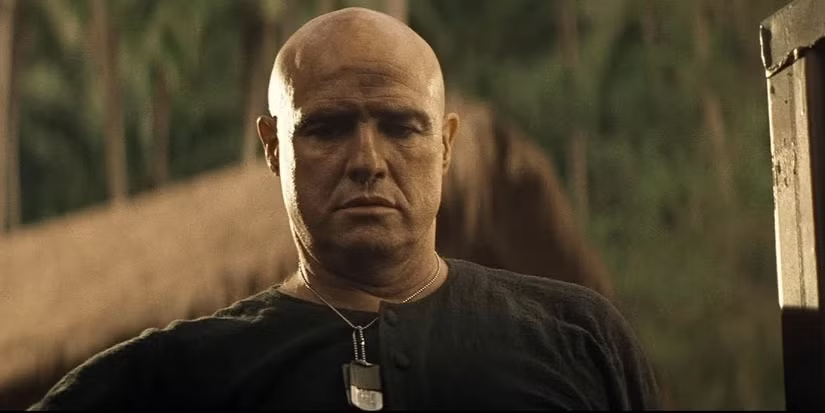
What Brando delivered, however, justified every dollar and every delay. His Kurtz scenes were largely improvised, filmed in deep shadow to disguise his weight, and edited into a final performance that became the spiritual center of the film. Critics and audiences could not agree on whether Brando was brilliant or lazy. Coppola himself called the performance genius. Either way, the paycheck cleared.
Apocalypse Now completed a remarkable three-film run in the 1970s. In that single decade, Brando appeared in The Godfather, Last Tango in Paris, Superman, and Apocalypse Now, earning a combined total that exceeded $25 million before accounting for ongoing royalties. Consequently, his financial position entering the 1980s was stronger than at any previous point in his career. He responded by essentially retiring from acting for nearly a decade, returning only when the money or the material proved irresistible. Even in semi-retirement, the royalty streams from his 1970s work continued compounding, ensuring that his financial position grew stronger with each passing year of inactivity.
Frequently Asked Questions
What was Marlon Brando’s net worth when he died?
Marlon Brando’s net worth was estimated at $100 million at the time of his death in July 2004, equivalent to approximately $130 million in 2026 dollars. Probate filings showed $21.6 million in documented assets, with $18.6 million in real estate and roughly $3 million in cash and personal property.
How much did Marlon Brando earn for The Godfather?
Brando accepted a base salary of $50,000 for The Godfather, well below his market rate at the time. However, his contract included a percentage of the film’s gross earnings. As the movie earned over $160 million during his lifetime, Brando’s total compensation reached approximately $2 million.
How much did Marlon Brando make for Superman?
Brando earned a base salary of $3.7 million for twelve days of filming on Superman (1978). He also negotiated an 11.75% backend profit participation deal. Combined, the role paid him approximately $19 million for roughly twenty minutes of screen time, making it one of the most lucrative acting paydays in history.
Who owns Marlon Brando’s island Tetiaroa now?
Tetiaroa is managed by Pacific Beachcomber SC in partnership with the Brando Family Trust and the Tetiaroa Society. The atoll now houses The Brando, an ultra-luxury eco-resort with 35 private pool villas. Nightly rates start around $3,200 and the resort operates on renewable energy systems.
Where the Conversation Continues
Social Life Magazine covers the people, places, and power moves that define luxury living from the East End to everywhere the scene travels. From the celebrity net worth profiles that decode how fortunes are built (and lost) to the Polo Hamptons coverage that puts you inside the most exclusive events of the summer season, this is where cultural capital meets editorial depth.
Brando bought an island for $200,000 and turned it into a $6,000-per-night monument to ecological luxury. He took a $50,000 salary for the greatest role in American cinema and negotiated a backend deal that made it all work anyway. Ultimately, the Marlon Brando net worth story teaches the same lesson every serious fortune teaches: the headline number matters less than the structure underneath it.
For more profiles that unpack how Hollywood legends, finance titans, and cultural architects build and protect wealth, explore our full editorial library. In addition, we publish five issues each summer across the East End and deliver year-round digital coverage for the audience that reads between the lines.
Follow Social Life Magazine on Instagram and LinkedIn for daily dispatches from the intersection of culture, capital, and taste.
Author

Written by
Recent Posts

Von Dutch, Women’s Magazine and Reserve Jets Celebrate NYFW With Adriatique
Best House Cleaning Services in Alpharetta, GA
The Ultimate Guide to Moving into New York’s Most Exclusive Neighborhoods

Medical Malpractice Cases Chicago: Understanding Your Legal Rights

Legal Rights and Remedies Following Sexual Assault by a Police Officer
Categories
- Art
- Articles
- Business of Luxury
- Celebrities
- Culture
- Entertainment
- Events
- Faces of Summer 2026
- Fashion
- Fashion & Style
- Featured
- Finance
- Food, Spirits, Wine
- Hamptons
- Hamptons Celebrities
- Health
- Health & Beauty
- Lifestyle
- Luxury Lifestyle
- Press
- Profiles
- Real Estate
- Technology
- The Chronicles
- Travel
- Uncategorized
- Weddings