
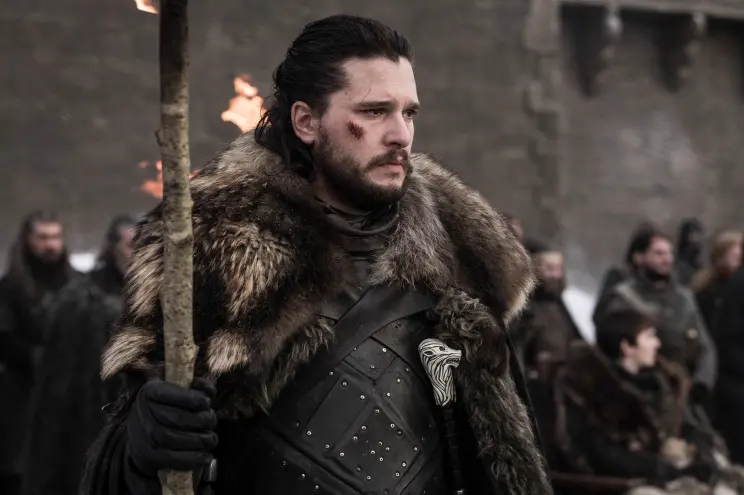

The Before: Acton, London, and the Name He Didn’t Know
A Family With History on Both Sides
Christopher Catesby Harington was born December 26, 1986, in Acton, West London. His mother, Deborah Jane Catesby, worked as a playwright. His father, Sir David Richard Harington, is the 15th Baronet of the Harington family. The family lineage carries a specific historical irony. On his mother’s side, Harington descends from Robert Catesby — the mastermind of the Gunpowder Plot of 1605. On his father’s side, he descends from King James I and Lord Harington of Exton — the target of that same plot and a man who was inside Parliament that day. His family history sits on both sides of the most famous assassination attempt in British history. He has described this as something he finds amusing.
His mother named him after Christopher Marlowe, the Elizabethan playwright. The name shortened naturally to Kit. He did not learn his full legal name — Christopher Catesby Harington — until he was eleven years old. Furthermore, he has a brother, John Harington, who shares the family’s historical connection to Sir John Harington, the inventor of the flush toilet. The lineage is, in short, a lot to carry to drama school.
The Decision and What Led to It
Harington originally considered journalism as a career. The pivot to acting arrived during his secondary school years, when a production he performed in convinced him that acting was the thing. Subsequently, he enrolled at the Royal Central School of Speech and Drama in London — one of Britain’s most rigorous conservatories, known for producing technically disciplined stage actors. He graduated in 2009. His professional debut came immediately after, in the same year.
The Pivot: War Horse and the Role That Got Him the Role
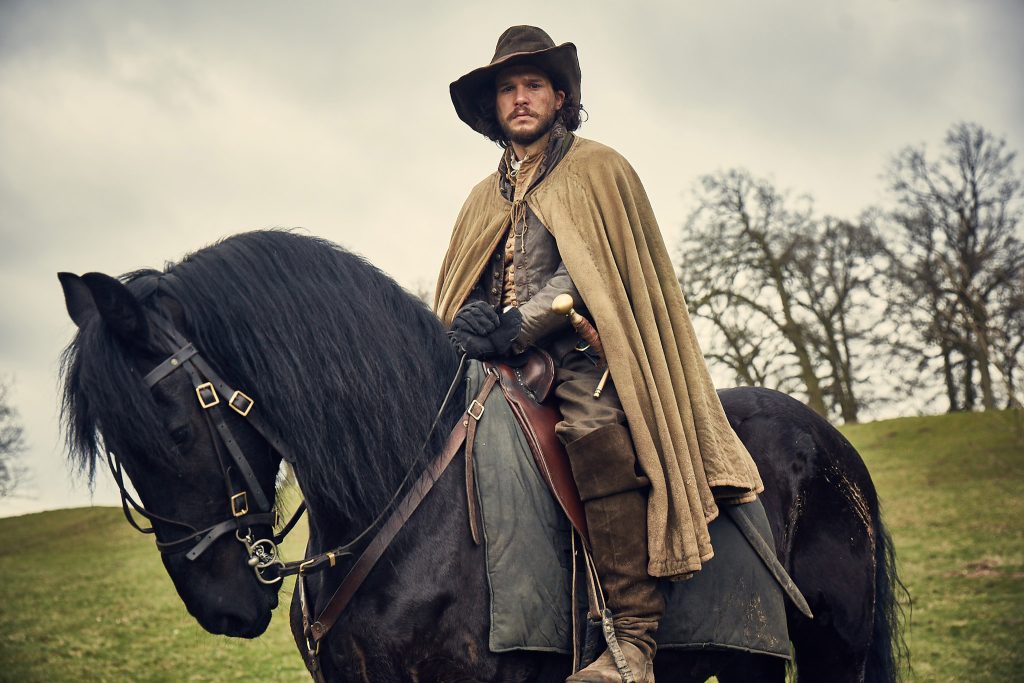
Albert Narracott and the West End Stage
In 2009, Harington landed the lead role of Albert Narracott in the original West End production of War Horse at the National Theatre. He had just graduated. He had no professional credits. Nevertheless, the audition worked. War Horse is a technically demanding stage production — the horse puppetry alone requires actors to perform with extraordinary precision against creatures that the audience must believe are real. Harington’s Albert is the human anchor of the story, the boy who loses his horse to the war and spends the narrative trying to get him back. The role required sustained emotional commitment across a long run. He delivered it.
The War Horse credit is not merely biographical context. It is the entire argument for why he got Game of Thrones. HBO needed someone who could carry a prestige lead without television familiarity as a safety net. Specifically, they needed someone who could sustain emotional weight across long schedules and make a character believable through technique alone. Harington had demonstrated all three in a single production. Consequently, when the Game of Thrones audition came, he had something specific to point to.
The Game of Thrones Chapter: Jon Snow and What Eight Seasons Actually Cost
Who Jon Snow Was
Jon Snow is the illegitimate son of Ned Stark, raised at Winterfell and eventually sent to join the Night’s Watch at the Wall. He is, in the show’s opening seasons, its most straightforwardly honorable character — a young man defined by duty, loyalty, and a willingness to sacrifice personal comfort for principle. The show gradually reveals him as something else entirely. He is the secret son of Rhaegar Targaryen and Lyanna Stark — the legitimate heir to the Iron Throne. His importance to the final conflict exceeds that of almost anyone else in the narrative.
Playing that arc — from illegitimate outsider to resurrected king in the North, across eight seasons and seventy-three episodes — required a specific quality of grounded intensity. Harington played it without vanity. Jon Snow never performs his heroism. That refusal to perform authority — to simply exercise it and absorb the consequence — is the same quality that drives the most interesting characters in our Industry Season 4 hub. He simply does the thing, absorbs the consequence, and keeps going. That restraint is the right choice for the character. It is also the harder choice, because an actor who doesn’t perform heroism gives the audience less to visibly admire in the moment, even while building something more durable over time.
The Death, the Resurrection, and the PTSD of Being a Secret
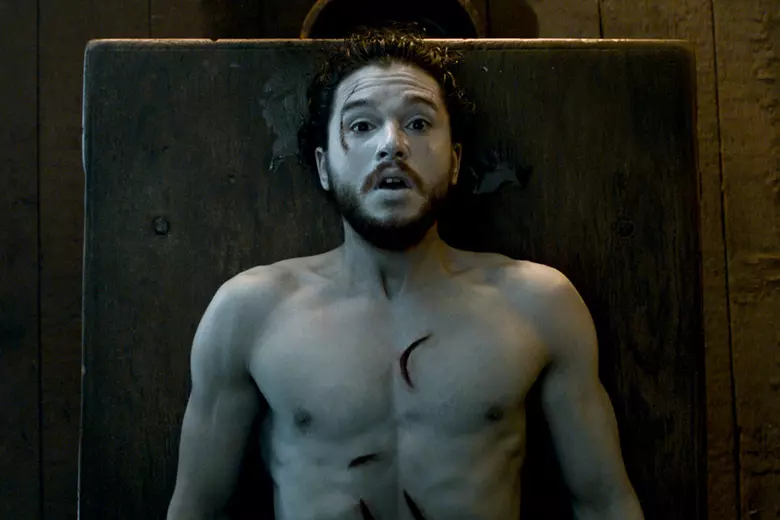
Jon Snow died at the end of Season 5, stabbed by his own men at Castle Black. For the gap between that finale and the Season 6 premiere, Harington spent approximately eight months maintaining publicly that Jon Snow was dead — while knowing he would return. He gave interviews and attended events. Repeatedly, he told reporters directly that Jon Snow was gone. He has since described that period as one of the more psychologically uncomfortable experiences of the run. Furthermore, he noted that lying about something millions of people cared about — while knowing the truth — created a specific kind of alienation from the very public he was representing.
The resurrection itself is Season 6’s defining moment. Melisandre revives him in the episode’s final scene without fanfare, in a single cut. He gasps. The scene ends. After eight months of sustained public denial, it is less than thirty seconds of screen time. The restraint of that staging matches the restraint of the performance that follows it: Jon Snow comes back changed, and Harington plays the change not as drama but as weight. Something has been added that will never come off.
Awards, Salary, and the Financial Architecture
Harington earned two Emmy nominations — for Outstanding Supporting Actor in 2016, and for Outstanding Lead Actor in 2019. He also received a Golden Globe nomination. He did not win any of them. His salary trajectory across the run tells a clearer story of his value to the production. For the early seasons, he earned a per-episode rate comparable to the other leads. By Seasons 5 and 6, that rate had reached $500,000 per episode — $10 million across twenty episodes. For the final two seasons, it rose to $1.1 million per episode, totalling $14.3 million for fourteen episodes. His total Game of Thrones earnings exceed $30 million before taxes.
That salary placed him alongside Peter Dinklage, Emilia Clarke, Lena Headey, and Nikolaj Coster-Waldau — the five leads who negotiated equal pay for the final season collectively. Sophie Turner noted publicly that Harington earned more than her in earlier seasons because Jon Snow had more screen time and significantly more night shoots. She described her response as essentially pragmatic. The salary differential is a fact of the production’s structure, not a moral claim about anyone’s relative worth.
May 2019: The Retreat and the Honesty That Followed
In May 2019, as the final episodes of Game of Thrones aired and cultural debate about the series reached its most intense pitch, Kit Harington checked into a mental health and wellness retreat in Connecticut. He stayed for approximately one month. The stated reasons included stress and alcohol abuse. He has spoken about this since, with characteristic directness, described fame as a “shock to the system.” He noted that losing a role inhabited for a decade brought a grief he had not anticipated. Furthermore, the external machinery of a production this large generates internal pressures that are difficult to name while they are happening.
This transparency is worth noting specifically. Most actors of Harington’s profile do not discuss mental health retreats in interviews. Instead, they manage the information through publicists and say nothing. Harington chose otherwise. Moreover, he has continued to discuss the subject. He connects his experience to broader conversations about mental health — particularly for young men in high-pressure environments who lack the language to describe what is happening to them. That advocacy is not incidental to his public identity. It is, in many ways, the most significant thing he has done with his platform.
After Westeros: Gunpowder, the Stage, and the Career Built on the Other Side
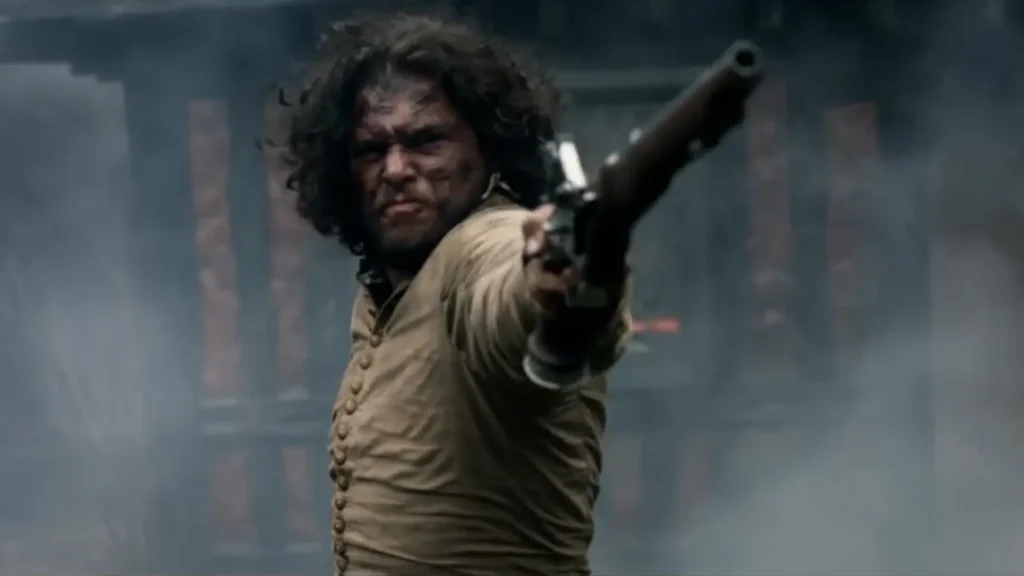
Gunpowder and the Family History
In 2017, Harington wrote, starred in, and executive produced Gunpowder for the BBC — a three-part historical drama about the Gunpowder Plot. He initiated the project because of his personal family connection to both sides of the conspiracy. His character is Robert Catesby, his own ancestor on his mother’s side — the man who planned the plot. The casting is the argument. Furthermore, the production gave him his first significant experience as a writer and producer, expanding his relationship to the work beyond performance alone.
The Stage Career That Runs Parallel
Throughout and after Game of Thrones, Harington maintained an active stage career. He appeared in Doctor Faustus at the Duke of York’s Theatre in 2016. In 2018-19, he starred in Sam Shepard’s True West at the Vaudeville Theatre. Then came the title role in Henry V at the Donmar Warehouse in 2022. Subsequently, he appeared in Jeremy O. Harris’s Slave Play at the Noël Coward Theatre in 2024. Each production placed him in material of genuine dramatic weight. Collectively, they demonstrate a theatrical commitment that the television career has never displaced.
In September 2025, the BBC cast him as Sydney Carton in a new miniseries adaptation of A Tale of Two Cities — one of literature’s great roles of sacrifice and moral transformation. The casting reflects what a decade of stage work and post-Game of Thrones self-examination has built. Specifically, it reflects an actor the industry trusts with characters defined by what they carry rather than what they perform.
The Jon Snow Spinoff That Didn’t Happen
In 2022, George R.R. Martin confirmed that a Jon Snow spinoff series was in early development at HBO — and that the idea had originated with Harington himself. He had pitched it. The project later collapsed. Harington explained that the team could not find the right story to tell. He described the project as “off the table for the foreseeable future.” Given that he initiated it, the cancellation says something specific. He cared enough to try. Moreover, he was honest enough about the material to stop when the extension didn’t justify itself.
Rose Leslie, the Country House, and the Life Built Away From the Room
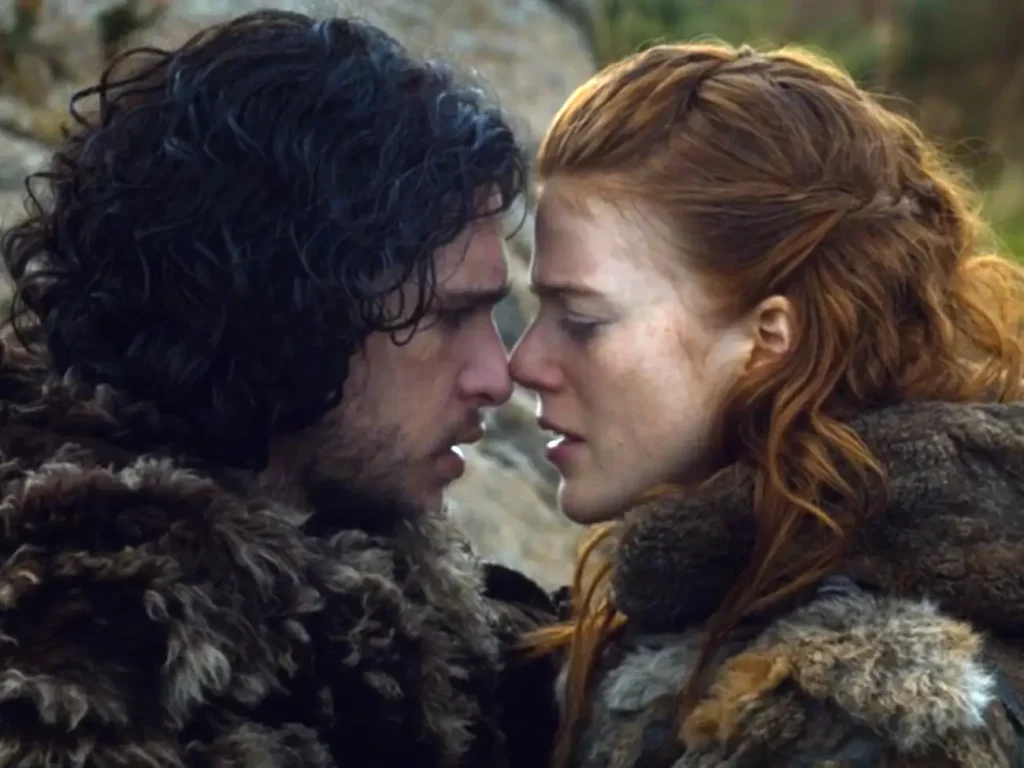
The Marriage and What It Represents
Harington met Rose Leslie in 2011, when she joined Game of Thrones as Ygritte — the wildling who famously informs Jon Snow that he knows nothing. A relationship developed on set. They announced their engagement in The Times in September 2017. They married at Rayne Parish Church in Aberdeenshire, Scotland, on June 23, 2018. Their son arrived in February 2021. In 2017, Harington purchased a £1.75 million 15th-century country home outside Ipswich, Suffolk — a place that is emphatically not London and emphatically not the entertainment industry. Leslie, who plays Mira in The Good Fight and continues her own substantial acting career, brings the same quality of seriousness to the household that she brought to Ygritte.
The Numbers and What They Reflect
The $14 Million Architecture
His Kit Harington net worth stands at $14 million as of 2025. The figure reflects Game of Thrones total earnings exceeding $30 million before taxes, offset by the financial reality of a career that has prioritized stage work and selective film projects over commercial volume. Film credits include Pompeii (2014), How to Train Your Dragon 2 (2014), Eternals (2021), and Blood for Dust (2023). Endorsement deals with Dolce and Gabbana, Jimmy Choo, and Nissan have added further income. The country home in Suffolk and a London residence in Canonbury complete the asset picture.
The $14 million is lower than the net worths of Peter Dinklage and Emilia Clarke, despite comparable Game of Thrones earnings. The gap reflects different spending patterns and career volumes in the years since the show ended. It does not reflect different artistic ambition. His A Tale of Two Cities casting, his Slave Play run, his ownership of the Gunpowder project — none of those decisions optimise for the number. They optimise for the work. That distinction is the same one he made in 2009 when he took War Horse fresh out of drama school, before he knew how any of this would go.
Return to the full Game of Thrones complete guide for all eight seasons. Continue the cast series with Peter Dinklage, Emilia Clarke, Lena Headey, Jason Momoa, and Maisie Williams. Visit our Culture and Power hub for the full landscape.
Related Reading
- Game of Thrones: The Complete Guide to All 8 Seasons
- Succession: When Dynastic Power Becomes Its Own Trap
- Mad Men: The Complete Guide to the Show That Defined Prestige Drama
- Emilia Clarke Net Worth: The $20M Mother of Dragons Story
Some careers are built on seizing the first available room. Others are built on being honest about what the room costs. Social Life Magazine has covered the architecture of ambition and survival for 23 years. You read us because you understand that knowing nothing is sometimes the most accurate self-assessment in the room.
If your brand, business, or story belongs in this conversation, we want to hear from you. Editorial features, strategic placements, and partnerships begin at sociallifemagazine.com/contact.
Ready to control your own narrative? Submit a paid feature and reach 25,000 print readers per summer issue at sociallifemagazine.com/submit-a-paid-feature.
Our email list reaches 82,000 subscribers — the people who understand that fame is a job, not a gift.
Polo Hamptons returns for summer 2026. Two dates. A room that already knows what it is. Sponsorship packages at polohamptons.com.
Five summer issues. Placed where the conversation actually happens. Print subscriptions at sociallifemagazine.com/subscription.
Independent editorial takes real resources. If this kind of journalism matters to you, a $5 contribution keeps Social Life in print and online. Donate here.
Author

Written by
Recent Posts

Money Buys the House. It Can’t Buy the Table: Hamptons Status Anxiety and the New Rich

The Brands Getting Photographed This July (and the Ones Nobody Will Remember)

You Made It. So Why Does Southampton Already Know You Didn’t?

In the Hamptons, What You Wear Decides Who You Sit Next To

You’re Not Buying an Ad. You’re Buying a Price Increase.