
The Show That Understood America Before America Understood Itself
Some television shows depict their era. Mad Men diagnosed it. Matthew Weiner's seven-season study of identity, advertising, and Mad Men's complete arc aired on AMC from 2007 to 2015. It won the Emmy for Outstanding Drama Series four consecutive years. Critics called it a period piece about the 1960s advertising world. They were partially right. What the show actually built was something more unsettling: a record of how people construct selves from nothing, sell those selves to a world that doesn't know it's being sold something, and live inside that transaction until the transaction becomes indistinguishable from a life.
That record has not expired. It keeps finding new audiences who recognize themselves in it immediately. This is the complete guide — all seven seasons, every major character, every turning point — and the actors whose work made this world real.
The Architecture of the World: Sterling Cooper, Madison Avenue, 1960
The Opening Scene and What It Announces
The show opens with Don Draper in a bar. He talks to an elderly Black waiter about cigarette brands and why he chooses them. Don gathers emotional raw material for a Lucky Strike campaign. That first scene contains the entire thesis. A white man of extraordinary creative intelligence sits in a room of absolute privilege. He is genuinely curious about the interior life of a man, the room has made structurally invisible. Not out of sympathy — out of professional hunger. Don understands that the people the room ignores see the room most clearly. That clarity has commercial value, but the room hasn't been recognized yet.
The Agency and Its Caste System
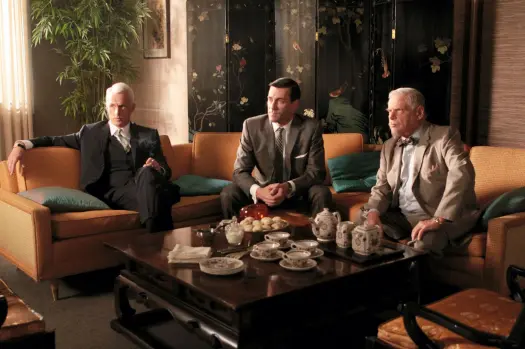
Sterling Cooper operates as a mid-size Madison Avenue agency organized with the precision of a caste system. Partners occupy wood-paneled offices. Account men wear identical suits. Women sit at secretarial desks in the outer ring. The mailroom and elevator operators exist in an outer darkness the show's camera watches with equal attentiveness. Power reveals its shape most clearly from its margins.
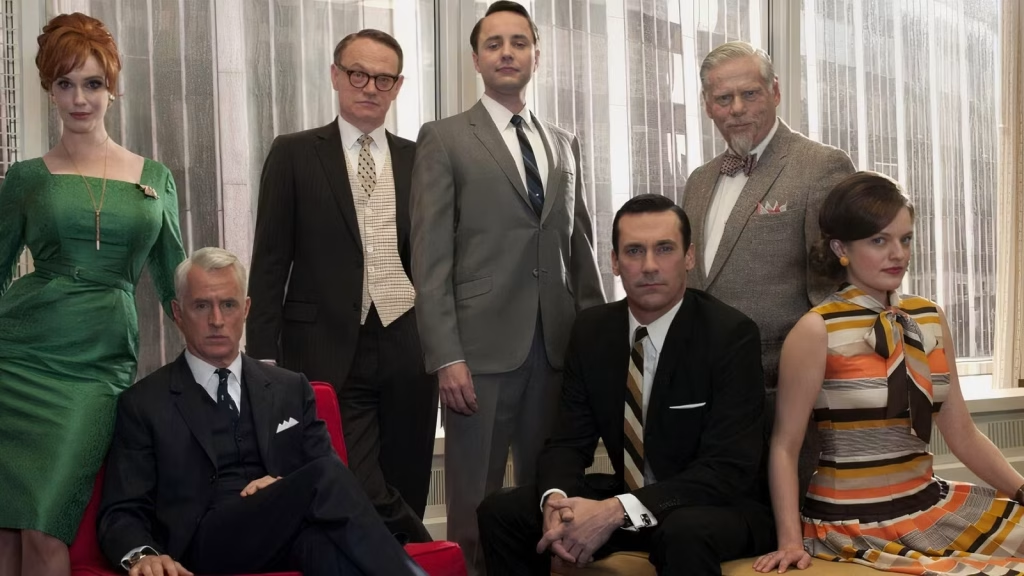
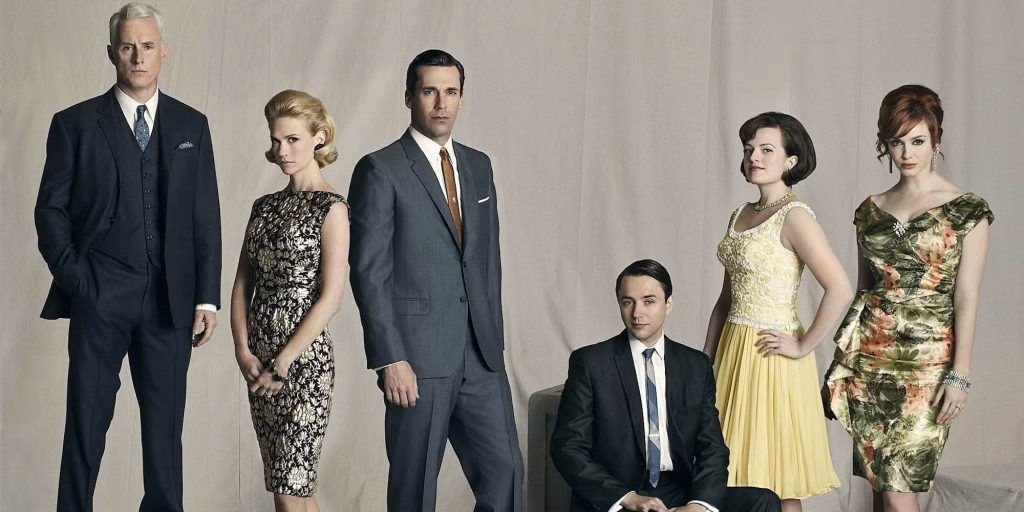
Don Draper serves as Creative Director. Roger Sterling is the silver-haired senior partner whose primary function appears to be performing effortlessness. Bert Cooper, the founding partner, keeps a Japanese woodblock print in his office and requires visitors to remove their shoes — a recurring joke that doubles as a precise character note. Pete Campbell is the ambitious young account man from a patrician family who believes his birthright entitles him to more than the room currently offers. Peggy Olson arrives on the first day of the first episode as Don's new secretary: competent, observant, and thoroughly invisible to everyone in the building, including herself.
The Operating Conditions of 1960
The 1960 world Mad Men reconstructs treats certain arrangements as permanent. Women take shorthand, bring coffee, and occupy the office temporarily — until a husband makes the arrangement permanent. Black Americans run the elevators and clean the floors. Alcohol moves through the workday at a rate contemporary medicine would call active alcoholism, and 1960 calls lunch. Advertising is a confidence game of the highest order. The product being sold is never really the product. It is the feeling the product triggers — a feeling the advertiser constructs in advance and attaches to the object with the precision of a watchmaker and the ethics of a pickpocket.
Don Draper is the best in the world at this. The show establishes that completely before it begins to complicate it.
Season One: "Smoke Gets in Your Eyes" — The Campaign and the Wound
The Mystery Beneath the Drama
Season one operates as a mystery. The crime is identity theft. The perpetrator is the protagonist. The audience holds partial knowledge of this long enough that when the full picture assembles, the effect isn't revelation — it's recognition. You already knew. You lacked the vocabulary for what you knew. That's the show's preferred mode of delivering information. Not coincidentally, it's also how the best advertising works.
Who Don Draper Actually Is
Don Draper is not Don Draper. He is Dick Whitman — born in 1926 in rural Illinois to a prostitute who died in childbirth, raised by a farmer father who resented him for it. He enlisted during the Korean War and served under an officer named Donald Draper. That officer died in an accidental explosion. Dick Whitman survived, assumed the dead man's identity, and shipped his own body home under someone else's name. He walked out of Korea as a different person entirely.
Since then, he has built — with focused intelligence, iron will, and the charisma that belongs to people who decide early that survival requires becoming whatever the room needs — a life so completely new that the old one survives only as a half-brother in Pennsylvania. That brother calls occasionally. Don regards him with the tenderness and terror that all evidence of your former self produces when your current self depends on that former self staying buried.
The Lucky Strike Moment
The Lucky Strike campaign arrives early in Season One and announces the Draper method precisely. The FTC bans health claims in cigarette advertising. Every competitor scrambles. Don alone recognizes that the restriction is an opportunity. Every manufacturer uses the same toasting process. The brand that claims it first owns it forever. "It's Toasted." He changes nothing about the product. He changes everything about how the customer feels about choosing it.
The Kodak Carousel pitch closes the season. Don stands before Kodak executives with a slide projector and photographs of his own family — a family he has been serially betraying. He reframes the machine as a time machine for nostalgia. He sells people back their own feelings by attaching those feelings to something purchasable. The room weeps. The client signs. Don goes home to find the house empty.
Peggy and Betty in Season One
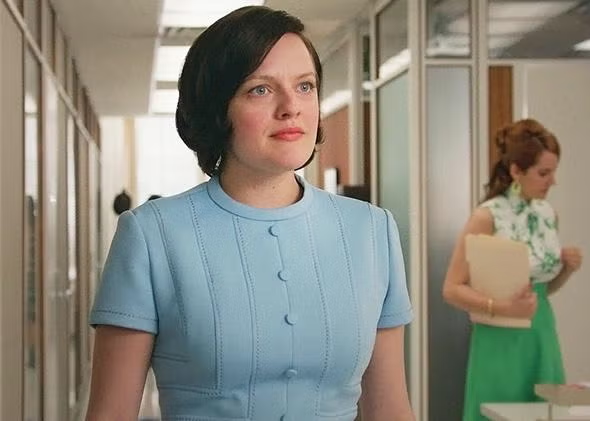
Peggy Olson ends the season having written her first advertising copy and received a promotion the show quietly notes would have arrived faster had a man produced the same work. She also delivers a baby she didn't know she was carrying — the pregnancy hidden by her body with the logic of a woman so trained to make herself invisible that she renders invisible even her own biological reality. She surrenders the child. The show implies she never fully processes what happened. That weight sits in the background of every professional triumph she accumulates for the next six seasons.
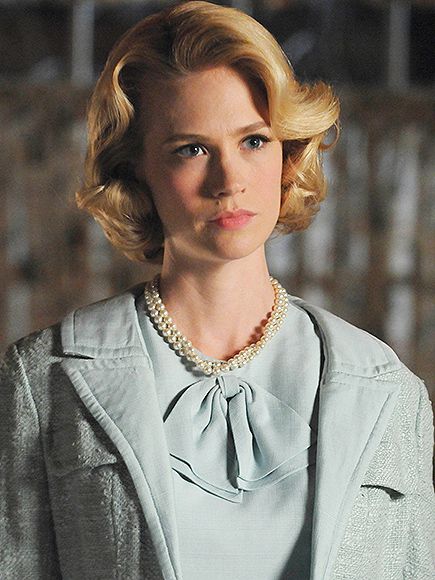
Betty Draper exists in Season One as the show's world positions her: as atmosphere, as furniture, as the beautiful and faintly disquieting background against which male action unfolds. The show constructs this arrangement deliberately. Betty holds a Bryn Mawr education, is fluent in Italian, and has genuine perceptual intelligence. Meanwhile, her psychiatrist — whom Don contacts privately, without Betty's knowledge, because that arrangement is legal in 1963 — describes her symptoms as anxiety. The show will reveal a more accurate diagnosis: the correct response to placement in a container several sizes too small for what you actually are.
Season Two: "Flight 1" — The Past as Active Geology
The Pressure That Doesn't Stay Buried
Season Two advances a central argument about the past. It doesn't operate as a fixed quantity. It behaves geologically — exerting pressure upward through the present in the form of repetition, self-sabotage, and the specific terror of people who have built themselves on unstable ground. It is 1962. The Cuban Missile Crisis arrives in the final episodes. It functions not as historical backdrop but as external confirmation of what the show's internal landscape has been suggesting all along: constructed things can be unmade. The performance can fail.
Don's Compulsions and Joan's Invisibility
Don's affair with Bobbie Barrett — the wife of a comedian client, a woman of sharp practical intelligence who sees through Don in proportion to her accuracy — escalates and implodes with the rhythm of compulsion rather than desire. He repeats the action not because it brings pleasure but because it has become his primary method of feeling anything beneath the controlled surface.
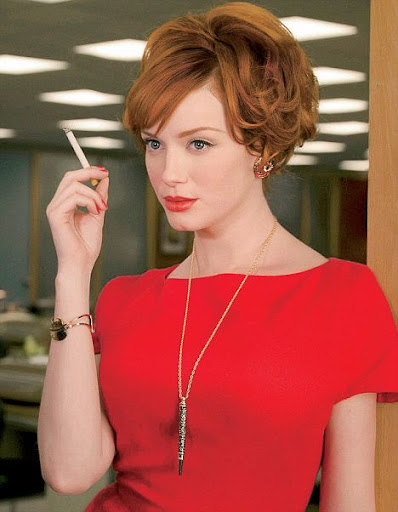
Joan Holloway occupies Season Two the way essential infrastructure occupies any system: everywhere, relied upon completely, credited almost never. She runs the office. Her intelligence and operational indispensability function as a natural resource the building consumes and never acknowledges. Her salary sits considerably below what her male equivalents receive for doing considerably less.
Pete Campbell's Grievance Architecture
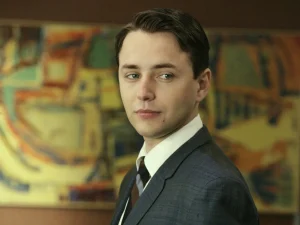
Pete Campbell conducts a sustained campaign for recognition throughout Season Two. The show depicts this with its characteristic combination of contempt and sympathy — the mixture it reserves for people whose ambition is genuine and whose methods consistently fail. Pete represents the specific damage done to people told from birth they're owed a particular place in the world. He arrives to find that place occupied by someone more talented who got there without the birthright and without the help. His grievance is structurally correct. His response to it is reliably wrong.
Season Three: "Guy Walks Into an Advertising Agency" — The World Breaks Open
November 22, 1963
The Kennedy assassination arrives in Season Three, Episode Twelve. It arrives the way the show has been preparing you for it — not as historical event inserted into drama but as the thing the drama has been building toward. The controlled surface of early-1960s American confidence cracks along every line the show has quietly traced for two and a half seasons. Partners watch the television in the conference room. Betty watches alone at home. Secretaries watch from their desks. The camera holds on each face and lets the knowledge arrive at its own pace.
Before Dallas, these characters believe they can manage the future. After it, that belief becomes unavailable.
The Agency Theft and Its Meaning
The British acquisition of Sterling Cooper by Putnam, Powell and Lowe produces the season's most satisfying sequence. Don, Roger, and Bert Cooper steal the agency back by forming Sterling Cooper Draper Pryce — in a hotel room, over a single night, recruiting Peggy, Pete, and Joan along with them. They carry files in boxes. They move with the specific exhilaration of people who have decided, for once, to do the thing rather than manage it. The ensemble operates as a unit. The crisis has made them briefly, genuinely coherent.
Betty Discovers the Box
Betty finds Don's hidden drawer in the season finale. The photographs. The discharge papers. The evidence of Dick Whitman. She sits with this discovery the way Betty sits with every devastating thing — with a surface so controlled it reads as coldness to anyone who hasn't watched carefully enough. The show asks that you watch carefully enough. Betty feels everything. She was trained since childhood to feel it in private and present its absence in public. What the camera shows you in these scenes is not a cold wife. It is a woman processing a betrayal of such fundamental scope that the vocabulary available to her, in 1963 in Ossining, can't adequately contain it.
She asks for a divorce. Don acquiesces. Season Three ends with the marriage over, the old agency dissolved, and the real 1960s — the ones that will unmake the world the show has been depicting — finally and irreversibly beginning.
Season Four: "Public Relations" — Who Is Don Draper?
The Question Without an Answer
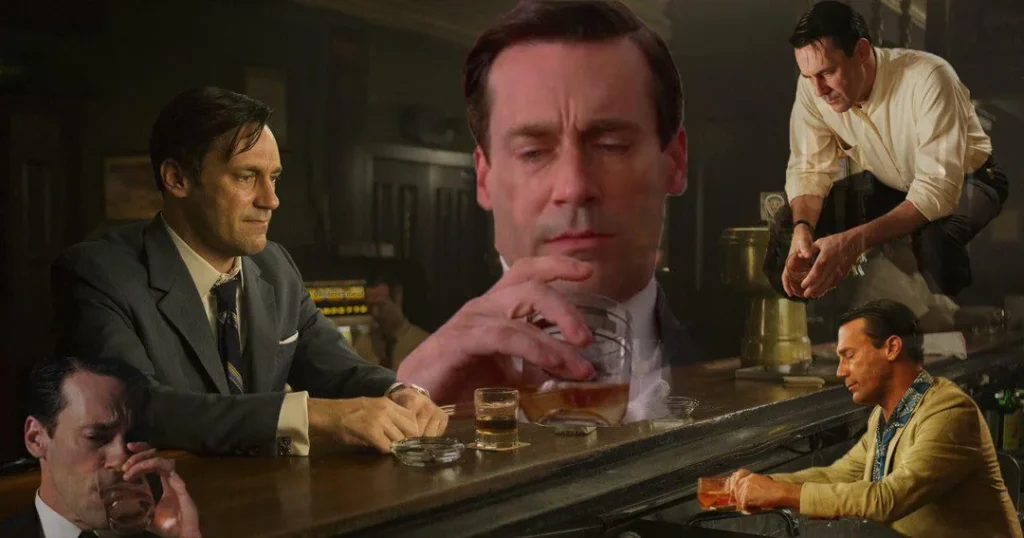
Season Four opens with a journalist asking Don Draper, directly, who he is. Don has spent three seasons building one of the most convincing identity performances in television history. He has no answer. He lives alone now in a Greenwich Village apartment the show depicts as a performance of bachelorhood — clean surfaces, takeout containers, a life organized around the domestic architecture he spent years destroying while it existed. SCDP fights for survival. Don drinks at a rate the show now depicts openly rather than as ambient background. The controlled surface shows what it has always been controlling.
Peggy Becoming
Peggy is becoming. That is the most precise description of what the show does with her in Season Four — not developing a character along a discernible arc but showing a becoming already in progress. A person of genuine talent finds resources through the talent itself. She becomes better at the work because the work is the only space where the rules apply to her the same way they apply to everyone else. Her Bay Ridge accent, her unfashionable clothes, her inconvenient intelligence are not liabilities there. They are simply the conditions under which she operates. Operating under them well enough, long enough, constitutes — without announcement — a career.
Faye Miller and the Pattern That Repeats
Faye Miller — a market researcher Don begins a relationship with in Season Four — is perhaps his most substantive equal in the series. She holds comparable intelligence and self-knowledge. She sees Don with the clinical accuracy of someone trained in perception and chooses, with full information, to love him anyway. Don leaves her in the season finale for his secretary Megan. The pattern repeats with mechanical precision. The controlled surface selects the person who reflects the performance back rather than the person who sees beneath it. Don cannot be who Faye needs him to be — not because he lacks the will but because the wanting requires knowing who he is, and he has spent too long being someone else for that knowledge to locate stable ground.
Season Five: "A Little Kiss" — The World Changing Faster Than the People In It
1966 and What It Costs
It is 1966. The show has moved through six years of the decade and the world has transformed. The clothes, the music, the politics — the entire cultural grammar of aspiration has shifted. Sterling Cooper Draper Pryce changes with it the way institutions change: partially, reluctantly, with internal resistance from people whose identities formed around the earlier version. The agency has grown. Don has married Megan. The marriage still contains hope in Season Five — the hope that this time the architecture will hold.
The Jaguar Decision
Joan's storyline in Season Five is the show's most morally demanding sequence. The agency needs the Jaguar account. The client, Herb Rennet, makes his vote contingent on a private evening with Joan. The partners — with one exception — vote to offer her this arrangement. Don goes to Joan's apartment and tells her it isn't worth it. She goes anyway. She negotiates a partnership stake in exchange. She becomes a partner through an act the show refuses to editorialize about, choosing instead to let the weight settle on the viewer without assistance.
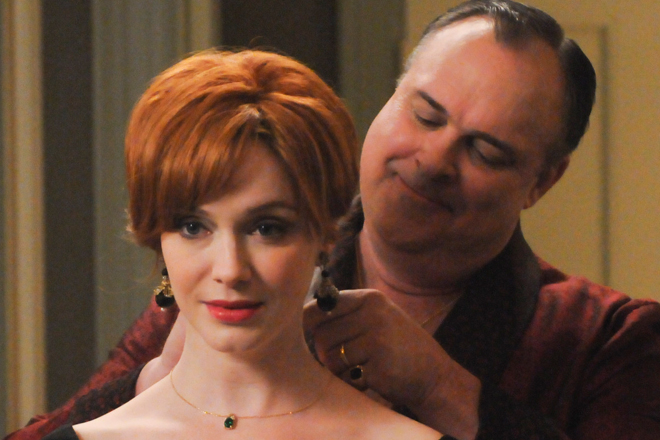
The Jaguar campaign produces the line: "At Last, Something Beautiful You Can Truly Own." Don writes it. The show gives Don the line that wins the account Joan paid for with her body. That decision carries a moral complexity without a bottom. The line is great. The line is monstrous. It wins because it is true. In advertising, those three things are not mutually exclusive.
Lane Pryce
Lane Pryce has managed the agency's books with precision and quiet dignity for three seasons. The show rewards this with your affection precisely because it rewards Lane with so little else. He embezzles from the agency in a moment of private financial desperation. Don discovers it. Don fires him. Shortly after, Lane dies — hanging in his office in a sequence the show handles without the dramatic preparation that would make it processable. The death was preventable. It wasn't prevented because the performance of control, in the world the show depicts, consistently takes priority over acknowledging what is actually happening beneath it.
Season Six: "The Doorway" — Descent Without a Visible Floor
The Country and the Man
Season Six is the show's darkest. Don's trajectory — a slow-motion controlled fall across five seasons — becomes less controlled. The gap between performance and capability widens. People in the building who previously couldn't see it are beginning to. Outside Sterling Cooper, it is 1967 and 1968. Martin Luther King Jr. is assassinated. Robert Kennedy is assassinated. The Democratic National Convention in Chicago collapses into chaos. The entire political architecture of postwar American consensus fractures along every fault line that has been accumulating pressure since the Korean War.
The show allows this exterior disintegration to rhyme with Don's interior disintegration. It never states the rhyme explicitly. It doesn't need to. The man is the country. The country is the man. One story at two scales simultaneously.
The Sylvia Rosen Affair
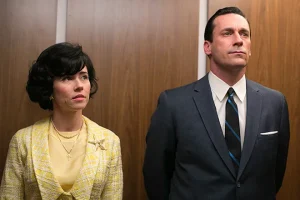
Don conducts an affair with Sylvia Rosen, his neighbor's wife. The affair escalates into a period of deliberate degradation that Don engineers with focused intention. The show treats this not as a revelation of hidden monstrousness but as a continuation of its sustained argument: people who have managed the surface for long enough require extreme pressure to feel anything beneath it. The ordinary textures of life no longer supply what he needs. He has made himself into a person who cannot locate his own interior without a crisis to illuminate it.
The Merger and Its Cost
Ted Chaough's agency merges with SCDP to form Sterling Cooper and Partners. The merger introduces creative tensions and a genuine mutual admiration between Don and Ted — a warmth the show depicts as real before depicting Don destroying it. Don throws Ted's Sunkist presentation. He maneuvers Ted out of New York and into the Los Angeles office. The competitive instinct and the self-destruction operate together. Don wins. Winning costs him more than losing would have.
The Confession That Ends the Season
In the season finale, Don tours the deteriorated Lower East Side building where Dick Whitman grew up. He tells the assembled creative team the truth about his childhood. He believes, in the moment, that this transparency is a breakthrough. The agency's partners interpret it correctly as a crisis. They vote to place Don on indefinite leave. This is the closest the show comes to institutional acknowledgment that the performance has been failing in ways that internal management can no longer contain.
Season Seven: "Time Zones" — The Long Landing
Return and Restriction
The final season — split across 2014 and 2015 — is the show's most patient. It lets things be what they are without the pressure of revelation. Don returns to the agency on restricted terms. He attempts sobriety with the craft and insufficient conviction of a person who can see his own pattern clearly and cannot stop executing it. Peggy starts the final season in a relationship going nowhere and a career headed somewhere she can't yet identify — the destination legible only in retrospect, the way careers always are.
The McCann Acquisition
McCann Erickson acquires the agency. The show treats this as the death of something — the particular, imperfect, human-scaled institution these characters have been building and fighting over and occasionally sacrificing themselves for since Season Three. Roger Sterling comes adrift without it. Bert Cooper dies quietly in his office, watching the moon landing. He appears afterward to Don in a musical hallucination — either the show's most tonally audacious choice or a strange detour, depending on your temperament. Either way, it functions as acknowledgment: the world Bert Cooper represented is genuinely gone and will not return.
Joan at McCann
Joan departs McCann after a sexual harassment encounter with a client that the McCann partners handle with the institutional indifference she has spent a decade learning to expect. She forms her own production company. The structural impediments appear immediately — the difficulty of being taken seriously, the assumption that her competence is support rather than leadership, the exhaustion of a woman who has spent her entire career being valuable in ways the institution refuses to price correctly. She succeeds anyway. The success is real. It costs exactly as much as it should not have to cost.
Peggy's Entrance and What It Means
Peggy arrives at McCann in the final episode with sunglasses and a cigarette and the rolling gait of a person who has decided, finally and without apology, to take up the space she has earned. That entrance is precisely choreographed and completely right. Everything the show has shown you — about who she was, what it cost, what she built from those costs — arrives in that walk. It answers every question the series has been asking about what it takes a woman to build authority in a world designed without her authority in mind.
Don and the Final Image
Don drives west. He arrives at a California retreat. He sits in a circle of strangers listening to a man named Leonard describe the feeling of being inside a refrigerator — visible through the glass, present in the house, but never selected, never picked up and held. Don weeps. Not with the controlled, managed emotion of seven seasons of performance. He weeps with the completeness of a person who has just heard his biography delivered by a stranger.
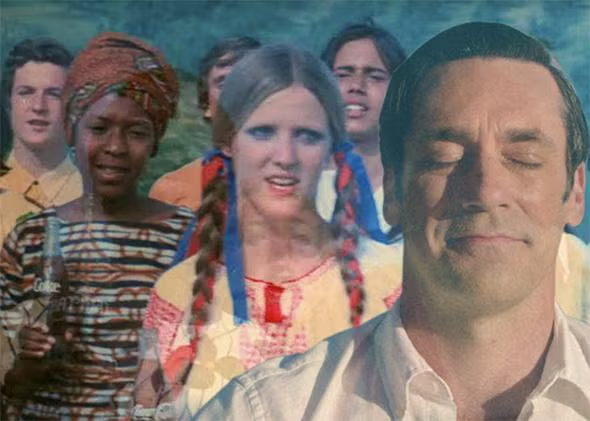
Then: Don meditating on a California hillside. A smile breaks across his face. The cut comes immediately, without warning — to the 1971 Coca-Cola "Hilltop" commercial. Children on a hillside. They want to buy the world a Coke. The show does not confirm Don wrote this campaign after returning from California. It doesn't need to. He processed his breakdown, his road trip, his moment of genuine human contact with a stranger's grief. Then he converted it. The machine metabolizes everything. The campaign continues.
The smile was real. It was also the setup for the line. The show will not resolve that for you. That is the work it leaves you with. For the finance archetypes that inherited the same operating logic in contemporary prestige television, see our Industry Season 4 hub. For how the same wealth and power anxieties played out one generation earlier in an old-money dynasty, see our Succession cluster.
The Actors Who Made This World Real
Why the Casting Matters
A show of this ambition succeeds or fails in the bodies and voices and faces asked to inhabit it. Mad Men assembled, across seven seasons, a cast whose collective work constitutes one of the most sustained achievements in American acting. They gave the characters a reality that writing alone couldn't produce. Each actor carried, for up to a decade, the weight of a person whose interior life the show reveals only through behavior, omission, and the grammar of what goes unsaid — among the most technically demanding things an actor can be asked to do. In Mad Men, it never fails.
Jon Hamm as Don Draper
Jon Hamm had nearly quit acting before Mad Men. He was 36 when the show premiered. He had spent years in Los Angeles doing small roles, working as a set dresser, rebuilding after his father's death when he was twenty left him without the financial and emotional infrastructure most young actors rely on. Don Draper required him to be extraordinarily present while appearing to feel almost nothing — a technical demand that most actors, given the choice, would decline. Hamm made it the defining performance of his generation.
Jon Hamm: origin story, net worth, and what came after Don Draper →
Elisabeth Moss as Peggy Olson
Elisabeth Moss navigated the transition from child actress to adult lead with the methodical patience the show would eventually ask Peggy to perform on screen. Her earlier work on The West Wing as President Bartlet's youngest daughter had given her a decade of serious dramatic training in a show that demanded precision. Mad Men demanded something harder: the sustained portrayal of a becoming, a character who changes in increments too small to notice in any individual episode but whose transformation across seven seasons constitutes the series' moral arc.
Elisabeth Moss: from Peggy Olson to industry titan — the career she built →
Christina Hendricks as Joan Holloway
Christina Hendricks spent years in guest roles before Joan — the specific purgatory of an actress the industry reads as only one thing before she demonstrates otherwise. Joan required her to make operational intelligence and social fluency feel simultaneous and inseparable, to play a woman who runs every room she enters while holding the posture of someone who merely occupies it. The Jaguar sequence demanded she play a decision of devastating moral complexity with a surface of perfect control. She made both things true at once.
Christina Hendricks: what Joan Holloway's decade taught the actress who played her →
January Jones as Betty Draper
January Jones faced an early industry verdict that she couldn't act. She used it as fuel in the way that accurate critics of people with genuine ability often inadvertently do — by producing exactly the anger and focus that the ability required to surface. Betty is the most difficult role on the show to make sympathetic, because the show asks you to understand her through a surface of deliberate coldness that repels easy empathy. Jones made her sympathetic anyway — by playing the coldness as discipline rather than indifference, as the controlled surface of a person who feels too much in a world that won't allow her to feel anything at all.
John Slattery as Roger Sterling
John Slattery arrived at Mad Men as a theater actor of fifteen years — serious, technically grounded, widely respected, and largely invisible to the television audience. Roger Sterling gave him the role every actor over fifty now covets: a man for whom charm has become so fully internalized that it operates as a survival mechanism rather than a social tool, whose surface ease conceals, imperfectly and increasingly, a growing awareness that the world he was built for has stopped requiring him. Slattery also directed seven episodes of the series while starring in it, a dual commitment that speaks to the seriousness of his engagement with the material.
John Slattery: Roger Sterling's silver hair and the career built on the right side of every scene →
Vincent Kartheiser as Pete Campbell
Vincent Kartheiser began his career as a child actor — Alaska in 1996, a handful of other projects — and spent his young adult years rebuilding an identity as a serious dramatic actor in the way that child actors who survive their childhoods occasionally do: with the focused determination of someone who has already lost one career and won't lose another. Pete Campbell is the show's most technically demanding role in one specific sense: he must be unlikable in ways the audience recognizes as correct while remaining watchable for seven seasons. Kartheiser achieved this without tricks — through the simple discipline of playing Pete's grievances as though they were legitimate, which the show ultimately argues they partly were.
Vincent Kartheiser: Pete Campbell's climb and the actor who made it watchable →
Why Mad Men Remains the Most Important Show on Television
What the Show Actually Documented
Mad Men ended in 2015. It has not, in any meaningful sense, stopped. Every year someone writes the essay about why it is more relevant now than when it aired. Every year they are correct. That consistency is itself data.
The structures the show depicted are not historical artifacts. They are the present in different clothes. The specific violence done by gender roles — to Betty, to Joan, to Peggy, to every woman who occupied the outer ring of that building — did not resolve when the decade ended. The mechanisms reconfigured. The language updated. The operating logic persisted.
The Decade the Show Covers and Why It Matters Now
The 1960s Mad Men documents span the period when America's foundational stories about itself began failing under the weight of their own internal contradictions. The gap between the performance and the underlying reality grew too wide for advertising alone to manage. The Civil Rights Movement named the gap. The women's movement named it. Vietnam named it with a finality that left no available response except the kind of grief that either transforms or destroys — and in the show's world, as in the actual world, it did both, to different people, in different proportions, with consequences that have not fully resolved.
The Smile and What It Means
Matthew Weiner built, across ninety-two episodes, a record — not a judgment, not a corrective, but a record — of what it actually looked like to be inside a particular arrangement of power, desire, self-deception, and genuine creative ambition. His characters don't fully understand they're inside it. They go to work, drink their drink, make the pitch, go home to the house they built on the story they told. They are simultaneously the best at what they do and unable to say, clearly, what they are.
The smile in the final image is real. The commercial is also real. Mad Men will not resolve that for you. That is the work it leaves behind. That is the work.
Read the full cast profiles: Jon Hamm, Elisabeth Moss, Christina Hendricks, January Jones, John Slattery, Vincent Kartheiser. Return to our Culture and Power hub for the full landscape.
Related Reading
Some publications cover television. We cover what television understands about the world before the world is ready to hear it. Social Life Magazine has been the record of culture, wealth, and power for 23 years. You are here because you already know that record matters.
If your brand, business, or story belongs in this conversation, we want to hear from you. Editorial features, strategic placements, and partnerships begin at sociallifemagazine.com/contact.
Ready to control your own narrative? Submit a paid feature and reach 25,000 print readers per summer issue, plus our full digital audience, at sociallifemagazine.com/submit-a-paid-feature.
Our email list reaches 82,000 subscribers — the people for whom culture is not a leisure category but an operating environment. Join the list here.
Polo Hamptons returns for summer 2026. Two dates. A room that already knows what it is. Sponsorship and hospitality packages at polohamptons.com.
Five summer issues. Placed where the conversation actually happens. Print subscriptions at sociallifemagazine.com/subscription.
Independent editorial takes real resources. If this kind of journalism matters to you, a $5 contribution keeps Social Life in print and online. Donate here.
Author

Written by
Recent Posts

A Real Gift: How La Scala Found Its Community in New York Through the Teatro alla Scala Association of America (TASAA)

He Sold His Company, Got Everything He Wanted, but Lost His Purpose

OUT OF LINE

A Couple Hundred Million Felt Like Real Money, Until He Met the Multi-Billionaires

He’s Got Millions. He Still Flinches at the Bill.
Categories
- Art
- Articles
- Business of Luxury
- Celebrities
- Culture
- Entertainment
- Events
- Faces of Summer 2026
- Fashion
- Fashion & Style
- Featured
- Finance
- Food, Spirits, Wine
- Hamptons
- Hamptons Celebrities
- Health
- Health & Beauty
- Lifestyle
- Luxury Lifestyle
- Press
- Profiles
- Real Estate
- Technology
- The Chronicles
- Travel
- Uncategorized
- Weddings