
The $100M Architecture Built On Discipline
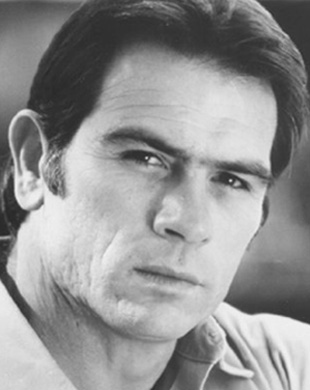
By early 2026, Tommy Lee Jones net worth had compounded to approximately $100 million per Celebrity Net Worth. His fortune is anchored across multiple holdings. Specifically, a 3,000-acre cattle ranch in San Saba County, Texas. Furthermore, a polo property at the Santa Maria Polo Club in Buenos Aires. Notably, a 50-year filmography that includes JFK, The Fugitive, Lonesome Dove, Men in Black, No Country for Old Men, and Lincoln. He won the Best Supporting Actor Oscar in 1994 for the role of U.S. Marshal Sam Gerard. Furthermore, he has been Oscar-nominated three additional times. The discipline that built the catalog is architecture.
The San Saba Kid Whose Parents Married And Divorced Twice
Thomas Lee Jones was born September 15, 1946, in San Saba, Texas. His father, Clyde Jones, worked as a cowboy and oil field laborer. His mother, Lucille Marie Jones, worked as a police officer, then later as a schoolteacher and beauty shop owner. The Tommy Lee Jones net worth at age zero was nominally precarious through his parents’ inconsistent income and structurally complicated through their on-and-off marriage that would dissolve and reconstitute twice across his early years.
The Cherokee And Welsh Heritage
His Cherokee heritage anchored one side of the family ledger. His Welsh and English ancestry anchored the other. The household moved across West Texas through his early childhood as his father followed oil-field work between Midland, Odessa, and various smaller towns whose names did not appear in any subsequent Hollywood biographical sketch. Specifically, the rotational pattern of small-town Texas oil-field life produced the kind of geographic restlessness that would later define his approach to property holdings.
By the time he reached high school, the family had settled in Midland. He attended Robert E. Lee High School. Subsequently, he transferred to St. Mark’s School of Texas in Dallas on scholarship, finishing his secondary education at one of the most academically rigorous private day schools in the American Southwest. Notably, the St. Mark’s pipeline to elite American universities had been established for decades, and Jones leveraged it directly into Harvard’s 1965 admissions class.
What the Texas childhood taught him was the lesson he would later apply with surgical precision to every project negotiation. Geography was not destiny. Furthermore, family instability was not character. The choice he made to leave Texas for Harvard at 18 was the choice that defined his career architecture. Subsequently, the choice he made to return to Texas in middle age defined the rest of his estate.
Harvard, Al Gore, And The Senior Thesis On Flannery O’Connor
Jones entered Harvard College in 1965 on need-based financial aid. He played offensive guard on the football team for four years. He roomed in Dunster House with two future-significant figures: Al Gore, who would later become Vice President of the United States, and Bob Somerby, who would later edit the political-media criticism site The Daily Howler. The three roommates remained close across the subsequent five decades.
His senior thesis examined the role of Catholicism in the works of Flannery O’Connor, the Georgia novelist whose Southern Gothic short stories had defined American Catholic literary fiction across the 1950s. Specifically, the thesis required Jones to analyze O’Connor’s theological engagement with Catholic doctrine in a Protestant region. Notably, the choice of subject matter signaled exactly the kind of intellectual range that would later distinguish him from every other working-class Texan who tried to break into American cinema.
He graduated cum laude in 1969 with a Bachelor of Arts in English Literature. Few working actors of his generation arrived in New York with comparable academic credentials. Furthermore, the Harvard signal carried structural consequences across his subsequent career. Casting directors who might otherwise have typecast him as pure Texas-rancher material recognized the intellectual depth in his auditions. Consequently, the Tommy Lee Jones net worth architecture from this point forward would compound through specific projects. Specifically, projects that required exactly that combination of physical presence and intellectual range.
The Love Story Coincidence
His friendship with Gore proved consequential beyond personal correspondence. Specifically, the novelist Erich Segal had been on sabbatical at Harvard during Jones’s undergraduate years. Subsequently, Segal told interviewers that he had based the character of Oliver Barrett IV in Love Story on aspects of both Jones and Gore. Jones would later play a Harvard student in the 1970 film adaptation of Segal’s novel, the actual screen role drawing on the real-life observations Segal had made during the period when Jones lived in Dunster House.
The Broadway Years And The One Life To Live Apprenticeship
Jones moved to New York City after graduation in 1969. He made his Broadway debut that same year in A Patriot for Me, performing in supporting roles across the production. Subsequently, in 1971 he returned to Broadway in Abe Burrows’s Four on a Garden, sharing the stage with Carol Channing and Sid Caesar.
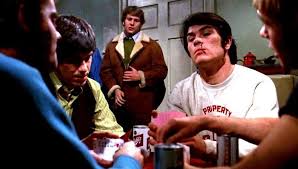
His first major film role came in Love Story in 1970. He played a Harvard student in the Erich Segal adaptation that grossed $136 million on a $2.2 million budget, becoming the highest-grossing film of 1970 and a permanent fixture in American romantic-cinema canon. His compensation was approximately scale wages for the supporting role. Furthermore, the visibility the film generated would shape his subsequent television opportunities across the 1971-1975 period.
From 1971 through 1975, Jones portrayed Dr. Mark Toland on the ABC daytime soap opera One Life to Live. The role required him to perform consistent television work across four years of weekly production schedules. Specifically, the soap opera apprenticeship taught him the kind of professional discipline that would later define his entire approach to film performance. He learned to deliver dramatic material under tight production constraints. Furthermore, he developed the ability to repeat takes without losing performance quality across exhausting daily schedules.
What the early career taught him was the same lesson Donald Sutherland’s pre-fame BBC television apprenticeship had taught a generation earlier. Television work paid steadily. Furthermore, it built craft discipline that prestige film projects could not provide. The Tommy Lee Jones net worth across the 1970s grew slowly but consistently, anchored by approximately $50,000 to $100,000 in cumulative annual income across his combined Broadway and soap opera work.
Coal Miner’s Daughter And The Lonesome Dove Inflection
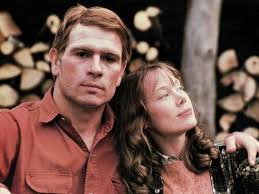
Michael Apted cast Jones as Mooney Lynn opposite Sissy Spacek in Coal Miner’s Daughter in 1980. The film was a biographical drama about country music star Loretta Lynn. Spacek won the Academy Award for Best Actress for her performance. Jones earned the kind of supporting-role visibility that would later compound across his subsequent prestige work.
His performance as Texas Ranger Woodrow F. Call in the 1989 CBS miniseries Lonesome Dove became the inflection point of his entire career architecture. The Larry McMurtry adaptation ran across four nights of broadcast television, drew approximately 26 million viewers per episode, and earned Jones a Primetime Emmy Award nomination for Outstanding Lead Actor in a Miniseries. The miniseries has since been ranked among the greatest American television productions of the 20th century by multiple critical surveys.
His compensation for Lonesome Dove was approximately $250,000 across the four-month production schedule. The role placed him alongside Robert Duvall in a partnership that anchored the entire production. Furthermore, the Lonesome Dove visibility produced the casting opportunities that would define his subsequent decade. Oliver Stone offered him Clay Shaw in JFK within 18 months of the miniseries broadcast.
What Lonesome Dove established was the cultural authority that would later distinguish his work from every other 1980s character actor of his cohort. Specifically, the miniseries had positioned him as the moral center of an American Western epic that rivaled the genre’s cinematic peaks. The Tommy Lee Jones net worth from this point forward compounded faster than during any equivalent period of his earlier career.
JFK And The First Oscar Nomination
Oliver Stone cast Jones as Clay Shaw in JFK in 1991. The role was the most consequential supporting performance in the largest prestige political drama of the early 1990s. The complete production architecture of that performance is documented in the JFK Cast hub. Notably, Jones was originally cast in a different role in an earlier draft of the script that subsequently got cut, then recast as Shaw two months before principal photography began.
His preparation defined the kind of methodical character work that distinguished his entire register of acting. Specifically, Jones interviewed Garrison on three separate occasions. Furthermore, he talked to Shaw’s surviving New Orleans associates and studied trial transcripts and prison letters that had not been published outside legal scholarship. He arrived on set with a complete portrait of a man who had been simultaneously reviled by the prosecution and defended by his city’s social establishment.
The Academy nominated Jones for Best Supporting Actor at the 64th ceremony in March 1992. He did not win. Specifically, he lost to Jack Palance for City Slickers, but the nomination converted his profile from prestige character actor to leading-man candidate within 18 months. His JFK compensation was approximately $1.5 million across the production schedule, the highest single-project payout of his career to that point.
What JFK established was the multi-register working pattern that Joe Pesci’s parallel cast member status demonstrated alongside him. Both actors had used the Stone production to extend their dramatic range beyond the typecasting that had defined their breakthroughs. Pesci built outward from gangster to political-thriller. Jones built outward from Western to political-thriller. The Tommy Lee Jones net worth at this point had reached approximately $5 million in cumulative working-career earnings.
The Fugitive And The 1994 Best Supporting Actor Oscar
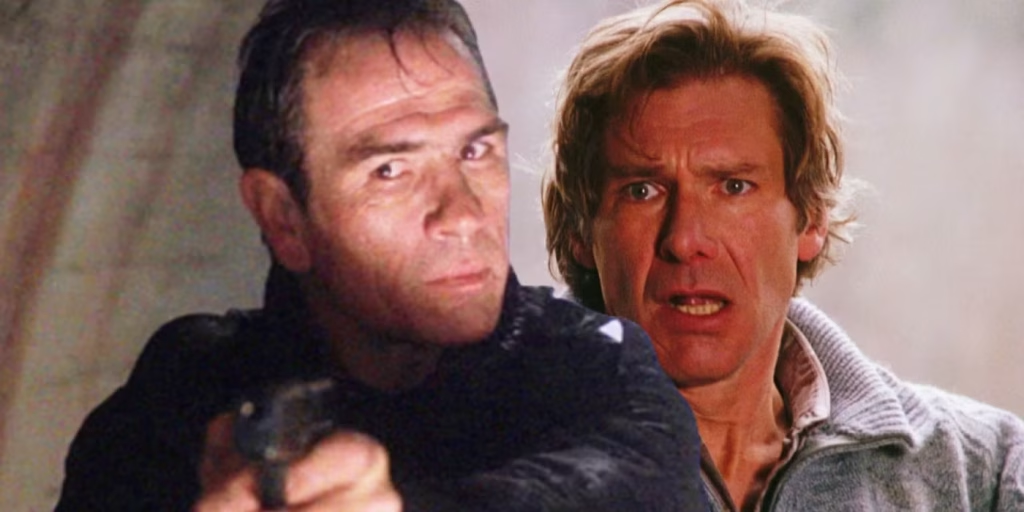
Andrew Davis cast Jones as U.S. Marshal Samuel Gerard in The Fugitive in 1993. The role required Jones to play the federal lawman whose obsessive pursuit of Harrison Ford’s wrongly accused doctor anchored the entire 130-minute thriller. His compensation was approximately $5 million across the production schedule.
The Fugitive grossed $369 million worldwide on a $44 million budget. The film became one of the largest commercial hits of 1993 and earned seven Academy Award nominations including Best Picture. Jones won the Academy Award for Best Supporting Actor at the 66th ceremony in March 1994. Notably, his acceptance speech was characteristically brief and characteristically dry. The Oscar restored his industry-standing position to the top tier of working American character actors.
His post-Fugitive market value reached approximately $10 to $15 million per picture across the next decade. Subsequently, his work in Natural Born Killers (1994), Volcano (1997), Men in Black (1997), Men in Black II (2002), and The Hunted (2003) all benefited directly from the Oscar’s institutional validation. The Men in Black franchise alone produced approximately $40 million in cumulative compensation across his three installments.
What the Fugitive Oscar proved structurally was the same lesson Sean Connery’s Untouchables Oscar had proven six years earlier. Veteran-supporting-actor recognition could reset a working actor’s market value into permanent leading-man territory. Connery hit that inflection point at 56 with Officer Jim Malone. Jones hit it at 47 with Sam Gerard. Both actors used their Oscars to negotiate $10-million-per-picture compensation across the subsequent decade.
No Country For Old Men And The $15 Million Coen Brothers Fee
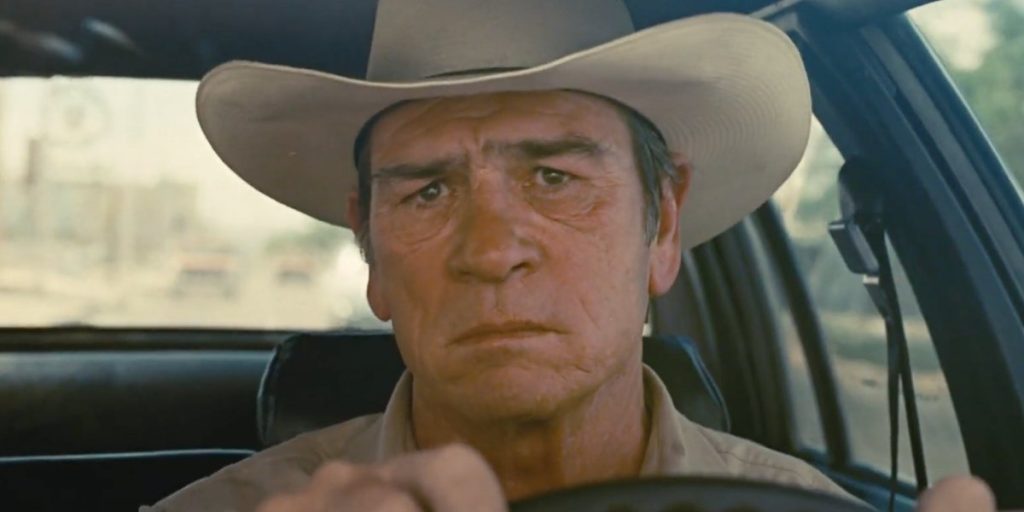
Joel and Ethan Coen cast Jones as Sheriff Ed Tom Bell in No Country for Old Men in 2007. The role required Jones to deliver the film’s central narrative voice. Specifically, the Cormac McCarthy adaptation would win Best Picture, Best Director, and Best Adapted Screenplay at the 80th Academy Awards. Furthermore, Javier Bardem won Best Supporting Actor in the same ceremony. His compensation reached approximately $15 million for the production.
His performance as Sheriff Bell anchored the moral architecture of the entire film. Specifically, the closing monologue delivered by Jones over Carter Burwell’s score became one of the most-quoted cinematic moments of the late 2000s. Specifically, that film grossed $171 million worldwide on a $25 million budget. Notably, the Coen Brothers’ decision to cast Jones rather than the more obviously commercial leading-man options reflected the same recognition that Oliver Stone had made in 1991. Furthermore, Andrew Davis had made the same recognition in 1993.
That same year, Jones directed and starred in In the Valley of Elah, the Iraq War drama for which he earned his third Academy Award nomination for Best Actor. The Iraq War drama paid him approximately $5 million plus directing fees. Furthermore, the dual recognition across both No Country for Old Men and In the Valley of Elah at the 2007 awards season placed him in the top tier of working American actors at age 61.
His subsequent Lincoln performance in 2012 earned him his fourth Academy Award nomination for Best Supporting Actor. He played Congressman Thaddeus Stevens in the Steven Spielberg historical drama. The Lincoln compensation was approximately $4 million plus participation. Notably, the role anchored his late-career prestige reputation across the 2010s, and the Tommy Lee Jones net worth from this point forward continued compounding through selective project choices rather than commercial volume.
The 3,000-Acre San Saba Cattle Ranch
Jones acquired his San Saba County, Texas cattle ranch across the late 1980s and early 1990s. The property eventually expanded to approximately 3,000 acres of working ranchland in his birthplace county. Specifically, the operation runs as a genuine cattle business rather than a celebrity vanity project, and the ranching income generates ongoing revenue that compounds outside his acting compensation.
The primary residence on the San Saba property is reportedly modest by celebrity standards. Specifically, it features four bedrooms and two bathrooms across a relatively traditional Texas ranch-house footprint. The choice reflects the same logic that had shaped his entire residential architecture across his adult life. He prioritized working land over trophy real estate. Furthermore, he prioritized agricultural utility over architectural display.
His Wellington, Florida polo estate represented the only significant exception to that pattern. He purchased separate parcels in 2002 for approximately $4.62 million and combined them into a 50-acre equestrian estate featuring a regulation polo field, 48 horse stalls, an 11,000-square-foot main residence, and miles of horse trails. He listed the property in 2013 for $26.75 million, eventually selling in 2019 for approximately $11.5 million. The transaction generated approximately $7 million in capital gains across his 17-year holding period before tax considerations.
His Buenos Aires polo property at the Santa Maria Polo Club anchors his international real estate position. Specifically, the Argentine equestrian community has been one of the most exclusive polo destinations in the world for decades, and Jones’s house there reflects his lifelong commitment to the sport. He has bred and trained polo ponies on his Texas ranch. Furthermore, he won the U.S. Open polo championship as part of his team during one of his most successful playing seasons.
The Polo Career And The San Antonio Spurs Loyalty
Jones is a serious polo player. He has held a 3-goal handicap across multiple competitive seasons, a rating that places him among the most accomplished American amateur polo players of his generation. Furthermore, he has supported the Harvard Polo Club financially and through his ongoing membership in the Polo Training Foundation.
His polo participation runs across three continents. Specifically, the Texas ranch breeds and trains polo ponies. The Argentine property hosts him for the South American polo season. Notably, the Florida estate hosted him during the U.S. winter polo circuit until he sold the property in 2019. The pattern reflects the same disciplined geographic distribution that defined his entire approach to property ownership.
His support of the San Antonio Spurs has anchored his domestic sports loyalty for decades. He attends Spurs home games regularly when his production schedule permits. Specifically, he is often seen courtside at Spurs games during the NBA regular season. The choice reflects his Terrell Hills, Texas residency, which places him in the broader San Antonio metropolitan area rather than in the conventional Hollywood social orbit.
At the 2000 Democratic National Convention, Jones delivered the nominating speech for Al Gore. Specifically, his old Harvard roommate had secured the Democratic Party’s nomination for President of the United States. Furthermore, the speech reflected the kind of personal loyalty that had defined his post-Harvard friendships across three decades. The political endorsement carried structural consequences for his public profile, but the friendship was always the primary motivation.
The January 2026 Loss
On January 1, 2026, Tommy Lee Jones’s 34-year-old daughter Victoria was found dead at the Fairmont San Francisco hotel from an apparent drug overdose. Subsequently, reports from TMZ noted that she had been pronounced dead at the scene following a medical emergency. The investigation by the Chief Medical Examiner remains ongoing. Victoria had previously appeared in supporting roles in Men in Black II and her father’s 2005 directorial work The Three Burials of Melquiades Estrada.
Jones has not made extensive public statements about the loss. The privacy reflects the same characteristic restraint that had defined his entire approach to family architecture across five decades. Specifically, his marriages and his children have remained largely outside the public-facing portion of his biography, and the January 2026 tragedy has not changed that pattern. His surviving son Austin Leonard Jones and his current wife Dawn Laurel-Jones anchor the surviving family architecture.
The loss has produced reflective coverage across multiple outlets discussing how families in the public eye navigate grief. Notably, the conversation has touched on substance abuse and mental health questions that extend far beyond any single family circumstance. Jones’s silence has carried more weight than commentary would have, and his ongoing work commitments have continued without public disruption.
The Real Tommy Lee Jones Net Worth Math In 2026
Celebrity Net Worth lists the Tommy Lee Jones net worth at $100 million as of early 2026. Furthermore, multiple secondary sources place the figure in the $100 million to $120 million range when accounting for his cattle ranch valuation, his Argentine property, his ongoing residual income, and his selective late-career project compensation.
The compositional breakdown looks roughly like this. Specifically, his career acting earnings across 50 years of working-actor compensation generated approximately $80 to $100 million in cumulative gross before agent fees, manager fees, and taxes. Real estate represents approximately $15 to $20 million across the San Saba ranch, the Buenos Aires polo property, and his other holdings. Catalog residuals from Lonesome Dove, JFK, The Fugitive, the Men in Black franchise, No Country for Old Men, and Lincoln generate estimated annual income of $2 to $4 million for ongoing distribution.
His Japanese coffee endorsement deals across multiple decades produced one of the most consistent secondary income streams of his career. Specifically, Jones has appeared in advertisements for BOSS Coffee in Japan since 2006, and the long-term relationship has compounded into approximately $10 million in cumulative endorsement compensation across nearly two decades. The arrangement reflects the same selective approach that defined his broader project choices. He took endorsement work only when the brand fit and the relationship lasted.
His structure echoes the patterns documented in Social Life Magazine’s celebrity net worth rankings 2026. Specifically, his holdings concentrate heavily in working agricultural land and residual-income positions rather than in trophy real estate or speculative investments. Furthermore, the conservative diversification has insulated his portfolio across multiple decades of industry change. Notably, the discipline that built the catalog has been the discipline that protected the estate.
What He Built That No Oil Field Could Take Back
The catalog will outlast every Coen Brothers retrospective, every Men in Black reboot rumor, every San Antonio Spurs championship season, and every estate-planning consultation. Specifically, JFK will play forever. The Fugitive will play forever. Lonesome Dove will play forever. No Country for Old Men will play forever. Lincoln will play forever. Furthermore, his catalog from the 1990-2012 peak years produced one of the most concentrated prestige-cinema accumulations of any working American actor of his generation.
His willingness to leave Texas for Harvard at 18, return to Texas at midlife, and build a working cattle ranch alongside an Oscar-winning acting career became the Jones signature across six decades. He took the Love Story scale fee. His One Life to Live soap opera apprenticeship paid steadily. Lonesome Dove’s inflection compounded into JFK and The Fugitive Oscar within four years. The cumulative consequence of those choices was a career that earned him approximately $100 million while keeping his daily life anchored in San Saba County rather than in Beverly Hills.
Most actors at 79 are managing decline. Specifically, Jones at 79 is operating a 3,000-acre cattle ranch, breeding polo ponies, supporting the San Antonio Spurs, mourning a daughter, and selectively choosing late-career projects that interest him. Notably, the Tommy Lee Jones net worth at $100 million on the public ledger and $120 million on the actual ledger represents only the financial residue. Specifically, the residue of a career that mattered to American cinema in ways the San Saba accountants could not measure.
The CassWorld Take
For Brands Reading Between The Lines
A fish does not notice the water. A reader does not notice the architecture. That is the entire point. Furthermore, that is the entire opportunity for the brand founder, fund manager, or fashion house creative director who has just read this far. Consequently, the reader is, without having fully realized it yet, about to scroll down and click one of the following links.
Are you a brand, a founder, a creative director, or an in-house marketing lead who has read this far? Moreover, would you like to be considered for an editorial feature in Social Life Magazine’s print or digital ecosystem? The editorial team reviews brand submissions year-round. Reach out via the Social Life editorial contact page.
Submit A Paid Feature
Are you a Texas spirits portfolio, a luxury Western menswear house, or a polo-adjacent equestrian brand? Specifically, the kind that recognizes a Cormac McCarthy aesthetic when they see one? Then the Submit A Paid Feature page is the fastest entry point. Furthermore, our editors build the placement to fit your audience, not ours.
The 82,000-Reader Email List
Join the 82,000+ readers who receive the Social Life Magazine email digest weekly. The list reaches the affluent New York and Out East audience that drives luxury brand purchase decisions across beauty, spirits, hospitality, finance, and fashion. Sign up via the Social Life Magazine email signup form.
Polo Hamptons 2026
Some brands are ready to be present in front of the right demographic. Specifically, the readers who quote Sheriff Ed Tom Bell’s closing monologue at dinner parties. Notably, the kind who consider No Country for Old Men a foundational text. Consequently, Polo Hamptons 2026 is the marquee summer activation for that audience. Title sponsor BMW returns for its eighth consecutive year. Tickets, cabanas, and remaining sponsorship packages are available now.
Print Subscription
Subscribe to the print edition of Social Life Magazine and hold 23 years of Out East cultural authority in your hands. Five summer issues delivered Memorial Day through Labor Day, plus the Fall and Winter editions reaching Upper East Side doorman buildings. Print subscriptions are available at the Social Life subscription page.
Support Independent Journalism
If this article sharpened your thinking, consider supporting independent luxury journalism. Donate $5 and keep the signal clean. Buy us a coffee here.
The Tommy Lee Jones net worth story is a rare 80-year career document. Specifically, the San Saba kid whose parents married twice and divorced twice. Furthermore, the same kid roomed with a future Vice President in Dunster House. Notably, he wrote his senior thesis on Flannery O’Connor. Consequently, he quietly built a $100 million estate across a 3,000-acre Texas ranch and an Argentine polo property. The catalog is the asset and the discipline is the architecture. Print the Tommy Lee Jones net worth architecture. Bookmark this page.
Written by CassWorld. Cass Almendral is Head of Business Development at Social Life Magazine and Co-Founder of Polo Hamptons. Reach editorial at [email protected].
Author

Written by
Recent Posts

Planning an Arizona Road Trip? Practical Details to Handle Before You Leave

Short Homecoming Dresses That Feel Polished, Not Overdone
Men’s Health After 40: Important Changes to Pay Attention To
What You Need to Know About Spray Tanning

Simple Ways to Upgrade Your Summer Drink Routine
Categories
- Art
- Articles
- Business of Luxury
- Celebrities
- Culture
- Entertainment
- Events
- Faces of Summer 2026
- Fashion
- Fashion & Style
- Featured
- Finance
- Food, Spirits, Wine
- Hamptons
- Hamptons Celebrities
- Health
- Health & Beauty
- Lifestyle
- Luxury Lifestyle
- Press
- Profiles
- Real Estate
- Technology
- The Chronicles
- Travel
- Uncategorized
- Weddings