
There is a moment in the third summer that does not happen in the first or second. A reader encounters a brand in a Social Life Magazine summer issue and does not register it as a brand she is learning about. She registers it as a brand that is always here in the summer. It is part of the summer. It belongs.
That shift in categorization — from “brand I have seen before” to “brand that belongs here” — is not produced by a single encounter. No single encounter, however well-executed, produces belonging on its own. Accumulated encounters over time produce it, in the same context, with the same quality of presence. Eventually the brand becomes so consistent a feature of the environment that the reader stops categorizing it as a visitor.
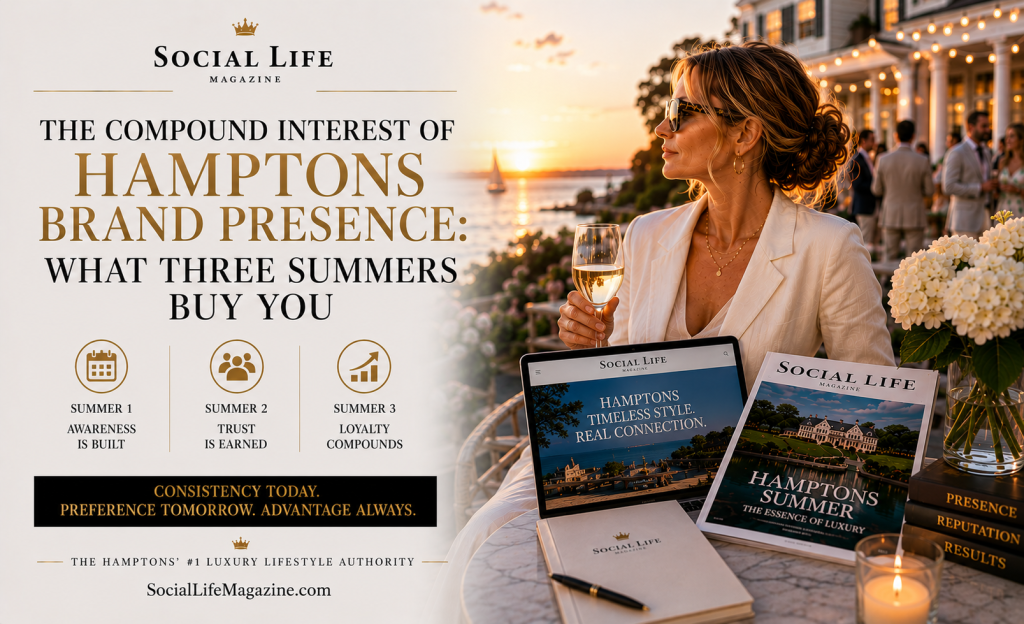
This is the compound interest of Hamptons brand presence. Three summers in Social Life buy not three years of reach. One year of awareness. A year of familiarity. One year of belonging. The third year is categorically different from the first, not just incrementally better.
The Three-Stage Model
Year one is discovery. Year one: the brand is new, or new enough that the reader is forming her first impression of it in this context. The editorial quality of the feature, the publication’s reputation, and the physical format all contribute to the quality of that first impression. The brand enters her awareness in the most favorable context available in the Hamptons market.
Year two is familiarity. The reader encountering a brand for the second summer processes it differently than she did the first time. That initial impression either confirms or updates. The brand is demonstrating, through its continued presence, that it is invested in this market — that it has not appeared once and retreated. That investment signal matters. It is one of the primary mechanisms through which the Hamptons social network upgrades brands from “noticed” to “established.”
Year three is belonging. The reader who has now encountered the brand in two prior summers is not evaluating it. She has already evaluated it, and continued presence has ratified the positive initial impression. She is, at this point, a potential brand advocate. The brand is already part of her mental map of the Hamptons summer. She will mention it in the social contexts where Hamptons recommendations are made.
At the end of year three, the brand holds something no single-season budget can purchaseon at any price: it is expected. It is the brand a reader has not tried but already trusts — because consistent encounters built the prior.
The Math of Compounding
The financial analogy is imprecise but useful. A brand that invests in Social Life Magazine for three consecutive summers is not making three separate annual investments with three separate annual returns. It is making a compounding investment in which each year’s return is partially applied to the following year’s principal.
The first year generates awareness and initial brand equity. Year two generates familiarity. Because the audience is already primed by the first year’s encounter, it increases the conversion rate of any direct marketing the brand runs. The third year generates belonging status, which produces the organic word-of-mouth and social circulation that no paid channel can manufacture.
By year three, the brand’s total return on its Hamptons media investment is not three times its year-one return. It is substantially more, because the compounding returns of familiarity and belonging are worth more than raw awareness. The social network effects that belonging status activates are not available to brands that have not put in the time.
This is the full argument for why Hamptons brand presence should be evaluated as a multi-year investment rather than an annual campaign decision. By year three, the brand that executed consistently holds a position no competitor can replicate in a single season, regardless of budget.
The summer that compounds starts now. Submit at sociallifemagazine.com/submit-a-paid-feature.
Where The Conversation Continues
The compounding model is the full expression of what the irreplaceable asset argument means for brands making multi-year decisions. Full hub: The Irreplaceable Asset: Why 23 Summers of Hamptons Trust Cannot Be Bought on a Media Plan.
Sibling spokes: The Legacy Luxury Paradox and Why Hamptons Print Still Wins.
Pillar: Why Luxury Brands That Ignore Psychology Lose the Hamptons Every Summer.
Author

Written by
Recent Posts

The Hidden Work Behind a Seamless Hotel Weekend
Choosing Scratching Furniture for a British Shorthair
Bile Reflux vs. Acid Reflux: Why Your Antacid Isn’t Working
Annie Watt Photography Agency 20th Anniversary Celebration and Exhibition in NYC | New York, NY

Denise Fraile: Connecting People, Inspiring Purpose
Categories
- Art
- Articles
- Business of Luxury
- Celebrities
- Culture
- Entertainment
- Events
- Faces of Summer 2026
- Fashion
- Fashion & Style
- Featured
- Finance
- Food, Spirits, Wine
- Hamptons
- Hamptons Celebrities
- Health
- Health & Beauty
- Lifestyle
- Luxury Lifestyle
- Press
- Profiles
- Real Estate
- Technology
- The Chronicles
- Travel
- Uncategorized
- Weddings