
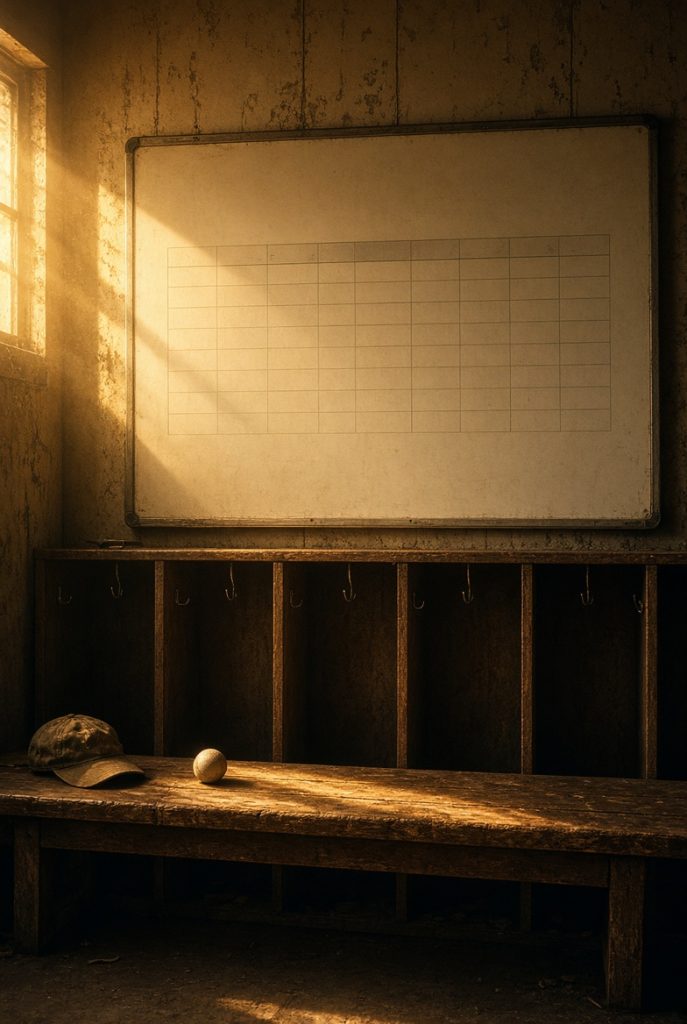
The useful scene is not a home run. It is a cheap first baseman who gets on base.
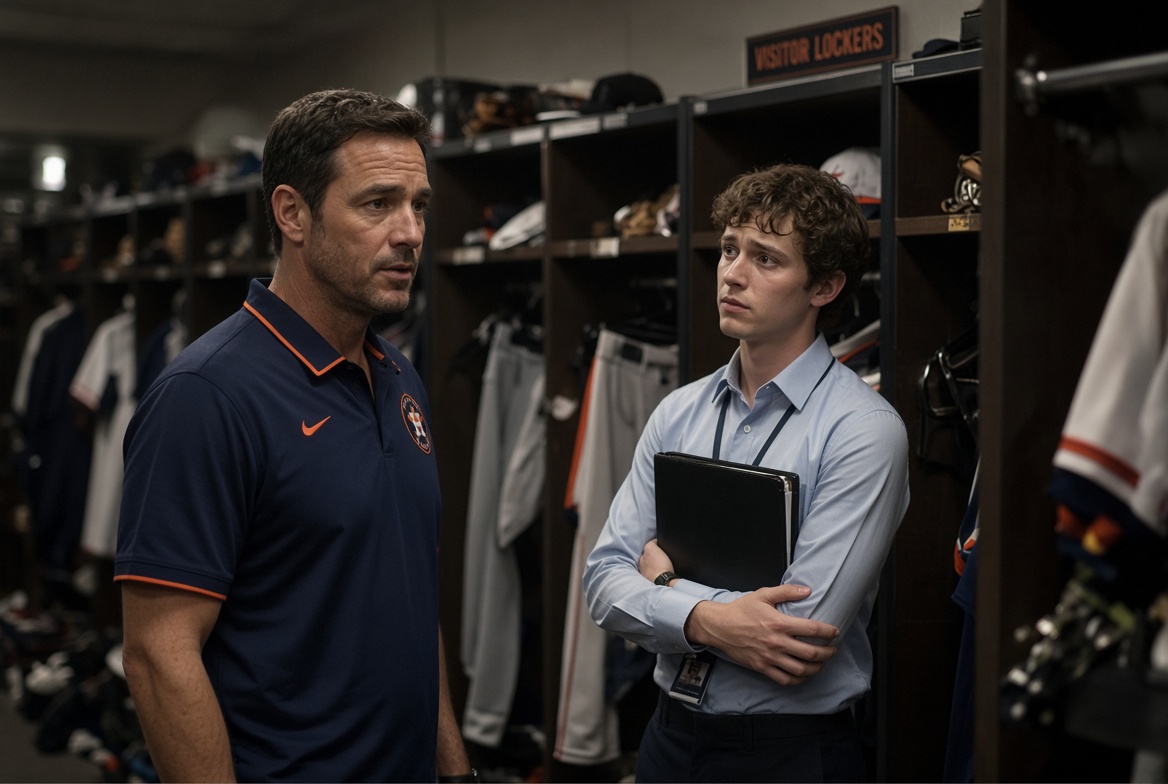

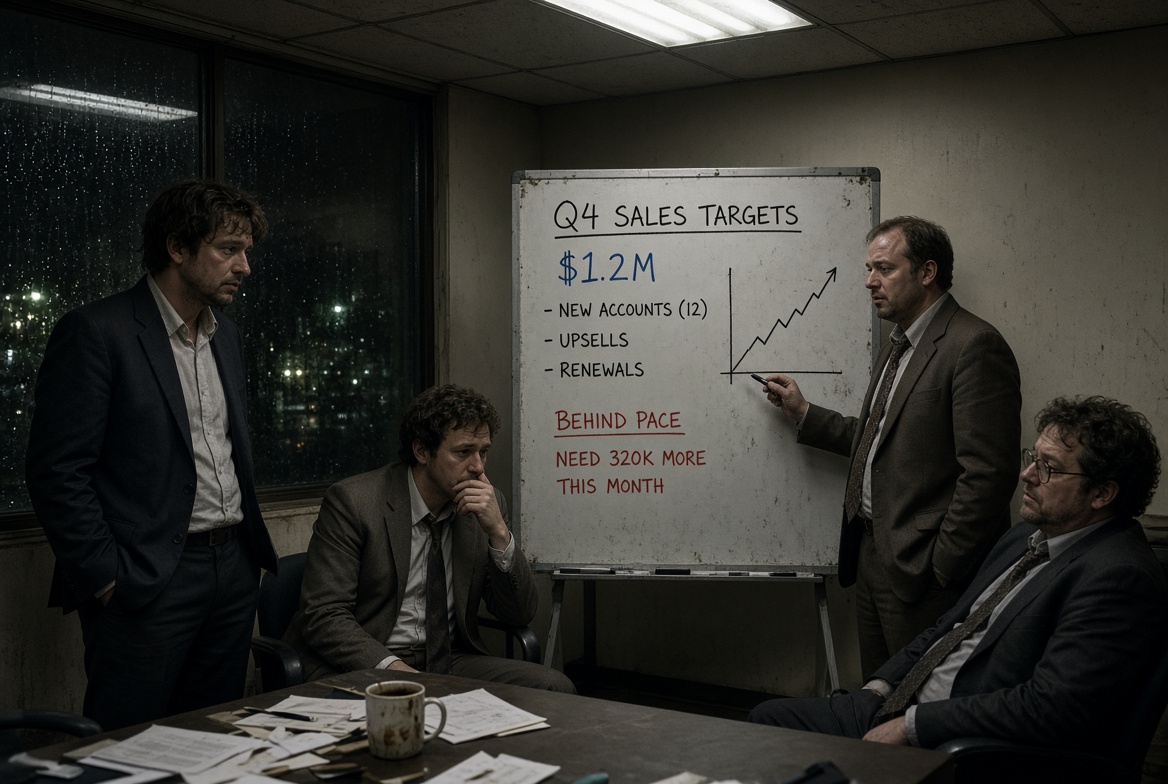
Billy Beane has lost Jason Giambi to the Yankees and cannot replace him with another Giambi. Peter Brand — Jonah Hill’s composite of Paul DePodesta — has a number the scouts will not look at. On-base percentage. Walks. The ugly production the market has mispriced because it does not photograph.
That is why Bennett Miller’s 2011 film sits third in Make It on the Prestige Watchlist, after The Social Network and The Founder. Cap table. Contract. Then the hiring model that ignores how a man looks in a uniform.
Aaron Sorkin wrote two of those three. One is depositions. This one is a draft board. Same brain, different inventory.
What the picture actually is
Michael Lewis published the book in 2003. Rachael Horovitz bought the rights. Steven Zaillian and Sorkin wrote the screenplay from Stan Chervin’s story. Brad Pitt produced it through Plan B and played Beane after Sony nearly killed the picture — Steven Soderbergh’s $60 million documentary-ish version collapsed days before cameras, $10 million already spent. Amy Pascal cut it to $50 million and kept Pitt’s paycheck inside that number.
Sony released it September 23, 2011. Worldwide gross: about $110–113 million. Six Oscar nominations, including Picture, Actor, Supporting Actor for Hill, Adapted Screenplay. Hoffman plays Art Howe, the manager who will not give up the lineup card.
The 2002 Oakland A’s do not win the World Series. They win twenty in a row on a payroll that is a third of New York’s. The movie is honest about the ceiling. A model can buy you a season. It cannot buy you the last week if the other side still has more money.
The scorecard the scouts hide
| Player | What they trust | What the movie is teaching | Steal this |
|---|---|---|---|
| Billy Beane | The undervalued number | Scarcity forces a model | If you cannot buy stars, buy production |
| Peter Brand | Spreadsheets, Yale, no locker-room heat | The quiet hire | Put the analyst in the room, not the hallway |
| Art Howe | The card, the clubhouse | Authority without the model | Title is not strategy |
| The scouts | Body, face, “the good face” | Pedigree as luxury tax | Looks are a market inefficiency |
| Scott Hatteberg | A broken catcher who can take a walk | Reposition the asset | Job title is not the skill |
| The Yankees | Payroll | What the model is up against | Some rooms will always outspend you |
| Pitt / Plan B | The project that almost died | Operator persistence | The company that later sold started as a refusal to fold this script |
Lewis already sits on this site through The Big Short. Same author, same move: find the price the room is too proud to see.
Pedigree is a luxury good
The draft room is every Hamptons hiring committee with better lighting. Someone wants the guy who “looks like a ballplayer.” Someone else has the walk rate. The first person is buying a feeling. The second is buying outs.
Steal this: write the one number that actually predicts the season you are in. Not the number that photographs. Pages sold is not the same as the list that books weekends. A beautiful house is not the same as twelve paid Saturdays. A famous name on a cabana is not the same as a signed insertion order.
Beane’s wound is useful. He was the bonus baby who did not hit. He spends the rest of the movie refusing to buy himself. That is rarer than analytics.
What the film refuses
It refuses the championship as proof.
It refuses to make Brand a wizard. He is a kid with a model and no presence. Presence is Howe’s problem and Brand’s gap.
It refuses the idea that the rich are stupid. The Yankees are not stupid. They are funded.
That last point is why this spoke is not a sermon against money. It is a sermon against paying retail for charisma when you are Oakland.
Hamptons residue
A season that has to work on a magazine rate card instead of a family-office underwriting is an A’s season. You cannot hire Giambi. You can hire the person who will take the walk — the operator who answers the email, the publicist who actually files, the house manager who turns the property on Friday without a scene.
Polo Saturday has scouts. They point at the good face. The model is who rebooks. Put Brand at the table when the cabana map gets drawn. Leave Howe the ceremony.
Pitt’s own arc on this site is the rhyme: the $6,000 scene that became an operator company. He did not just play Beane. He kept a mispriced script alive until Sony could see the on-base.
Decoder: watch it like a GM
1. What is cheap and predictive?
On-base. Name yours.
2. Who will not look at it?
The scouts. Do not argue taste. Change the budget line.
3. Who holds the card?
Howe. A model that cannot reach the lineup is a memo.
4. What does twenty wins in a row buy?
A season. Not the last week. Know the ceiling.
5. Monday move.
List three people you would hire if you ignored the face. Call one.
How this spoke sits in the cluster
Watch order inside Make It: The Social Network, The Founder, Moneyball. Equity. Paper. Hiring. Then Air and Jerry Maguire for the backend.
Glengarry is the floor without a model. Moneyball is what happens if Williamson gave Brand the drawer.
FAQ
Did the A’s really do this?
Lewis’s book is the record. The film compresses people into Brand and cleans the year. Use the movie for the hiring lesson, the book for the season.
Why six Oscars and no win?
Prestige that year was crowded. The culture kept the whiteboard anyway.
Is this anti-scouting?
It is anti-paying a luxury premium for a feeling when you do not have Yankee money.
What should I watch next?
The Big Short if you want Lewis in a crash. Air if you want the deal after the model.
The almost-dead movie
Soderbergh was days from cameras on a $60 million semi-documentary version when Sony stopped the picture. Ten million already spent. Pitt and the agents ran a weekend of turnaround calls. No studio took it. Amy Pascal cut the budget to $50 million, kept Pitt’s paycheck inside that number, and let Bennett Miller shoot the quieter film. That production story is the plot: a mispriced asset the room almost discarded.
Plan B later sold a majority stake to Mediawan above $300 million. Beane bought on-base. Pitt bought the script Sony did not want. Same instinct, different inventory.
Twenty wins is not a ring
The 2002 Athletics won twenty straight and still did not win the World Series. Miller leaves that ceiling in the movie. A model can buy a season. It cannot buy the last week if the other side still has Yankee money. Operators who treat Moneyball as a guarantee are the scouts in reverse — worshipping a whiteboard the way the old room worshipped the face.
The useful steal is narrower. Write the one number that predicts the season you are actually in. Pages are not weekends. A beautiful house is not twelve paid Saturdays. A famous name on a cabana is not a signed insertion order.
Put Brand at the table
Howe has the lineup card. Brand has the model. If the model never reaches the card, it is a memo. Polo Saturday has the same split: ceremony in one chair, rebooks in another. Seat the person who knows which guests return. Leave the good face the toast.
Author

Written by
Recent Posts

World Cup Injury Attorney for Vancouver Events
What a 3-Carat Engagement Ring Actually Costs in 2026: The Real Numbers
The Skincare Habits That Make a Real Difference Over Time
Hamptons-Ready Beauty: Polished Makeup for Long Summer Days
Is Now a Good Time to Sell a Home in NJ?
Categories
- Art
- Articles
- Business of Luxury
- Celebrities
- Culture
- Entertainment
- Events
- Faces of Summer 2026
- Fashion
- Fashion & Style
- Featured
- Finance
- Food, Spirits, Wine
- Hamptons
- Hamptons Celebrities
- Health
- Health & Beauty
- Lifestyle
- Luxury Lifestyle
- Press
- Profiles
- Real Estate
- Technology
- The Chronicles
- Travel
- Uncategorized
- Weddings