

The useful room in The Social Network is not a Harvard suite and it is not a California house with a pool. It is a deposition table.

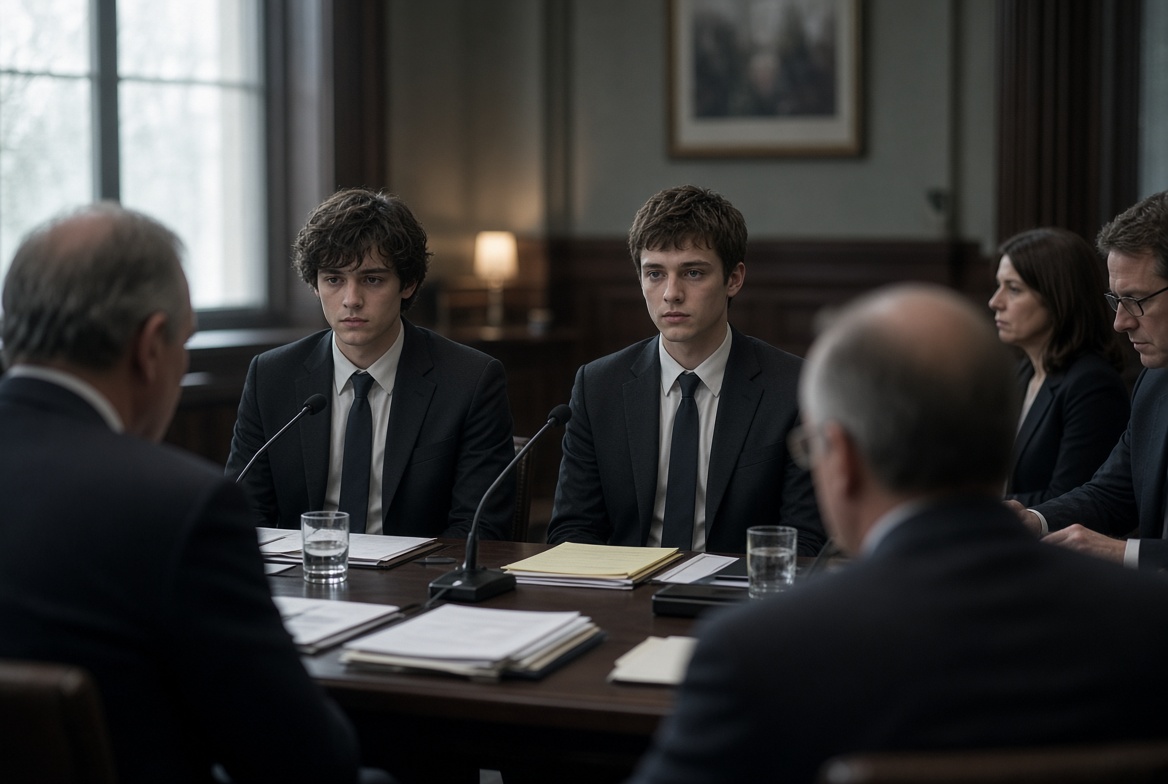

Aaron Sorkin writes two lawsuits as sport. David Fincher shoots them as a clock. Eduardo Saverin sits with a lawyer and learns, out loud, that a company can issue new shares the way a host adds chairs — except the new chairs vote and the old guest does not.
“You issued 24 million new shares of stock?”
“How much were your shares diluted?”
“It wasn’t.”
“And what was your ownership share diluted down to?”
“Point oh-three percent.”
That exchange is why this film sits first in Make It on the Prestige Watchlist. Most wealth movies sell a personality. This one sells a document. The document is the movie.
What the picture actually is
Columbia released The Social Network on October 1, 2010. Fincher directed. Sorkin adapted Ben Mezrich’s The Accidental Billionaires. Budget: about $40 million. Worldwide gross: about $225 million. Eight Oscar nominations. Three wins — adapted screenplay, editing, score. Zuckerberg called it fiction and took staff to see it anyway.
The plot everyone remembers is a slighted genius building a network after a breakup. That is marketing. The plot that pays is three claims on one company.
The twins say they brought the idea of the club.
Eduardo says he brought the checks.
Mark says he brought the thing.
Sean Parker brings a sentence that changes the room. He is the man who has already watched a platform die in public. That scar is his due diligence. Peter Thiel brings the first serious check — $500,000 on a convertible note in 2004, about 9 percent of the recut company. After that meeting the dorm story is over. The company is a company. Someone keeps it.
Yahoo later tried to buy the whole thing. The board gave Terry Semel a mandate up to $1.2 billion. Zuckerberg wanted $1 billion. Semel tried $850 million. Zuckerberg walked. The 2012 IPO printed about $104 billion. That miss already lives in our Semel file. It is the same movie from the other side of the table: the buyer who still thought Hollywood haggling worked on a founder who had already learned about votes.
That is make-it cinema. Jerry Maguire is one client as leverage. The Founder is a contract outlasting the kitchen. The Social Network is the cap table learning to speak.
The scorecard the hoodie hides
| Player | What they brought | What the film says happened | What the public record says | Steal this |
|---|---|---|---|---|
| Mark Zuckerberg | The product and the pace | Keeps control | Stayed CEO; dual-class votes later locked control | Control is a separate line from percentage |
| Eduardo Saverin | Early cash, CFO title, the Brazil connection | Diluted to 0.03%, then a settlement | Diluted toward ~10%, fired 2005, settled 2009; ~4–5% by the 2012 IPO | “CFO” is not anti-dilution |
| Winklevoss twins / Narendra | The club concept, Harvard intros | Painted as jocks who could not code | 2008 settlement: $20M cash + $45M in stock | An idea without the build is a lawsuit |
| Sean Parker | Language, intros, the Napster scar | Names the company and the threat | Early president; later diluted like everyone who did not hold the vote | The person who names the room is not the owner |
| Dustin Moskovitz | Code, loyalty, hours | Quiet partner who stays | Co-founder who kept working | Staying is a cap-table strategy |
| Peter Thiel | $500,000 convertible note, 2004 | Adult in the room | First institutional money; 9% on that round | The first serious check rewrites every prior promise |
Facebook priced its May 2012 IPO around a $104 billion valuation. Guardian reporting at the time put Saverin’s paper wealth near $2.7 billion and his stake in the mid-single digits after the squeeze and the settlement. Zuckerberg sold into the offering and still held a fortune measured in tens of billions of paper. The twins’ stock, from the 2008 deal, appreciated with the listing. Our Winklevoss file already tracks that settlement as the chip that later funded Gemini. Do not treat this spoke as a second biography of Tyler. Treat it as the mechanism that minted the chip.
The scene operators should freeze
Fincher pushed Andrew Garfield until the office storm-in felt like a body blow. The method on screen is simple. New shares. Old partner left off the issuance. Percentage collapses. Title remains long enough to be insulting.
Reality was colder and slightly less operatic. Reporting around the 2012 IPO, including contemporaneous Business Insider reconstructions of the 2004–05 paper, runs like this. Before Thiel, the split was roughly Zuckerberg 65, Saverin 30, Moskovitz 5. After the first institutional money, Saverin was in the mid-twenties. In January 2005 the company issued millions of new common shares to Zuckerberg, Parker, and Moskovitz. Saverin’s stake fell under 10 percent. Lawyers followed. He was out. The film’s “0.03 percent” is Sorkin turning a knife. The real knife was still a knife.
Two lessons survive the rounding.
First: dilution is not automatically theft. It is how growth capital enters. Thiel’s note was supposed to dilute everyone. The tell is who does not get diluted, or who gets a separate class of control.
Second: a title on a business card is not a protective provision. CFO, co-founder, “I was there first” — none of those phrases is anti-dilution, a veto, or a board seat. If it is not in the document, it is dialogue.
What the film gets loud
Sorkin is a prosecutor of conversation. He needs villains who can talk. So the twins become a rowing poster. Parker becomes Mephistopheles with better hair. Mark becomes a machine that cannot apologize. That is why the movie is watchable. It is also why amateurs walk out quoting the wrong line.
“You better lawyer up, asshole” is not the lesson.
“A million dollars isn’t cool. You know what’s cool? A billion dollars” is not the lesson.
The breakup that supposedly launches the site is not the lesson.
The lesson is that the person who controls the issuance controls the story after the issuance. Everyone else is a witness.
Zuckerberg has said for years that the film is fiction. Fine. Fiction can still be a clean diagram. Wall Street was a warning that hired a generation — the 1987 file already mapped that paradox. The Social Network is a diagram that hired a generation of people who wanted to be Mark and a quieter generation who should have wanted Eduardo’s lawyer six weeks earlier.
Control is the other column
By the IPO, Zuckerberg’s economic stake had been diluted like any founder who raises. His voting control had not. Dual-class stock is the adult version of the dorm-room issuance. Percentage is what Forbes prints. Votes are what the board feels.
Watch the movie a second time with that column drawn in the margin. Parker can rename the company. Thiel can price the round. The twins can settle. Eduardo can get whole enough to live in Singapore as a billionaire. None of that is the same as who can fire the CEO.
Make It is the hub for this distinction. Keep It is what happens when the votes stay in the family. The Corleone office and the Facebook board are different moral worlds. They are not different machines.
Hamptons residue
Partnership fights on the East End rarely look like Kirkland House. They look like a guest-house season, a polo cabana, a magazine page, a renovation that was supposed to be “ours.”
Two names on an LLC. One person paid the first winter carrying costs. The other brought the list. August works. January arrives. Someone wants to issue a new class of membership for a sponsor. Someone else still thinks “we started this together” is a clause.
It is not a clause.
The people who last through twelve peak weekends write the issuance rules before the first tenant posts a photo. The people who do not last replay Garfield’s walk-in without the glass walls. Same temperature. Worse clothes.
A private network that actually gates the room — the opposite of early Facebook’s land grab — is a different product. We have already written the feeling of walking into one. The Social Network is the prequel in which the gate did not exist yet, so the fight moved to the paper.
The other East End version is quieter. Two couples go in on a summer. One couple fronts the deposit and the staff week. The other couple “knows everyone.” July photographs well. Labor Day arrives and someone wants to add a third couple for September at a discount that dilutes the original split. If the operating agreement is a text thread, you are watching Garfield come through the glass. If the operating agreement already says how new members issue, you are watching Thiel sit down. Same house. Different column.
Decoder: watch it like a partner
1. Freeze every number.
30 percent. 24 million new shares. 0.03 percent. $500,000. $20 million plus stock. If you cannot pause, you are watching a hoodie commercial.
2. Separate cash, title, percentage, and votes.
Eduardo had the first two. He lost the third in the film and the third-plus-control in life. Mark optimized for the fourth.
3. Ask who can issue.
The person who can print new shares does not need to win the argument in the room.
4. Treat “co-founder” as branding until the charter says otherwise.
It is a word for the press release. It is not a ratchet.
5. Monday move.
Open the last deal you shook hands on. Circle the anti-dilution sentence. If there isn’t one, you are in the first act.
How this spoke sits in the cluster
Watch this film first in the Make It week, then The Founder, then Moneyball. Pitt’s Plan B produced the last of those; the operator comparison is the live companion. Then switch quadrants. Wall Street will try to hire you. The Social Network will try to incorporate you. Only one of those leaves you holding a percentage.
The eat-the-rich sibling in this wave wants you to despise the house. This spoke wants you to read the rider on the house.
FAQ
**Is The Social Network accurate?**
Zuckerberg says no. The dilution method is real. The 0.03 percent figure is drama. Saverin was squeezed toward the low tens, then settled. Use the film as a diagram, not a deposition transcript.
What did the Winklevoss twins actually get?
A February 2008 settlement: $20 million cash and $45 million in Facebook stock. The Tyler Winklevoss net worth piece is the later chapter.
Did Saverin end up broke?
No. By the 2012 IPO his remaining stake was still a fortune. The wound was control and the manner of the exit, not a zero.
Why did the film win screenplay, edit, and score — not Best Picture?
Because those three crafts are the cap table of the movie: who speaks, how fast the cuts issue new information, what the music does to your pulse. The King’s Speech took the crown in 2011.
Is this anti-Zuckerberg?
No. It is pro-document. Founders who keep the company usually look cold in the second hour. That is not the same as the paper being fictional.
Where should I watch it?
Once as a drama. Once with a notebook. The second screening is the spoke.
Author

Written by
Recent Posts

World Cup Injury Attorney for Vancouver Events
What a 3-Carat Engagement Ring Actually Costs in 2026: The Real Numbers
The Skincare Habits That Make a Real Difference Over Time
Hamptons-Ready Beauty: Polished Makeup for Long Summer Days
Is Now a Good Time to Sell a Home in NJ?
Categories
- Art
- Articles
- Business of Luxury
- Celebrities
- Culture
- Entertainment
- Events
- Faces of Summer 2026
- Fashion
- Fashion & Style
- Featured
- Finance
- Food, Spirits, Wine
- Hamptons
- Hamptons Celebrities
- Health
- Health & Beauty
- Lifestyle
- Luxury Lifestyle
- Press
- Profiles
- Real Estate
- Technology
- The Chronicles
- Travel
- Uncategorized
- Weddings