
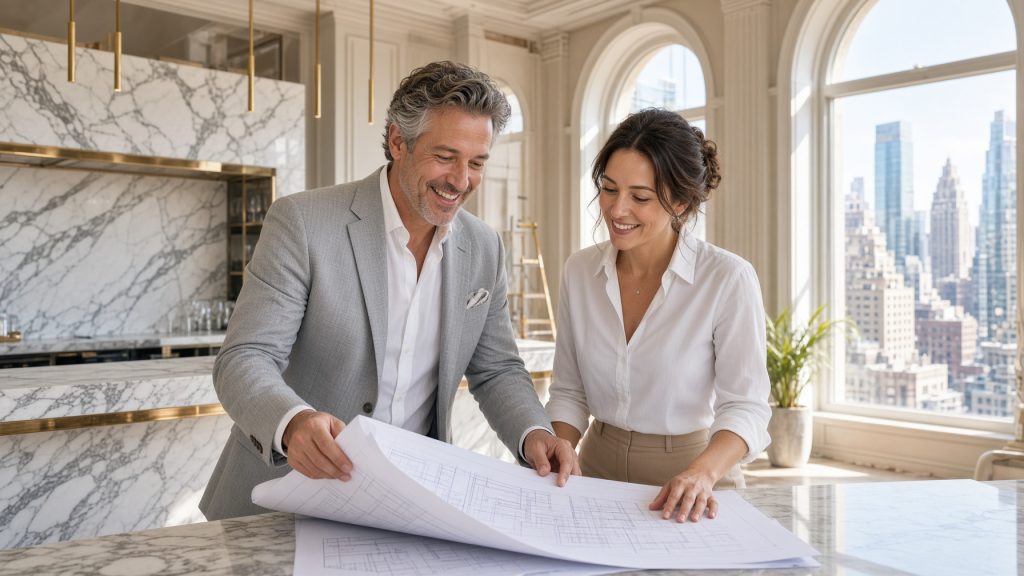
Behind every new velvet rope in Manhattan is a landlord with a spreadsheet. The city’s private club boom is as much a real estate story as a social one. Here are the developers and building owners turning empty floors into members-only rooms, and why the math works for them.
The builders behind the club boom at a glance
| Club | Building and partners | The number |
|---|---|---|
| Aman Club | Crown Building, 730 Fifth Avenue; developed by Vlad Doronin’s OKO Group | Office portion bought for $475 million in 2015; budget grew to almost $1.45 billion |
| Casa Cipriani | Battery Maritime Building; Midtown Equities, Centaur Properties and Cipriani | $100 million refinancing in 2022 |
| Kith Ivy | 120 Leroy Street; Ronnie Fieg with Midtown Equities | $1.6 million in preliminary construction filings |
| Maxime’s | 828 Madison Avenue; building owned by the Reuben Brothers | About 12,000 square feet on a 20-year lease |
| ZZ’s Club | Hudson Yards; Major Food Group | About 25,000 square feet over three floors |
| The Twenty Two | 16 East 16th Street, the former Margaret Louisa Home | About 80,000 square feet and 78 rooms |
In 2021, the Reuben Brothers bought the retail condominium at 828 Madison Avenue, the former Westbury Hotel, from Vornado Realty Trust for $50 million. A year later they signed a tenant for two floors: Robin Birley, the London club owner, who took about 12,000 square feet on a 20-year lease with an option for 10 more, according to The Real Deal. The space became Maxime’s.
That deal captures the whole boom in one transaction. A landlord with a prime but tricky space found a tenant who would sign for two decades and bring the right people to the block. The tenant got a Madison Avenue address. Everybody got a story. Across Manhattan, the same trade is being made over and over.
Why are developers building private clubs in New York?
Developers are building private clubs in New York because clubs fill hard-to-lease space with long-term tenants, raise the value of the buildings around them and turn members into a steady stream of income. A club can make a building more desirable for residents, office tenants and hotel guests, which lifts what a developer can charge for everything else.
The post-pandemic office market helped. Landlords have more empty space and are more open to unconventional tenants, and developers see clubs as a way to elevate their buildings, according to Wallpaper. A floor that was a dull office suite in 2019 can now be a padel court, a spa or a jazz lounge with a waitlist.
The Cayre family’s two velvet ropes
One family’s company shows up behind two of the city’s most talked-about clubs. Midtown Equities, the Cayre family’s real estate firm, joined Casa Cipriani in 2018 as an investor and development partner alongside Centaur Properties and Cipriani, according to Commercial Observer. The partners closed a $100 million refinancing in 2022.
Midtown Equities is also a partner in Kith Ivy, the padel and wellness club Kith founder Ronnie Fieg opened at 120 Leroy Street, along with the owners of Café Mogador, according to 6sqft. One firm, two very different clubs: a restored 1909 ferry terminal at the tip of Manhattan and a rooftop padel court in the West Village. The common thread is the business model, not the decor.
Aman: the club that sells the building
The most ambitious example is Aman New York. Vlad Doronin bought the office portion of the Crown Building for $475 million in 2015, according to OKO Group, and turned it into a hotel, 22 residences and the Aman Club, with its $200,000 initiation fee. Residence owners are invited to become club founders, according to Lifestyle Asia.
The residences sold out, with the last one going for $66 million. The club made the apartments more desirable, and the apartments supplied the club’s first members. Our story on the Aman Club goes inside.
How do private clubs make money for landlords?
Private clubs make money for landlords through long leases, reliable rent backed by membership dues and higher values for the rest of the building. A club tenant with thousands of members paying every year is often a steadier bet than a restaurant that must win customers nightly, and its presence can raise rents and sale prices nearby.
Clubs also bring something landlords cannot easily buy: the right crowd on the block. A well-run club draws exactly the residents and office tenants a luxury building wants. It is like putting a very good restaurant in the lobby, except the restaurant pays its rent with dues collected in January.
The risk nobody puts in the brochure
The boom has a weak spot: clubs depend on being fashionable, and fashion moves. A building can last a century. A hot club can cool in five years. Developers who treat a club as a permanent asset are making a bet on taste, which is the hardest thing in Manhattan to predict.
The smartest projects hedge. The Twenty Two pairs its club with a 78-room hotel and a café open to the public, according to Afar, so the building earns money even on quiet nights. Our story on Crane Club and The Twenty Two looks at the newest challengers.
Rooms built on people
Strip away the marble, and every club deal is a bet that people still want to be in the same room. After years of video calls and delivery apps, that turned out to be a very good bet. The developers did not invent the demand. They noticed it, and built floors to hold it.
The buildings will outlast any one club. What fills them will keep changing. That is the good news for the rest of us: the value is not in the square footage. It is in the people who walk through the door. For the full picture, read why the rich pay for private clubs and our guide to the velvet rope wars.
Frequently asked questions
Who owns the building where Maxime’s is located?
Maxime’s is at 828 Madison Avenue, the former Westbury Hotel. The Reuben Brothers bought the building’s 18,000-square-foot retail condominium from Vornado Realty Trust for $50 million in 2021, and Robin Birley leased about 12,000 square feet for 20 years, according to The Real Deal.
Who developed Casa Cipriani?
Casa Cipriani, in the Battery Maritime Building, was developed by Midtown Equities, Centaur Properties and Cipriani S.A. Centaur and Cipriani began the conversion in 2017, and Midtown Equities joined in 2018. The partners closed a $100 million refinancing in 2022, according to Commercial Observer.
Why do building owners want private clubs as tenants?
Building owners see social clubs as a solid amenity that can lift a property’s appeal, according to an Anchin real estate leader quoted by the New York Post. Clubs sign long leases, collect dues up front and attract the residents and tenants luxury buildings want.
Sources
- The Real Deal: Robin Birley to open dining club on Upper East Side
- Commercial Observer: Casa Cipriani lands $100M refi
- NYCEDC: Renovation transforms the Battery Maritime Building
- 6sqft: Erewhon is coming to NYC
- OKO Group: Aman New York officially sold out
- Lifestyle Asia: Aman New York
- The Real Deal: Major Food Group bringing members club to Hudson Yards
- Afar: The Twenty Two New York
- Travelling for Business: The Twenty Two expands to New York
- Wallpaper: New York’s members club boom
- New York Post via Anchin: Why NYC’s most exclusive social clubs are hot with investors
Author
Written by
Recent Posts

Aman New York’s Private Club: The Most Expensive Hideout in Midtown

Club Wars: The Billionaire Developers Behind NYC’s Membership Gold Rush

Who Really Owns Your Club? Following the Money Behind the Velvet Rope
Is It Worth It? A Brutally Honest Breakdown of What a Private Club Membership Buys

The Art of Hosting: How to Bring People Together Around Good Food
Categories
- Art
- Articles
- Business of Luxury
- Celebrities
- Culture
- Entertainment
- Events
- Faces of Summer 2026
- Fashion
- Fashion & Style
- Featured
- Finance
- Food, Spirits, Wine
- Hamptons
- Hamptons Celebrities
- Health
- Health & Beauty
- Lifestyle
- Luxury Lifestyle
- Press
- Profiles
- Real Estate
- Technology
- The Chronicles
- Travel
- Uncategorized
- Weddings