
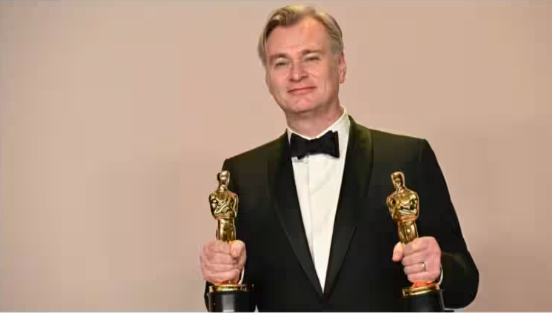
Christopher Nolan learned early that time wasn’t linear, that home could be two places at once, that the self could fracture across continents and reassemble into something new. His parents’ transatlantic arrangement meant he spent his childhood in perpetual transit, never fully belonging to either side.
Today, that displaced boy commands a $250 million fortune and directs films obsessed with time’s malleability. The structures he builds on screen, those fractured chronologies and impossible architectures, are blueprints for the childhood he’s still trying to make sense of.
Christopher Nolan Net Worth 2025: The Boy Between Worlds
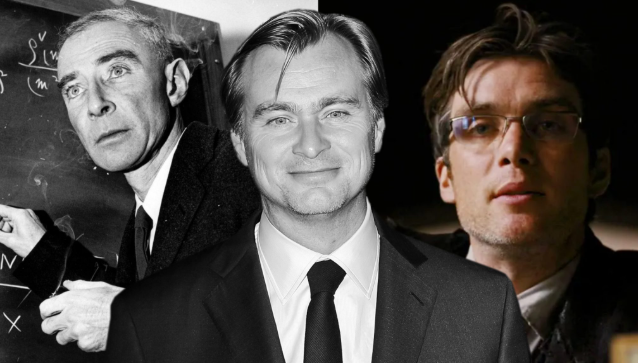
Brendan Nolan, Christopher’s father, was a British advertising executive. Christina, his mother, was an American flight attendant. The two met on a transatlantic flight, a detail almost too perfect for the director Christopher would become.
Their marriage produced three sons: Matthew, Christopher, and Jonathan. Rather than choose one country, the family split time between London and Chicago. Young Christopher held dual citizenship, dual accents, dual identities.
The Architecture of Displacement
This arrangement wasn’t poverty. The Nolans were solidly middle-class, comfortable enough to maintain homes in two countries. Nevertheless, something fundamental was missing: continuity.
Friends made in London were left behind for Chicago. Friends made in Chicago were abandoned for London. Young Christopher developed a watchful distance, an observer’s temperament. He belonged everywhere and nowhere, which meant he could see both places with an outsider’s clarity.
The Camera as Anchor
At seven, Christopher borrowed his father’s Super 8 camera and started making films. The equipment was modest, but the obsession was absolute. While other children played sports or video games, young Nolan staged elaborate productions with his brothers and action figures.
The camera offered something his fractured geography couldn’t: control. Behind the lens, he determined what happened and when. Time bent to his will. Space obeyed his framing. The displaced boy had found his domain.
The Chip: Control as Creative Philosophy
University College London accepted Nolan to study English literature. The choice seemed odd for an aspiring filmmaker, but it was strategic. English literature taught narrative structure, the mechanics of story that would distinguish his work from pure technicians.
At UCL, he led the film society and shot his first short films on 16mm. The productions were ambitious beyond their budgets. More importantly, they were disciplined. While peers shot experimental chaos, Nolan constructed precise puzzles.
The $6,000 Feature
Following, his 1998 debut feature, cost approximately $6,000 and took over a year to shoot. The constraints were brutal. Nolan could only film on weekends when his friends were available. Natural light was mandatory because he couldn’t afford equipment.
Rather than hide these limitations, he weaponized them. The film’s fractured timeline, told in non-chronological order, wasn’t artistic pretension. According to IndieWire, it allowed him to shoot scenes out of order whenever actors and locations aligned. Necessity became signature.
The Memento Breakthrough
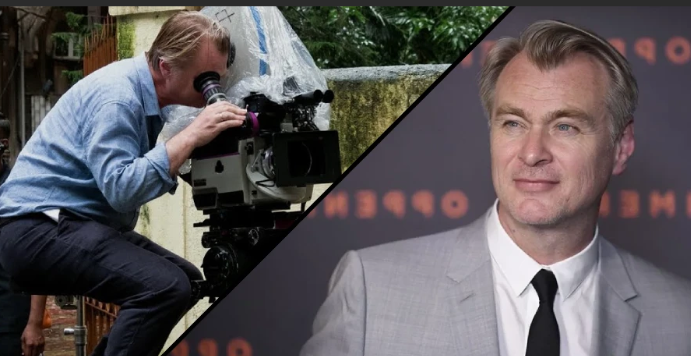
Following caught the attention of Newmarket Films, who backed his next project. Memento in 2000 told its story in reverse chronological order, following a man with no short-term memory hunting his wife’s killer.
The $9 million film grossed $40 million worldwide and announced Nolan as a major talent. More significantly, it established his recurring obsession: characters trying to construct meaning from fragmented experience. The boy who’d grown up between continents was making films about the impossibility of coherent identity.
The Rise: From Indie Darling to Billion-Dollar Brand
Warner Bros. offered Nolan Insomnia in 2002, a remake of a Norwegian thriller starring Al Pacino. The budget was modest by studio standards: $46 million. Nevertheless, it proved Nolan could handle major resources without losing his precise touch.
Then came the call that changed everything. Warner Bros. wanted to revive the Batman franchise after Joel Schumacher’s neon disasters. They wanted darkness, realism, Christopher Nolan.
The Dark Knight Transformation
Batman Begins in 2005 grossed $373 million worldwide. The Dark Knight in 2008 crossed $1 billion, making it the fourth highest-grossing film ever at that time. The Dark Knight Rises added another billion in 2012.
Nolan’s Batman trilogy generated over $2.4 billion in box office revenue alone. According to Forbes, his backend deals on these films contributed substantially to his current $250 million fortune. The indie filmmaker had become a blockbuster machine.
The Original Films Empire
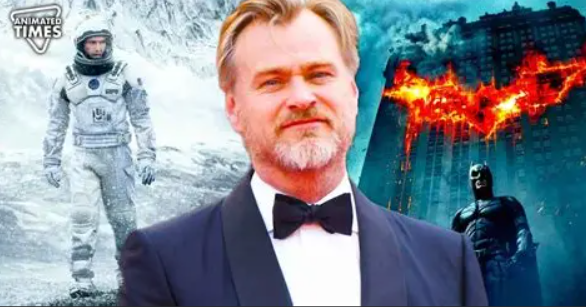
Between Batman films, Nolan pursued originals that bent genre conventions. The Prestige explored obsession and identity through rival magicians. Inception built dream architecture that grossed $836 million worldwide. Interstellar combined theoretical physics with father-daughter pathos.
Each film explored time’s distortions: memory in The Prestige, dream-time dilation in Inception, relativistic time near black holes in Interstellar. The boy who’d grown up between time zones couldn’t stop examining time itself.
The Tell: The Practical Effects Purist
Nolan’s insistence on practical effects over CGI isn’t mere aesthetic preference. It’s philosophy. He crashed a real 747 for Tenet because he wanted actors responding to actual destruction. He built a rotating hallway for Inception because computer-generated weightlessness feels false.
This commitment extends to his refusal to use email or smartphones. According to interviews with The Guardian, Nolan prefers face-to-face meetings and handwritten notes. The digital world’s fragmentation apparently feels too much like his childhood’s geographic fractures.
The Oppenheimer Vindication
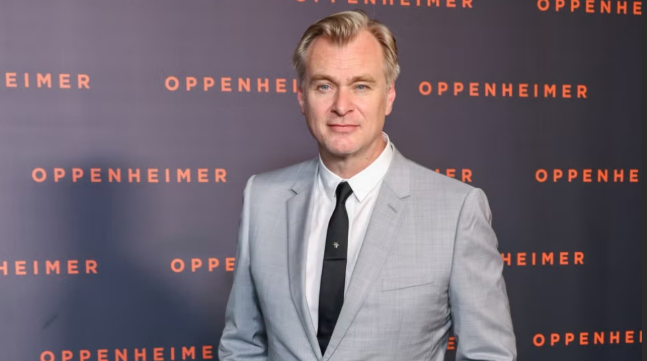
Oppenheimer in 2023 represented Nolan’s fullest artistic statement. A three-hour biographical epic about nuclear physics grossed $952 million worldwide and swept the Academy Awards. The film proved that audiences would embrace complexity when guided by confident vision.
More telling was Nolan’s departure from Warner Bros. over their streaming strategy. He walked away from the studio that made him a billionaire-brand director because they’d released Tenet simultaneously in theaters and on HBO Max. The betrayal, for Nolan, was existential. Cinema demanded commitment, presence, the undivided attention his fractured childhood never received.
The Location Connection: Finally, One Home
Nolan and his wife Emma Thomas, who produces all his films, live in Los Angeles with their four children. The couple met at UCL when both were nineteen. They’ve been together ever since, a stability that contrasts sharply with Christopher’s transatlantic childhood.
Their production company, Syncopy Films, operates from Los Angeles but maintains the handcrafted, boutique sensibility of British independent cinema. The Nolans have consciously chosen rootedness. Their children attend American schools. There are no split homes across oceans.
The Architecture of Permanence
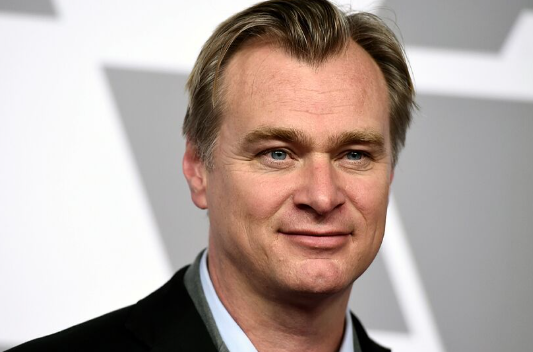
The $250 million fortune could fund estates worldwide, but the Nolans haven’t replicated Christopher’s childhood geography. Instead, they’ve built a creative fortress: every film a collaboration, every production employing the same trusted crew, every decision filtered through the partnership.
The boy who never had one home has spent his adult life constructing permanence. His films explore temporal fragmentation because he knows firsthand what it costs. His practical effects insistence reflects a need for physical reality that displacement denied him. The fortune is substantial. The stability it purchased was the real prize.
The Paradox of Christopher Nolan
At fifty-four, Nolan stands as Hollywood’s most commercially successful auteur. Every film since Batman Begins has grossed over $200 million worldwide. The $250 million fortune places him among the wealthiest directors working today. Oscar recognition for Oppenheimer finally silenced critics who dismissed him as merely a puzzle-maker.
Yet watch his films with biography in mind, and the patterns reveal themselves. The fractured timelines. The unreliable memories. The fathers separated from children by vast distances of space or time. The desperate attempts to construct coherent identity from broken pieces. The $250 million is real. The Los Angeles permanence is real. Underneath both, Christopher Nolan is still that boy in the doorway, half in one world and half in another, using the camera to make time behave.
Related Articles
- Steven Spielberg Net Worth 2025: The $4 Billion Dreamer of Georgica Pond
- Martin Scorsese Net Worth 2025: Little Italy to Legend at 82
- Quentin Tarantino Net Worth 2025: The Video Store Clerk Who Became an Auteur
Connect With Social Life Magazine
For features, advertising, and partnership inquiries, visit sociallifemagazine.com/contact
Experience Polo Hamptons: polohamptons.com
Subscribe to our print edition for exclusive coverage delivered to your door.
Author

Written by
Recent Posts
Behind the Scenes of Weddings Involving Long-Distance Relationships
Why Karaoke Is the Ultimate Entertainment Choice for a Hen Party
Easy Recipes That Feed A Crowd Without The Stress
The Influence Of Social Media On Interior Style Trends
Where Can You Find the Best Made-to-Measure Bespoke Suits in NYC
Categories
- Art
- Articles
- Beauty & Skincare
- Celebrities
- Celebrities|Movies
- Celebrities|The Chronicles
- Chronicles
- Entertainment|Culture
- Event Photos
- Events
- Fashion
- Fashion & Style
- Featured
- Food & Beverage
- Food, Spirits, Wine
- Hamptons
- Hamptons Celebrities
- Hamptons Celebrities|Celebrities|The Chronicles
- Health
- Health & Beauty
- Lifestyle
- Luxury Lifestyle
- Movies|Culture
- Movies|Hamptons Lifestyle
- Press
- Profiles
- Real Estate
- Technology
- The Chronicles
- Travel
- Uncategorized
- Weddings