
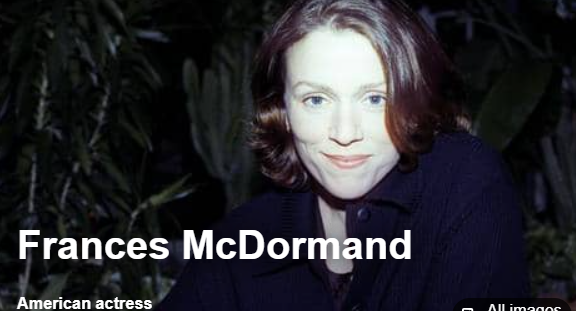
The baby was six days old when Noreen McDormand and her husband Vernon, a Disciples of Christ minister, adopted her from a home for unwed mothers in rural Illinois. Frances Louise McDormand entered the world in 1957 as someone else’s mistake, then became someone else’s purpose. The future three-time Oscar winner spent her first week of existence without a name, without a family, without any indication that she would become the most celebrated anti-celebrity in American cinema.
Today, Frances McDormand’s net worth sits at approximately $30 million. The figure is modest by Hollywood standards, particularly for someone with her accomplishments. However, the number reflects something more than earnings history. It represents a deliberate philosophy about wealth, fame, and the dangerous seductions of an industry that destroys people who want too much from it.
The Wound: When You Start as Someone’s Second Choice
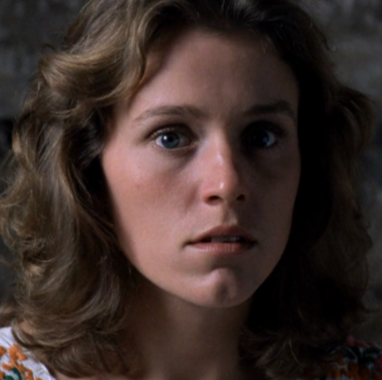
Vernon McDormand moved his family constantly, following pastoral appointments across Pennsylvania, Tennessee, Georgia, and Kentucky. Young Frances never stayed anywhere long enough to establish roots. Every few years, a new congregation, a new school, a new set of people she’d have to learn and then leave. Moreover, beneath the transience sat a foundational fact she couldn’t escape: she existed because someone else hadn’t wanted her.
The Preacher’s Daughter Economy
Preacher’s kids occupy a particular position in American social architecture. They’re simultaneously prominent and scrutinized, expected to model behavior while lacking the privacy other children enjoy. Frances grew up in the fishbowl of pastoral families, where every action reflected on her father’s ministry and every rebellion carried consequences beyond normal teenage stakes.
The adoption added another layer. She didn’t look like her parents or her also-adopted siblings. Congregants could see she wasn’t biologically theirs. The family never hid her origins, but the knowledge shaped her sense of belonging. She was chosen, yes. Nevertheless, being chosen meant someone else had chosen not to keep her first. The wound of original rejection became the foundation for a personality that would never quite trust being wanted.
Finding Theater as Escape
Theater offered escape from the fishbowl. On stage, Frances could be someone other than the preacher’s adopted daughter, someone other than the girl who’d been given away. Additionally, performance provided what constant moving had denied: temporary communities where belonging was earned through talent rather than inherited through birth. She could prove her right to exist through what she did rather than who she was.
At Bethany College in West Virginia, she encountered serious dramatic training for the first time. The small Christian school might have seemed limiting, but it provided something the competitive conservatories couldn’t: a place where being a preacher’s kid was normal, where her background didn’t mark her as exotic or damaged. She could learn craft without performing her origins.

The Chip: Building Identity Through Refusal
Yale School of Drama accepted her for graduate study in 1979. There, among future stars and industry strivers, McDormand developed the contrarian instincts that would define her career. While classmates networked furiously, she focused on technique. While peers cultivated industry relationships, she cultivated skepticism about what the industry rewarded.
The Joel Coen Partnership
Joel Coen changed everything when he cast her in Blood Simple in 1984. The low-budget noir launched both their careers. More importantly, it launched a partnership that would anchor McDormand’s approach to Hollywood. She married Coen in 1984. Subsequently, their relationship established a creative model that prioritized artistic control over commercial success.
The Coen brothers operated outside normal Hollywood systems. They wrote, directed, and produced their own material. They cast according to vision rather than marketability. They maintained final cut when other filmmakers surrendered it for bigger budgets. Furthermore, McDormand absorbed these principles as her own. If you controlled the work, you couldn’t be controlled by the industry’s demands.
The Fargo Breakthrough
Fargo in 1996 demonstrated what her approach could achieve. Marge Gunderson, the pregnant Minnesota police chief, was a role no studio would have created for a movie star. The character was unglamorous, heavily pregnant, and spoke in an accent most Americans associated with regional comedy. McDormand played her as the smartest person in every room, her ordinariness masking extraordinary competence.
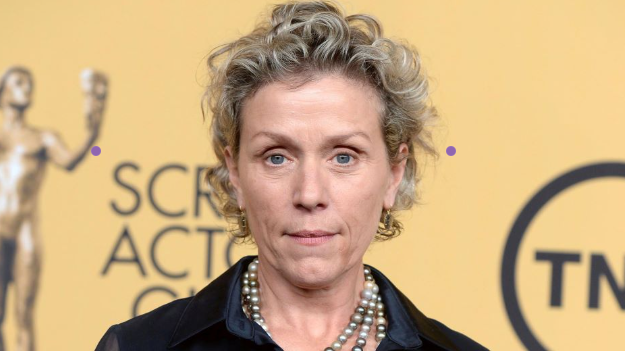
The Oscar victory validated everything she’d suspected about Hollywood’s limitations. The industry rewarded conventional beauty and conventional stories. Nevertheless, when someone broke through those conventions with undeniable work, the industry had to acknowledge it. Marge Gunderson became her proof that refusing to play the game could win the game.
The Rise: How Refusal Became a Strategy
Post-Fargo, McDormand could have leveraged her Oscar into leading-lady stardom. Studios offered precisely these opportunities. She declined most of them, choosing instead to continue working with the Coens, with independent filmmakers, with projects that interested her artistically regardless of their commercial potential.
The Supporting-Role Philosophy
The strategy puzzled industry observers but reflected coherent principles. Leading roles came with promotional obligations, with image management, with the machinery of stardom that consumed actors’ lives. Supporting roles offered the best parts without the worst burdens. Additionally, she could work constantly without becoming a “movie star” in the sense that erased personal privacy.
Three Billboards Outside Ebbing, Missouri in 2017 delivered her second Oscar for playing Mildred Hayes, a grieving mother who rents billboards to shame local police for failing to solve her daughter’s murder. The role required her to embody rage that most actresses would have softened for palatability. McDormand played Mildred as genuinely difficult, abrasive, and occasionally wrong. The performance was uncomfortable in exactly the ways Hollywood usually avoids.
Nomadland and the Third Oscar
Nomadland in 2020 earned her third Best Actress Oscar, tying the record held by Katharine Hepburn. She played Fern, a woman living in her van after economic collapse, part of a community of modern nomads seeking dignity outside conventional housing. The film required her to spend months living as her character lived, in actual nomad communities, earning the trust of real people whose lives would be depicted.
The performance was indistinguishable from documentary because McDormand had essentially become what she was portraying. At 63, she’d achieved what she’d worked toward since Yale: acting so committed to truth that the boundary between performance and reality dissolved. Moreover, she’d done it while maintaining the privacy and autonomy she’d protected for four decades.
The Tell: Where the Preacher’s Kid Still Preaches
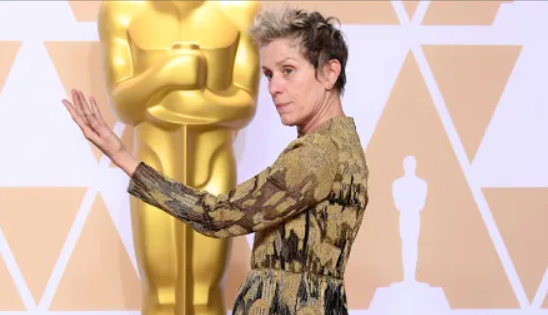
At awards ceremonies, McDormand performs discomfort with celebrity ritual. Her acceptance speeches contain manifestos rather than thank-you lists. She’s used Oscar moments to advocate for inclusion riders, to howl like a wolf, to generally refuse the gracious gratitude that acceptance speeches traditionally require.
The Anti-Celebrity Celebrity
“I don’t have any other facial expression,” she told interviewers who commented on her lack of red-carpet glamour. The statement is both joke and policy position. She refuses the physical transformations that actresses undergo for public appearances. Furthermore, she’s maintained the same basic look for decades: short hair, minimal makeup, clothes that prioritize comfort over fashion.
The preacher’s kid who grew up in a fishbowl has built an adult life that rejects being watched. She lives in New York rather than Los Angeles. She avoids social media. She gives interviews rarely and controls them carefully when she does. Additionally, her marriage to Joel Coen has produced one son, Pedro, adopted in 1994, continuing the family pattern of building families through choice rather than biology.
The Location: Where Anti-Hollywood Plants Roots
McDormand and Coen have maintained an apartment in New York City that reflects their priorities: location chosen for creative community rather than industry proximity, size appropriate for living rather than impressing. They’ve avoided the real estate accumulation that marks Hollywood wealth.
The Modest Fortune Philosophy
The $30 million net worth is modest for someone with three Oscars. Hamptons estates alone can cost more than her entire fortune. However, the number reflects deliberate choices: projects selected for interest rather than pay, supporting roles that earned less than leading ones, a lifestyle that doesn’t require maximum income to sustain.
She’s spoken about wanting to remain “a citizen” rather than a celebrity. The distinction matters in the architecture of her choices. Citizens can walk down streets without security. Citizens can maintain friendships outside their professional sphere. Citizens can make mistakes without media coverage. Moreover, maintaining citizenship requires rejecting the wealth accumulation that turns people into protected assets rather than participating humans.
The Hamptons film community includes plenty of actors who’ve leveraged success into lifestyle empires. McDormand has chosen the opposite path: success leveraged into continued creative freedom, wealth sufficient for security but not for isolation, fame managed rather than maximized.
The Believer Who Refuses to Believe
Frances McDormand at 67 has proven something Hollywood doesn’t want to acknowledge: the industry needs actors more than actors need the industry. Three Oscars earned through roles that conventional wisdom said wouldn’t sell demonstrates that commercial calculation consistently underestimates audiences. Furthermore, her continued ability to work on her own terms proves that refusal can be sustainable strategy rather than career suicide.
Somewhere inside the three-time Academy Award winner lives a six-day-old baby without a name, waiting to discover whether anyone would choose her. The power dynamics of Hollywood replay that original question constantly: will they want me? McDormand’s career answers it differently than most: she wants herself, she chooses herself, and the industry’s approval is pleasant but unnecessary.
The wound of adoption and transience healed into self-sufficiency. The preacher’s daughter who watched her father serve communities learned that communities are temporary but principles persist. The $30 million fortune could be larger. Nevertheless, it’s exactly the size that allows her to keep making choices that prioritize work over wealth, craft over celebrity, and citizenship over stardom. The baby who started as someone’s second choice has spent sixty years proving that being chosen matters less than choosing yourself.
Related Articles
- Cate Blanchett Net Worth 2025: The Prestige Player Who Learned Disappearance Early
- Kate Winslet Net Worth 2025: From British Council Estate to Titanic Fortune
- Joaquin Phoenix Net Worth 2025: The Commune Kid in River’s Shadow
Want to be featured in Social Life Magazine? Contact our editorial team to discuss coverage opportunities. For Polo Hamptons tickets and sponsorship information, visit polohamptons.com. Subscribe to our newsletter for exclusive Hamptons lifestyle content, or order a print subscription delivered to your door. Support independent luxury journalism with a $5 contribution.
Author

Written by
Recent Posts
Where Can You Find the Best Made-to-Measure Bespoke Suits in NYC
The Financial Habits Every Successful Entrepreneur Swears By
What Happens If You Delay Hemorrhoid Treatment in New York City

James Franco Net Worth — A $30 Million Career Interrupted

Selena Gomez Net Worth — How a Disney Kid Built a $1.3 Billion Empire
Categories
- Art
- Articles
- Beauty & Skincare
- Celebrities
- Celebrities|Movies
- Celebrities|The Chronicles
- Chronicles
- Culture|Television
- Entertainment|Culture
- Event Photos
- Events
- Fashion
- Fashion & Style
- Featured
- Food & Beverage
- Food, Spirits, Wine
- Hamptons
- Hamptons Celebrities
- Hamptons Celebrities|Celebrities|The Chronicles
- Health
- Health & Beauty
- Lifestyle
- Luxury Lifestyle
- Movies
- Movies|Culture
- Movies|Hamptons Lifestyle
- Press
- Profiles
- Real Estate
- Technology
- The Chronicles
- Travel
- Uncategorized
- Weddings