
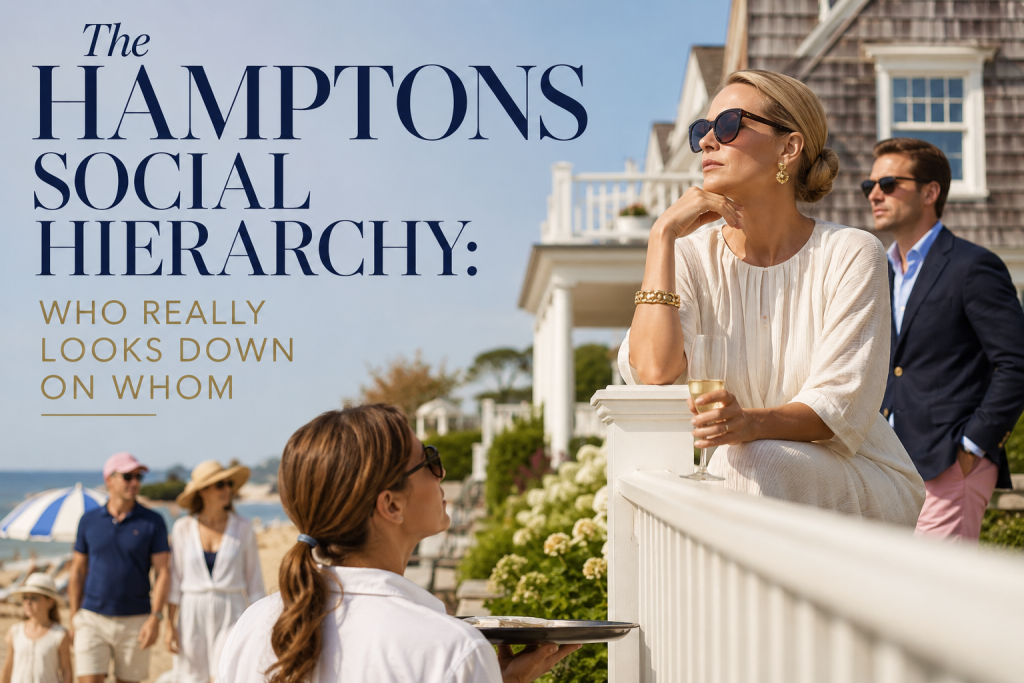
Last Memorial Day, a man sold his software company for $230 million. Days later he closed on a nine-bedroom spread in Sagaponack. So he threw a party. The Hamptons social hierarchy, he assumed, could be bought.
He hired the caterer everyone uses. He ordered the rosé everyone drinks. The invitations ran $40 a card. Still, almost nobody who mattered showed up.
That gap, between the money he spent and the guests who came, is the Hamptons social hierarchy in a single night. It is real. It is ruthless. And out here, nobody says it out loud.
The newcomer assumed the cash was the password. By contrast, the people he wanted at his table were running a different game. His $230 million could not buy into it in one weekend. Here is who looks down on whom, and why your money is only the cover charge.
What Bourdieu Saw Coming
A French sociologist explained this beach town better than any broker has. His name was Pierre Bourdieu. In 1979 he argued that taste is never innocent.
What you find beautiful or tacky, he said, mostly reveals where you sit and where you are climbing. Out here that theory wears Loro Piana. The dominant set decides what counts as good taste. Of course, the rules quietly favor things only they grew up around.
Bourdieu split status into two currencies. Economic capital is the money, and you can earn it fast. Cultural capital is the slow one. It means knowing which beach, which club, which fork, and it usually takes a generation to bank.
So the founder held one currency in surplus and the other at zero. He could outspend the entire room. Still, he could not out-belong it. That mismatch is the engine under every status play in this guide.
Money Is the Floor, Not the Ranking
Here is the first thing newcomers get wrong. They treat the price of the house as their rank. In reality, the house is only the entry fee.
Every serious zip code out here starts around $5 million. Because so many people clear that bar, the number stops sorting anyone. A $20 million build on Further Lane and a $6 million teardown can sit on the same road. Still, their owners may live in completely different tiers.
The ranking runs on things that resist a wire transfer. For example, a locker at a club that stopped taking new members in the 1980s. Or a grandmother who summered here when Montauk was a fishing town. Such markers are social capital, the web of who vouches for you, and they do not appear on Zillow.
So spending more rarely moves you up. Sometimes it moves you down, since the loudest spend reads as the newest money. The trick is knowing which purchases buy belonging and which ones just buy attention.
The Village War Nobody Admits To
Outsiders say “the Hamptons” as if it were one place. Locals never do. Instead, they hear a dozen villages, each convinced it outranks the next.
This is Bourdieu’s sharpest point in beachwear. Distinction is mostly a war against the group just below you. Because the gaps are small, the policing gets vicious. The full map of who snubs whom lives in our village-by-village ranking, but the headline is simple.
South of the highway looks down on north. Old villages look down on the built-up ones. And nearly everyone claims not to care, which is itself the oldest tell in the book. People who truly sit at the top rarely mention the rankings, because for them the rankings were settled generations ago.
The strivers, by contrast, can recite the whole pecking order on demand. So if a host explains why his hamlet is the “real” one, you have already learned his exact coordinates. He is climbing, and he is letting you watch.
Southampton and the Hedge People
Southampton holds the oldest money on the East End. Here the estates hide behind privet hedges grown twelve feet tall on purpose. The hedge is the point.
It signals a household that wants nothing seen and nothing asked. The Bathing Corporation, the beach club locals just call the Bath, runs a waitlist measured in decades. Money cannot skip that line, since the line is the product. What it sells is time you do not have.
Gin Lane and Meadow Lane carry the addresses that make brokers whisper. Still, the flex here is restraint. The right family drives a fifteen-year-old Wagoneer with a cracked dashboard and feels no need to explain it. That battered car is cultural capital wearing a disguise.
For the newcomer, Southampton is the hardest village to crack. You can buy the house on the lane. You cannot buy the four generations who already know the gate code. Even so, plenty of arrivals try, and the trying is always visible.
East Hampton and the Art-Money Set
East Hampton plays a different hand. Where Southampton guards old fortunes, East Hampton courts a glossier crowd of art collectors, gallerists, and people who summer near them. The currency here is cultural, not merely financial.
Knowing the painter matters more than owning the painting. A dinner in Springs, the scruffier arts corner, can outrank a gala on the ocean. Because taste is the local coin, the performance of taste never stops. Even the farm stand becomes a stage.
Further Lane and Lily Pond Lane hold the trophy houses. Yet the truly fluent downplay the trophy. They mention the Pollock-Krasner house the way other towns mention the gas station. Such ease is the entire flex, and it cannot be rented for a season.
This is why a fashion label chasing relevance in the Hamptons must understand the difference. Southampton wants discretion. East Hampton wants the right reference, dropped lightly. Pitch the wrong village and the brand reads as a tourist in good shoes.
Why Montauk Insists It’s Different
Montauk spent decades as the workingman’s edge of the island. Then the surfers came, then the brands came, then the bottle-service crowd arrived. Now Montauk loudly insists it is not the Hamptons at all.
That insistence is the tell. A place truly secure in its status feels no need to deny the label. By denying it, Montauk reveals exactly how much the ranking still stings. We trace that whole identity crisis in the Montauk status breakdown, and it connects to the deeper history in our Montauk dossier.
Today the town runs two economies side by side. One wears a wetsuit and remembers the fishing fleet. The other pays $28 for a cocktail at a hotel that did not exist a decade ago. Because both groups claim the “real” Montauk, the fight over authenticity never ends.
For a sponsor, this tension is gold. Montauk sells the fantasy of being the cool exception, the place too authentic to be ranked. Naturally, that fantasy is itself a ranking, and a profitable one.
The Sag Harbor Exception
Sag Harbor likes to think it sits above the whole contest. Once a whaling village, it now markets itself as the literate, tasteful alternative to the glossier towns. The bookstore stays open. The marina fills with restraint.
Here the flex is cultural capital in its purest form. People mention the writers who lived here and the history that predates the money. We unpack where that quiet superiority complex comes from, and the longer story sits in our Sag Harbor guide.
Still, the village is not immune to the same forces. A captain’s house that sold for $900,000 in 2005 now trades north of $4 million. The new arrivals buy the charm and, in buying it, slowly change it. That is the quiet tragedy under every “authentic” town.
The Sag Harbor move is to claim you are not playing the status game while playing it expertly. By rejecting the scoreboard, you score. It is the most sophisticated position out here, and the hardest to fake convincingly.
The Line That Sorts Everyone
One road organizes the entire region. Montauk Highway, the local Route 27, splits every village into two halves. The split is not geographic trivia. It is the single cleanest status line on the East End.
South of the highway means closer to the ocean, older money, and the addresses brokers lead with. North of the highway means farther from the water and, in the old logic, a tier down. We break the whole divide apart in this guide to the highway line.
Of course, the logic is loosening as prices climb everywhere. A spectacular modern build north of the road can now outprice a tired cottage to the south. Still, the old hierarchy lingers in how people describe themselves. “South of the highway” remains a phrase people deploy on purpose.
So listen for it at dinner. When someone works their side of the road into the first ten minutes, they are placing themselves on the map for you. By naming the line, they reveal how much it matters to them.
The Beach Is the Real Scoreboard
If the village is your zip code, the beach is your status in public. Not all sand ranks the same. Some beaches sort by sticker, others by birthright.
Coopers Beach in Southampton charges outsiders for parking and feels democratic by comparison. By contrast, the ocean stretches off Further Lane and Meadow Lane operate as private extensions of private lawns. There is no sign. There is simply the understanding that you do not belong there.
Main Beach in East Hampton sits in the middle, prestigious yet technically public. A resident sticker on the windshield does real social work here. We rank the whole coast, sticker by sticker, in our guide to the beach hierarchy.
This is symbolic capital at its most literal. The towel, the chair setup, the stretch of shoreline all broadcast a position. So the beach is never just the beach. It is the open-air leaderboard where everyone can see the standings.
New Money Versus Old Money
Run all the villages together and one fault line remains. New money against old money is the deepest rift out here, deeper than any town rivalry. Everything else is a subplot.
Old money treats wealth as weather, simply the climate it has always lived in. New money treats wealth as an achievement worth displaying. Because the two read status so differently, they constantly misjudge each other. We map the full divide in our new-money survival guide.
The old guard prizes the worn, the inherited, the deliberately unimpressive. The newer arrival prizes the pristine, the labeled, the obviously expensive. Neither is wrong, exactly. Yet only one set writes the rules, and it is not the one with the newest Range Rover.
For the founder in Sagaponack, this is the whole problem in a sentence. He optimized for impressive when the room rewarded invisible. The deeper codes of that quiet world sit in our old-money playbook.
How the Tells Actually Work
Status out here leaks through small choices. A “tell” is any detail that places you before you say a word. Some you can fix. Some take a generation.
Spending patterns are the loudest tells of all. Old money repairs the roof and ignores the kitchen. New money gut-renovates and posts the reveal. We catalog the full set of signals in our field guide to money tells.
The renovation itself is a confession. The choices you make on the house announce which tier you think you are joining. Too much marble reads one way, and a preserved 1920s porch reads another. We break that down in the renovation tells guide.
Here is the uncomfortable part for any newcomer. You are being read constantly, and the reading happens fast. By the time you have parked the car, your neighbors have already filed you. So the question is not whether you send signals. It is whether you know what they say.
The Institutions That Don’t Advertise
Some of the most powerful gates out here have no front door you can find online. The oldest clubs keep no website and answer no cold calls. That silence is the whole strategy.
A club that cannot be searched cannot be bought into by a stranger. Membership runs through sponsors, seconds, and waitlists measured in years. Because the process resists money, it manufactures the one thing money cannot make on its own, which is time.
The same logic governs the dinners that never get posted. The most coveted table of the summer often sits in a private kitchen with no photographer present. By contrast, the party with a step-and-repeat is usually the one trying hardest. So the absence of cameras is itself a status signal.
For the newcomer, this is the hardest layer to read. You cannot RSVP to what you cannot see. Still, the invisible circuit is exactly where belonging gets decided. Eventually the aim is to reach rooms that leave no trace, since those are the rooms that count.
The Season Has a Pecking Order
Status out here is not only spatial. It is also seasonal. When you arrive, and which parties you make, ranks you as clearly as any address does.
The truly established open the house in May and close it in October. By contrast, the renter who shows for one August fortnight signals a thinner tie to the place. The calendar, in other words, is a hierarchy with dates.
Certain events work as the season’s checkpoints. A spot at the right benefit, the right gallery opening, or a marquee match like Polo Hamptons tells the room you were invited, not merely admitted. Because invitations cannot be bought at the door, they read as social capital made visible.
So the smart newcomer studies the calendar like a syllabus. He learns which dates confer standing and which ones simply fill a feed. Eventually the goal is not to attend everything. It is to attend the few things that actually count.
Who Gets to Decide Now
Every hierarchy needs a referee. Someone has to certify what counts as tasteful, current, and in. For a long stretch the old families held that pen alone.
That monopoly has loosened. Today a wider set of tastemakers, editors, founders, and a few well-placed publications share the power to confer status. The keys changed hands, even if the gates still look the same.
This shift is the opening that newcomers rarely notice. Because the gatekeepers are no longer purely hereditary, legitimacy can now be earned through the right alignments. A brand that lands in the correct pages borrows the credibility those pages have banked. So the path runs straight through the people who currently hold the pen.
That, in the end, is what this magazine has become over two decades. We are one of the parties who decides what reads as Hamptons-real. And we are, on occasion, willing to share the keys.
The Cost of Reading It Wrong
Misreading the hierarchy is expensive, and not only socially. The founder in Sagaponack learned that within one summer. His party became a cautionary tale told at other people’s tables.
Get it wrong and the doors quietly stay shut. Get it wrong loudly and you become the anecdote. By contrast, the person who reads the room correctly compounds advantages season after season. Invitations beget invitations, since access is the currency that pays out in more access.
There is also a hard business cost for brands. A label that activates in the wrong village, or sponsors the wrong event, can spend heavily and still read as an outsider. The money goes out, yet the belonging never comes back. So precision matters far more than budget out here.
The lesson under all of it stays the same. In a place this coded, knowing the map is not optional. It is the difference between buying a house and buying a position.
Where You Actually Rank
Now turn the lens around. Most people reading this sit in the middle of the Hamptons social hierarchy. They have real money and incomplete codes. That is not an insult. It is the most common position out here, and the most workable one.
The good news is that the hierarchy is not sealed. Cultural capital can be learned, even if it cannot be bought outright. The newcomer who listens more than he spends moves up faster than the one who throws the biggest party.
The faster path is borrowed legitimacy. You attach yourself to an institution the old guard already trusts, and some of that trust transfers to you. A feature in a publication that has covered this world for over twenty years does exactly that work. So does the right table at the right event.
That is the quiet logic behind everything we build at this magazine. We are not selling exposure. We are selling a shortcut through a system that normally takes three generations.
Where The Conversation Continues
You now hold the map most people out here pretend not to read. The Hamptons social hierarchy rewards the person who understands it and quietly punishes the one who does not. The choice is which one you intend to be this summer.
If you are a founder who wants the right room, a brand that wants real relevance, or a host who wants the guests who matter, the move is the same. You borrow the legitimacy before you try to buy it. We have spent over twenty years inside these gates, and we know which ones open.
The season is short, and the good tables fill early. Tell us what you are building, and we will show you where it fits on the map. The ones who ask now are the ones seen later.
Author

Written by
Recent Posts

The Activist Education: Board Seats, 13Ds, and the Decade That Built Friendly Activism
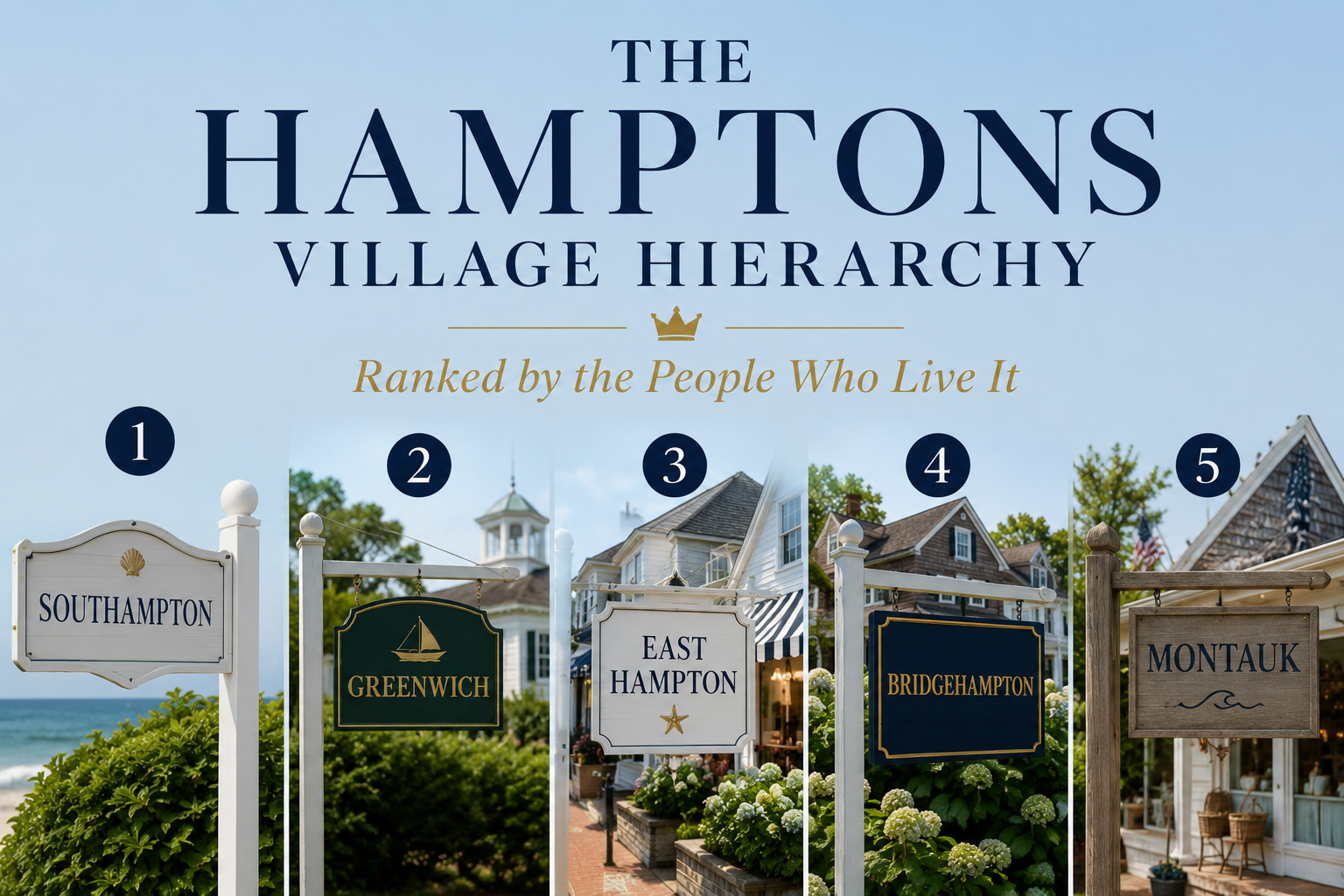
The Hamptons Village Hierarchy, Ranked by the People Who Live It

The Noodles & Company Campaign: A Friendly Activist Fight in Real Time

Inside Galloway Capital Partners: The Deep Value Machine, Documented

New Money vs Old Money: The Hamptons Status Divide Nobody Explains