
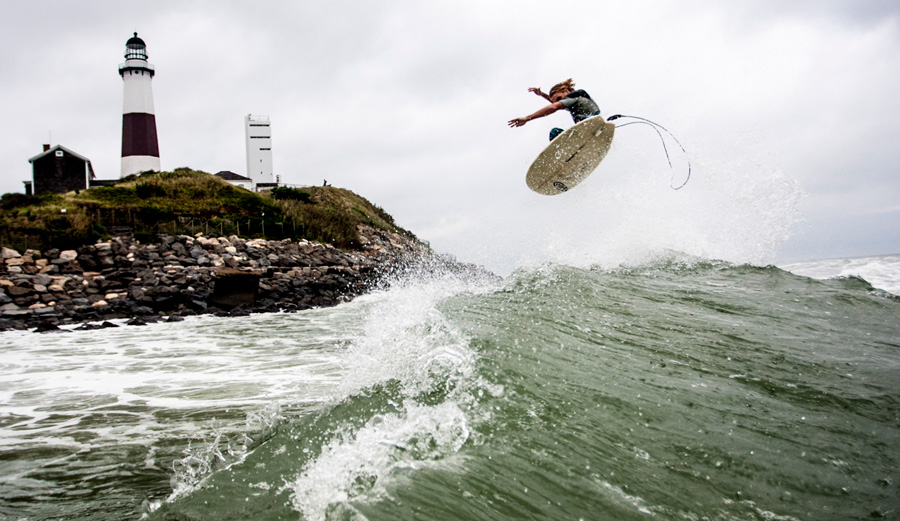
Montauk history is not a timeline. It is a series of collisions. A Native American confederation that governed the tip of Long Island for thousands of years. A president who built a lighthouse in 1796. An Indiana promoter who tried to build Miami Beach on the bluffs in 1927. A pop artist who bought a compound in 1971 and invited the Rolling Stones. A Brazilian nightclub owner who turned a motel into a cultural institution in 2008. None of these chapters resolved. All of them still echo in a hamlet of 3,500 year-round residents at the place locals call “the End.” This is the story of how Montauk became Montauk.
The Montaukett: Before the Road Existed
Long before European contact, the Montaukett people occupied the eastern tip of Long Island. They were part of a confederation of four tribes, including the Shinnecock, the Manhasset, and the Cutchogue. The chiefs were brothers who inherited authority from their father, and between them they controlled most of Long Island. Dutch explorers first encountered the Montaukett in 1614. Eventually, English settlers from Connecticut and Massachusetts arrived in the mid-1600s.
Chief Wyandanch, who governed during this period, brokered alliances with the English that temporarily preserved Montaukett sovereignty. Yet the arrangements did not hold. Over the next two centuries, a series of land transactions, some negotiated and some fraudulent, stripped the Montaukett of nearly all their territory. By the early 1900s, a disputed land sale gave developer Arthur Benson control of most of Montauk. In 1910, New York State courts declared the Montaukett tribe “extinct,” a ruling the Montaukett Nation has contested ever since. They remain here. The name Montauk itself comes from their language.
The Lighthouse: Washington’s Promise, 1796
In 1792, Congress authorized a lighthouse at the eastern tip of Long Island to protect ships navigating the treacherous waters between Block Island Sound and the Atlantic. George Washington approved the expenditure. Thomas Jefferson signed the authorization. The Montauk Point Lighthouse was completed in 1796, making it the oldest in New York State and the fourth oldest in the nation.
Washington reportedly promised the lighthouse would stand for 200 years. Of course, he underestimated it. The tower has survived 230 years of nor’easters, hurricanes, and coastal erosion. In 2023, a $44 million Army Corps of Engineers project reinforced the bluffs with a stone revetment designed to protect the structure for another century. Today, the lighthouse operates as a museum, and its beam still flashes every five seconds, visible for 19 nautical miles. It is the single oldest institution in the Hamptons, predating every private club, every restaurant, and every real estate transaction in every other village.
Deep Hollow Ranch and the Rough Riders: 1658 to 1898
Between the lighthouse and the modern era, two events shaped Montauk’s character. The first was Deep Hollow Ranch, established in 1658 on land the Montaukett had used for cattle grazing. It is the oldest cattle ranch in America. Even today, trail rides leave from the property along paths that connect three centuries of land use in a single sightline of the lighthouse.
The second was Camp Wikoff, a military quarantine camp established in 1898 at the end of the Spanish-American War. Teddy Roosevelt and his Rough Riders were brought to Montauk to recover from tropical diseases contracted in Cuba. Approximately 30,000 soldiers camped on the moorlands near the current village. Roosevelt himself used Montauk as a staging ground for his political ascent. Within two years, he was governor of New York. Within three, he was president. Montauk’s contribution to that trajectory is documented but rarely discussed at dinner parties, which is typical. The village has a habit of participating in history without claiming credit.
Carl Fisher’s Grand Failure: 1925 to 1929
He is fifty-one years old and worth somewhere between $50 million and $100 million. After co-founding the Indianapolis Motor Speedway, he turned a swamp into Miami Beach. Now he buys 10,000 acres at the tip of Long Island for $2.5 million and announces a slogan that sounds like destiny: “Miami Beach in the winter, Montauk Point in the summer.” Between 1925 and 1927, he hires 800 laborers and builds everything at once. By 1929, the stock market has collapsed, his wife has divorced him, and the dream is over. He dies in 1939 with $40,000 to his name. The buildings remain.
Carl Fisher’s ambition transformed Montauk from moorland to municipality. First came the 200-room Montauk Manor (Tudor Revival, still standing, now condominiums). Then the Montauk Yacht Club on Star Island. He also constructed a polo field, a golf course (now Montauk Downs State Park), indoor and outdoor tennis courts, a Grand Prix race track, a boardwalk with an Olympic-size pool, and a seven-story office tower that was then the tallest building on Long Island. Most dramatically, he dynamited an inlet to connect the freshwater lake to Block Island Sound, creating the harbor that now houses New York State’s largest commercial fishing fleet.
Fisher also built roads, churches, shops, and his own residence at 44 Foxboro Road. The Town of East Hampton purchased the Carl Fisher House in 2021 for $5.5 million in community preservation funds. Nevertheless, his infrastructure survives. His vision did not. But the lesson is the one Montauk always teaches: the land outlasts the ambition. Every developer who arrives at the End eventually discovers that the End was here first.
Camp Hero: The Military Years, 1942 to 1981
The United States Army commissioned Camp Hero in May 1942, five months after Pearl Harbor, as a coastal defense station. The base was disguised as a fishing village, with Cape Cod-style houses concealing artillery bunkers. After the war, the Air Force took over in 1951 and erected a 126-foot SAGE radar tower designed to detect Soviet nuclear bombers. Camp Hero was decommissioned in 1981.
What happened after decommissioning depends on whom you ask. Preston Nichols published The Montauk Project: Experiments in Time in 1992, alleging mind control experiments in underground laboratories. The conspiracy theory eventually inspired the Duffer Brothers, who originally titled their Netflix series Montauk before renaming it Stranger Things. Today, the 755-acre state park attracts hikers, history buffs, and fans of the show. The radar tower still creaks in the wind. The government still retains ownership of everything below the surface.
Warhol, the Stones, and the Cultural Revolution: 1971 to 1987
In 1971, Andy Warhol and filmmaker Paul Morrissey purchased a compound of five white clapboard cottages on the oceanfront bluffs for $225,000. They named it Eothen, ancient Greek for “at first light.” Over the next sixteen years, Warhol transformed the compound into a private salon that hosted Jackie Kennedy, Lee Radziwill, John Lennon, Elizabeth Taylor, Liza Minnelli, Halston, Catherine Deneuve, Truman Capote, Keith Haring, and Peter Beard.
The most consequential visit came in spring 1975, when the Rolling Stones rented Eothen for $5,000 while preparing for their Tour of the Americas. As Warhol later wrote: “Mick Jagger really put Montauk on the map.” Bianca Jagger opened clams at Shagwong Tavern. Jagger wrote the song “Memory Motel” about a woman he met at the only bar in town with a piano. The Memory Motel still exists. After Warhol’s death in 1987, Morrissey donated fifteen acres to the Peconic Land Trust, creating the Andy Warhol Preserve. Eothen eventually sold for $50 million in 2015 to art collector Adam Lindemann.
The Surfing Era: 1950 to Present
Although it seems like surfing has always defined Montauk, the sport arrived only in 1950, when a soldier named Richard Lisiewski brought his board from New Jersey and paddled out at Ditch Plains. For sixteen years, he was essentially alone. Then in 1966, a group of pioneers including Rusty Drumm, Gene DePasquale, and Allan Weisbecker discovered that Montauk’s position at the tip of Long Island produced consistent, well-shaped breaks. The rock reef at Ditch Plains peeled waves with unusual regularity.
By the 1970s, the Ditch Plains trailer park had become ground zero for surf culture. Fishermen in mobile homes occupied the west side. Hippie surfers pitched tents on the east. Despite their differences, both tribes coexisted peacefully. The Ditch Witch food truck arrived in 1994 and has served breakfast on the sand ever since. Today, Ditch Plains is the most famous surf break on the East Coast, and the real estate surrounding it spans from $2 million cottages to a $17 million oceanfront record set in 2025.
The Surf Lodge and the Modern Era: 2008 to Present
In 2008, Jayma Cardoso, a Brazilian-born nightlife entrepreneur, purchased a 1967 motor inn on Edgemere Street overlooking Fort Pond. She spent $400,000 on renovations and opened the Surf Lodge with a booking nobody expected: Stephen and Julian Marley during a freezing rainstorm. Since that opening night, the Surf Lodge has become the single most consequential cultural venue in the modern Hamptons. Its summer concert series has featured John Legend, Willie Nelson, Snoop Dogg, and Rufus Du Sol.
The Surf Lodge proved something essential about Montauk history. Every previous era had followed the same pattern: someone arrives with a vision, builds something, and the village absorbs it without changing its fundamental character. Fisher built a resort. Montauk stayed a fishing village. Warhol hosted celebrities. Montauk stayed a fishing village. Cardoso built a music venue. Montauk stayed a fishing village. The pattern is the point. Montauk’s history is not a narrative of transformation. It is a narrative of absorption. Of course, things arrive at the End. The End remains the End.
The Timeline at a Glance
Pre-contact: Montaukett confederation governs the eastern tip of Long Island. 1614: Dutch explorers encounter the Montaukett. 1658: Deep Hollow Ranch established, the oldest cattle ranch in America. 1792: Congress authorizes the Montauk Point Lighthouse. 1796: Lighthouse completed. 1898: Teddy Roosevelt and the Rough Riders quarantine at Camp Wikoff. 1910: New York courts declare the Montaukett “extinct.” 1925: Carl Fisher buys 10,000 acres. 1927: Montauk Manor opens. Fisher dynamites the inlet, creating Lake Montauk harbor. 1929: Stock market crash ends Fisher’s vision. 1942: Camp Hero commissioned. 1951: Air Force erects SAGE radar tower. 1971: Andy Warhol buys Eothen. 1975: Rolling Stones at Eothen. 1981: Camp Hero decommissioned. 1987: Warhol dies. 1994: Ditch Witch food truck opens. 2008: Surf Lodge opens. 2015: Eothen sells for $50 million. 2016: Stranger Things debuts. 2025: Ditch Plains oceanfront record hits $17 million.
Where the Conversation Continues
Social Life Magazine has covered the East End for 23 years, documenting the villages, the people, and the history that make this stretch of coastline unlike any other. If you are reading this, you already understand that history is not just what happened. It is what people remember, and what they choose to build next.
For brands and tastemakers who want to be featured in the publication that the East End actually reads: explore our paid features program.
Polo Hamptons 2026 returns July 18 and 25 at 900 Lumber Lane in Bridgehampton, with BMW North America as title sponsor and Christie Brinkley as host. Details at polohamptons.com.
Subscribe: sociallifemagazine.com/subscription.
The lighthouse was here before all of us. It will be here after. That is the only history that matters at the End.
Author

Written by
Recent Posts
How to Measure Whether a Hair Loss Treatment Is Working
Is Online Psychiatry Covered by Insurance? What to Know Before Booking
Four Habits of Quietly Successful Entrepreneurs

The Most Common Preventable Health Concerns Doctors See Today
What Affects a Rideshare Injury Settlement?
Categories
- Art
- Articles
- Business of Luxury
- Celebrities
- Culture
- Entertainment
- Events
- Faces of Summer 2026
- Fashion
- Fashion & Style
- Featured
- Finance
- Food, Spirits, Wine
- Hamptons
- Hamptons Celebrities
- Health
- Health & Beauty
- Lifestyle
- Luxury Lifestyle
- Press
- Profiles
- Real Estate
- Technology
- The Chronicles
- Travel
- Uncategorized
- Weddings