
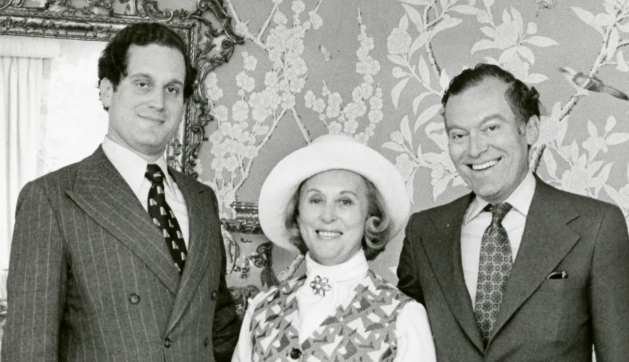
Corona, Queens, 1920s. A girl watches her uncle cook face cream on a kerosene stove in the stable behind her family’s hardware store. She is ashamed of her parents’ Hungarian accents, their old-country ways. The dream is to become “100 percent American.” The rest of her life will be spent running from Corona toward something she can barely articulate—elegance, acceptance, the transformation beauty might make possible.
That girl was Josephine Esther Mentzer, who would rename herself Estée Lauder and build a $70 billion company from those stable-cooked creams. Her family’s combined net worth now exceeds $33 billion. Three generations have shaped global beauty standards, acquired iconic brands, and created perhaps the most successful family business dynasty in American cosmetics history.
Yet the dynasty’s true legacy isn’t measured in billions. It lives in the wound that started it all—a child’s shame transformed into empire.
The Founding Generation: Estée and Joseph
Estée Lauder was born July 1, 1908, to Rose and Max Mentzer, Hungarian-Jewish immigrants who ran a hardware store in Queens. The neighborhood teemed with Italian, Irish, and Eastern European families, all pursuing American dreams. The area adjoining Flushing Bay served as a garbage dump; locals called the refuse heaps “Corona Mountain.”
The Uncle Who Changed Everything
When World War I began, Estée’s uncle John Schotz came to America from Hungary. A chemist, he began creating skin creams in the family stable. Young Esty (as family called her) watched, fascinated. She learned to mix ingredients, to apply creams with massage motions, to tell women that beauty was achievable.
She married Joseph Lauter in 1930, correcting the Austrian spelling to Lauder. They divorced in 1939 when Estée’s business ambitions overwhelmed domestic life. Yet she missed Joseph—”the sweetest husband in the world,” she later said. They remarried in 1942 and stayed together until his death in 1983.
Building the Empire
The company officially launched in 1946. Estée sold during days, cooked products at night in a former restaurant’s kitchen. By 14, son Leonard was delivering orders to Saks on his bicycle. The gift-with-purchase concept, now industry standard, was Estée’s invention. Her genius wasn’t just product quality but psychological insight: make women feel special, and they’ll buy.
Youth Dew, launched in 1953, transformed the company. The bath oil that doubled as perfume allowed women to buy fragrance for themselves rather than waiting for gifts from men. Sales reached 150 million bottles by 1984. The company went public in 1996, valuing Estée’s kitchen-stove operation at billions.
The Second Generation: Leonard and Ronald
Estée’s sons took radically different paths, each shaped by birth order and temperament. Leonard, the elder, inherited the company. Ronald, eleven years younger, built his own empire of influence.
Leonard: The Company Man
Leonard Alan Lauder (1933-2025) joined Estée Lauder Companies in 1958 and never left. He created the first research and development laboratory, then acquired MAC Cosmetics, Bobbi Brown, and Aveda, transforming a single-brand company into a diversified portfolio. After which, he took the company public and served as CEO until 1999.
His death in June 2025 at age 92 marked the end of an era. Forbes estimated his net worth at $9.7 billion. His art collection—Cubist masterpieces worth over $1 billion—went to the Metropolitan Museum of Art. His Breast Cancer Research Foundation, founded with first wife Evelyn, created the pink ribbon symbol.
Ronald: The Diplomat and Advocate
Ronald Steven Lauder (born 1944) charted independent territory. He served as U.S. Ambassador to Austria, ran for New York City mayor, founded Central European Media Enterprises, and built one of the world’s great collections of German and Austrian art. His $135 million purchase of Klimt’s “Portrait of Adele Bloch-Bauer I” set auction records.
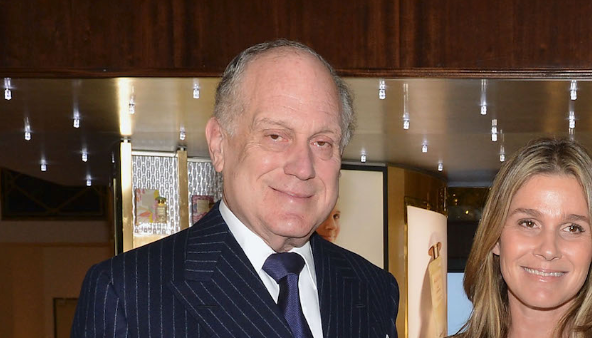
As president of the World Jewish Congress since 2007, Ronald advocates for Jewish communities worldwide. His foundation rebuilds Jewish life across Central and Eastern Europe—establishing schools in Prague, Vienna, Budapest, and other cities where his grandparents’ generation was nearly erased. His net worth stands at approximately $4.7 billion.
The Third Generation: William, Aerin, Jane
Leonard’s and Ronald’s children face different challenges. They didn’t witness the founding struggle. They inherited wealth, access, and expectation. Their task: prove inheritance doesn’t preclude achievement.
William P. Lauder: The Executive
Leonard’s son William (born 1960) started in regional marketing and rose to CEO (2004-2009), now serving as Executive Chairman. He created the Origins brand and pioneered store-within-store retail concepts. His Wharton teaching position reflects a leader who sees his experience as transmissible wisdom. His estimated net worth reaches $1.5 billion.

Aerin Lauder: The Tastemaker
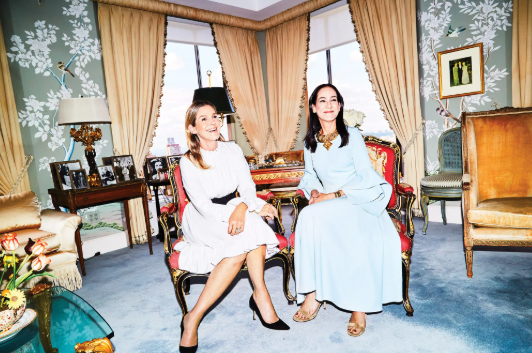
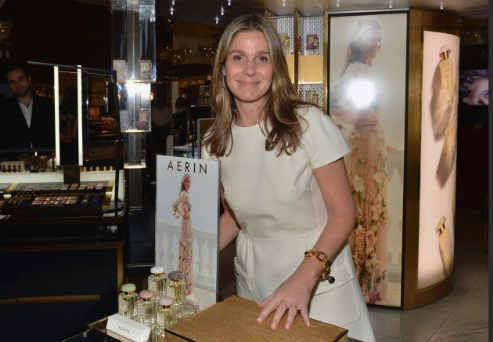
Ronald’s daughter Aerin (born 1970) serves as Style and Image Director while running her own AERIN lifestyle brand. She inherited Estée’s East Hampton house, which she’s updated while preserving her grandmother’s blue-and-white Chinese porcelain and signature aesthetic. Her net worth exceeds $3.3 billion.
Jane Lauder: The Data Strategist
Aerin’s younger sister Jane (born 1973) chose operational excellence over public persona. As Executive Vice President and Chief Data Officer, she leads the company’s digital transformation while running the Clinique unit. Her estimated net worth stands at $2.45 billion. Her husband Kevin Warsh served as a Federal Reserve Governor.

The Family as Institution
The Lauder family functions as both dynasty and institution. Board seats pass through generations. Homes cluster in the Hamptons. Philanthropic causes—breast cancer research, Jewish cultural preservation, art museum support—extend across branches. The company itself serves as family organizing principle.
Governance and Control
Despite going public in 1996, the Lauders maintain controlling interest through dual-class stock structure. Family members hold executive positions and board seats. Major strategic decisions still require family consensus. This combination of public capital and private control has proven remarkably durable.
The Hamptons as Family Headquarters
The East End of Long Island serves as unofficial Lauder territory. Estée’s original property now belongs to Aerin. Ronald’s Wainscott holdings include 30 acres he purchased to prevent development, later selling to East Hampton Town for preservation. Family gatherings maintain connections across branches.
The locations tell the family story. Estée arrived in the Hamptons as a striver, gradually acquiring the credentials of belonging. Her descendants were born belonging. The progression—from Queens hardware store to oceanfront compound—encapsulates American class mobility.
The Wound That Built an Empire
Every Lauder fortune traces back to one girl’s shame. Estée spent her childhood embarrassed by her parents, her neighborhood, her accent. She invented false European aristocratic origins and changed her name’s spelling to look French. Then she married a man whose Austrian surname added Continental credibility.
What Remains
The original wound never fully healed. Estée remained obsessed with presentation until her death in 2004. She couldn’t stop selling even at family dinners. The hunger that drove her from Corona to Park Avenue persisted across decades of success.
Her descendants inherited the fortune but not the desperation. Aerin speaks openly about her grandmother’s influence without sharing her urgency. William teaches leadership rather than scrambling for survival. Jane optimizes data rather than cooking cream on stoves.
The family’s collective $33 billion represents more than compound returns on 1946 investments. It represents the monetization of one woman’s determination to become something other than what her birth suggested. Every Lauder billion carries that original shame, transformed into gold.
Closing Reflection: Beauty as Inheritance
Corona, Queens still exists, though the garbage mountains are long gone. The hardware store is a memory. The stable where Uncle John cooked cream probably became a parking lot. Nothing physical remains of where Estée Lauder began.
Yet everything the family built carries that beginning within it. The turquoise packaging recalls Estée’s obsessive color-matching. The gift-with-purchase reflects her understanding that beauty is also theater. The premium positioning comes from a woman who wanted so desperately to seem refined that she invented fake aristocratic ancestry.
The Lauder legacy isn’t just wealth or brands or Hamptons compounds. It’s the demonstration that shame, properly channeled, becomes ambition. Ambition, properly sustained, becomes empire. Empire, properly inherited, becomes dynasty.
Three generations later, the hurt child from Corona still lives inside the family business. She always will.
Explore the full Lauder family story and Hamptons lifestyle coverage at sociallifemagazine.com/contact. Experience our exclusive polo events at polohamptons.com, and become an insider through our email newsletter or print subscription. Support our journalism with a $5 contribution.
Related Articles
Author

Written by
Recent Posts

Carey Mulligan Net Worth: The Fortune Built on Saying No to Everything That Wasn’t Worth It
Josh Brolin Net Worth: The Fortune That Required Twenty Years of Irrelevance to Build

Shia LaBeouf Net Worth: How a Fortune Survived the Man Who Keeps Trying to Destroy It

Vin Diesel Net Worth: The $225 Million Fortune a Bouncer Built by Trading a Cameo for a Franchise

Ben Affleck Net Worth: The Fortune Built on a Joint Bank Account, Two Oscars, and the Boiler Room Speech
Categories
- Art
- Articles
- Beauty & Skincare
- Celebrities
- Celebrities|Movies
- Celebrities|The Chronicles
- Chronicles
- Entertainment|Culture
- Event Photos
- Events
- Fashion
- Fashion & Style
- Featured
- Food & Beverage
- Food, Spirits, Wine
- Hamptons
- Hamptons Celebrities
- Hamptons Celebrities|Celebrities|The Chronicles
- Health
- Health & Beauty
- Lifestyle
- Luxury Lifestyle
- Movies|Culture
- Movies|Hamptons Lifestyle
- Press
- Profiles
- Real Estate
- Technology
- The Chronicles
- Travel
- Uncategorized
- Weddings