
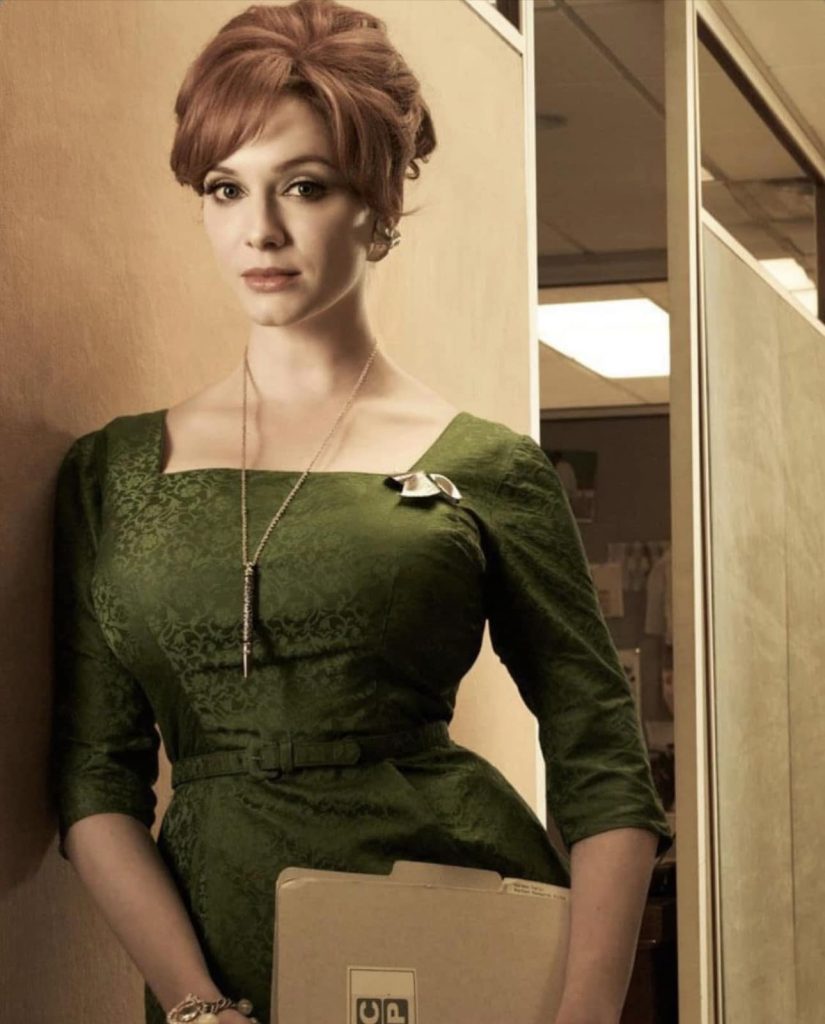
The Before: Knoxville, Idaho, and the Education That Came From Moving
A Childhood in Transit
Christina Rene Hendricks was born May 3, 1975, in Knoxville, Tennessee. Her mother, Jackie, worked as a psychologist. Her father, Robert, was a Forest Service employee from Birmingham, England. That job required the family to relocate repeatedly. From Tennessee, they moved to Georgia when Christina was two months old. The family then settled in Portland, Oregon, for her elementary years. Subsequently, they relocated to Twin Falls, Idaho, when she was nine. Through her father, she holds dual British and American citizenship.
In Twin Falls, her mother enrolled Christina in a local theater group. The goal was simply to help the children make friends. However, the strategy worked beyond its original purpose. Hendricks discovered she was genuinely good at performance. The stage offered a stability that constant relocation never could. The entire town attended the children’s productions. Being an actor in Twin Falls, she later recalled, meant being cool. That experience shaped her understanding of what the work could be before the industry told her what it was worth.
Fairfax, Bullying, and the Drama Department
When Hendricks was a teenager, the family relocated again — this time to Fairfax, Virginia. The move from Idaho was, by her own account, traumatic. She described herself as a loner at Fairfax High School. Bullying was frequent. She found community exclusively in the drama department. Additionally, she studied ballet throughout her teen years. That training placed her in unexpected parallel with Elisabeth Moss. Both would later become Mad Men cast members. Neither knew the other existed yet.
She left Fairfax High School before completing her senior year. Consequently, she finished her education at Northern Virginia Community College. The decision was entirely practical. She had already been accepted to Virginia Commonwealth University’s drama program. At the same time, she had entered a competition to appear on the cover of Seventeen magazine. One path required a degree. The other required a plane ticket. She chose the plane ticket.
The Red Hair and What It Meant
At ten years old, Hendricks began dyeing her hair red. The inspiration was Anne of Green Gables. She admired the character’s defiant singularity — the way the red hair marked her as different and entirely herself. Hendricks was a natural blonde. Nevertheless, the red hair stayed for three decades. By the time the industry assigned its label to her, she had been making that defining choice since childhood. Ultimately, the label was theirs. That decision had always been hers.

The Pivot: IMG Models, New York, and the Nine-Year Education
The Cover Contest
At eighteen, Hendricks won a competition to appear on the cover of Seventeen magazine. The win produced a contract with IMG Models. She moved to New York City, having turned down her pre-acceptance to Virginia Commonwealth’s drama program. She later described that decision without evident regret. In her view, it reached her destination by a path drama school would not have offered. Between eighteen and twenty-seven, she modeled in New York, London, and Japan. She also lived in London for approximately a year. In practice, professional modeling teaches how rooms read you before you speak. It also teaches the gap between what you project and what you actually intend. Hendricks absorbed both lessons, and then began the transition out.
Receptionist, Shampoo Girl, and Firefly
In her early twenties, she moved with her mother and brother to Los Angeles. She briefly pursued a career in the music industry’s administrative sector. Friends redirected her back toward acting. Practically speaking, she worked as a receptionist and as a shampoo girl at a salon while attending auditions. Meanwhile, she accumulated credits that most profiles skip entirely. These included recurring roles on Beggars and Choosers (2001-2002) and Kevin Hill (2004-2005). Appearances on ER and Tru Calling followed.
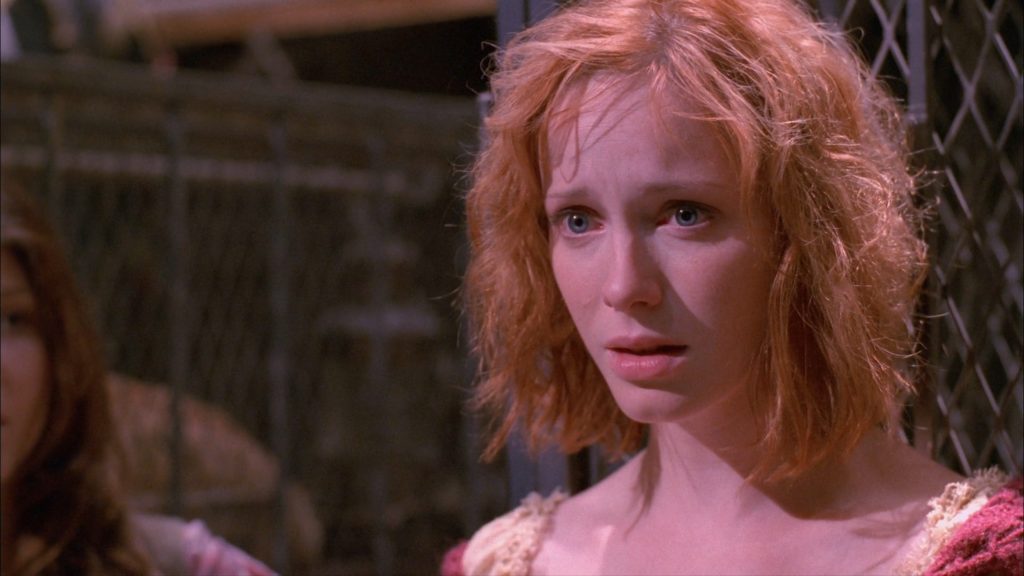
In 2002, she played Saffron in Joss Whedon’s Firefly. The character is a con artist who deploys charm as a professional instrument. She appears across multiple episodes under different names. In retrospect, the role is the exact template for Joan Holloway — running seven years earlier on a cancelled show. Whedon’s fanbase kept it alive long enough to give Hendricks a devoted audience. AMC had simply not confirmed the casting logic yet.
The Mad Men Chapter: Joan Holloway and the Performance Nobody Fully Credited
What the Role Required
Joan Holloway manages Sterling Cooper. She knows the clients, the vendors, and the emotional temperature of every room before anyone else arrives. The partners treat this as a support function. Joan understands it is the entire operation. In turn, playing her required Hendricks to perform operational genius while appearing to perform mere competence. The audience needed to see the intelligence that the show’s characters were structurally unable to acknowledge.
Furthermore, the role demanded a specific sustained composure. Joan never lets the room see her working. At the same time, that work is entirely visible to the audience. Holding both simultaneously — across ninety-two episodes, without a single moment where the seam shows — is the accomplishment. Six Emmy nominations acknowledged it. Zero wins honored it.
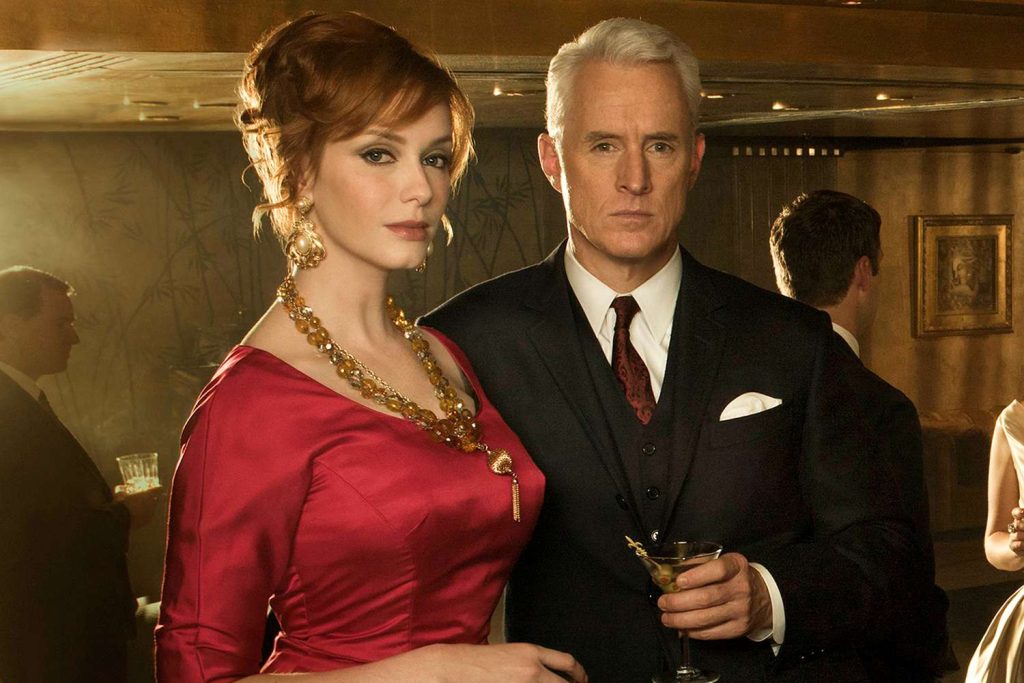
The Jaguar Episode
Season Five’s Jaguar storyline is the show’s most morally unresolvable sequence. The agency needs the account. The client makes his vote contingent on a private evening with Joan. All but one of the partners agrees. Joan accepts. She knows exactly what she is doing. She also knows precisely why the institution has left her no other legitimate path to partnership. Hendricks played those scenes with absolute surface control. The devastation registers only through the containment — in how much the composure is visibly costing her.
That year’s Emmy nomination went to someone else. Notably, the show would have recognized that irony without requiring anyone to state it aloud.
Salary, SAGs, and Drive
At her peak on Mad Men, Hendricks earned $100,000 per episode. That figure came on a supporting contract, for work of comparable complexity to the lead role. The show nominated her six consecutive times for Outstanding Supporting Actress. She also received two Screen Actors Guild Awards and two Critics’ Choice Awards. The SAG and Critics’ Choice recognitions represent the honest accounting. John Slattery held the same $100,000 supporting contract ceiling during the same period — a parallel the show’s salary architecture made structurally inevitable. By contrast, the Emmy record represents a repeated acknowledgment the industry could not stop making and would not reward.
Beyond Mad Men, she received critical notice for Nicolas Winding Refn’s Drive (2011). The film required a quieter, more interior register. As a result, the performance confirmed what the supporting role had been demonstrating: her range extended considerably further than the category implied.
After Sterling Cooper: Good Girls and the Range That Followed
The Post-Mad Men Landscape
When Mad Men ended in 2015, Hendricks occupied a complicated position. She was among the most recognizable faces in prestige television. Nevertheless, the industry’s first instinct was to offer her versions of Joan. She took some of those offers selectively, while building toward something different. The intervening years included Another Period and Hap and Leonard. She also reunited with Refn for The Neon Demon (2016). She also voiced Gabby Gabby in Pixar’s Toy Story 4 (2019). That character’s menace operates entirely through surface warmth. Pixar understood the casting logic precisely.
Good Girls: Four Seasons, One Lead, Zero Emmy Nominations
In 2018, Hendricks took the lead role in NBC’s Good Girls as Beth Boland. Beth is a suburban mother who turns to crime after discovering her domestic life rests on her husband’s financial fraud. The show ran four seasons through 2021. Hendricks carried it as its unambiguous center. Her character demanded the same foundational skill Joan had required: performing normalcy over a compounding accumulation of moral complexity. Consequently, the Emmy record contains six nominations for a supporting role. It also shows zero nominations across four seasons of network drama lead work. That distribution is its own data point.
Geoffrey Arend, George Bianchini, and What Came After
Hendricks married actor Geoffrey Arend in 2009. They divorced in 2019 after ten years together. Throughout that period and its dissolution, she maintained her privacy with the same composure she brought to the work. In March 2023, she became engaged to camera operator George Bianchini. They married April 20, 2024. The ceremony was private. What followed looked, from the photographs that circulated, like a woman settled in her own life — without the performance the professional years had required.
The Numbers and What the Numbers Miss
The $10 Million and Its Honest Accounting

Her Christina Hendricks net worth stands at approximately $10 million as of 2025. The figure reflects a peak salary of $100,000 per episode on Mad Men. It also includes four seasons of NBC lead work on Good Girls. A film career spanning the Refn collaborations and the Pixar credit adds further to the total. Additionally, a modeling and endorsement portfolio built across nine years before Hollywood found official use for her adds to the total. Nevertheless, the figure also reflects the structural reality of a supporting contract on a show where the lead earned considerably more for comparable craft. The gap between this number and what a male actor with the same nomination count would have accumulated is not calculable from public data. It exists nonetheless.
What Joan Holloway Proved
Joan Holloway ran the office. Her name was not on the door. The gap between those two facts is the show’s most sustained argument about institutional power. It describes systems that extract intelligence while withholding the recognition that would make it legible as leadership. Hendricks inhabited that argument for eight years with absolute precision. Over time, the performance compounds on every rewatch. Each new viewer encountering Joan for the first time finds the same woman: running the infrastructure, holding the room, keeping everything functional. She waits, without evident impatience, for acknowledgment that may arrive on its own schedule. That quality, sustained without breaking across eight seasons, is the accomplishment. The Emmy count is simply the evidence that the room knew it and couldn’t bring itself to say so. For the financial architecture the show’s male characters built freely across the same seven seasons, the contrast is instructive.
Return to the full Mad Men complete guide for the show’s seven-season breakdown. Read Jon Hamm and Elisabeth Moss in the full cast series. Visit our Culture and Power hub for the complete landscape.
Related Reading
- Mad Men: The Complete Guide to Every Season and Character
- Elisabeth Moss Net Worth: The $30M Three-Show Story
- John Slattery Net Worth: The $10M Roger Sterling Story
Some careers are built inside the category the industry creates for you. Others are built in spite of it. Social Life Magazine has covered the architecture of creative ambition — and the institutional forces that shape it — for 23 years. You read us because the difference between those two stories matters to you.
If your brand, business, or story belongs in this conversation, we want to hear from you. Editorial features, strategic placements, and partnerships begin at sociallifemagazine.com/contact.
Ready to control your own narrative? Submit a paid feature and reach 25,000 print readers per summer issue at sociallifemagazine.com/submit-a-paid-feature.
Our email list reaches 82,000 subscribers — the people who understand that recognition and value are not always the same number. Join the list here.
Polo Hamptons returns for summer 2026. Two dates. A room that already knows what it is. Sponsorship packages at polohamptons.com.
Five summer issues. Placed where the conversation actually happens. Print subscriptions at sociallifemagazine.com/subscription.
Independent editorial takes real resources. If this kind of journalism matters to you, a $5 contribution keeps Social Life in print and online. Donate here.
Author

Written by
Recent Posts
Galina Breslav: From Pension Fund to Executive Presence

Hermès Fake Authenticator: A Monopoly Mistaken for Expertise
A Real Gift: How La Scala Found Its Community in New York Through the Teatro alla Scala Association of America (TASAA)

He Sold His Company, Got Everything He Wanted, but Lost His Purpose

OUT OF LINE
Categories
- Art
- Articles
- Business of Luxury
- Celebrities
- Culture
- Entertainment
- Events
- Faces of Summer 2026
- Fashion
- Fashion & Style
- Featured
- Finance
- Food, Spirits, Wine
- Hamptons
- Hamptons Celebrities
- Health
- Health & Beauty
- Lifestyle
- Luxury Lifestyle
- Press
- Profiles
- Real Estate
- Technology
- The Chronicles
- Travel
- Uncategorized
- Weddings