
The 90s Music Brand Building Lessons Nobody Teaches in Business School
Every MBA program teaches Porter’s Five Forces. None of them teach what Jay-Z understood at 26: that the real money is never in the product. It is in the brand architecture surrounding the product. The most valuable 90s music brand-building lessons have nothing to do with music and everything to do with leverage, timing, and the alchemy of converting cultural relevance into durable wealth.
Here is what the decade that invented modern fame can teach anyone building something designed to last longer than a career.
Lesson One: Ownership Is the Only Strategy That Compounds
TLC sold 65 million records and filed for bankruptcy. Jay-Z sold fewer records and became a billionaire. The difference was not talent, work ethic, or even luck. It was a single word: ownership.
In the 90s, the standard record deal gave labels roughly 85 percent of revenue. Artists received advances against future royalties, which sounds generous until you realize that recoupment clauses meant most artists never earned a dollar beyond their advance. According to Harvard Business Review, this structure mirrors the sharecropping economics of early American agriculture.
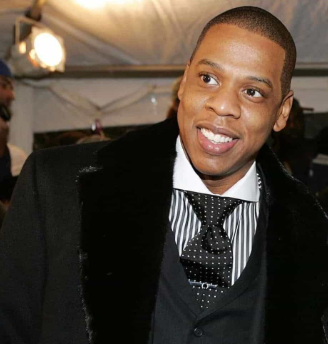
Jay-Z co-founded Roc-A-Fella Records rather than signing away his masters. Consequently, when he sold the label to Def Jam, he retained leverage. When he acquired Armand de Brignac champagne, he applied the same principle. When he invested in Tidal, same principle again. Each move compounded on the last because he owned the underlying asset.
The 90s music brand building lesson here is stark. If you do not own what you create, you are renting your own career. Every entrepreneur, content creator, and founder should tattoo this on their strategy deck.
Lesson Two: Reinvention Is Not Pivoting. It Is Compounding.
The Victoria Beckham Model
Victoria Beckham’s net worth within the Spice Girls was modest. Her solo music career produced exactly one memorable moment. By conventional metrics, she should have faded. Instead, she built a $450 million fortune by treating her Spice Girls fame not as a career but as seed capital for a fashion empire.
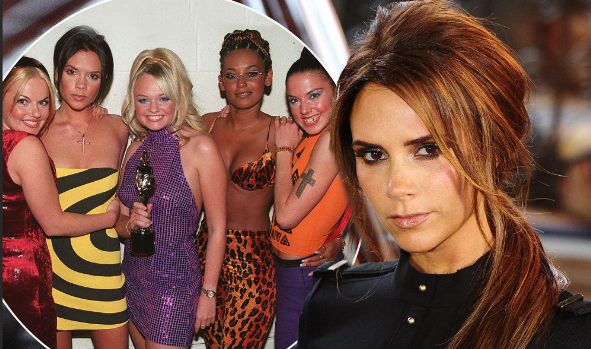
The critical insight, as noted by McKinsey’s luxury practice, is that Beckham did not pivot away from her celebrity. She compounded on it. Each phase added a new revenue layer while the previous layers continued generating income. Spice Girls nostalgia tours. Fashion brand revenue. David Beckham’s parallel brand amplification. The whole thing functions as a wealth engine with multiple cylinders.
The Gwen Stefani Variation
Similarly, Gwen Stefani moved from No Doubt to L.A.M.B. fashion to solo pop to The Voice to a Blake Shelton-amplified country crossover. Each chapter reached a different demographic while maintaining brand coherence. Her $160 million fortune was built across four distinct career acts, each one feeding the next.

The brand building lesson is counterintuitive. Reinvention works only when each new version feels like an expansion of the original, not a contradiction. Beckham could become a fashion designer because Posh Spice was already a style icon. Stefani could launch a fashion brand because No Doubt’s aesthetic was already distinctive. The brand was always there. They simply built more rooms in the house.
Lesson Three: Passive Income Is the Real Endgame
Jennifer Aniston earns roughly $20 million per year from Friends reruns. She does not appear on set. She does not promote the show. The residuals simply arrive, year after year, like dividend checks from a blue-chip stock she bought in 1994. According to Forbes, this makes her one of the highest-earning passive income recipients in entertainment history.
Mariah Carey’s “All I Want for Christmas Is You” generates approximately $3 million annually. She recorded it once, in 1994. Thirty-two years of compounding revenue from a single afternoon in the studio.
These 90s music brand building lessons point to a truth that today’s wealth builders are only now internalizing: the most valuable asset is the one that generates income while you sleep. Catalog sales, residuals, licensing deals, and evergreen intellectual property are the modern equivalents of commercial real estate. They appreciate. They generate cash flow. They survive recessions.
Lesson Four: The Manager Can Destroy Everything
When Trust Becomes the Vulnerability

Alanis Morissette sold 33 million copies of Jagged Little Pill and then discovered her business manager had stolen $5 million from her. Britney Spears earned over $300 million and lost control of every dollar to a conservatorship that lasted thirteen years. Lou Pearlman created NSYNC and the Backstreet Boys, then paid the boys a per diem while he pocketed hundreds of millions.
The pattern, documented extensively by Rolling Stone and Billboard, is consistent. Young artists hand financial control to trusted advisors who exploit that trust. The 90s music brand building lesson for entrepreneurs is identical: governance matters more than growth. A business without financial oversight is a fortune waiting to be stolen.
Lesson Five: Cultural Capital Converts to Financial Capital, but Only Once
There is a narrow window when cultural relevance can be converted into lasting financial infrastructure. Jay-Z converted during his window. So did Dre, Beckham, and Lopez. Tupac died before his window closed. TLC missed their window entirely because their contracts prevented them from capitalizing on their fame.
Research from Boston Consulting Group on celebrity brand longevity suggests this window lasts approximately five to seven years. After that, cultural relevance decays exponentially unless actively managed. The 90s icons who built lasting wealth all share one trait: they made their ownership plays while they were still undeniably relevant. Not after. During.
The Bottom Line on 90s Music Brand Building Lessons
The 90s did not just produce the best music of a generation. It produced a laboratory of brand strategy failures and successes that remain relevant three decades later. Own what you build. Compound rather than pivot. Prioritize passive income. Govern your money like it could disappear. Convert cultural capital while you still have it.
For the complete financial rankings of every 90s icon, visit our Complete 90s Icon Net Worth Rankings. For the pillar overview, see 90s Music Icons Net Worth 2026.
Want to feature your brand alongside stories like this? Contact Social Life Magazine about partnership opportunities. Join us at Polo Hamptons this summer. Subscribe to the print edition or join our email list for exclusive content. Support independent luxury journalism with a $5 contribution.
Read next: Earned vs. Kept: The Real Net Worth Gap of 90s Music | Complete 90s Icon Net Worth Rankings
Author

Written by
Recent Posts

Inside the Art Collections Hidden Behind Hamptons Estate Gates

Next Holidays Makes Holiday Booking Faster, Easier, and More Convenient

The Fertility Pioneer: Inside Dr. David Smotrich’s Mission to Build Families
Beat the Summer Heat Safely: 5 Practical Styling Hacks for Boat Trips and Lake Days
First Date Outfit Ideas: Flattering and Budget-Friendly Dresses to Wear Tonight
Categories
- Art
- Articles
- Business of Luxury
- Celebrities
- Entertainment
- Events
- Faces of Summer 2026
- Fashion
- Fashion & Style
- Featured
- Finance
- Food, Spirits, Wine
- Hamptons
- Hamptons Celebrities
- Health
- Health & Beauty
- Lifestyle
- Luxury Lifestyle
- Press
- Profiles
- Real Estate
- Technology
- The Chronicles
- Travel
- Uncategorized
- Weddings