
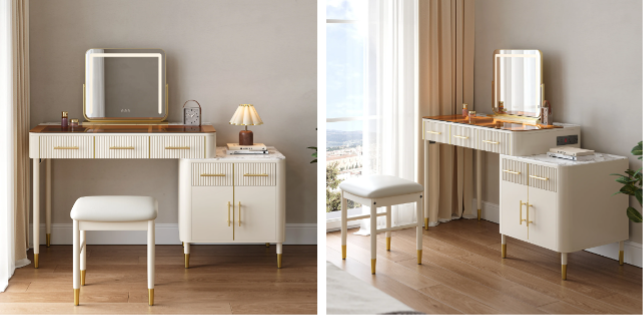
Getting ready for an evening out often begins in a space that has received very little design attention. Makeup lives in a bathroom drawer, jewelry gathers beside the sink, and a handheld mirror moves between rooms in search of better light. A dedicated dressing corner brings those scattered tasks together. It can also give a bedroom a more personal atmosphere, with furniture and accessories chosen around the way its owner actually gets ready.
In a home inspired by the relaxed elegance of the Hamptons, the dressing area can feel like a natural extension of the bedroom. Pale finishes, interesting textures, and a comfortable seat establish the mood. The practical work happens underneath that first impression, through thoughtful placement, useful storage, and lighting that makes the space comfortable at different times of day.
Begin with the Routine
Before looking at furniture, spend a few mornings noticing what you reach for. Some people need space for a small makeup bag and everyday jewelry. Others use several skincare products, styling tools, brushes, and accessories. Gather those items together and separate daily essentials from occasional supplies. This simple exercise gives you a realistic idea of how much surface area and storage the corner needs.
Consider whether the space will be shared. Two people getting ready on different schedules may benefit from separate drawer sections, while a guest bedroom dressing area might need more open space for visitors’ own belongings. Leave room for the routine to change. A surface that is filled completely on the first day will be difficult to keep comfortable and organized over time.
Find the Right Position
An unused bedroom wall or a quiet corner beside a window can be a good starting point. Look at how the position relates to wardrobe doors, bedside furniture, and the main walkway. Pull a chair into the proposed location and sit down. Check whether someone can pass behind you comfortably and whether an open drawer would interfere with a nearby door.
When exploring Homary for a makeup vanity, compare the overall dimensions with the usable space in your room. Drawer depth, legroom, and mirror placement deserve attention alongside the furniture’s appearance. Mark the footprint with painter’s tape, then allow additional room for the seat and for opening storage. This makes the relationship between the vanity and the rest of the bedroom easier to judge.
Plan for Daylight and Evening Light
A window can make a dressing corner pleasant to use, but the direction of the light matters. Sit where the mirror will be and notice whether your face is evenly visible. Strong light behind you can make it harder to see detail, while bright sunlight from one side may create uneven shadows. Curtains or adjustable shades can help manage changing conditions throughout the day.
For early starts and evenings out, a makeup vanity with lights is worth considering. Review the lighting features of the individual model, including brightness settings and any available color temperature options. Confirm the power requirements and outlet location before choosing a position. If possible, check how your usual makeup looks in both the dressing area’s light and ordinary daylight so the setup supports the way you use it.
Make the Drawers Work Harder
Storage is most useful when you can see and reach what is inside it. Measure the drawer interiors before buying dividers, and choose compartments that suit the actual items being stored. A shallow section can keep small cosmetics visible, while taller bottles need sufficient clearance. Keep frequently used products near the front and group backups separately so they do not crowd the daily routine.
Hair tools need their own plan. Follow the tool manufacturer’s instructions for cooling and storage, and keep cords from becoming tangled with delicate jewelry or cosmetics. A small removable tray can hold rings and earrings while you get ready. For products that might spill, choose organizers that are easy to remove and clean, and follow the furniture manufacturer’s guidance for protecting the finish.
Choose a Seat You Will Enjoy Using
A dressing chair or stool should fit both the furniture and the person using it. Compare seat height with the vanity’s underside clearance, including any drawers or apron beneath the top. Think about whether you prefer back support for a longer routine. If the seat will tuck away, check that its full width and depth fit beneath the vanity without catching on the legs.
Texture can make this small area feel considered. Upholstery, woven details, or a warm wood finish can connect the seat with the wider bedroom. Review care instructions before choosing a fabric, especially if cosmetics or hair products will be used nearby. A comfortable, manageable piece is easier to enjoy every day.
Add Character with Restraint
Bring the corner together with a few personal objects. A favorite photograph, a ceramic dish, or a modest arrangement of branches can add character while leaving the working surface usable. Repeat one or two colors from the bedroom so the area feels connected to its surroundings.
Finally, use the dressing corner for a week before adding more accessories. Notice where things naturally land and adjust the organizers accordingly. The most satisfying finishing touches often emerge from daily use, when every brush, bottle, and piece of jewelry has found a convenient place.
Author

Written by
Recent Posts
A Dressing Corner Worth Making Room For
Why Brand Activations Need Architecture, Not Just a Booth
How a Head Spa Reset Works (and Why Your Scalp Needs One)
How to Host a Golf Tournament That People Actually Talk About
Golf Gifts for the Man Who Has Everything: His Home Course on the Wall
Categories
- Art
- Articles
- Business of Luxury
- Celebrities
- Culture
- Entertainment
- Events
- Faces of Summer 2026
- Fashion
- Fashion & Style
- Featured
- Finance
- Food, Spirits, Wine
- Hamptons
- Hamptons Celebrities
- Health
- Health & Beauty
- Lifestyle
- Luxury Lifestyle
- Press
- Profiles
- Real Estate
- Technology
- The Chronicles
- Travel
- Uncategorized
- Weddings