

Arthur Miller died at home in Roxbury, Connecticut on February 10, 2005 with an estate worth approximately $20 million. The figure looks modest. The asset under it does not. Arthur Miller net worth at death sat on top of a royalty stream from four plays that get performed in virtually every high school, university, and regional theater in America every year. Death of a Salesman alone generates an estimated $1 to 2 million annually for the estate, more than sixty years after its 1949 premiere. The Crucible, All My Sons, and A View from the Bridge add to the float. Miller married Marilyn Monroe and outlasted her by 43 years. As an entry in the Movie Star Legends cluster, Miller is the case study in cultural capital that compounds across generations. He earned less than Hollywood. He kept more.
Arthur Miller Net Worth at a Glance
| Birth Name | Arthur Asher Miller (born October 17, 1915) |
|---|---|
| Net Worth | Approximately $20 million at death (February 10, 2005) |
| Primary Income Source | Play royalties (Death of a Salesman, The Crucible, All My Sons, A View from the Bridge); screenplays; book sales; Roxbury, Connecticut real estate |
| Career Span | 1944 (The Man Who Had All the Luck) to 2004 (Finishing the Picture) |
| Key Credits | Death of a Salesman (1949 Pulitzer); The Crucible; All My Sons; A View from the Bridge; The Misfits screenplay |
| Notable Achievements | Pulitzer Prize for Drama 1949; Tony Award Best Play 1949; HUAC contempt conviction 1957 (overturned 1958); married Marilyn Monroe 1956 to 1961 |
| Residence at Death | Tophet Road, Roxbury, Connecticut (350-acre converted dairy farm purchased 1948) |
Before the Money: The Crash, The Coat Factory, And The Hopwood Check
Arthur Asher Miller arrived October 17, 1915 in Harlem, born to Isidore Miller and Augusta Barnett Miller. Isidore ran a successful women’s coat manufacturing business through the 1920s, employing roughly 800 workers at peak. The Wall Street crash wiped him out in 1929. The family moved from Manhattan to a small frame house at 1350 East 3rd Street in Brooklyn. Augusta sold her piano. Arthur watched the move and learned the lesson young: capital can vanish overnight.
He worked as a delivery boy for an auto-parts company after high school and saved $500 over two years for college tuition. Public schools followed by the University of Michigan on a scholarship from the Hopwood Awards committee in 1934. Michigan paid him $250 for the play No Villain in 1936. That check was the first money Miller earned writing. He worked at the Brooklyn Navy Yard repairing battleships through the early 1940s while drafting plays at night. The economic basis of childhood, the lost coat business, and the long apprenticeship years shaped every play he wrote about American capitalism.
The Brooklyn To Broadway Years: $2M From One Play
Death Of A Salesman And The 1949 Pulitzer
Miller’s first Broadway play, The Man Who Had All the Luck (1944), closed after four performances. Critics called it incompetent. He almost quit writing. He spent two years on All My Sons instead. The play opened January 29, 1947 at the Coronet Theatre. It ran 328 performances and won the New York Drama Critics’ Circle Award. Royalty payments began arriving. Miller bought a small Brooklyn brownstone with the first check.
Death of a Salesman opened February 10, 1949 at the Morosco Theatre. The play ran 742 performances on Broadway. It won the Pulitzer Prize for Drama, the Tony Award for Best Play, and the New York Drama Critics’ Circle Award. Miller earned an estimated $2 million from Salesman across his lifetime, equivalent to roughly $25 million in 2026 dollars. He was 33 years old. He had built the most commercially successful serious play in American theater history. Hollywood adapted the play in 1951. Miller earned an additional $50,000 from the film rights.
The Crucible followed in January 1953 at the Martin Beck Theatre. McCarthyism was already destroying careers across Hollywood and Broadway. The play addressed the Salem witch trials as a thin allegory for the McCarthy hearings. Critical reception was mixed at premiere. The Crucible has since become the most-performed serious American play in world theater. Royalty revenue from the play alone has generated an estimated $30 million across its 73-year history. Annual licensing currently produces approximately $1 million for the Miller estate.
HUAC: The Defiance That Sealed The Brand
$0 In Hollywood, $40M+ In Permanent Cultural Capital
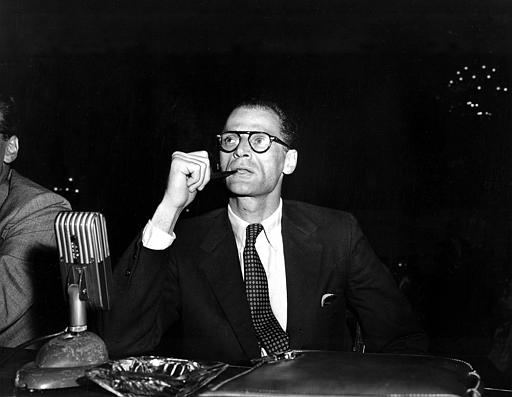
The House Un-American Activities Committee summoned Miller to testify in June 1956. The committee wanted names. Miller had attended a handful of Communist Party-affiliated meetings in the 1940s. He had supported left-wing causes through the New Masses magazine. He refused to name anyone. The committee held him in contempt of Congress in 1957. A federal court convicted him. The Court of Appeals overturned the conviction in 1958. Legal fees came to an estimated $40,000, roughly $450,000 adjusted. The professional cost looked catastrophic at the time. Hollywood blacklisted him. Foreign-rights deals dried up. Theater producers grew nervous about staging his work.
The reputational gain proved permanent. Miller had refused to do what Elia Kazan had done in 1952. Kazan named eight names and kept working. Miller named nobody and went into the wilderness. Kazan won an honorary Oscar in 1999 to scattered applause and standing dissent. Miller won American conscience in 1956 and never gave it back. The differential ran for decades. The man who wrote The Crucible to expose American hypocrisy refused to enact that hypocrisy on its own stage.
Financial calculus looked bad on paper for the late 1950s. Miller’s earnings collapsed in those years. Peak years of $200,000 to $300,000 in 1949 through 1953 dropped to roughly $30,000 in 1957. Hollywood adaptation deals froze. Foreign productions slowed. He took the loss in exchange for symbolic capital that would compound for the rest of his life. By the 1970s, Miller’s plays were back in every American high school curriculum. Every regional theater season and university drama department staged them too. The HUAC sacrifice converted directly into permanent cultural capital.
The Monroe Marriage: Capital Collision With Hollywood
$250K For The Misfits, A Lifetime In Reputational Trade-Off
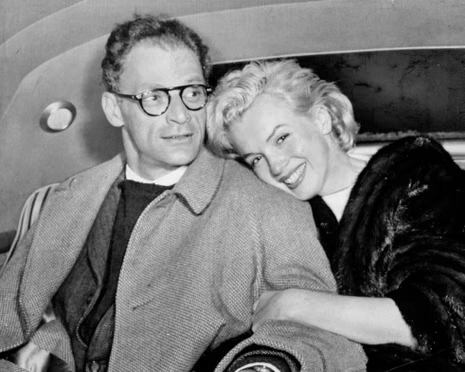
Miller met Marilyn Monroe in 1951 on a Hollywood visit. They reconnected in 1955. He left his first wife Mary Slattery, mother of his two children Jane and Robert, in summer 1956. Miller married Monroe in a civil ceremony in White Plains, New York on June 29, 1956. Two days later they held a Jewish ceremony in Katonah, performed by Rabbi Robert Goldburg. Monroe had converted to Judaism for the marriage. The pairing made tabloid sense and intellectual chaos.
Monroe wanted what Miller had: cultural legitimacy, permanent seriousness, acceptance into the intellectual class she had built her brand to escape. Miller wanted what Monroe had: permission to access desire without losing his identity as the conscience of America. The marriage was a capital exchange in both directions. Neither party fully understood the trade. Both paid prices that compounded across the next five years.
Miller wrote The Misfits in 1960 as a screenplay built around Monroe. The film paid him approximately $250,000. Production was catastrophic. Monroe was deteriorating, Clark Gable suffered a heart attack and died ten days after filming wrapped, and the Miller-Monroe marriage collapsed during the shoot. They divorced in January 1961. Monroe died eighteen months later. Miller refused to attend her funeral. He told friends she was beyond his reach by the time she went to Hollywood for the last picture. The screenplay fee was the smallest transaction in the deal. Emotional cost ran into psychological terms Miller paid over the next forty years.
The Roxbury Years And The Royalty Stream
How A Brooklyn Coat Maker’s Son Built $20M On Annuities
Miller married Inge Morath, a Magnum Photos photographer, in February 1962. They moved permanently to a converted dairy farm on 350 acres in Roxbury, Connecticut. The town read like a Wharton novel: New England old money, low-key, allergic to celebrity. Henry Kissinger and William Styron lived nearby because the neighbors did not ask questions. Miller wrote a new play every two or three years through the next four decades. After the Fall (1964). Incident at Vichy (1964). The Price (1968). Broken Glass (1994). None matched Salesman or Crucible commercially. None needed to.
The royalty stream from the four big plays generated steady annual revenue without any new commercial output. Death of a Salesman royalties through Dramatists Play Service ran an estimated $1 to 2 million per year by the 1990s. The Crucible matched and eventually exceeded it. All My Sons and A View from the Bridge added smaller amounts. Foreign-rights licensing through Curtis Brown and ICM Partners generated parallel streams. Miller’s annual income from royalties alone exceeded $2 million per year through most of the 1980s and 1990s. He needed no additional writing to maintain the float.
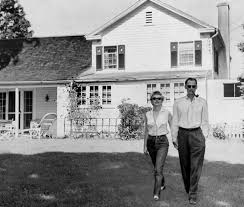
The Roxbury property appreciated through the same period. Connecticut farmhouse real estate moved from $50,000 in 1962 to several million by 2005. Miller built a writing studio on the property himself in 1948 before fully relocating. Visitors over the decades included Saul Bellow, Norman Mailer, Alexander Calder, and a young Daniel Day-Lewis, who married Miller’s daughter Rebecca in 1996. Miller died at his Roxbury home on February 10, 2005, exactly 56 years to the day after Death of a Salesman opened on Broadway. The estate inventoried at approximately $20 million.
How Arthur Miller’s $20M Estate Compounds On Performance Rights
Stack the estate against the underlying revenue engine. Death of a Salesman: estimated lifetime gross to Miller’s estate of $30 to 40 million, current annual licensing $1 to 2 million through Dramatists Play Service. The Crucible: lifetime gross to estate $25 to 35 million, current annual licensing $1 to 1.5 million. All My Sons and A View from the Bridge: combined annual licensing roughly $500,000. The Misfits screenplay rights and miscellaneous adaptations: small but persistent. Roxbury property: sold in pieces after Miller’s death, total proceeds approximately $5 million. Manuscripts, papers, and letters: donated to the University of Texas Harry Ransom Center, valued at $7 million.
The estate as a whole generates an estimated $3 to 4 million annually in licensing revenue plus appreciating book and academic sales. The Miller Trust, administered by his three children, retains the rights. Compare to Marilyn Monroe’s posthumous estate at $13 million per year, or Tennessee Williams’ estate at roughly $2 million annually. Miller’s estate runs in the upper middle of literary estates. Revenue is not extractive. It compounds. Every American teenager who reads Death of a Salesman in high school adds incremental income to the float. The Crucible runs in every theater capable of staging it. The play has not gone out of print since 1953. Math survives the author.
Where Arthur Miller’s Money Stands Now
The Arthur Miller Trust administers performance rights through Dramatists Play Service for Death of a Salesman and A View from the Bridge. The Crucible runs through Dramatists Play Service and select international agents. All My Sons licensing runs through similar channels. Roughly 30 to 40 major regional productions of a Miller play happen in any given American theater season. Approximately 2,000 high school and university productions happen each year. The float is steady, predictable, and immune to celebrity-economy volatility. The estate is the literary version of a municipal bond.
Miller’s cultural-capital footprint sits inside the Movie Star Legends cluster through the Monroe marriage and the broader mid-century intellectual scene. Crosslinks reach into the Quiet Luxury cluster through the Roxbury, Connecticut residency and the playwright’s relationship with old-money New England. The HUAC defiance positions Miller inside any forthcoming political-conscience cluster. He is the playwright peer to JFK on the Kennedy-era intellectual register. He is the moral counterweight to Elia Kazan in the broader Hollywood blacklist conversation. The royalty stream proves that survival is the most underrated form of capital. Cleverness pays in spurts. Compounding pays forever.
Arthur Miller Net Worth FAQ
What was Arthur Miller’s net worth at death?
Arthur Miller net worth at death on February 10, 2005 totaled approximately $20 million. The estate included his 350-acre Roxbury, Connecticut farm, the Brooklyn brownstone, manuscript archives valued at $7 million (donated to the University of Texas Harry Ransom Center), and the performance-rights catalog for his major plays. The estate continues to generate $3 to 4 million annually in royalty revenue through Dramatists Play Service licensing.
How much did Death of a Salesman earn Arthur Miller?
Miller earned an estimated $2 million across his lifetime from Death of a Salesman, equivalent to roughly $25 million in 2026 dollars. The play won the Pulitzer Prize for Drama and the Tony Award for Best Play in 1949. Annual licensing revenue currently runs $1 to 2 million for the estate through Dramatists Play Service. Cumulative gross to Miller and his estate from Salesman is estimated at $30 to 40 million across the play’s 76-year history.
Why did Arthur Miller refuse to testify before HUAC?
Miller refused to name names before the House Un-American Activities Committee in June 1956 on principle. He had attended a handful of Communist Party-affiliated meetings in the 1940s and supported left-wing causes. The committee held him in contempt of Congress in 1957. A federal court convicted him. The Court of Appeals overturned the conviction in 1958. Legal fees ran roughly $40,000. The Hollywood blacklist that followed cost him an estimated $1 million in lost work but earned him permanent moral standing.
Did Arthur Miller’s estate continue to earn after his death?
The Arthur Miller Trust generates an estimated $3 to 4 million annually in licensing revenue. Death of a Salesman, The Crucible, All My Sons, and A View from the Bridge are performed in roughly 30 to 40 major regional productions per year and approximately 2,000 high school and university productions annually. The royalty stream is steady, predictable, and immune to celebrity-economy volatility, behaving more like a municipal bond than a Hollywood estate.
Where The Conversation Continues
Social Life Magazine covers the intersection of wealth, culture, and influence from the Hamptons to Manhattan. Our celebrity net worth coverage traces the economics, the leverage, and the decisions that built the fortune.
Our readers are family office principals, exit founders, fashion executives, and the advisors who serve them. For premium editorial placement and integrated advertising across print and digital, submit a paid feature or contact our business development team.
Want insider access to the events, launches, and gatherings that define the Hamptons social calendar? Sign up for Event Invites & Specials and never miss a moment.
Social Life Magazine. Twenty-three years of covering the people and places that define luxury in America.
Author

Written by
Recent Posts
Legal Options for Investment Fraud Claims

How Custom DTF Printing Adds Ease and Color to Your Boutique
How Often Should You Actually Replace Your Towels?
Apartment Pet Policies: What to Know as a Pet-Owning Tenant
Why Reliable Airport Transportation Matters for Modern Travelers
Categories
- Art
- Articles
- Business of Luxury
- Celebrities
- Culture
- Entertainment
- Events
- Faces of Summer 2026
- Fashion
- Fashion & Style
- Featured
- Finance
- Food, Spirits, Wine
- Hamptons
- Hamptons Celebrities
- Health
- Health & Beauty
- Lifestyle
- Luxury Lifestyle
- Press
- Profiles
- Real Estate
- Technology
- The Chronicles
- Travel
- Uncategorized
- Weddings