
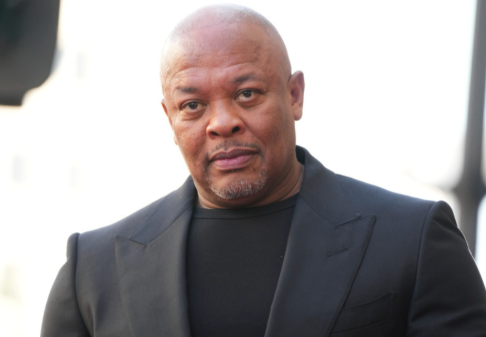
There’s a moment in every mogul biography where the person stops doing the thing that made them famous and starts doing the thing that makes them rich. For Andre Romelle Young, that moment happened in a meeting with Interscope chairman Jimmy Iovine in 2006. Dre was complaining about earbuds. Two years later, he was building the most valuable consumer electronics brand in audio history. Six years after that, he was cashing a check from Apple for approximately $750 million.
Dr. Dre’s net worth sits at approximately $500 million in 2026, according to Celebrity Net Worth and Forbes estimates. That figure is down from a peak near $800 million, eroded by a costly divorce settlement. But the headline number undersells the story. Dre’s career arc represents the single most successful pivot from artistic fame to product-market fit in entertainment history.
Compton to Chronic: The Origin of the Ear
Born in Compton, California, in February 1965, Andre Young started spinning records at local clubs as a teenager. He joined the World Class Wreckin’ Cru, a funk-influenced group that earned him his first real studio experience. Then came N.W.A.
The group’s 1988 album Straight Outta Compton didn’t just redefine hip-hop. It created an entirely new market for aggressive, unapologetic West Coast rap. Dre produced the album on equipment that cost less than a decent set of studio monitors today. The record eventually went triple platinum. Yet the financial mechanics of N.W.A. followed a pattern that would repeat itself across the 90s. The label, Ruthless Records, controlled the money. The artists who created the cultural moment saw fractions of the revenue.
When Dre left N.W.A. and co-founded Death Row Records with Suge Knight in 1991, he entered an arrangement that looked like ownership but functioned like employment. His debut solo album, The Chronic (1992), sold 5.7 million copies and invented the G-funk sound that dominated West Coast rap for a decade. He produced Snoop Dogg’s Doggystyle, which moved 800,000 copies in its first week. He worked on Tupac’s All Eyez on Me.
During the Death Row era, Dre’s personal income from these historic releases was estimated at $500,000 to $1 million annually. He was generating hundreds of millions in revenue for a label that wasn’t sharing the wealth. The lesson was carved in financial scar tissue. Creating the product is not the same as owning the product.
Aftermath and the Talent Factory
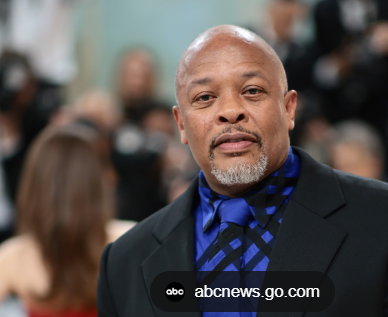
Dre left Death Row in 1996 and founded Aftermath Entertainment as a subsidiary of Interscope Records. The move gave him something Death Row never did. A label where he controlled the A&R, the production direction, and the equity.
Through Aftermath, Dre assembled one of the most consequential rosters in hip-hop history. He signed and developed Eminem, whose The Slim Shady LP (1999) and subsequent albums would sell over 220 million records worldwide. Next came 50 Cent, whose Get Rich or Die Tryin’ (2003) debuted at number one with 872,000 first-week sales. Then Kendrick Lamar, who would go on to win a Pulitzer Prize for music.
Each of these artists generated tens of millions in production royalties, label profits, and touring revenue that flowed through Aftermath’s books. Dre’s ear for talent was, in quantitative terms, the single most productive A&R skill in the genre. He didn’t just find artists. He found artists who moved culture, which moved units, which moved capital.
Beats by Dre: The $3 Billion Complaint
The origin story of Beats Electronics has been retold so many times it’s become music industry mythology. But the details matter because they illustrate how a single consumer insight can generate billions.
In 2006, Dre sat in a meeting with Jimmy Iovine and complained about Apple’s plastic earbuds. “It’s one thing that people steal my music,” he reportedly said. “It’s another thing to destroy the feeling of what I’ve worked on.” Iovine’s response redirected Dre’s entire career trajectory. “Don’t do sneakers,” Iovine reportedly advised. “Do speakers.”
They partnered with Monster Cable to manufacture the first Beats by Dr. Dre Studio headphones, which launched in July 2008 at a premium price point of $349. The product was priced roughly three times higher than comparable headphones. The audio quality, by audiophile standards, was not three times better. That was entirely the point.
Beats understood what the consumer electronics industry had missed for decades
Headphones were not audio equipment. They were fashion accessories and status signifiers. LeBron James wore them. Serena Williams wore them. Lady Gaga wore them in music videos. The endorsement strategy wasn’t about sound quality. It was about cultural positioning, a concept Harvard Business Review would later analyze as “category creation through cultural capital.”
By 2013, Beats controlled 70% of the premium headphone market. Mobile phone manufacturer HTC had purchased 50.1% of the company in 2010 for $309 million, valuing Beats at roughly $618 million. By 2013, Dre and Iovine had bought back HTC’s entire stake. The Carlyle Group invested $500 million, pushing the valuation to $1 billion.
On May 28, 2014, Apple confirmed the acquisition of Beats for $3 billion, paying $2.6 billion in cash and $400 million in stock. It was the largest acquisition in Apple’s history. Dre and Iovine each held approximately 25% equity. Their pre-tax payouts were roughly $750 million each. Forbes confirmed Dre earned $620 million in 2014 alone, the highest annual income any musician has ever recorded.
Dre also received approximately $100 million in Apple stock, which has roughly doubled in value since the deal closed. Assuming he held those shares, the Apple position alone is now worth approximately $200 million.
Post-Beats: The Catalog Cash-Out
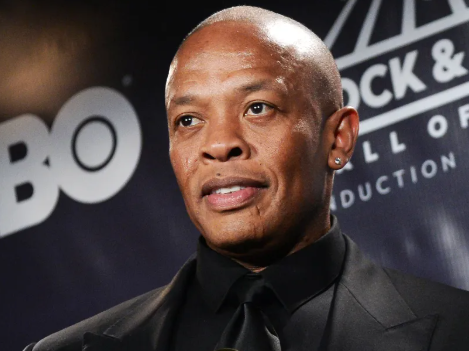
In 2023, Dre sold his music catalog, including artist royalties from two solo albums, N.W.A. royalties, producer royalties, and his song catalog’s writer’s share, to Universal Music Group and Shamrock Holdings for over $200 million. The catalog reportedly generates approximately $10 million in annual income.
The sale represented a clean financial calculation. Lock in a premium valuation while the catalog market was hot, convert future royalty streams into present-day capital, and redeploy into assets with higher growth potential. It’s the same logic that drove Jay-Z’s D’Ussé sale, applied to a different asset class.
Dre also launched Still G.I.N., an ultra-premium gin brand with Snoop Dogg, entering the celebrity spirits market that his fellow 90s moguls have dominated. His real estate portfolio includes properties worth an estimated $80 million in the Los Angeles area.
The Divorce That Reshaped the Balance Sheet
In 2020, Dre’s wife of nearly 25 years, Nicole Young, filed for divorce. The proceedings revealed a financial universe through court documents. Assets valued between $450 million and $500 million. Average monthly income of approximately $230,000. Bank balances near $183 million. Apple stock worth $73 million at the time. Personal property valued at $270 million.
The settlement terms were not fully disclosed, but the divorce is widely reported to have cost Dre somewhere between $100 million and $200 million. The financial impact explains the gap between his peak net worth (estimated near $800 million shortly after the Beats sale) and his current $500 million.
The Dre Playbook: Product Beats Royalties
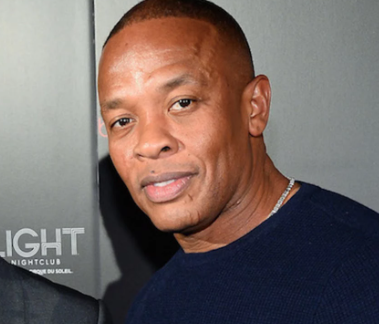
Dr. Dre’s career offers a blunt financial lesson. In 30 years of producing some of the most influential albums in hip-hop history, his music catalog accumulated a value of roughly $200 million. In six years of building a headphone company, he generated roughly $750 million in personal wealth from a single exit.
The math is inescapable. Creating culture is valuable. Creating a product that leverages cultural credibility into consumer demand is exponentially more valuable. Dre’s seven Grammy Awards didn’t make him one of music’s richest figures. His ability to see that headphones could be status symbols did.
At 60, Dre’s active output has slowed. The legendary Detox album was worked on for over a decade before being abandoned, a testament to his refusal to release anything below his standards. But the fortune doesn’t require new releases to sustain itself. Apple stock, real estate, spirits revenue, and catalog residuals generate passive income that places him comfortably among hip-hop’s wealthiest figures for decades to come.
He started in Compton with borrowed equipment. He’s finishing in Brentwood with a portfolio. The beats changed. The ear never did.
This article is part of Social Life Magazine’s Mogul Tier series within our 90s Music Icons collection.
Read next: Diddy Net Worth 2026: Rise, Empire, and the Unraveling | Eminem Net Worth 2026
Want to feature your brand alongside stories like this? Contact Social Life Magazine about partnership opportunities. Join us at Polo Hamptons this summer. Subscribe to the print edition or join our email list for exclusive content. Support independent luxury journalism with a $5 contribution.
Author

Written by
Recent Posts
How to Pick a Homecoming Dress for Your Body Type and Feel Amazing in It
How to Prepare a Home for Sale When Major Repairs Are Not Affordable
From Everyday Comfort to Personal Style: My SHEIN Slipper Habit
5 Best Mitsubishi Heat Pump Companies in Seattle
Tech Gadgets as Modern Corporate Gifts: Useful Ideas for Employees and Clients
Categories
- Art
- Articles
- Business of Luxury
- Celebrities
- Culture
- Entertainment
- Events
- Faces of Summer 2026
- Fashion
- Fashion & Style
- Featured
- Finance
- Food, Spirits, Wine
- Hamptons
- Hamptons Celebrities
- Health
- Health & Beauty
- Lifestyle
- Luxury Lifestyle
- Press
- Profiles
- Real Estate
- Technology
- The Chronicles
- Travel
- Uncategorized
- Weddings