
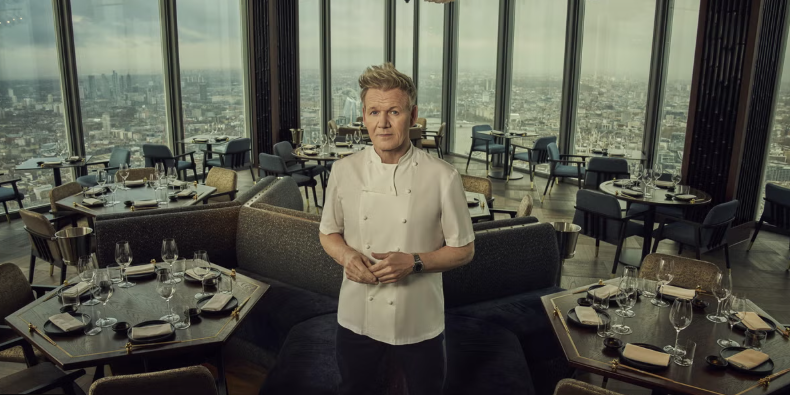
Gordon Ramsay Net Worth 2025: The Complete Breakdown
Gordon Ramsay’s net worth in 2025 reaches approximately $220 million, according to estimates from Forbes and Celebrity Net Worth. This figure represents one of the largest fortunes ever accumulated by a professional chef, surpassing culinary legends like Wolfgang Puck and rivaling only a handful of food-media moguls.
The composition of that wealth tells a more interesting story than the headline number. Television contracts account for the largest share, followed by licensing arrangements, restaurant profit participation, and product endorsements. Each revenue stream operates on fundamentally different economics.
| Revenue Stream | Estimated Annual Value | Cumulative Lifetime Value |
|---|---|---|
| TV Contracts (Hell’s Kitchen, MasterChef, Kitchen Nightmares) | $45 million/year | $350+ million lifetime |
| Restaurant Group (35+ locations globally) | $25 million profit share | Operating income |
| Cookware and Endorsements | $15 million/year | $100+ million lifetime |
| Digital Content and Streaming | $10 million/year | Growing rapidly |
| Speaking and Appearances | $2 million/year | Variable |
These figures illustrate a pattern that applies across the celebrity chef category: operational businesses like restaurants generate prestige and press, while media and licensing generate actual wealth accumulation.
The Origin Story: From Homeless Teenager to Michelin Star Chef
Gordon Ramsay’s path to culinary stardom began in circumstances most profiles gloss over. His father was an abusive alcoholic who moved the family eleven times during Ramsay’s childhood. By sixteen, Gordon found himself homeless after a promising football career ended with a knee injury. No safety net existed. Family connections didn’t open doors. Inherited capital never cushioned the landing.
This background matters because it explains the ferocity that became his brand. When you’ve been abandoned, you control everything. Every plate becomes a referendum on whether you deserve to exist. Perfectionism isn’t personality for Ramsay. It’s survival mechanism monetized at scale.
The formal training followed a traditional European path. Ramsay apprenticed under Marco Pierre White in London, then worked with Guy Savoy and Joël Robuchon in France. By 1998, he opened his first eponymous restaurant in Chelsea. Within three years, it earned three Michelin stars, joining an elite tier of global fine dining.
How Gordon Ramsay Built His Television Empire
The television career that would ultimately dwarf Ramsay’s restaurant income began in 2004 with Ramsay’s Kitchen Nightmares in the UK. American audiences first encountered his volcanic temperament through Hell’s Kitchen in 2005, a show now approaching its twenty-fifth season with no signs of fatigue.
Understanding the economics of Ramsay’s TV deals illuminates why television drives celebrity chef wealth more effectively than restaurants ever could. A hit restaurant might generate $2-5 million in annual profit for its chef-owner after expenses. A successful television franchise generates $20-50 million annually in direct compensation, plus backend participation, plus global syndication rights, plus streaming residuals.
Ramsay’s current television portfolio includes Hell’s Kitchen, MasterChef, MasterChef Junior, Gordon Ramsay’s 24 Hours to Hell and Back, and numerous international adaptations. Each show operates independently, each generates its own revenue stream, and each reinforces the brand equity that makes all the others more valuable. The flywheel compounds.
The Near-Bankruptcy That Changed Everything
In 2010, Gordon Ramsay Holdings faced a crisis that nearly destroyed everything he’d built. The company owed approximately £10 million to creditors. Restaurant locations were closing. Lawsuits from former business partners created ongoing legal exposure. The empire appeared to be collapsing.
What happened next represents the most important business decision of Ramsay’s career. Rather than simply refinancing debt and continuing the same approach, he fundamentally restructured how Gordon Ramsay Holdings operated. The shift moved from ownership to licensing, from capital-intensive restaurant launches to capital-light brand extensions.
Before 2010, Ramsay typically owned significant equity in his restaurants, bearing the operational risk alongside the potential upside. After the restructuring, most new Gordon Ramsay restaurants operate under licensing agreements. Local operators provide the capital and bear the operational risk. Ramsay provides the brand, training protocols, menu consultation, and occasional appearances. He earns management fees and royalties without the downside exposure that nearly bankrupted him.
Gordon Ramsay’s Restaurant Empire: 35+ Locations Worldwide
The Gordon Ramsay restaurant portfolio now spans more than 35 locations across the United States, United Kingdom, France, and Asia. Flagship properties include Restaurant Gordon Ramsay in Chelsea (three Michelin stars), Pétrus in Belgravia, and Gordon Ramsay Steak at multiple Las Vegas casino resorts.
Las Vegas deserves particular attention in any analysis of Ramsay’s business strategy. The city’s casino-resort ecosystem offers celebrity chefs something unavailable in traditional restaurant markets: guaranteed foot traffic, corporate parents with deep pockets, and customers predisposed to premium pricing. Ramsay operates Hell’s Kitchen restaurants, Gordon Ramsay Steak, Gordon Ramsay Burger, and Gordon Ramsay Fish & Chips across multiple Strip properties.
The casino-resort model also provides the licensing structure Ramsay now favors. Caesars Entertainment or MGM Resorts provides the capital, handles the operations, and absorbs the volatility. Ramsay provides the brand and collects steady fees regardless of whether any individual location exceeds or misses its targets.
Why Restaurant Ownership Rarely Creates Chef Wealth
A counterintuitive truth applies across the hospitality industry: owning restaurants rarely creates significant wealth for chefs. The economics simply don’t support it. Restaurant margins typically run between 3-9% of revenue. Labor costs, food costs, rent, and insurance consume the vast majority of every dollar that comes through the door.
Successful restaurants can certainly generate comfortable incomes for their chef-owners. A well-run establishment doing $5 million in annual revenue might produce $300,000-$400,000 in profit for the principal. Respectable by most standards, but nowhere near the wealth levels that define celebrity chef fortunes.
The chefs worth $100 million or more almost universally derive that wealth from media contracts, licensing deals, and product royalties rather than restaurant operations. Wolfgang Puck, Guy Fieri, Rachael Ray, and Gordon Ramsay all follow this pattern. The restaurants credential the expertise. The media monetizes the credibility. The licensing compounds the brand.
The Gordon Ramsay Brand: Anger as Asset
Gordon Ramsay’s television persona generates more value than any other aspect of his business empire. The screaming, the insults, the thrown plates, the dramatic confrontations all constitute a carefully cultivated brand asset worth tens of millions annually.
This observation isn’t criticism. Ramsay understood something fundamental about entertainment economics that many chefs miss entirely. Culinary skill alone doesn’t create television ratings. Conflict does. Drama does. Personality does. The chef who cooks beautifully but speaks softly gets a PBS special watched by 400,000 viewers. The chef who creates spectacle gets a FOX primetime slot watched by 5 million.
The authenticity question matters less than skeptics assume. Whether Ramsay genuinely rages at underperforming cooks or performs that rage for cameras doesn’t change the economic outcome. Audiences tune in. Advertisers pay premium rates. Networks renew contracts. The brand equity compounds.
Gordon Ramsay’s Cookware and Product Licensing
Beyond television and restaurants, Gordon Ramsay generates substantial income from cookware licensing, kitchen equipment endorsements, and consumer product partnerships. The HexClad cookware relationship represents the most visible current example, with Ramsay appearing in advertisements and promotional content for the premium pan manufacturer.
Product licensing follows the same capital-light model that now characterizes Ramsay’s restaurant expansion. Manufacturers develop products, invest in production and distribution, and handle the operational complexity. Ramsay provides brand endorsement and promotional support. Revenue flows as royalties or licensing fees without requiring Ramsay to understand supply chains, manage inventory, or worry about retail relationships.
The cookbook portfolio adds another revenue stream. Ramsay has published more than twenty cookbooks, several of which became international bestsellers. Cookbook economics favor established celebrities: a well-known author can expect advances of $500,000-$2 million for major releases, plus ongoing royalties typically ranging from 10-15% of cover price.
Lessons from Gordon Ramsay’s Wealth Building
Several patterns emerge from analyzing Gordon Ramsay’s path to $220 million that apply beyond the celebrity chef context.
Credentialing and monetization are different activities. Michelin stars credential culinary excellence. They don’t generate wealth directly. The restaurants that earn those stars often lose money or generate minimal profits. The credential creates the platform; media and licensing monetize the platform.
Near-catastrophe can clarify strategy. Ramsay’s 2010 debt crisis forced a business model transformation that ultimately generated far more wealth than the original approach ever could have. The shift from ownership to licensing, from capital-intensive to capital-light, from concentrated to diversified revenue streams came from necessity. It proved superior.
Personality is intellectual property. The yelling, the perfectionism, the dramatic confrontations all constitute protectable, monetizable brand assets. Ramsay didn’t just develop cooking skills. He developed a character that generates premium rates in every context where it appears.
Television economics dwarf restaurant economics. A successful television franchise generates 10-20x the annual profit of a successful restaurant. Chefs who aspire to significant wealth accumulation need media platforms, not just restaurant platforms.
Gordon Ramsay Net Worth: The Hamptons Connection
Gordon Ramsay’s influence extends into the luxury dining circuit that defines Hamptons summer entertaining. His proteges populate high-end restaurant kitchens from Manhattan to Montauk. Event planners booking major estate functions consider Ramsay-trained chefs premium placements. The culinary standards his television shows popularized shape expectations among the affluent audiences that summer on the South Fork.
For Social Life Magazine readers planning significant entertaining, understanding celebrity chef economics provides practical insight. The chefs worth booking for major events aren’t necessarily the ones with the most restaurant locations. They’re the ones who’ve built brands that signal sophistication to guests. That distinction matters when allocating six-figure event budgets.
Gordon Ramsay Net Worth 2025: Final Assessment
Gordon Ramsay’s $220 million net worth in 2025 represents one of the most successful wealth-building trajectories in culinary history. The fortune derives primarily from television contracts, secondarily from licensing arrangements, and only marginally from the restaurant operations that initially established his reputation.
His near-bankruptcy in 2010 catalyzed a strategic transformation that younger chefs would do well to study. The shift from restaurant ownership to brand licensing, from capital-intensive expansion to capital-light partnerships, created a business model far more capable of generating and preserving wealth than traditional hospitality approaches.
For those who watch Gordon Ramsay scream at contestants and see only entertainment, the real story goes unnoticed. Behind the performance lies a sophisticated business architecture that converts attention into assets, converts personality into intellectual property, and converts celebrity into compounding wealth. The yelling is the product. The silence is where the deals get structured.
Related Articles
- Wolfgang Puck Net Worth 2025: The Oscars, Vegas, and a Licensing Empire
- Guy Fieri Net Worth 2025: How an $80 Million Food Network Deal Changed Everything
- Celebrity Chef Net Worth Rankings 2025: Who’s Really Making Money
- How Licensing Deals Create Long-Term Wealth
For coverage inquiries, brand partnerships, and advertising opportunities, contact Social Life Magazine. Join the Hamptons’ most exclusive lifestyle events at Polo Hamptons.
Author

Written by
Recent Posts

AI for personal finance: where PennyGuard fits

How to Pick a Homecoming Dress for Your Body Type (and Feel Amazing in It)

World Cup Injury Attorney for Vancouver Events
What a 3-Carat Engagement Ring Actually Costs in 2026: The Real Numbers
The Skincare Habits That Make a Real Difference Over Time
Categories
- Art
- Articles
- Business of Luxury
- Celebrities
- Culture
- Entertainment
- Events
- Faces of Summer 2026
- Fashion
- Fashion & Style
- Featured
- Finance
- Food, Spirits, Wine
- Hamptons
- Hamptons Celebrities
- Health
- Health & Beauty
- Lifestyle
- Luxury Lifestyle
- Press
- Profiles
- Real Estate
- Technology
- The Chronicles
- Travel
- Uncategorized
- Weddings